
Production RAG development on your own data
Our RAG development services connect LLMs to your private documents, databases, policies and enterprise knowledge, so every answer is grounded in your own data with sources your team can check.

Clutch 4.8/5 from client reviews
50+ AI systems in production since 2012
AI systems in production
Three contracts renew before 30 September: Northwind Logistics 1, Halden Packaging 2 and Orbis Freight 3. Orbis requires 60 days' notice.
Trusted by teams at




Clutch 4.8/5Verified client reviews
GoodFirmsReviewed software partner
ISO 9001:2015Certified delivery process
GDPR compliantData handled under EU rules
What RAG development involves in practice
Most RAG pilots fail at retrieval quality, so that is where we spend most of the engineering time.
- What is retrieval-augmented generation (RAG)?
- Retrieval-augmented generation (RAG) is an AI pattern that connects a large language model to a private knowledge base, so the model answers from current, verified company information instead of its pretrained memory. A retrieval layer finds the relevant passages in your documents and data, and the model cites them in its answer.
Why RAG prototypes fail in production
A demo on twenty clean PDFs proves very little. These four problems show up once real documents and real users arrive, and each one has a fix we build in from the start.
Retrieval returns the wrong passage
Ask for part 7731-B and pure vector search can return a passage about a similar part. Keyword search runs next to vector search, and a reranker picks the passage with the exact term.
Answers go stale
An index built once keeps quoting the March policy long after the June update. Ingestion re-syncs whenever a source document changes, and we track retrieval drift in production.
Users see what they should not
A single shared index can surface salary bands or board papers to anyone who phrases the question right. Permissions from your source systems are enforced at retrieval time, for each user.
Nobody measures quality
Without a test set, a prompt tweak that fixes one answer can break ten others nobody checked. Every release is scored against a golden set of real questions before it ships and again in production.
Enterprise RAG systems we build
Most projects start as one knowledge assistant. Some grow into agents that act on what they retrieve.
Enterprise RAG pipelines
We build hybrid search with reranking over your document stores, databases and wikis. Ingestion re-syncs the index whenever a source changes, so answers keep up with your latest policies.
Custom LLM applications
When the answer has to appear inside your own product, we build the LLM feature around it, with guardrails, prompt versions and logs.
See LLM developmentRAG for AI agents
Agents look up the current SOP or policy before they act, and cite it in their audit trail.
See AI agent developmentMulti-modal RAG
Some answers live in a scanned table, a screenshot or a recorded call. Multi-modal retrieval reads those as well as plain text.
Evaluation and drift monitoring
Golden question sets and production monitoring show retrieval quality release by release.
Secure knowledge assistants
We build knowledge assistants for legal teams, healthcare providers and financial services, with role-based access, PII redaction and an audit entry for every answer.
Not sure which of these you need?
Send us one sample question and three documents, and we will show you a grounded answer on your own data.
RAG architecture patterns we deploy
Which pattern fits depends on your data, your latency budget and how much compliance review the system will face. We deploy these four most often.
Classic RAG
The standard setup. Documents are chunked and embedded, the closest chunks are retrieved, and the model answers with citations. It suits one well-structured corpus.
Hybrid search with reranking
Keyword and vector search run together, then a cross-encoder reranks the results. This is our default when people search for codes, names or clause numbers.
RAG over structured data
For data that lives in tables, the model writes SQL or graph queries against the database, so rows never need embedding.
Agentic RAG
An agent plans several retrieval steps across sources, checks its answer against them and, where you allow it, acts through a connected tool.
Chosen by brands where a wrong answer has a cost
Global brands, regulated healthcare and finance teams, and funded startups.














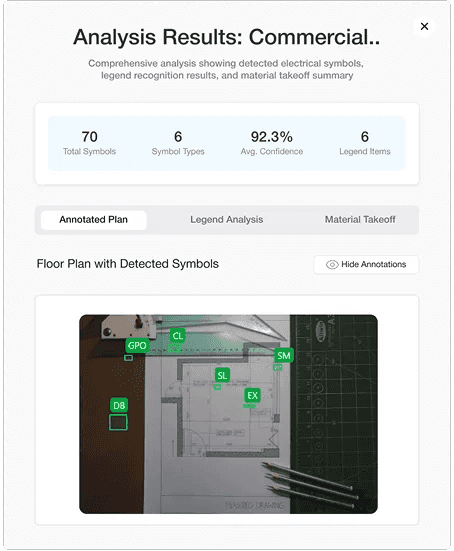
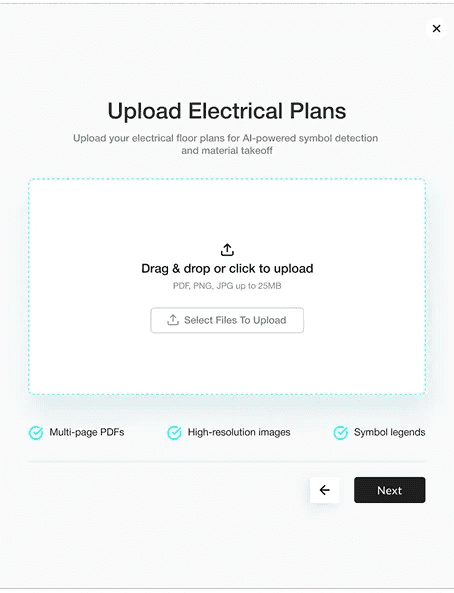
Planwise: AI electrical takeoff from residential plans
OCR and computer vision read each plan's own legend and count every lighting, power, fan and data point, with bounding boxes electricians can check and correct.
Takeoff cycle time, per the client
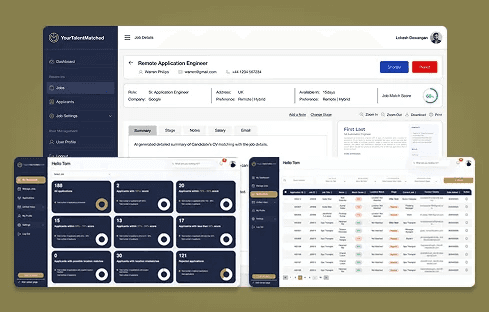
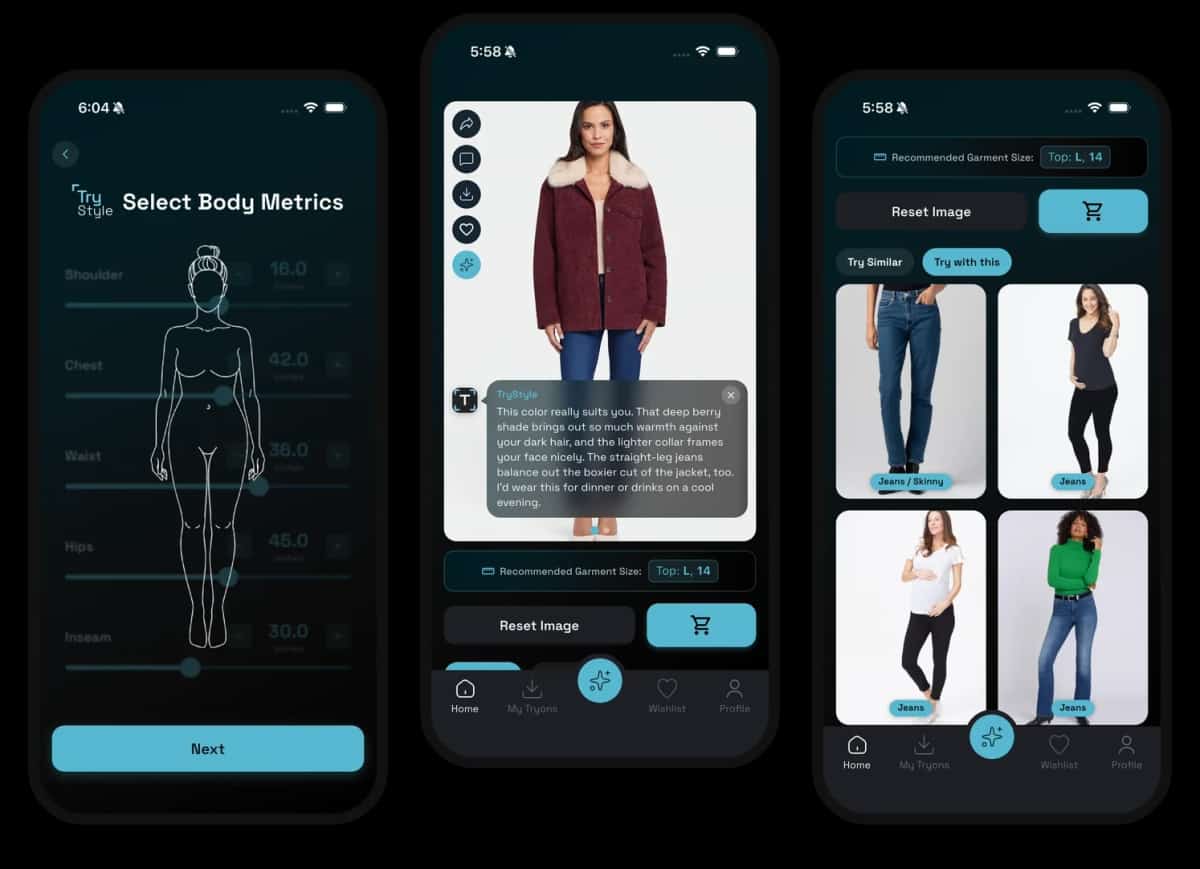
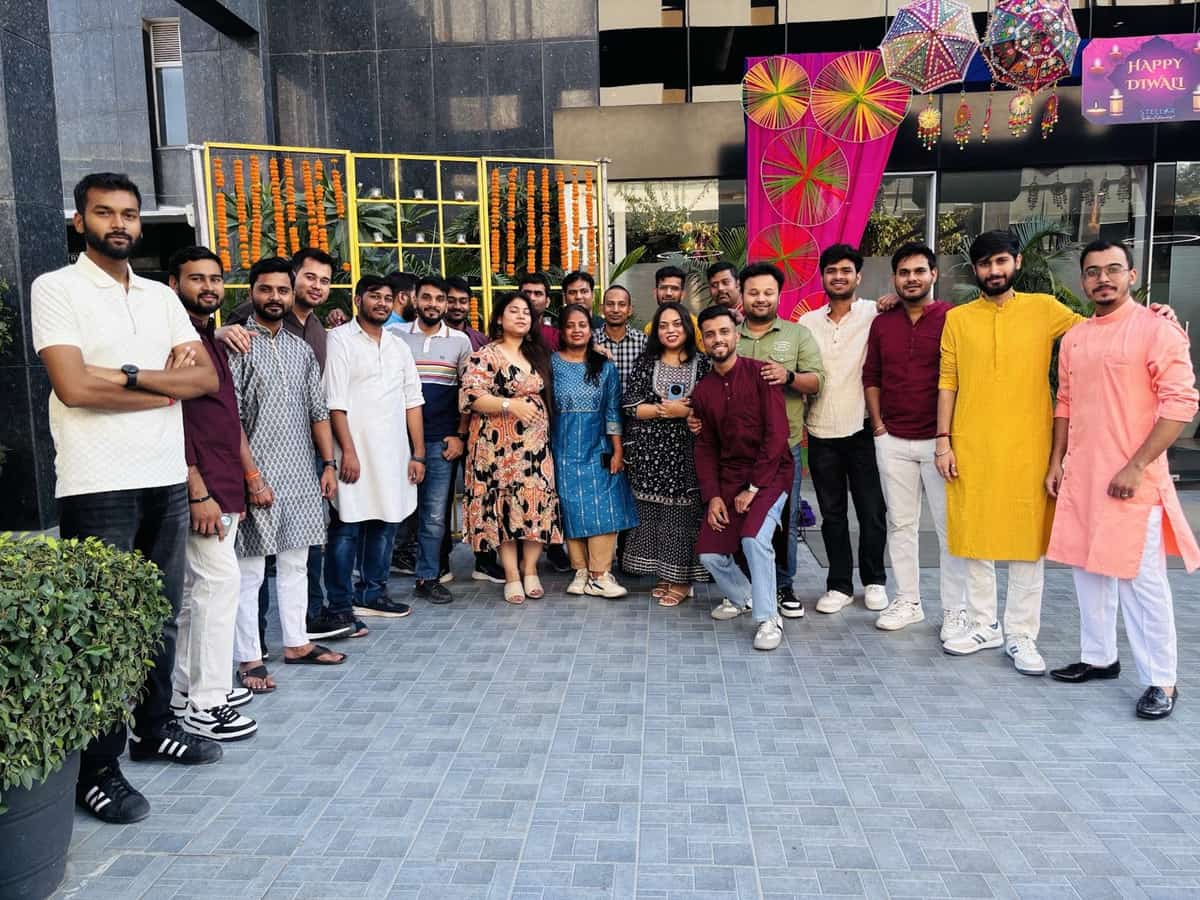
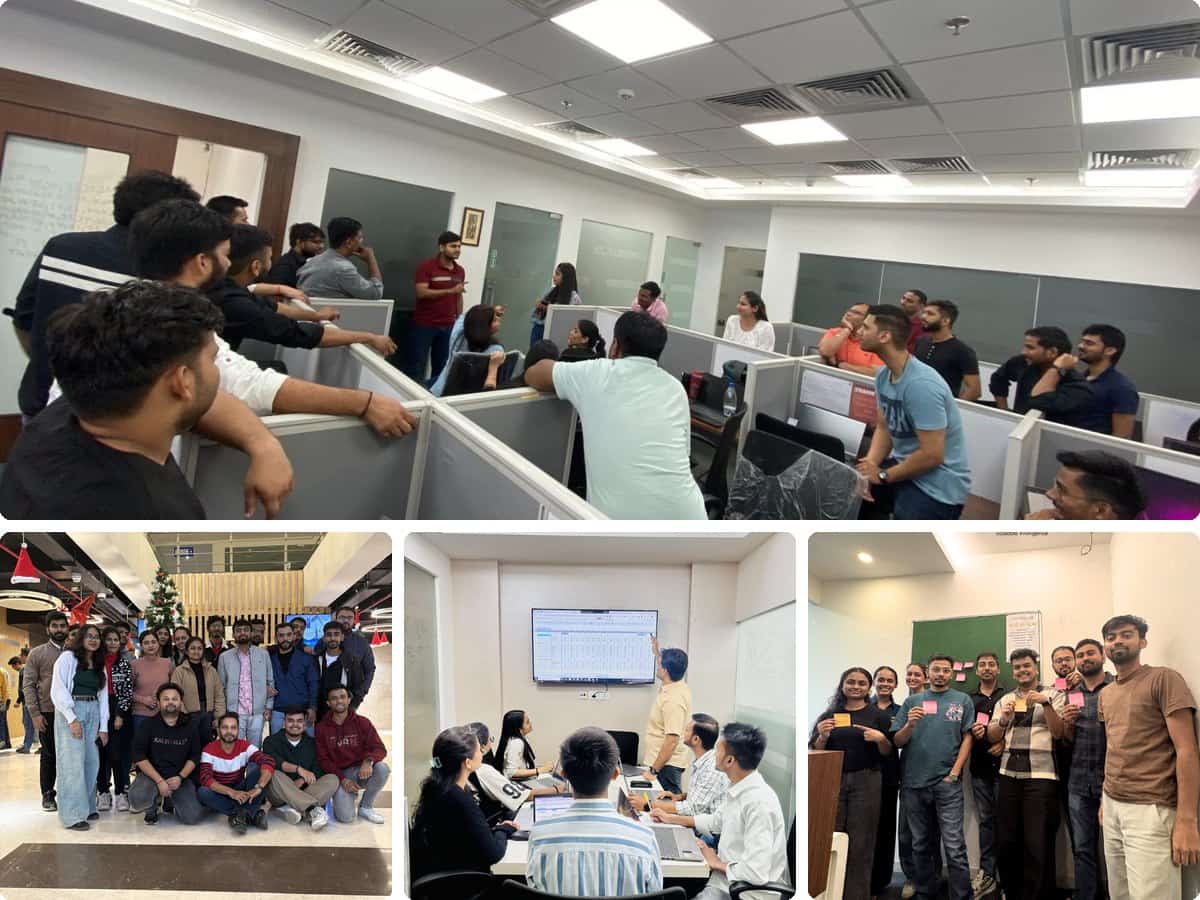
One team, 14 years of shipping
projects shipped since 2012
AI systems running in production
clients across 45+ countries
years building software, since 2012
Our RAG development process, from data audit to production
A validated proof of concept takes 2 to 4 weeks. We agree the production schedule once it passes.
Enterprise RAG use cases by industry
Teams with large, changing document sets and a cost to wrong answers see the fastest return.
Healthcare
- Clinical guideline lookup
- Payer policy questions
FinTech
- Policy and compliance assistant
- Research over filings
Legal
- Contract clause search
- Precedent research
Insurance
- Claims guideline assistant
- Underwriting manual questions
Retail and eCommerce
- Product catalog assistant
- Support answers from help docs
Manufacturing
- SOP and maintenance manuals
- Quality report search
Logistics
- Contract and rate lookup
- Shipment exception triage
EdTech
- Course content tutor
- Staff policy assistant
RAG tech stack, chosen per project
We pick based on scale, latency, access control needs and the infrastructure you already run.
Secure RAG for regulated data from day one
Access rules, redaction and logging are built into retrieval before launch, and they apply to every query.
Role-based access
A user can only retrieve what they are allowed to read in the source system.
PII redaction
Names, IDs and other personal data are masked before any text reaches the model.
Auditable answers
Each answer is logged with the question, the sources it used and who asked.
Encryption
Data is encrypted in transit and at rest, on infrastructure you control.
RAG development cost and engagement models
A proof of concept on your own documents starts at $4,999. A production RAG system starts at $14,999. Pick the way of working that fits your scope.
Project-based
Scope and timeline are agreed up front. We own delivery from discovery to launch.
Best for a defined RAG assistant or proof of concept.
Dedicated team
Engineers who work only on your product, inside your process and tools.
Best for a RAG platform you will keep extending.

Time and materials
Pay for the hours used while the scope is still moving.
Best for research spikes and evolving requirements.
RAG vs fine-tuning vs prompt engineering
Don't fine-tune for a knowledge problem. Use RAG when the answer depends on information that changes or is proprietary.
| RAG | Fine-tuning | Prompt engineering | |
|---|---|---|---|
| How it works | Retrieves your documents at query time and answers from them | Changes the model's weights with training examples | Instructions and examples in the prompt |
| Best for | Knowledge that changes or is private | A style, format or specialized task | Simple tasks on public knowledge |
| New information | Available as soon as it is indexed | Needs another training run | Limited to what fits in the prompt |
| Cites its sources | Yes, passage by passage | No | No |
| Where it falls short | Only as good as retrieval quality | Cost of training data and retraining | Breaks on large or private corpora |
Rated 4.8/5 by the clients we build for
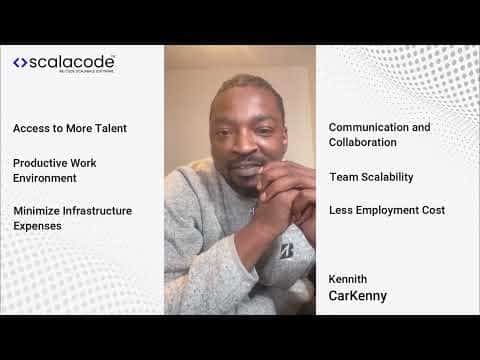
Verified reviews from Clutch and GoodFirms, and clients on camera.
33 verified reviews on Clutch
 Clutch review★★★★★
“What stood out to us as most impressive and unique about ScalaCode was their ability to humanize complex AI.”
Clutch review★★★★★“What I found impressive about ScalaCode was their ability to listen to the soul of an educational mission.”
Clutch review★★★★★“What impressed me most was that they didn't just blindly build whatever we wrote down in the initial scope.”
Clutch review★★★★★“What sets ScalaCode apart is their technical AI expertise and an understanding of a client's organizational ethos.”
 GoodFirms review★★★★★
“They built a high-performance, AI-powered platform that transformed video engagement for learning.”
Clutch review★★★★★“They managed to balance technical skill with an understanding of the marketing world.”
Clutch review★★★★★“Their team often proposed innovative features we hadn't considered.”
RAG development FAQs
We will answer anything not covered here on the call.
How much does RAG development cost?
Most clients start with a proof of concept on a sample of their documents, which costs $4,999 and takes 2 to 4 weeks. A production RAG system starts at $14,999. Where it lands depends on data volume, how many sources you connect and your compliance scope, and we fix the figure after a free discovery sprint.
How long does it take to build a production RAG system?
The proof of concept takes 2 to 4 weeks. Once it passes, we put the production timeline in writing, based on data volume, integrations and compliance scope. Our engineers use AI coding agents, which shortens the build.
How do you stop a RAG system from hallucinating?
Most hallucinations start with bad retrieval, so we fix that first. Hybrid search and reranking put the right passages at the top, the model answers only from those passages and cites each one, and a golden-set evaluation runs before every release to catch regressions. Our AI evaluation and observability work keeps measuring after launch.
Should we use RAG or fine-tune a model?
Pick RAG when the answer depends on private or changing information like policies, contracts or product data. Fine-tuning helps when the model has to follow a house style or do one narrow task well. Plenty of production systems combine the two, with RAG supplying the knowledge and a small language model, fine-tuned for the job, handling formatting or classification.
Which vector database should we use for RAG?
We work with Pinecone, Weaviate, Qdrant, Milvus and Postgres with pgvector. If you already run Postgres and have a few million chunks or fewer, pgvector is usually the simplest choice. Bigger or multi-tenant workloads tend to suit Qdrant or Pinecone.
Can a RAG system respect our document permissions?
Yes. Permissions are checked at retrieval time, so people only see passages they could open in the source system. PII redaction, audit logs and encryption in transit and at rest are standard.
Can RAG work on PDFs, tables and images?
Yes. OCR and layout-aware parsing handle scanned PDFs, forms and tables, and multi-modal embeddings make images searchable next to ordinary text.
Can you deploy RAG in our own cloud or on-premise?
Yes, on AWS, Azure, Google Cloud or your own servers. When data cannot leave your network, we run open-weight models inside it, and the documents, index and logs stay on infrastructure you control.
Who owns the code and data after the project?
You do, from the first commit, including the source code, prompts, evaluation sets and indexes. Your data is never used to train shared models, and we document the system so your team can run it without us.
One team, matched to your working hours
We schedule 4 to 6 hours of daily overlap with US time and a full working day with the UK and Europe, so reviews, demos and fixes happen during your working hours.
What sets ScalaCode apart is their technical AI expertise and an understanding of a client's organizational ethos.
Grounded answers from your own data, shipped in production
- 30 minutes with the ScalaCode team
- Where RAG fits your use case, and where another approach is better
- What is realistic, what it costs and how long it takes

“Their approach, dedication and project execution played a critical role in TipStars' success.”
James Ellis, Founder, TipStars