
Legal AI for contract review and legal research on your own documents
Legal AI that reviews contracts against your playbook, extracts clauses and answers research questions from your own precedents with a citation for every claim. It runs in your cloud account, follows matter permissions and leaves every decision with a lawyer.
years building software since 2012
projects shipped since 2012
AI systems running in production
clients in 45+ countries
on Clutch, from 33 verified reviews
9001:2015 certified delivery process
What legal AI covers
Language models applied to contracts, precedents, research and intake, with lawyers reviewing the output.
- What is legal AI?
- Legal AI is the use of language models and document AI to review contracts, extract clauses, search precedents and research memos, and triage incoming matters for law firms and in-house legal teams. Production systems ground every answer in the firm's own documents with citations, respect matter-level access rules and keep a lawyer responsible for the final work product.
Why legal AI pilots stall
Invented citations
A general chatbot writes plausible case names and clause references that do not exist. We constrain answers to retrieved passages and link each statement to its source document.
Privilege concerns stop the rollout
Risk committees will not send client files to a tool they cannot inspect. We run the system in your cloud account with matter permissions, masking and audit logs your risk team can check.
Every contract is drafted differently
Keyword rules miss clauses that are worded differently or split across sections. We extract clauses with language models and score them against a test set your lawyers mark up.
Lawyers stop using it
A separate tool with no link to the matter adds steps to the day. We put the answers inside the document system, Word or the matter workspace your lawyers already open.
Legal AI use cases we build for law firms
Each use case starts on a sample of your own documents, scored by your lawyers before anything goes live.
AI contract review
We compare incoming contracts with your playbook, flag deviations by clause and suggest fallback wording for the lawyer to accept or change.
Clause extraction
We pull parties, dates, change of control, assignment, liability caps and renewal terms from contract sets into a table for due diligence or a contract register.
See NLP developmentResearch with citations
Questions answered from your precedents, research memos and know-how, with each answer linked to the paragraph it relies on.
See RAG developmentIntake triage
We classify new enquiries and documents by practice area, urgency and conflict details, then route them to the right team.
Scanned document reading
Signed agreements, court bundles and handwritten forms read with OCR and vision models, with signatures and account numbers masked first.
See multimodal AIFirst drafts from precedent
We assemble drafts from your approved clause bank and matter data and mark them up for a lawyer to edit.
Testing AI on your own contracts?
Talk to us about your documents, permissions and review process before you pick a tool.
How legal document AI works in practice
Four patterns cover most legal AI requests. Each one keeps the source document one click away from the answer.
Playbook review
Each clause is matched to your playbook position and marked as standard, fallback or escalate, with the reason shown.
Cited research
Hybrid search finds the passages that answer the question, and the model writes only from those passages, linking each one.
Clause table
Language models fill a clause table across hundreds of contracts, and low-confidence cells are highlighted for checking.
Intake routing
Enquiry text and attachments are classified and the conflict details are passed to your conflict check before a matter opens.
Packaged legal AI tools or AI built on your documents
Packaged legal AI tools suit firms that want general drafting and research help quickly. Custom legal AI pays off when answers must come from your own precedents, playbooks and matter data.
| Packaged legal AI tool | Legal AI built on your documents | |
|---|---|---|
| Knowledge source | The vendor's corpus plus files you upload | Your precedents, playbooks and document system, indexed with their permissions |
| Where data runs | The vendor's cloud and chosen regions | Your cloud account, in the region you choose |
| Workflow | The vendor's interface | Inside your document system, Word or matter workspace |
| Measuring accuracy | The vendor's published testing | A test set marked up by your own lawyers |
| Cost | Per-seat licence | Build cost, then hosting and model usage |
Privilege, confidentiality and data residency
Confidentiality controls are designed before the first document is indexed, and SOC 2 and GDPR controls are written into scope during discovery.
Matter permissions
Each search runs with the lawyer's own access, so the AI reads only the matters that person can open and ethical walls hold.
No training on your data
Your documents are never used to train shared models, and an open-weight model can run on your infrastructure where policy rules out hosted models.
Data residency
The document store, index and application run in the cloud region you choose, with open-weight models where processing must stay in-country.
Lawyer review and audit logs
Every answer, source and reviewer decision is logged, and nothing reaches a client without a lawyer's approval.

How we build legal AI, from file sample to production
A proof of concept on a sample of your documents takes 3 to 4 weeks. The production system with permissions, integrations and monitoring follows on a schedule agreed after it, and AI coding agents help our engineers build it faster.
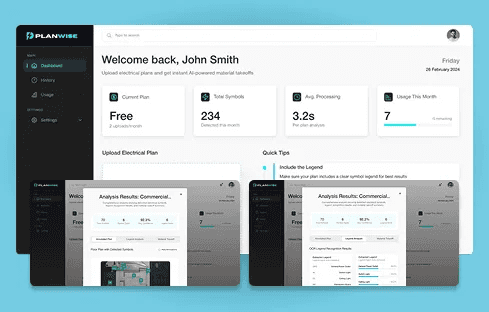
Planwise: OCR and computer vision that read electrical plans
We have no published legal AI case study yet. Planwise is the closest document work we have shipped. OCR pulls each drawing's own legend, vision models classify what the drawing contains, and people review every detection before the report is exported.
Takeoff cycle time, per the client
More work on text, documents and legal services
All case studies

One team, 14 years of shipping
projects shipped since 2012
AI systems running in production
clients across 45+ countries
years building software, since 2012
Rated 4.8/5 by the clients we build for
Verified reviews from Clutch and GoodFirms, and clients on camera.

33 verified reviews on Clutch
 Clutch review★★★★★
“What sets ScalaCode apart is their technical AI expertise and an understanding of a client's organizational ethos.”
 GoodFirms review★★★★★
“They built a high-performance, AI-powered platform that transformed video engagement for learning.”
Clutch review★★★★★“What stood out to us as most impressive and unique about ScalaCode was their ability to humanize complex AI.”
Clutch review★★★★★“They managed to balance technical skill with an understanding of the marketing world.”
Clutch review★★★★★“Their team often proposed innovative features we hadn't considered.”
Clutch review★★★★★“They didn't just build an algorithm; they built a tool that respects the nuances of Indigenous reconciliation.”
Clutch review★★★★★“What I found impressive about ScalaCode was their ability to listen to the soul of an educational mission.”
Legal AI FAQs
We will answer any other question on the call.
How much does legal AI development cost?
A proof of concept on a sample of your documents starts at $4,999. A production system for contract review or cited research starts at $14,999. Document volume, the number of sources and the integrations set the fixed quote.
How do you stop legal AI from inventing case law or citations?
The model writes only from passages retrieved from your document set, and each statement links to the passage it relies on. When no passage supports an answer, the system says it found no source. A test set of questions from your lawyers catches regressions before each release.
Is our client data used to train the AI model?
No. Your documents are never used to train shared models. Where your policy rules out hosted models, we run an open-weight model on your own infrastructure so prompts never leave it.
Can legal AI keep our data in a specific country?
Yes, for everything we host. The document store, vector index and application run in the cloud region you choose. Where a rule requires model processing in-country as well, we use an open-weight model deployed in that region.
Does legal AI respect ethical walls and matter permissions?
Yes. Access control runs at the retrieval step, so each lawyer only retrieves passages from matters they can already open in the source system. Every query and answer is logged with the user and time.
Should we buy a legal AI tool or build our own?
Buy a packaged tool if general drafting and research help is enough. Build when the answers must come from your own precedents and playbooks, when documents cannot leave your cloud account, or when the AI must sit inside your document system.
How accurate is AI contract review?
It depends on your contracts, so we measure it before launch. Your lawyers mark the correct clauses on a sample, the system is scored against that set, and anything below the confidence level you choose goes to a lawyer.
Have you built legal AI before?
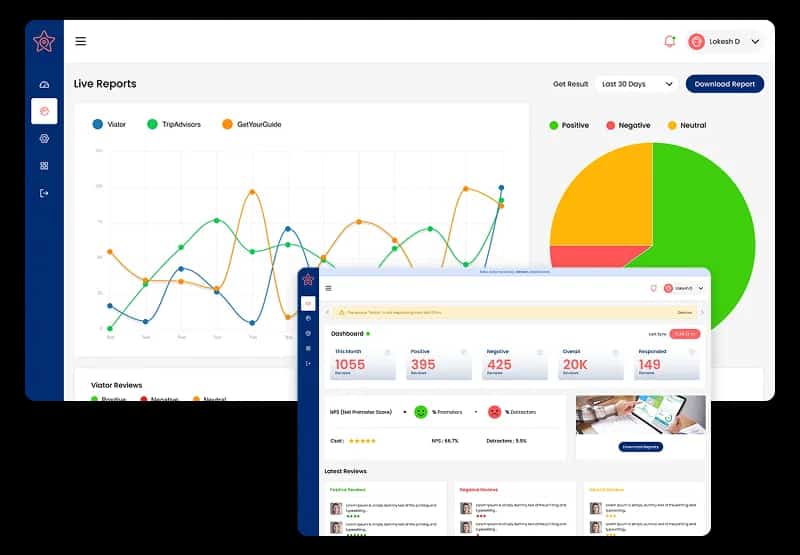
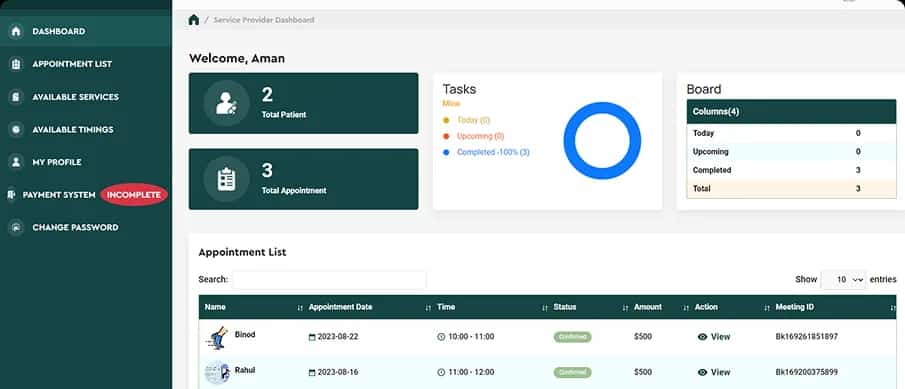
We have no published legal AI case study yet. ScalaCode has shipped 50+ AI systems into production, including Planwise, which reads complex drawings, and TourReview, which analyses review text, and we built Telestop for booking legal consultations online.
They understood the business side of our requirements and often brought up solutions or ideas we hadn't considered.
Scope your legal AI project in 30 minutes
- A use case and test plan for your own documents
- Privilege, residency and review rules covered up front
- Free, with no obligation to build with us