
Generative AI development services for enterprises
Our generative AI development services turn slow, document-heavy workflows into systems your team uses every day, built on OpenAI, Claude, Gemini and open-weight models. Each build starts from a defined business problem and the workflow it affects.
building software since 2012
projects shipped since 2012
AI systems running in production
clients in 45+ countries
on Clutch, from 33 verified reviews
9001:2015 certified delivery process
Trusted by teams at








Clutch 4.8/5Verified client reviews

GoodFirmsReviewed software partner
ISO 9001:2015Certified delivery process
GDPR compliantData handled under EU rules
Trusted by startups, ISVs and Fortune 500 teams
clients served
projects delivered
AI systems in production
countries served
Since 2012. Clutch 4.8/5 from 33 verified reviews.
What generative AI development services cover
Most GenAI engineering time goes into integration and evaluation, since model access is the simplest part of the build.
- What are generative AI development services?
- Generative AI development services cover building software that uses large language, image or speech models to create text, answers, images or code from a company's own data and workflows. The work spans model choice, retrieval, fine-tuning, agents, integration with existing systems, and the monitoring that keeps output quality and cost in check.
Generative AI solutions we build
We take GenAI from a first proof of concept to production inside the systems your business already depends on.
Generative AI consulting
Find where AI makes a measurable difference, with the right models and technology for each workflow.
PoC and MVP development
Validate business value and performance before a full build, then scale the MVP on live user feedback.
Model fine-tuning
We adapt pre-trained models to your data, workflows and goals so their responses come back more accurate and consistent.
See LLM developmentGenAI agent development
We build agents that use your business data and tools to make decisions and handle multi-step operations.
See AI agent developmentModel replication
Move a capability from a third-party API to a local model, cutting API limits and availability risk and keeping data private.
Generative AI integration
We wire LLMs, agents, recommendation engines and document intelligence into your existing software, as part of our wider AI development services.
Robotic process automation
AI bots take over data entry, report generation, customer onboarding and document handling for your operations teams.
NLP integration
We add software that understands and replies in human language, in text or speech. Built for staff, it becomes one of our enterprise copilots.
Monitoring and optimisation
We track accuracy, response quality, latency, usage and cost in production, and keep tuning the system as usage grows.
Have a specific GenAI project in mind?
Tell us the workflow and the data behind it. We will come back with an approach, a timeline and a cost range.
Models and platforms we work with
We pick per use case on accuracy, context, multimodality, latency, security and cost, and often combine several.
OpenAI GPT
Strong at reasoning, logic and code, with smaller variants when latency matters.
Anthropic Claude
Handles long documents and context-aware product behaviour well.
Google Gemini
Reads text, images, video and audio across long, mixed files.
Meta Llama
Open weights you can customise and run on your own servers.
Embedding models
Turn business data into vectors that capture meaning.
Whisper
Turns calls, voice notes and meetings into text.
DALL-E
Generates images from natural-language prompts.
Stable Diffusion
Image generation you can host and build into products.
Why generative AI pilots never reach production
These four problems stop more pilots than model choice does.
Nobody owns the metric
A pilot built to explore AI has nothing to prove when budget season comes. Every build starts from one workflow and one number someone owns.
The data is not ready
Answers are only as good as the documents and records behind them. We prepare data and the knowledge base before any model work.
Costs scale with usage
A per-call price that looks small in a demo grows fast with production traffic. We size models per task and track cost per request from day one.
Quality is not measured
Without a test set, nobody can say whether a prompt change helped. Evaluations run on every release, offline and in production.
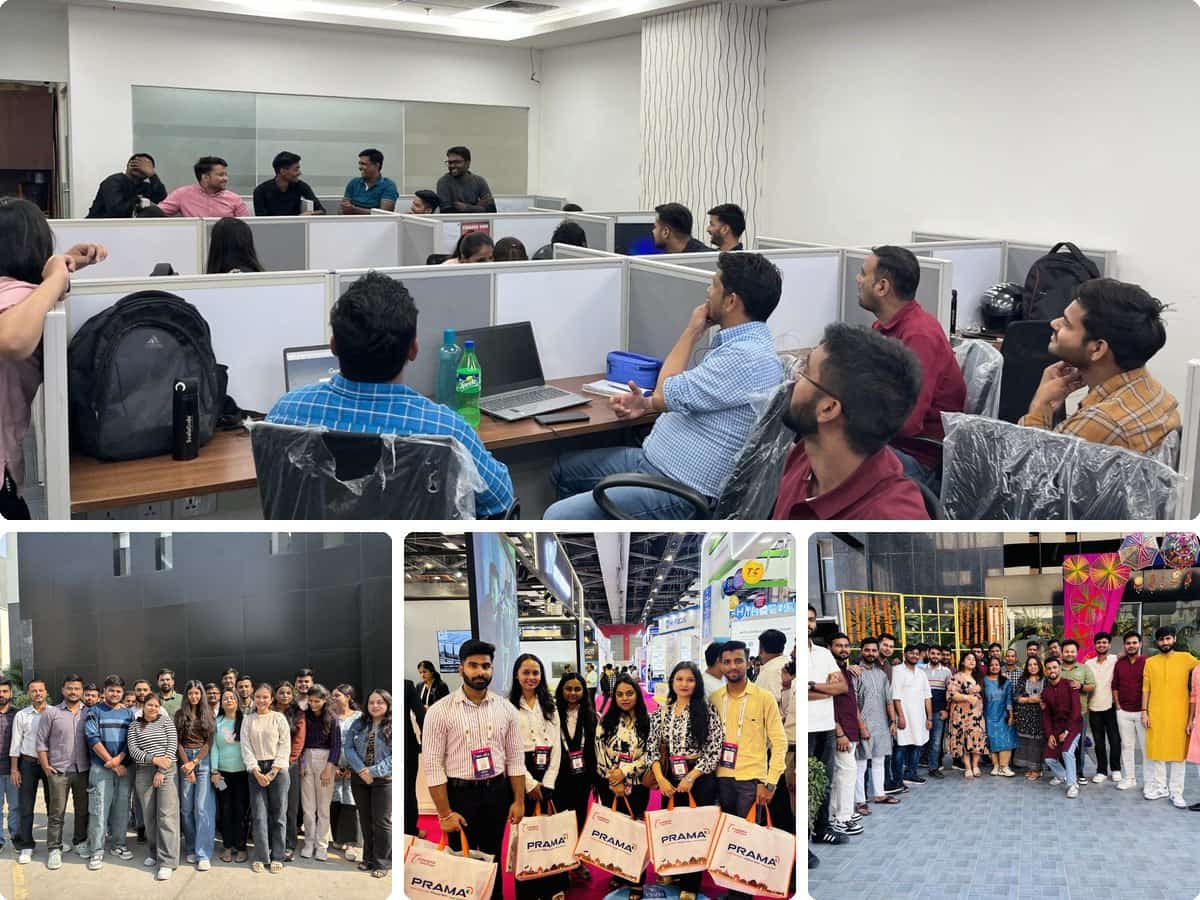
How a generative AI project runs
A pilot takes 4 to 6 weeks. The process comes from 14 years of delivery, so the first release is ready for production users.
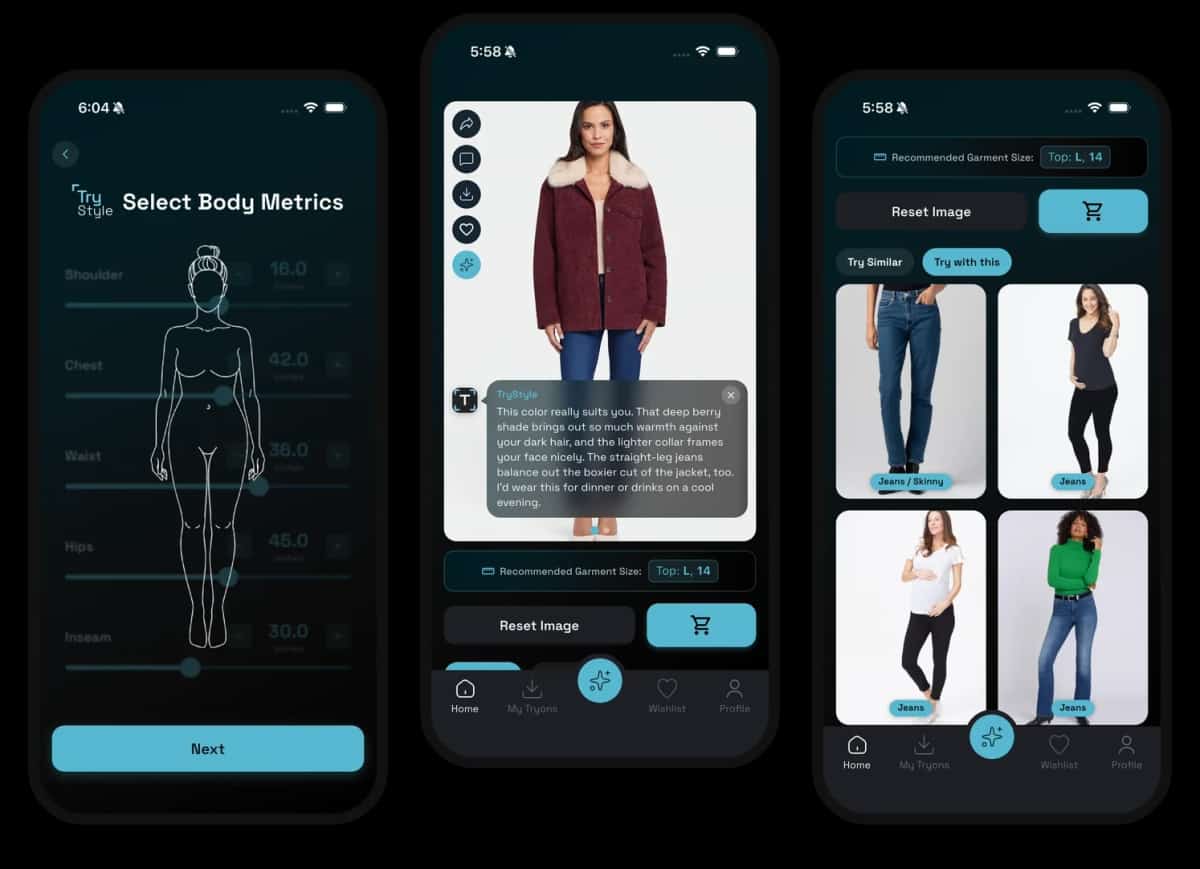
Try Style: diffusion try-on for fashion retail
A diffusion model renders the garment on the shopper's own photo, for single pieces and layered outfits of up to three garments, with fallback models behind it. Image models cut each garment out of the retailer's product photos, and a language model writes a short description of the finished look.
Single, two-piece and layered looks from one photo
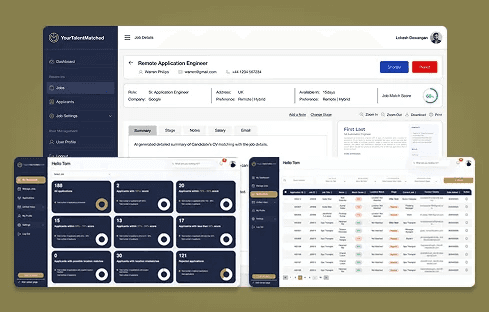
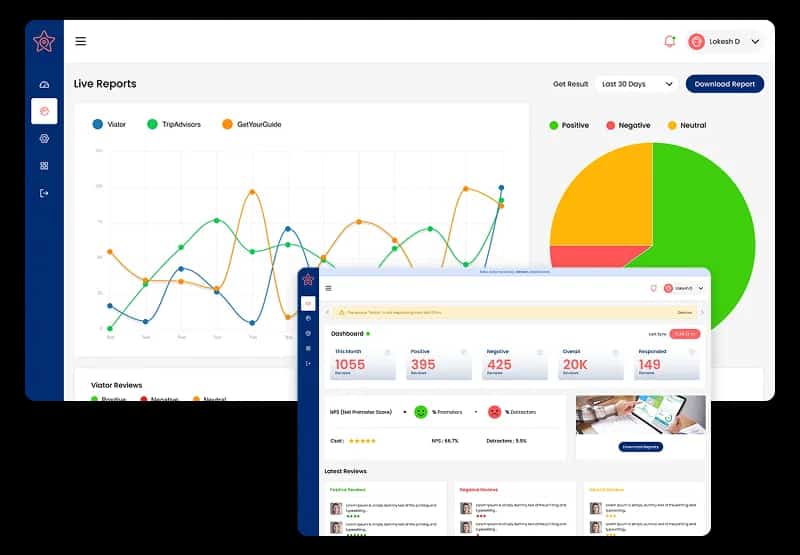
Custom GenAI vs off-the-shelf tools vs a thin API wrapper
Off-the-shelf is the right answer more often than agencies admit. Custom pays off when the workflow is yours alone.
| Off-the-shelf AI tool | Thin API wrapper | Custom GenAI build | |
|---|---|---|---|
| Fits your workflow | You adapt to the tool | Partly, around one prompt | Built around how your team works |
| Uses your data | Limited uploads or connectors | Whatever fits in the prompt | Retrieval, fine-tuning and live system access |
| Where data lives | The vendor's cloud | The model provider's API | Your cloud or your servers |
| Time to first version | Days | Weeks | 6 to 8 weeks for an MVP |
| Where it falls short | Generic output, per-seat cost | Breaks on edge cases, no evals | Higher upfront cost and needs an owner |
Where generative AI pays back first
Where GenAI takes repetitive information work off people's desks.
eCommerce
- Catalog and product content
- Smart search and suggestions
Banking and finance
- Document-heavy operations
- Repetitive fintech workflows
Healthcare
- Clinical documents
- Administrative workflows
Manufacturing
- SOP assistance
- Supplier and inventory queries
Logistics
- Shipment documents
- Invoice automation
Real estate
- Listings in plain language
- Buyer and tenant matching
Media and entertainment
- Content summaries
- Recommendation experiences
eLearning
- Tutoring and assessments
- Course content creation
Generative AI software development stack
Each technology is picked for your application's performance, security and scale needs.
Generative AI development cost
A generative AI pilot starts at $7,999 and takes 4 to 6 weeks for one use case, measured against a baseline. It follows a free discovery sprint.

Project-based
Scope and timeline are agreed up front, with pilots from $7,999. We own delivery from discovery to launch.
Best for a defined PoC or MVP.

Dedicated GenAI team
AI engineers, ML experts, data engineers and architects who work only on your product, from $1,799 a month per engineer.
Best for a GenAI product you will keep extending.

Time and materials
Pay for the hours used while the scope is still moving.
Best for research spikes and evolving requirements.
Rated 4.8/5 by the clients we build for
Verified reviews from Clutch and GoodFirms, and clients on camera.
33 verified reviews on Clutch
 GoodFirms review★★★★★
“They built a high-performance, AI-powered platform that transformed video engagement for learning.”
 Clutch review★★★★★
“What I found impressive about ScalaCode was their ability to listen to the soul of an educational mission.”
Clutch review★★★★★“What impressed me most was that they didn't just blindly build whatever we wrote down in the initial scope.”
Clutch review★★★★★“What sets ScalaCode apart is their technical AI expertise and an understanding of a client's organizational ethos.”
Clutch review★★★★★“What stood out to us as most impressive and unique about ScalaCode was their ability to humanize complex AI.”
Clutch review★★★★★“They managed to balance technical skill with an understanding of the marketing world.”
Clutch review★★★★★“Their team often proposed innovative features we hadn't considered.”
Generative AI FAQs
We will answer anything not covered here on the call.
How much does generative AI development cost?
A generative AI pilot starts at $7,999 and takes 4 to 6 weeks, covering one use case measured against a baseline. It follows a free discovery sprint. The pilot tells you whether the full build is worth funding.
Which generative AI use cases pay back first?
Document-heavy, repetitive work pays back first, such as drafting replies, extracting data from invoices and contracts, summarising long files and answering staff questions from internal knowledge. These workflows have a known volume and a baseline time per task, so the saving is measurable within weeks. Open-ended creative uses take longer to prove. Product descriptions and search are covered under AI for retail.
Which models do you work with?
We work with OpenAI GPT, Anthropic Claude, Google Gemini and Meta Llama for text, plus Whisper for speech and DALL-E or Stable Diffusion for images. We test the candidates on your own use case and pick on accuracy, context length, latency, security and cost. Many builds combine more than one model. For high-volume, narrow tasks we also fine-tune small language models that cost less to run.
How do you protect our data when using third-party models?
We use enterprise API tiers whose terms exclude your data from model training, and we mask personal data before a prompt leaves your systems. When data cannot leave your infrastructure, we run open-weight models such as Llama in your own cloud or on your servers. Access controls, audit logs and encryption in transit and at rest apply in both setups.
How do you measure generative AI output quality?
Before the build, we collect examples of past work with the outputs your team would accept, and that becomes the evaluation set. Every release is scored against it for accuracy, format and tone, with automated checks and human review. In production we track the same scores alongside latency and cost per request.
Can you add generative AI to our existing software?
Yes. We use APIs, middleware, enterprise connectors and custom integration layers so AI fits into the systems and workflows you already rely on, with no need to replace them.
How long does it take to build and deploy a GenAI product?
A pilot takes 4 to 6 weeks. The production rollout built on it is scheduled once the pilot passes, with a round of tuning after live user feedback, and AI coding agents help our engineers deliver it faster.
Do you build RAG and enterprise knowledge bases?
Yes. We connect LLMs to your documents, databases, policies and enterprise data so responses are grounded in your own sources and cite them.
Can you fine-tune an existing model for our business?
Yes. We adapt foundation models to your context and goals for consistent, domain-aware output, which costs far less than training a model from scratch.
One team, matched to your working hours
We schedule 4 to 6 hours of daily overlap with US time and a full working day with the UK and Europe, so reviews, demos and fixes happen during your working hours.
What stood out to us as most impressive and unique about ScalaCode was their ability to humanize complex AI.
GenAI your team uses every day, shipped to production
- 30 minutes with the ScalaCode team
- Which workflow to start with, and which to leave alone
- What is realistic, what it costs and how long it takes

“Their approach, dedication and project execution played a critical role in TipStars' success.”
James Ellis, Founder, TipStars