
AI agent development for agents that finish the work
As an AI agent development company, we build custom AI agents and multi-agent systems that reason through a task, call your tools and take action, with a human approval step wherever judgment is required.


Clutch 4.8/5 from 33 verified reviews
50+ AI systems in production since 2012

projects shipped since 2012
Plan: pull open invoices from the ERP 1, match them against the bank feed 2, draft reminders for accounts still unpaid 3. Waiting for your approval before sending.
Trusted by teams at







What agentic AI development involves
An agent's reliability depends on the tools, guardrails and approval steps around it, so that is where we spend most of the engineering time.
- What is agentic AI development?
- Agentic AI development is the engineering of AI agents, software systems that understand a goal, plan the steps, call tools and take actions with little human input. A production agent pairs a language model with scoped tool access, memory, approval gates and tracing, so a team can see and stop every action it takes.
Related: RAG development grounds an agent in your documents. LLM development covers model choice, fine-tuning and serving.
Agentic AI vs generative AI vs rules-based automation
If the workflow never changes, a rules engine is cheaper. Agents earn their cost when every case is a little different.
| Rules-based automation | Generative AI | Agentic AI | |
|---|---|---|---|
| What it does | Follows a fixed script | Creates content from a prompt | Plans steps, uses tools and takes actions toward a goal |
| Handles exceptions | Stops or fails on an unexpected input | Only inside one response | Re-plans, and escalates when unsure |
| Uses your systems | Through hard-coded integrations | Rarely, it mostly writes text | Through function calling, MCP and APIs |
| Human role | Fixes broken runs | Reviews every output | Approves high-impact actions only |
| Where it falls short | Brittle when inputs vary | Leaves the task unfinished | Needs guardrails, evals and cost limits to be safe |
The model behind an agent is a separate choice, made on reasoning quality, cost and where your data may go. We cover it under LLM development.
AI agent development services for operations, sales and support
We build single agents for one workflow and networks of agents that share context and hand work to each other.
Agentic AI consulting
We help you move from AI trials to agents in production, starting with the strategy, technical approach and roadmap. For a wider AI roadmap, see AI consulting.
Custom AI agent development
Agents built around how your business runs, covering reasoning, planning, tool use and execution in your own workflows.
Multi-agent systems
We design teams of specialised agents, each with its own role. The architecture, messaging, shared memory and control layers between them keep the whole system dependable.
Multi-agent orchestration
Agents that delegate tasks, share context and align on one goal, so a multi-stage process runs as one system.
AI agent integration
We deploy agents inside your stack with secure access to your applications, APIs and data. Where a system has no clean API, we build an MCP server for it.
Agentic workflow automation
We replace rigid rules-based workflows with agents that read the situation and change course when a case is unusual. A person stays in the loop wherever the decision needs judgment.
Architecture assessment
We review business-critical systems to see what must change to support agents while day-to-day operations continue.
AI governance and security
Access controls, monitoring, human oversight and data protection go in before launch, so agents can run in sensitive environments. Evaluation and observability records how each one behaves.
Maintenance and optimisation
Continuous evaluation, tuning and monitoring that keep agents accurate, responsive and cost-efficient as your business changes.
Bring one workflow your team dreads.
We will map where an agent fits, where a human has to stay in the loop, and what it would take to ship it.
Types of AI agents we build
Agent types differ in what they read, what they can change and when they hand back to a person.
Conversational agents
A conversational agent understands the request, pulls the information it needs and acts through your connected systems. It can run in chat or as a voice agent, and escalates when a person is needed.
Autonomous agents
An autonomous agent plans its own sequence, picks the tools and runs a multi-step workflow with little human input. Step budgets and stop conditions keep it on the goal.
Decision-making agents
A decision agent weighs your business data, rules and objectives, then recommends or carries out the next action. Typical uses sit in HR, sales, supply chain and finance.
Customer service agents
A service agent resolves support questions from your knowledge base and approves service actions within set limits. When it hands off, the person receives the full context.
Sales agents
A sales agent qualifies leads, personalises outreach and keeps CRM records current. For each deal it surfaces the next action a rep should take.
Multi-agent systems
Several specialised agents work in parallel under an orchestration layer and share one memory. The orchestrator merges their output into a single result.
Why AI agent pilots stall before production
A demo agent with one tool and a happy path proves very little. The failures below appear once an agent touches production systems and live transactions, with how we design each one out.
The agent loops or wanders
Without limits, an agent retries the same failing step or drifts off the goal. We set step budgets, timeouts and clear stop conditions.
It takes an action it cannot undo
A sent email or an issued refund cannot be pulled back the way a draft can. High-impact actions go through an approval gate.
Costs climb with every run
Long reasoning chains on a frontier model add up fast at volume. We route routine steps to cheaper models and cap tokens per task.
Nobody can explain what happened
When something goes wrong, there is no record of why the agent chose that path. Every plan, tool call and decision is traced and reviewable.
How we build and ship an AI agent
Work runs in small sprints through workflow audit, architecture, build, sandbox testing and a governed launch. A single-workflow pilot takes 4 to 6 weeks.
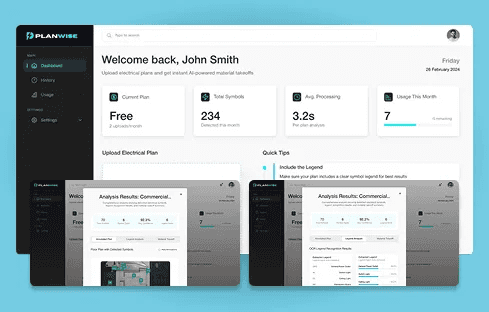
Planwise: an AI pipeline that reads plans and knows when to ask
Every electrical plan uses its own symbols, so the pipeline reads the plan's legend before it counts anything. Vision models then count lights, power points, fans and data points, and a second reasoning step works through the crowded, overlapping parts of the drawing. An electrician reviews the count on the plan itself before the takeoff goes out.
Takeoff cycle time, per the client
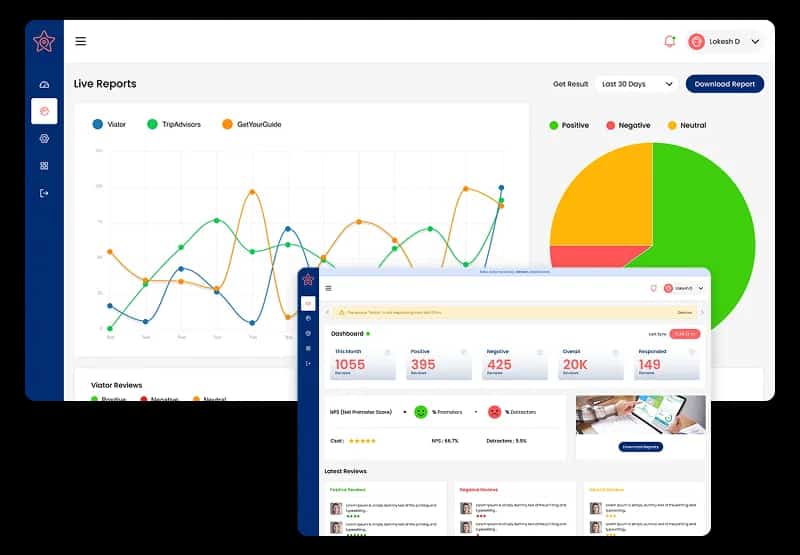
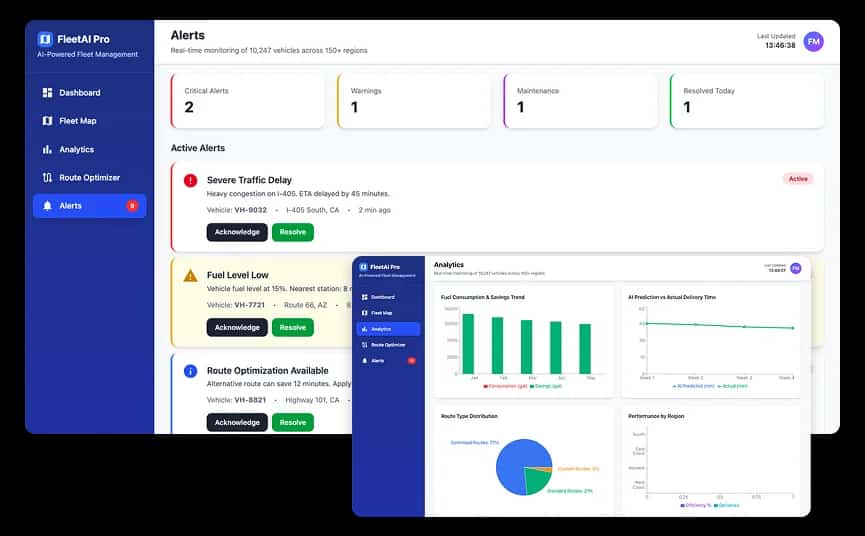
 Watch the video review
Hear John-Paul Hatala on working with our team
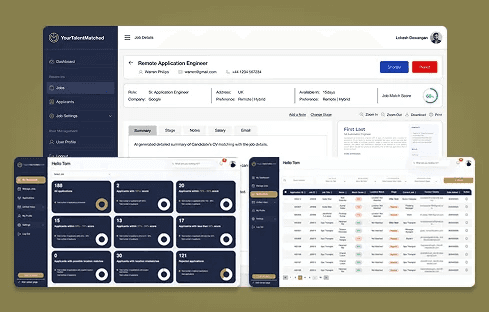
SnagPad runs a six-stage job search process for seekers, coaches and agencies. Its CEO talks through how the build went, in his own words, on camera.
Autonomy with control built in
An agent should be able to act, and you should always be able to see and stop what it does.
Approval gates
High-impact actions wait for a named human to approve.
Scoped tool permissions
Each agent can only call the tools and data its role needs.
Full audit trail
Every plan, tool call and decision is logged for review.
Kill switch
Pause any agent or workflow instantly, without a deploy.

One team, 14 years of shipping
projects shipped since 2012
AI systems running in production
clients across 45+ countries
years building software, since 2012
Where AI agents pay off first
Workflows with many systems, many exceptions and a clear cost to slow turnaround.
Finance
- Loan underwriting support
- Fraud and AML triage
Healthcare
- Insurance eligibility checks
- Prior-authorization prep
eCommerce
- Order exceptions
- Customer queries
Manufacturing
- Production monitoring
- Supplier follow-ups
Logistics
- Predictive monitoring
- Shipment exception handling
Real estate
- Lead routing
- Document collection
Education
- Admissions workflows
- Student service requests
Telecom
- Plan changes
- Service troubleshooting
Agentic AI architecture with tools, memory and guardrails
Chosen per project, based on reasoning needs, context length, privacy and where you deploy.
AI agent development cost
An AI agent pilot starts at $7,999 and covers one workflow, your tools and human approval steps in 4 to 6 weeks. It follows a free discovery sprint.

AI agent pilot
From $7,999, 4 to 6 weeks. One workflow in production, connected to your tools, with approval gates, tracing and evals.
Best for proving value on one workflow your team runs every day.

Dedicated agent team
AI engineers who work only on your agents, inside your process and tools, from $1,799 a month per engineer.
Best for an agent platform you will keep extending.

Multi-agent program
Several agents across systems, quoted after the discovery sprint once the workflows, tools and approval rules are mapped.
Best for scaling a pilot that works across departments.
Rated 4.8/5 by the clients we build for
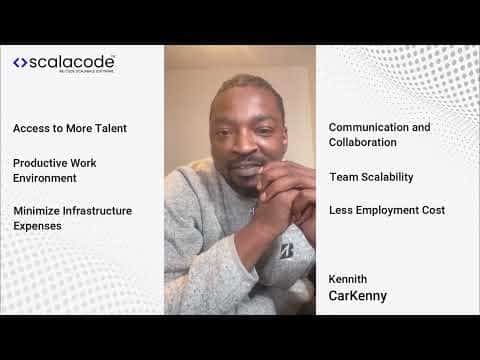
Verified reviews from Clutch and GoodFirms, and clients on camera.
33 verified reviews on Clutch
 Clutch review★★★★★
“What impressed us most was how quickly ScalaCode understood the operational challenges we were trying to solve.”
Clutch review★★★★★“What sets ScalaCode apart is their technical AI expertise and an understanding of a client's organizational ethos.”
 GoodFirms review★★★★★
“They built a high-performance, AI-powered platform that transformed video engagement for learning.”
Clutch review★★★★★“What stood out to us as most impressive and unique about ScalaCode was their ability to humanize complex AI.”
Clutch review★★★★★“They managed to balance technical skill with an understanding of the marketing world.”
Clutch review★★★★★“Their team often proposed innovative features we hadn't considered.”
Clutch review★★★★★“They didn't just build an algorithm; they built a tool that respects the nuances of Indigenous reconciliation.”
AI agent development FAQs
We will answer anything not covered here on the call.
How much does it cost to build an AI agent?
An AI agent pilot starts at $7,999 and takes 4 to 6 weeks for one workflow, connected to your tools with human approval steps. It follows a free discovery sprint. Multi-agent systems are quoted after discovery.
What is the difference between an AI agent and a chatbot?
A chatbot holds a conversation and answers questions. An AI agent works toward a goal, so it plans steps, calls your tools and APIs, and takes actions such as updating a record or preparing a refund. Many production assistants combine both, with a chat front end and agent workflows behind it. Agents that work on the phone need voice specialists, and you can hire AI voice engineers for that work.
Which agent frameworks do you use?
We use LangGraph for stateful, multi-step workflows and write custom orchestrators when a framework adds more weight than it saves. Tools connect through function calling, MCP servers, webhooks and REST APIs. Models include OpenAI, Claude, Gemini, Llama, Mistral and Cohere, chosen per task on reasoning, context length, privacy and cost.
How do you stop an agent from taking the wrong action?
High-impact actions go through an approval gate, and each agent can only reach the systems its role needs. Every tool call is logged, and any agent can be paused instantly without a deploy. We test failure cases in a sandbox before launch.
Can agents work with our CRM, ERP and internal APIs?
Yes. Agents call your CRM, ERP, ticketing system and internal services through their APIs, webhooks or MCP servers we build for them. Each agent gets scoped credentials, so it reaches only the records and actions its role needs.
How do you measure whether an agent is working?
We agree on a business metric before the build, such as cases closed per day or turnaround time, and measure the agent against your current baseline. An evaluation set of past cases runs on every release, and every plan and tool call is traced. Weekly trace reviews catch new failure modes early.
Do you build MCP servers for our internal tools?
Yes. We build Model Context Protocol (MCP) servers that expose your internal tools and data to agents, with authentication, scoped permissions and logging. One MCP server can serve several agents and AI clients, so each system is integrated once.
How long does it take to develop and deploy an AI agent?
A single-workflow agent pilot takes 4 to 6 weeks. Multi-system or multi-agent solutions are scheduled in writing during discovery, based on the number of tools, approval rules and data sources, and AI coding agents help our engineers deliver them faster.
One team, matched to your working hours
We schedule 4 to 6 hours of daily overlap with US time and a full working day with the UK and Europe, so reviews, demos and fixes happen during your working hours.
Agents that finish the task, with you in control
- 30 minutes with the ScalaCode team
- Where agents fit in your workflow, and where a person should stay in charge
- What is realistic, what it costs and how long it takes

“Their approach, dedication and project execution played a critical role in TipStars' success.”
James Ellis, Founder, TipStars