
MCP server development that connects AI to your tools and data
ScalaCode is an MCP server development company. We build the servers that let Claude, ChatGPT or your own agents look up a customer in your CRM, query a database or read a policy document, each through a scoped tool. Every server ships with sign-in, audit logs and tests, and the AI gets the same permissions as the person using it.
AI systems running in production
projects shipped since 2012
clients served since 2012
on Clutch, from 33 verified reviews
countries with live clients
9001:2015 certified delivery process
Trusted by teams at








Clutch 4.8/5Verified client reviews

GoodFirmsReviewed software partner
ISO 9001:2015Certified delivery process
GDPR compliantData handled under EU rules
What MCP server development means
An MCP server is a small service. Most of the work goes into tool design, permissions and testing how models call each tool.
- What is an MCP server?
- The Model Context Protocol (MCP) is an open standard, introduced by Anthropic in 2024, that lets AI applications connect to external tools and data through one interface. An MCP server exposes tools, resources and prompts that any compatible client, such as Claude or ChatGPT, can discover and call within the permissions it is given.
Related: Agentic AI development covers the agents that call MCP tools. AI integration covers adding AI to the software you already run.
MCP server, function calling or a custom integration
Function calling inside one app works well when a single product owns a few tools. An MCP server pays off when several assistants, agents or teams need the same tools under the same permissions.
| MCP server | Function calling in one app | Custom integration per assistant | |
|---|---|---|---|
| Who can use it | Any MCP client, such as Claude, ChatGPT, Cursor or your own agent | The one application that defines the functions | The one assistant it was written for |
| Adding an AI client | Point the client at the server | Re-implement the functions in the new app | Write another integration |
| Permissions | Defined once on the server, per tool and per user | Handled in each app's code | Handled separately in each integration |
| Tool discovery | Clients list tools and their schemas at runtime | Fixed in the app's code | Fixed in the integration code |
| Best for | Tools shared across assistants, agents and teams | A single product with a few tools | A one-off connection with no reuse |
For agents that plan and act across these tools, see agentic AI development.
MCP tool development we deliver
Each server starts with the few tools your first use case needs, tested against the way models call them, and grows as more teams ask for access.
Custom MCP servers for internal APIs
Our servers wrap your REST or GraphQL APIs as typed tools with clear descriptions, so models pick the right tool and pass valid arguments.
Database and warehouse access
We build read-only query tools over Postgres, SQL Server, Snowflake or BigQuery, limited to approved views, with row limits and query logging.
Documents and knowledge as resources
We expose files, wiki pages and tickets to the model as MCP resources, with search that respects each user's access in the source system.
Enterprise system connectors
We build MCP servers for Salesforce, Microsoft Dynamics and SAP on their published APIs, scoped to the objects your use case needs.
OAuth, scopes and approvals
Remote servers use OAuth sign-in, per-tool scopes and human approval on write actions such as sending, updating or deleting records.
MCP feasibility sprint
A 1 to 2 week review of the tools, data and AI clients involved, ending with a tool list, a security model and a build plan. The sprint is free.
Agents that use your MCP servers
We build agents on LangGraph or the OpenAI and Anthropic agent SDKs that call your MCP tools to finish multi-step tasks, with approval steps where judgment matters. You can also hire AI agent engineers to extend them.
Moving function calls into MCP
We move function-calling code spread across several apps into one shared MCP server, so every client runs the same tested implementation.
Monitoring and audit logs
We log every tool call with the user, arguments, result and latency, and alert on errors and unusual call patterns.
Your team copies data into AI chats by hand
Bring the systems your team copies from today and the AI clients they use. In 30 minutes the ScalaCode team will tell you what an MCP server should expose first and what it takes to build.
Four patterns we build into every MCP server
Models call tools in ways people would not, so these patterns go in from the first release.
Narrow tools with typed inputs
Each tool does one job with a JSON schema for its arguments, and inputs are validated before anything reaches your system.
Read freely, approve to write
Read tools run within the user's scope, and write tools pause for a person to approve the action in the client before they run.
The user's identity passed through
The server acts as the signed-in user through OAuth, so the AI sees only what that user could see in the source system.
A gateway in front of many servers
One gateway applies sign-in, rate limits and logging across all your MCP servers, so new servers join under the same policy.
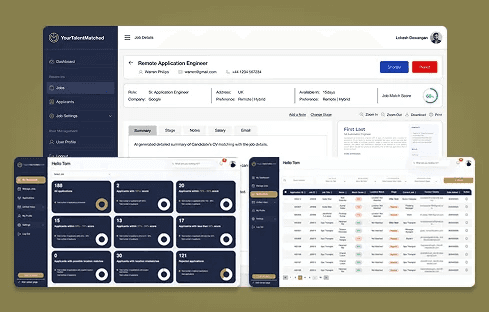
Talent Matched: an AI agent that reaches data only through MCP
Tallie, an AI agent, works across a multi-tenant ATS and the TM Discover search engine. It reads and acts on recruiter data only through MCP servers hosted by each product, and each customer's data stays in its own isolated schema.
Ranking and shortlisting time, per the client
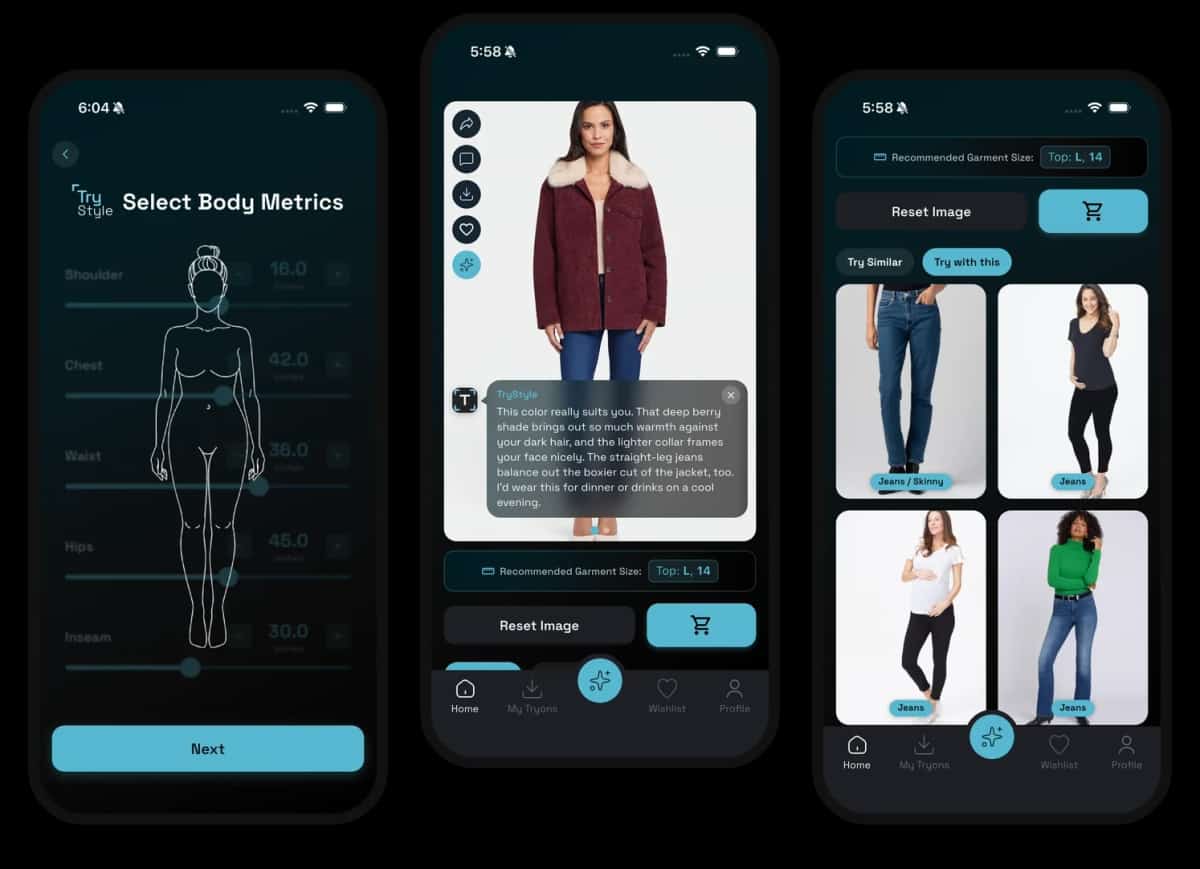
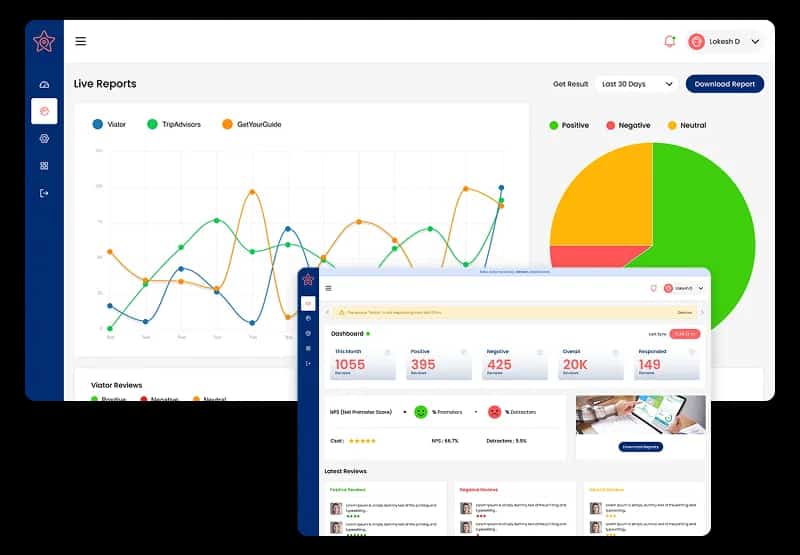
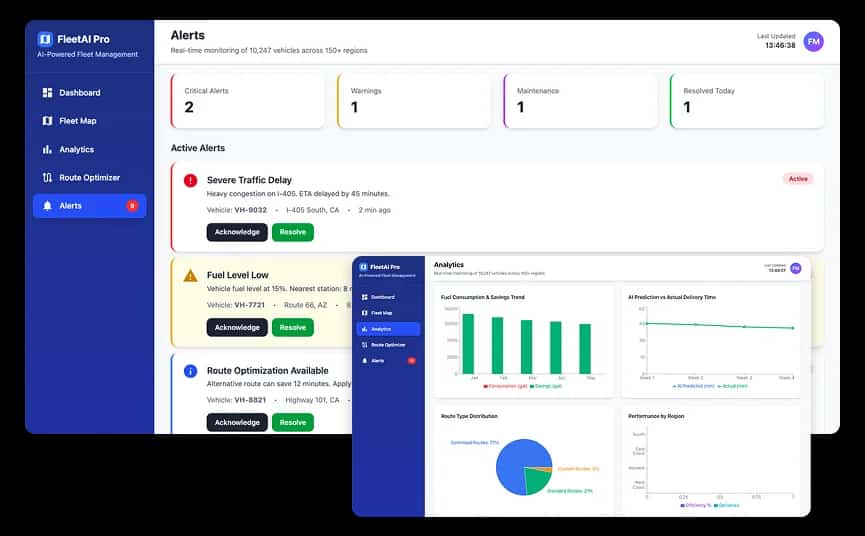
How we build an MCP server
A first MCP server for one use case takes 3 to 4 weeks as a proof of concept. A production rollout across several systems and AI clients is planned once that server passes your tests.

One team, 14 years of shipping
projects shipped since 2012
AI systems running in production
clients across 45+ countries
years building software, since 2012
Security for MCP servers
An MCP server gives a model a path into your systems, so access is designed before the first tool is written.
Per-user, per-tool permissions
The server checks the signed-in user's role on every call, so your existing access controls carry through to the AI.
Prompt injection defences
Content returned from documents and tickets is handled as data, write tools need approval, and tool descriptions are versioned and reviewed.
Redaction and data limits
Sensitive fields can be redacted before results reach the model, and query tools return capped, filtered rows.
Audit trail and compliance
Every tool call is logged in your cloud account with who asked, what ran and what came back. SOC 2, HIPAA or GDPR controls are written into the scope during discovery.
MCP SDKs, clients and platforms we work with
We build in the language your team maintains and host the server where your systems already run.
Where custom MCP servers fit by industry
MCP servers pay back where staff already use AI assistants and keep switching to internal systems for the data.
Financial services
- Account lookups for support
- Policy and procedure search
Healthcare
- Scheduling and referral lookups
- Internal guideline search
Retail and eCommerce
- Order and stock tools for support
- Catalogue edits with approval
Logistics
- Shipment tracking tools
- Carrier rate lookups
Manufacturing
- Maintenance history queries
- Parts and BOM lookups
SaaS platforms
- A public MCP server for your product
- Internal support tooling
Software teams
- Issue tracker tools for coding agents
- Internal API docs as resources
Professional services
- Document and matter search
- CRM updates from meeting notes
MCP server development cost
The discovery sprint is free and ends in a written proposal with a fixed quote. A proof of concept server for one use case starts at $4,999 and takes 3 to 4 weeks.

Discovery sprint
1 to 2 weeks and free, ending in a written proposal with a fixed quote. A tool inventory, a security model and a build plan.
Best for teams with several systems and no clear first use case.

Proof of concept, then build
A first MCP server from $4,999 in 3 to 4 weeks, tested with your AI clients. The production rollout is quoted after that.
Best for one team with a clear set of tools.

Dedicated AI engineers
AI engineers inside your process from $1,799 a month per engineer, building and maintaining servers as teams ask for new tools.
Best for a platform team running MCP across the company.
Rated 4.8/5 by the clients we build for
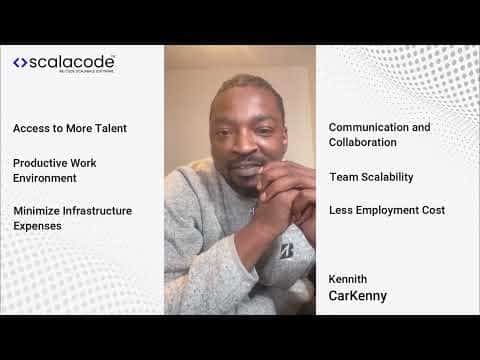
Verified reviews from Clutch and GoodFirms, and clients on camera.
33 verified reviews on Clutch
 Clutch review★★★★★
“What impressed us most was how quickly ScalaCode understood the operational challenges we were trying to solve.”
Clutch review★★★★★“What sets ScalaCode apart is their technical AI expertise and an understanding of a client's organizational ethos.”
 GoodFirms review★★★★★
“They built a high-performance, AI-powered platform that transformed video engagement for learning.”
Clutch review★★★★★“What stood out to us as most impressive and unique about ScalaCode was their ability to humanize complex AI.”
Clutch review★★★★★“They managed to balance technical skill with an understanding of the marketing world.”
Clutch review★★★★★“Their team often proposed innovative features we hadn't considered.”
Clutch review★★★★★“They didn't just build an algorithm; they built a tool that respects the nuances of Indigenous reconciliation.”
MCP server development FAQs
We will answer anything not covered here on the call.
What is the Model Context Protocol used for?
The Model Context Protocol is used to connect AI assistants and agents to tools and data, such as a CRM, a database or a ticketing system, through one standard interface. A tool built once as an MCP server works with every compatible client, which saves rewriting the integration for each assistant.
Which AI clients can use our MCP server?
Claude Desktop, Claude Code, ChatGPT, Cursor and VS Code can connect to MCP servers, and so can agents built with the OpenAI, Anthropic and LangGraph frameworks. Support for remote servers and sign-in differs between clients, so we test the server with the clients your team uses during the proof of concept. The enterprise copilots we build connect to MCP servers too.
How do you control what the AI can do through MCP?
Each tool exposes one action with validated inputs, and the server checks the signed-in user's role on every call. Write actions such as sending, updating or deleting wait for a person to approve them, and every call is logged with who asked and what ran.
Can an MCP server connect to our internal databases?
Yes. We build query tools over Postgres, SQL Server, MySQL, Snowflake or BigQuery that run against approved views through a read-only account, with row limits and logging. Sensitive columns can be redacted before results reach the model.
How long does it take to build an MCP server?
A proof of concept server for one use case takes 3 to 4 weeks, including tests with your AI clients. The schedule for a production rollout with OAuth, audit logging and several connected systems is set after that, and AI coding agents help our engineers build it faster.
How much does MCP server development cost?
A proof of concept server starts at $4,999. The discovery sprint is free, and a dedicated AI engineer starts at $1,799 a month. The production build is quoted after discovery, because the number of systems and the security model set the final figure.
Should we build an MCP server or use function calling?
Use function calling when one application owns a few tools. Build an MCP server when several assistants, agents or teams need the same tools, because permissions, logging and tests then live in one place.
Can you build an MCP server for our own SaaS product?
Yes. A public MCP server lets your customers connect their AI assistants to your product, with OAuth sign-in and scopes per account. We design the tool list around the tasks your customers ask for most.
Who owns the MCP server code?
You do. The code, tool definitions and test sets are yours from the first commit, NDAs are standard, and we work in your GitHub or GitLab and your cloud accounts.
One team, matched to your working hours
We schedule 4 to 6 hours of daily overlap with US time and a full working day with the UK and Europe, so reviews, demos and fixes happen during your working hours.
They built a high-performance, AI-powered platform that transformed video engagement for learning.
Find out what your first MCP server should expose
- 30 minutes with the ScalaCode team
- Which tools and data to expose first, and which actions need approval
- What a first server costs and how long it takes
“What sets ScalaCode apart is their technical AI expertise and an understanding of a client's organizational ethos.”
Laurence Longet, Director, MGEN (Clutch review)