
DevOps consulting and cloud services that keep production running
Our DevOps consulting services cover CI/CD pipelines, infrastructure as code, Kubernetes and migrations to AWS, Azure or GCP, with cost sprints after cutover. Every phase ships with a runbook, a rollback plan and validation you can check.


ISO 9001:2015 certified delivery
Clutch 4.8/5 from 33 verified reviews

projects shipped since 2012
Trusted by teams at







Clutch 4.8/533 verified client reviews
GoodFirmsReviewed software partner
ISO 9001:2015Certified delivery process
GDPR compliantData handled under EU rules
What DevOps consulting and cloud work covers
The work covers the move itself, then the cost control and release process that keep it running.
- What are DevOps consulting services?
- DevOps consulting services help engineering teams release software often without breaking production. The work covers CI/CD pipelines, infrastructure as code, containers and Kubernetes, observability, security controls and cloud cost management, and often a migration of applications and data to AWS, Azure or Google Cloud.
Four ways cloud migrations go wrong
We see these on rescue projects again and again. Each one is designed out before the first workload moves.
The timeline was compressed and validation was skipped
This is the most common reason migrations fail. Validation is a deliverable in every phase, with parallel runs before cutover.
Lift-and-shift was treated as the finish line
Moving VMs as they are often costs more than the data centre did. We plan the cloud-native refactor in slices, so each component ships on its own.
The rollback plan was never tested
An untested rollback plan tends to fail during the incident it was written for. Rollback procedures are rehearsed on staging before they are ever needed.
Monitoring arrived after the outage
Without baselines nobody can tell if the new setup is slower. Dashboards and alerts go live before cutover, so the new setup has a baseline to compare against.
DevOps consulting, CI/CD and cloud services we deliver
From the first assessment to the cost sprint after cutover.
Migration roadmaps
A written plan that splits the work into shippable phases, each with its own runbook, rollback plan and validation criteria.
Infrastructure as code
We write infrastructure in Terraform, Pulumi, CloudFormation or Bicep. It is modular, peer-reviewed and version-controlled, so your team can extend it after we leave.
Near-zero downtime database moves
We migrate PostgreSQL, MySQL, MongoDB, Oracle and SQL Server, using change data capture for online cutover and dual writes across engines.
CI/CD pipelines
Automated build, test and deploy with blue-green releases, so releasing becomes a routine step in the pipeline.
Managed DevOps
We manage your environments and handle incidents, with an on-call rotation if it is in scope.
Cloud cost optimization
FinOps sprints target idle databases, oversized compute, unused reservations and cross-zone data transfer, then leave dashboards and alerts behind.
Not sure where to start?
Send us your current architecture diagram, or a list of servers. We will tell you which workloads to move first and which to leave alone.
Cloud migration services: the four migrations we run most
The path depends on where you start, how much downtime you can take and what you want to stop paying for.
On-premises to cloud
First-time migrations from your own data centre, co-located hardware or ageing managed hosting.
Cloud to cloud
Teams consolidate a multi-cloud footprint, switch providers for cost or lock-in reasons, or merge estates after an acquisition.
Lift-and-shift to cloud-native
For teams that moved VMs as they were and now pay for it. Refactors run one workload group at a time.
Online database migration
Change data capture keeps source and target in sync, so the cutover window is measured in minutes.
Security is part of the cloud migration plan
For regulated environments, security onboarding can take 2 to 4 weeks. We build that time into the plan up front.
Identity and access
IAM roles and least-privilege policies are defined in code and reviewed like any other change.
Network security
VPCs, security groups and NACLs designed before the first workload moves.
Encryption
At rest and in transit, with keys in KMS or Key Vault on accounts you control.
Logging and audit
Audit trails feed your existing SIEM and SOC tooling.
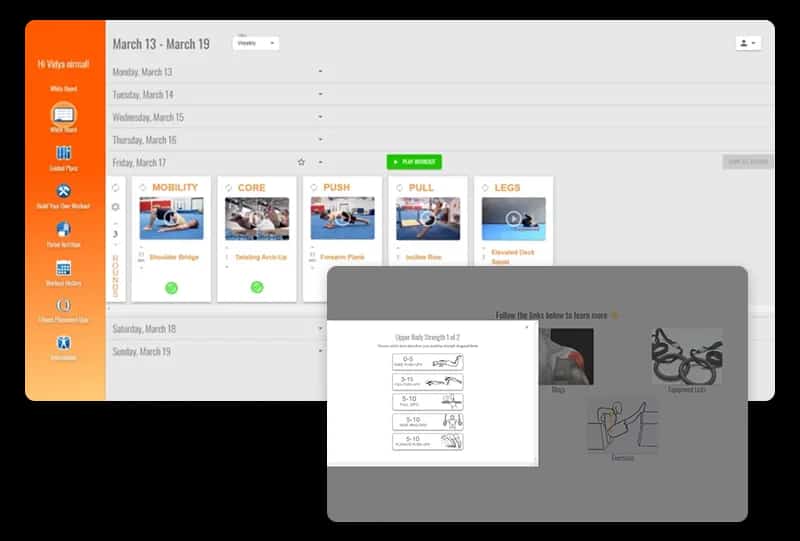
GymFit: a personalised fitness platform on AWS microservices
ScalaCode built GymFit, a web-based fitness and sports platform on AWS microservices. Users get exercise recommendations with video tutorials, diet plans matched to their metrics and goals, and calendar reminders, with premium tools on a subscription.
microservice hosting

How a cloud migration runs, phase by phase
Engineers join your standups, work in your repositories and follow your change management process.
Kubernetes and platform engineering stack
We work in the cloud you already run. If you have not chosen one, we pick on your workloads and team skills.
Where teams usually call us
First cloud migration
- Own data centre or co-location
- Limited cloud skills in-house
Cloud to cloud
- Provider switch for cost or lock-in
- Post-acquisition consolidation
Cost has outgrown usage
- FinOps dashboards and alerts
- Tagging and chargeback
Database modernisation
- Oracle and SQL Server to managed
- Zero-downtime cutover
Cloud migration cost and engagement models
A cloud migration starts from $4,999 and covers assessment, migration plan and cutover. Dedicated DevOps engineers start from $1,799 a month, full-time.

Project-based
Scope, timeline and milestone payments are agreed up front. We own delivery from discovery to launch.
Best for a migration assessment or a single workload move.

Dedicated team
Engineers who work only on your product, inside your process and tools.
Best for ongoing platform and DevOps work.
Hire .NET and Azure developers
Time and materials
Pay for the hours used, with a monthly cap, while the scope is still moving.
Best for audits, integrations and short performance sprints.
Rated 4.8/5 by the clients we build for
Verified reviews from Clutch and GoodFirms, and clients on camera.
33 verified reviews on Clutch
 Clutch review★★★★★
“What set ScalaCode apart was their deep understanding of both the technical and practical aspects of our industry.”
 GoodFirms review★★★★★
“Their team demonstrated deep knowledge in cloud security, automation, and performance optimization, allowing us to handle vast amounts of financial data efficiently.”
“Their approach, dedication and project execution played a critical role in TipStars' success.”
Clutch review★★★★★“What sets ScalaCode apart is their technical AI expertise and an understanding of a client's organizational ethos.”
Clutch review★★★★★“They understood the business side of our requirements and often brought up solutions or ideas we hadn't considered.”
GoodFirms review★★★★★“They built a high-performance, AI-powered platform that transformed video engagement for learning.”
Clutch review★★★★★“What stood out to us as most impressive and unique about ScalaCode was their ability to humanize complex AI.”
DevOps consulting FAQs
Ask anything not covered here on the call.
How much does a cloud migration cost?
A cloud migration starts from $4,999 and covers assessment, migration plan and cutover. Larger estates are scoped in a free discovery sprint. Dedicated engineers start from $1,799 a month, full-time.
How long does a cloud migration take?
A defined estate gets a written migration schedule from a short assessment. Larger estates start with a 2 to 4 week assessment and roadmap, then migrate in two-week phases, and cloud-native refactors move one workload group at a time, each planned in the assessment. Regulated environments can add 2 to 4 weeks of security onboarding.
Which cloud provider should we choose?
Start with the cloud your team already knows and your customer contracts allow. AWS has the widest range of managed services, Azure fits Microsoft-heavy estates with Active Directory and SQL Server, and Google Cloud suits data and Kubernetes-heavy workloads. If you have not chosen one, we pick on your workloads and team skills. Where data must stay in one country, as in government and public sector work, the in-country regions decide the shortlist.
Can you reduce our cloud bill?
Yes. A FinOps sprint targets idle databases, oversized compute, unused reservations and cross-zone data transfer. After a migration it runs 30 to 60 days after cutover, once usage is stable enough to size against, and we leave dashboards and alerts in place so spend stays visible.
Do you offer 24/7 support and on-call?
Yes, when it is scoped into a managed DevOps engagement. That covers environment management, incident handling and an on-call rotation that uses whichever alerting and incident tools your contract names. Escalation paths and response times are agreed in writing before go-live.
Can you work with our existing team and tools?
Yes. We work in your repositories, use your CI/CD pipelines, follow your change management process and join your on-call rotation if scoped. Our engineers sit in your standups from the first sprint.
Can you migrate without taking production down?
Yes, for most workloads. Change data capture handles online database moves, blue-green deployment handles applications, and we validate with parallel runs before cutover. Cutover windows typically last minutes.
Do we own the infrastructure code and runbooks?
Yes, from day one. Terraform modules, runbooks, architecture diagrams, IAM policies, network configuration and any custom tooling belong to your team.
Will you train our team?
Yes. Architecture walkthroughs, IaC code reviews with your engineers, runbook drills and a 30-day question window after handoff.
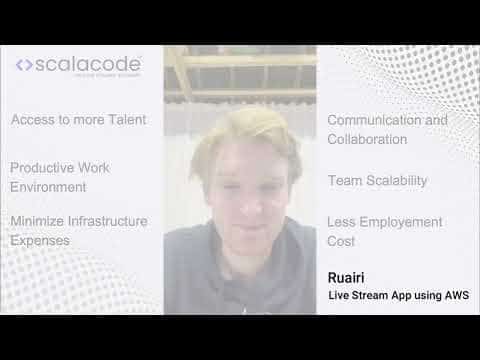
 Watch Ruairi's review
Rally Sports: a live-stream app on AWS
Know which workloads to move first, in 30 minutes
- A free 30-minute call
- A view on lift-and-shift or refactor for your stack
- What is realistic, what it costs and how long it takes