
AI in healthcare for clinical documentation, patient intake and coding support
ScalaCode builds healthcare AI that drafts clinical notes, runs patient intake and triage assistants, suggests billing codes and reads scanned documents, with a clinician or coder approving every output before it reaches the record.
AI systems running in production
building software since 2012
projects shipped since 2012
clients in 45+ countries
on Clutch, from 33 verified reviews
9001:2015 certified delivery process
Healthcare and life-science teams we have worked with



What AI in healthcare covers
Models that read, sort, summarise and draft inside clinical and administrative workflows, with staff signing off.
- What is AI in healthcare?
- AI in healthcare is the use of machine learning and language models inside clinical and administrative workflows to draft documentation, sort patient requests, suggest billing codes and extract data from records and images. These systems handle protected health information, so access control, audit logging and clinician review are part of the design from the start.
Four reasons healthcare AI pilots never reach clinicians
The pilot ran on clean sample data
Day-to-day clinic notes carry abbreviations, copy-forward text and scanned faxes, and accuracy drops once the model sees them. We test on a de-identified sample of your own records during discovery, before anyone commits to a build.
Security review blocks go-live
A model provider without a BAA, or logs that hold PHI with open access, stops the project at the compliance gate. HIPAA controls are written into scope in discovery, and model hosting is chosen to fit them.
Clinicians recheck everything
A draft with no link to its source means the clinician reviews it line by line, and the time saving disappears. Every AI draft links back to the transcript line, record or page it came from.
Nobody owns accuracy after launch
Templates, payer rules and coding guidance change, and output quality drifts without anyone noticing. Evaluation sets and monitoring show drift on a dashboard, and we re-test when your rules change.
Healthcare AI development for clinical and administrative work
Examples of where AI fits in a provider or health tech product. In each one a person makes the final decision.
Clinical documentation
We turn visit audio or dictation into a draft note in your template. Each line links to the transcript, and the clinician edits and signs.
Patient intake assistants
Web, app or SMS intake that collects symptoms, history and insurance details before the visit and writes them to the EHR as structured fields.
See AI chatbot developmentTriage and message routing
Patient messages and intake answers sorted by urgency against your own protocols. Anything matching a red-flag rule goes straight to a nurse.
Coding support
We suggest ICD-10 and CPT codes from the signed note and highlight the supporting text, for your coders to accept or change.
Document and imaging AI
Referral letters, faxes, insurance cards and lab reports read and filed, and imaging worklists sorted for radiologist review. Account numbers, signatures and marked fields can be masked before a hosted model sees the page.
See multimodal AI developmentProtocol and policy lookup
Staff ask questions of your protocols, formularies and payer policies, and a RAG assistant answers with the source paragraph cited.
See RAG developmentHave a clinical or admin workflow in mind for AI?
Bring the workflow, the systems it touches and a few sample documents. We will tell you what a pilot would take and what it would cost.
How we keep clinicians in control of medical AI software
Clinical and billing staff answer for what goes into a record or a claim, so these four patterns go into every healthcare AI system we build.
Draft, review, sign
The model produces a draft only. Nothing reaches the chart, the claim or the patient until a named clinician or coder approves it.
A source link on every suggestion
Each sentence of a note and each suggested code points to the transcript line or record it came from, so the reviewer checks the evidence in place.
Less PHI in each model call
Identifiers are masked where the use case allows, and the model runs under a BAA with its provider or as an open-weight model in your cloud account.
Shadow run before go-live
A new model runs beside current practice first. Its output is logged and compared with what staff did before anyone sees it in the workflow.
HIPAA controls for AI in healthcare
HIPAA controls are written into scope during discovery, and ScalaCode signs a business associate agreement (BAA) before our team handles protected health information.
BAA coverage
ScalaCode signs a BAA, and model hosting is chosen so a BAA covers the model provider too, or the model runs inside your own account.
A log of every AI request
Each request is recorded with the user, the model version and the output, so any draft or suggestion can be traced later.
Human sign-off
AI output stays advisory. Clinicians and coders accept, edit or reject each suggestion, and their edits feed the evaluation set.
ISO 9001:2015
Certified delivery process, with automated tests on every change and a staging release before production.

How a healthcare AI project runs, from data review to go-live
A proof of concept on your de-identified data takes 3 to 4 weeks. The production rollout inside your EHR is planned once it passes, around your integration and review steps.
Healthcare software and AI products we have shipped
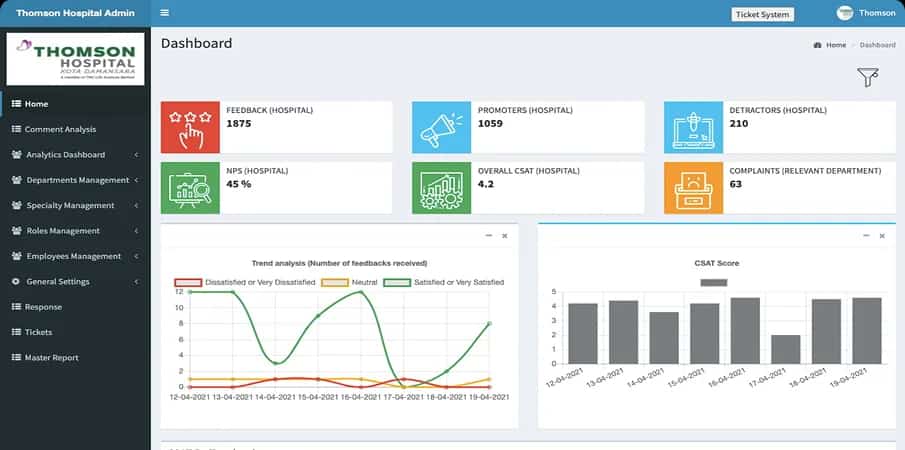
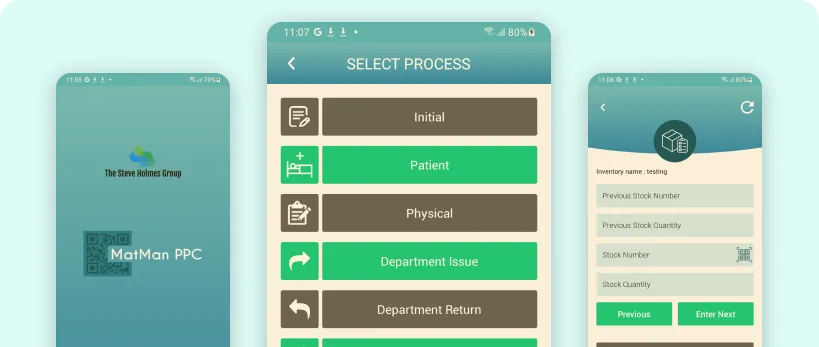
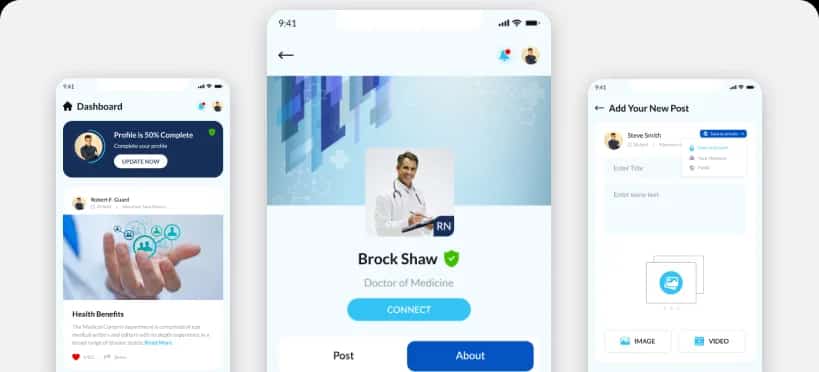
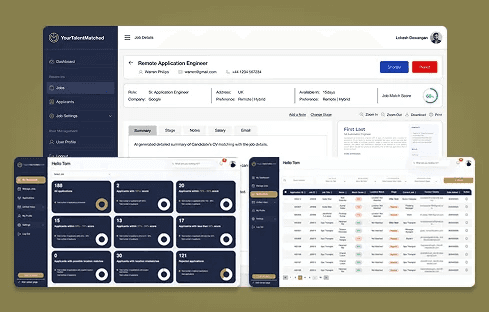
ScalaCode has not yet published a healthcare AI case study. Thomson Hospital, SHG Group and NAMES are healthcare software we built. Talent Matched is an AI product from recruitment that shows how we run language models in production.

One team, 14 years of shipping
projects shipped since 2012
AI systems running in production
clients across 45+ countries
years building software, since 2012
Rated 4.8/5 by the clients we build for
Verified reviews from Clutch and GoodFirms, and clients on camera.

33 verified reviews on Clutch
 Clutch review★★★★★
“What sets ScalaCode apart is their technical AI expertise and an understanding of a client's organizational ethos.”
 GoodFirms review★★★★★
“They built a high-performance, AI-powered platform that transformed video engagement for learning.”
Clutch review★★★★★“What stood out to us as most impressive and unique about ScalaCode was their ability to humanize complex AI.”
“In our project, we need flexibility, and ScalaCode offers that consistently.”
“I am the CEO of NAMEs, which is a healthcare application. And to be honest, I would have never achieved that without ScalaCode and their team of developers.”
 Trustpilot review★★★★★
“The application was basically built from scratch, and was complicated, as the software was to be integrated with a certain Medical EHR software.”
Clutch review★★★★★“They managed to balance technical skill with an understanding of the marketing world.”
AI in healthcare FAQs
We will answer any other question on the call.
How much does healthcare AI development cost?
The discovery sprint is free and ends in a written proposal with a fixed quote. A proof of concept on your de-identified data starts at $4,999, and dedicated engineers start at $1,799 a month. The production build is quoted after discovery, once integrations and compliance scope are known.
Is AI in healthcare HIPAA compliant?
AI can run within HIPAA when every vendor that touches PHI signs a BAA and the system enforces access control, audit logging and minimum necessary use. ScalaCode signs a BAA, writes HIPAA controls into scope during discovery and runs models under a BAA with the provider or inside your own cloud account. Your compliance team reviews the safeguards before go-live.
Can AI write clinical notes accurately?
Accuracy depends on the specialty, the audio quality and your note templates, so we measure it on your own visits during the proof of concept. Each draft links to the transcript, and the clinician edits and signs every note before it is filed.
How do you stop AI from making things up in a patient record?
The model writes only from the transcript, record or document in front of it, and each sentence carries a link to its source. Statements without a source are flagged for the reviewer, and the evaluation set includes cases built to catch invented findings. A clinician signs before anything enters the chart.
Can it work with Epic, Cerner or our EHR?
Yes. We connect through FHIR APIs and HL7 v2 interfaces, so drafts, codes and intake answers land in the record as structured fields. Access to each vendor's API program is arranged with your IT team at the start of the project.
Does AI replace our coders or triage nurses?
No. Coding support suggests codes with the supporting text highlighted, and coders accept or change them. Triage support sorts requests by your protocols and sends urgent cases to a nurse. Both shorten the queue for the staff you already have.
Which AI models do you use with patient data?
We use hosted models from providers that sign a BAA, or open-weight models in your cloud account when data must stay inside it. The choice is made per use case during discovery, based on accuracy on your evaluation set, cost per request and your compliance rules.
Do you have healthcare AI case studies?
Not published yet. Our published healthcare work covers a patient survey platform for Thomson Hospital, a MEDITECH handheld migration for SHG Group and the NAMES clinician app. Our AI case studies, such as Talent Matched and Planwise, come from recruitment and construction and show the evaluation, review screens and monitoring we bring to a clinical project.
They understood the business side of our requirements and often brought up solutions or ideas we hadn't considered.
Scope your healthcare AI project in 30 minutes
- Which workflow is ready for AI today, and which needs data work first
- HIPAA scope, EHR integration and timeline covered up front
- Free, with no obligation to build with us