
MVP development services that get a first version in front of users
ScalaCode is an MVP development company for founders and product teams who need a working first version in users' hands within weeks. We scope one core workflow in a fixed discovery sprint, then build it in 6 to 8 weeks on a stack the full product can grow on.


500+ projects shipped since 2012
Clutch 4.8/5 from 33 verified reviews

projects shipped since 2012
Trusted by teams at







Clutch 4.8/533 verified client reviews
GoodFirmsReviewed software partner
ISO 9001:2015Certified delivery process
GDPR compliantData handled under EU rules
What MVP development means
An MVP answers one question about your product with the least code that can answer it.
- What is MVP development?
- MVP development is the design and engineering of a minimum viable product, the smallest working version of a product that early users can sign up for and use. It is built around one core workflow, so a founder or product team learns whether people adopt the idea before funding the full build.
Related: custom software development, SaaS development and mobile app development.
MVP software development we build
Six kinds of first version, each scoped to the one workflow it has to prove.
Web app MVPs
We build sign-up, payments and the core workflow as a responsive web app in React and Node.js, so version two extends the same code.
Mobile app MVPs
One cross-platform app for iOS and Android in React Native or Flutter, with app store submission handled for you.
See mobile app developmentSaaS MVPs
A first B2B SaaS release with accounts, roles and subscription billing, structured so multi-tenancy can grow with your customer list.
See SaaS developmentMarketplace MVPs
Two-sided products with listings, search, booking or checkout and payouts. We agree the scope boundary early, because marketplaces collect edge cases fast.
AI MVPs
Products where an AI feature carries the value. An AI proof of concept on your own data, from $4,999 in 3 to 4 weeks, tests accuracy before the MVP is built around it.
Internal tool MVPs
Corporate innovation and product teams get a first version of an operations tool or portal, tested with one department before a wider rollout.
See custom software developmentNot sure what belongs in version one?
Bring your feature list. We will mark the workflow that tests your idea and the features that can wait for version two.
What we usually hold back for version two
Every feature in version one costs build time and slows the learning. These are the requests we most often move to version two, and what we build in their place.
Full admin dashboards
Founders often ask for complete reporting and role management on day one. The MVP gets the admin screens needed to onboard and support the first users.
Native apps alongside the web app
Building web and native mobile in parallel roughly doubles the work before anyone has used the product. We launch on the platform your users already reach for, and add the second one once usage proves it.
Per-customer customisation
Custom code for the first paying customer becomes the hardest code to maintain later. We build settings that cover the request for every customer, or hold it until a second customer asks.
Compliance certification
SOC 2 or HIPAA audits make sense once the product has customers who require them. Audit logs, encryption and access control go into the MVP so a later audit needs no rebuild.
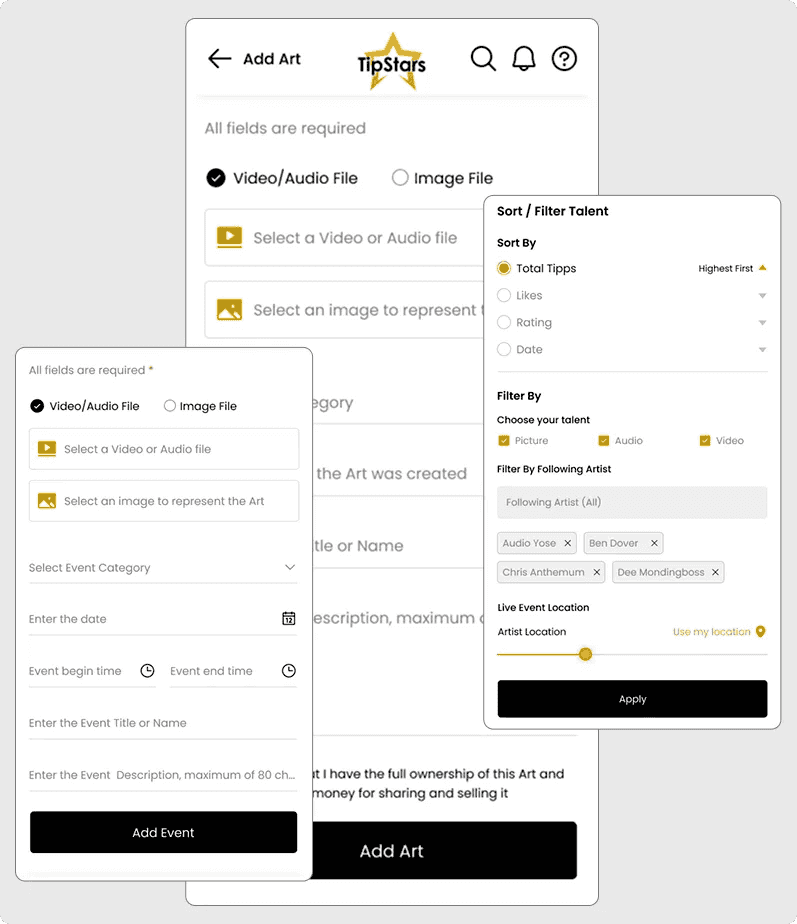
TipStars: a mobile app where fans discover and tip artists
Built for founder James Ellis. Native Kotlin and Swift clients on one Laravel API, with payments across cards and bank accounts in multiple currencies, live updates for tips, likes and follows, and event promotion for artists.
Fans tip and follow artists, artists grow a paying audience
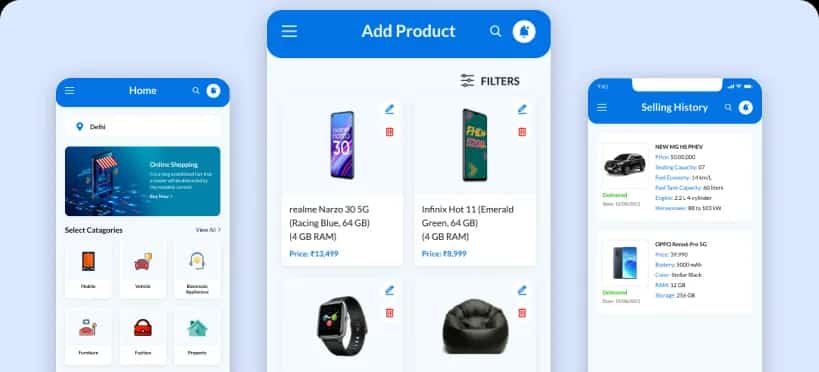
More products we shipped
All case studies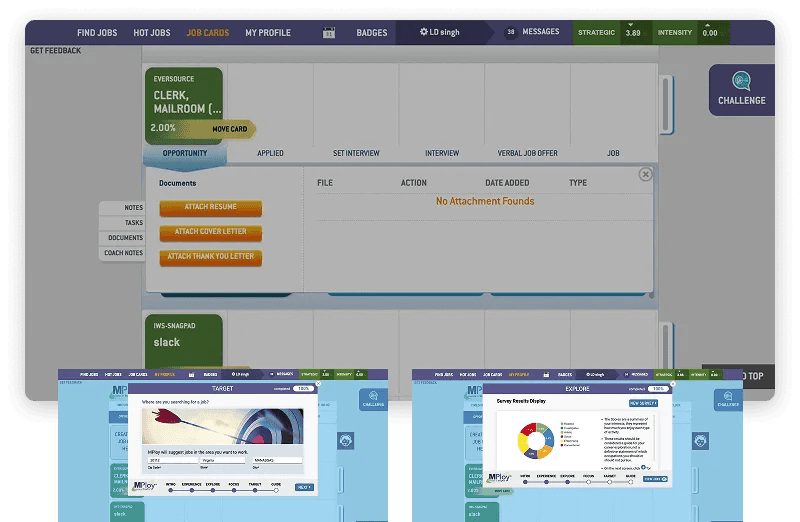
How we build an MVP in 6 to 8 weeks
A fixed discovery sprint sets the scope, then two-week sprints take one platform and the core workflow to launch.
The stack we build MVPs on
Mainstream tools that any engineer you hire later already knows.
Startup MVP development for founders and product teams
Pre-seed and seed founders
We ship a first version that shows traction before the next round.
Bootstrapped founders
We hold a tight scope that reaches paying users on a fixed budget.
Corporate innovation teams
You test a new product line outside the main roadmap, such as a real estate portal or a travel booking app.
Product teams
You test a new module or spin-off with a group of existing customers before it joins the main product.
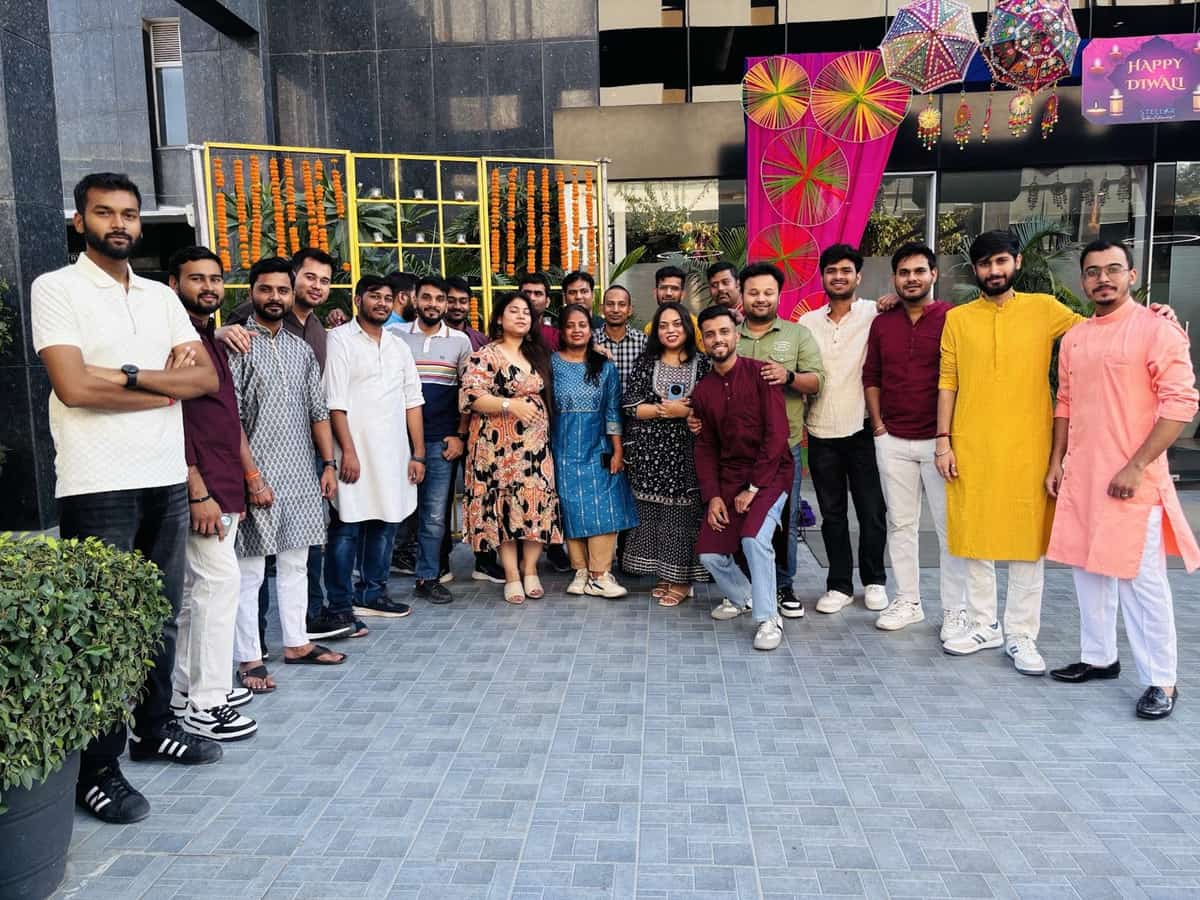
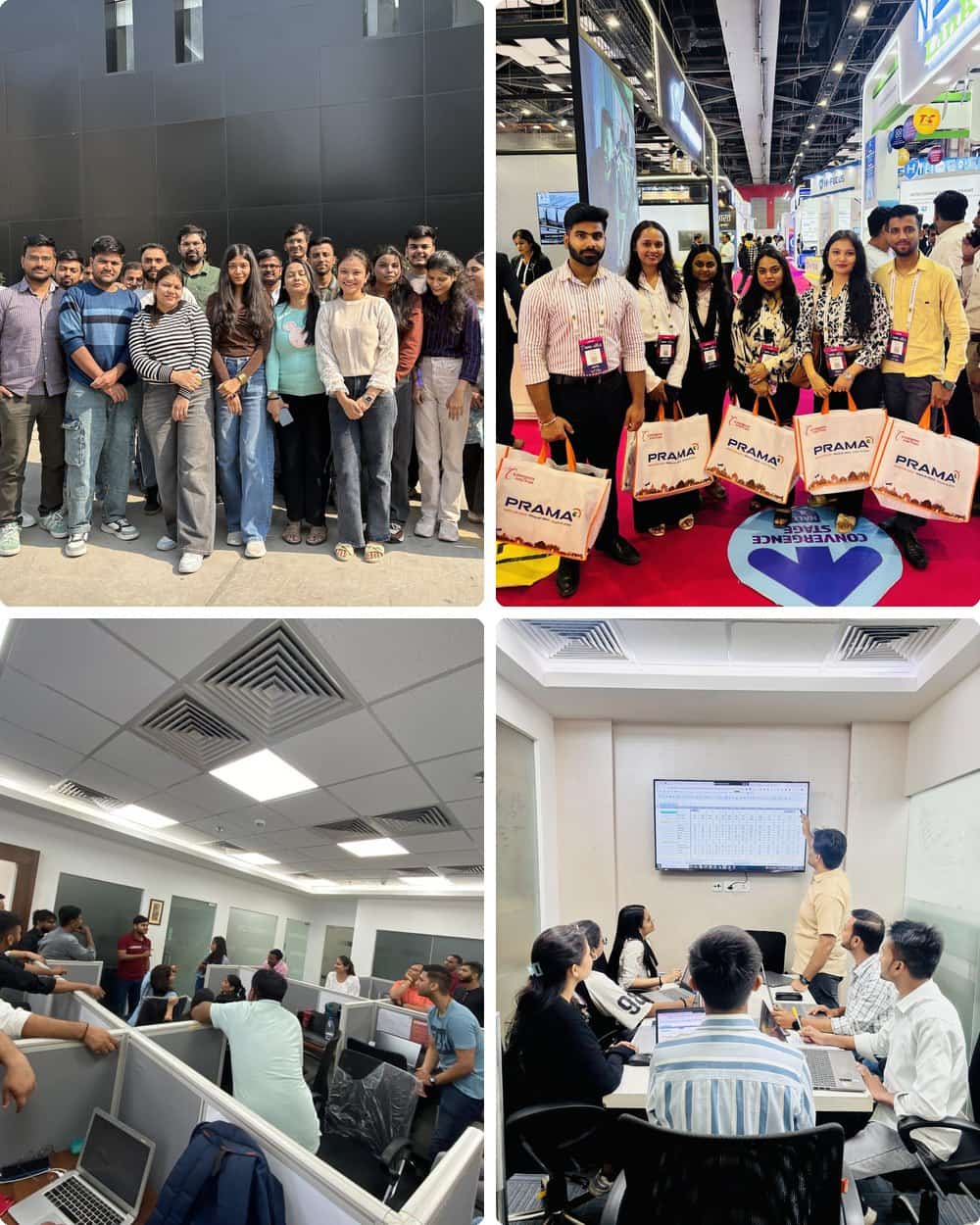
One team, 14 years of shipping
projects shipped since 2012
AI systems running in production
clients across 45+ countries
years building software, since 2012
MVP development cost
An MVP starts from $9,999 and takes 6 to 8 weeks for one platform and the core workflow. Every fixed quote follows a free discovery sprint.

Fixed-price MVP
Scope, timeline and price agreed after discovery. We own delivery from the first sprint to launch.
Best for a defined version one with a launch date.

Dedicated team
Engineers who work only on your product after launch, from $1,799 a month, full-time.
Best for version two and the roadmap after it.

Time and materials
Pay for the hours used while the scope is still moving.
Best for prototypes and ideas still being shaped.
Rated 4.8/5 by the clients we build for
Verified reviews from Clutch and GoodFirms, and clients on camera.
33 verified reviews on Clutch

 Clutch review★★★★★
“Instead of giving us a standard off-the-shelf solution, they tailored everything to Carology’s unique vision.”
“Their approach, dedication and project execution played a critical role in TipStars' success.”
“They led the team to develop the app I was looking for.”
Clutch review★★★★★“What impressed me most was that they didn't just blindly build whatever we wrote down in the initial scope.”
Clutch review★★★★★“They understood the business side of our requirements and often brought up solutions or ideas we hadn't considered.”
 GoodFirms review★★★★★
“Scalacode delivered a secure, scalable, and efficient platform exceeding our expectations.”
“In our project, we need flexibility, and ScalaCode offers that consistently.”
MVP development services FAQs
An MVP starts from $9,999 after a free discovery sprint. Ask anything not covered here on the call.
How much does MVP development cost?
An MVP starts from $9,999 for one platform and the core workflow. The fixed quote follows a free discovery sprint of 1 to 2 weeks. A second platform, complex payments or several third-party integrations raise the price, and discovery puts each one in writing.
How long does it take to build an MVP?
Most MVPs take 6 to 8 weeks to build after a discovery sprint of 1 to 2 weeks. That covers one platform and the core workflow. You see working software at the end of every two-week sprint.
What should go into an MVP?
An MVP needs the one workflow that shows whether users want the product, plus sign-up and the admin screens to support your first users. Analytics events go in from the start so the launch produces evidence. Full reporting, multi-language support and per-customer customisation usually wait for version two.
Can the MVP grow into the full product?
Yes. We build the MVP on the stack and data model the full product will use, with automated tests on every change and every release through staging before production. Version two extends the codebase you already own.
Do you build AI MVPs?
Yes. When the product depends on an AI feature, we usually start with an AI proof of concept on your own data, from $4,999 in 3 to 4 weeks. It shows whether the model is accurate enough before the MVP is built around it. ScalaCode has 50+ AI systems running in production.
Who owns the code?
You own the code and IP from the first commit, and NDAs are standard. We work in your GitHub or GitLab, your code review and your CI pipeline, so the code and its history stay in your accounts.
Can you take over an MVP another team started?
Yes, after a technical audit. We document the state of the code and the risks, then run a 3 to 4 week stabilisation sprint before adding features.
How involved do we need to be during the build?
Plan on a demo every two weeks and quick answers on scope questions. You see working software at the end of each sprint and get a written status every week. Our engineers keep 4 to 6 hours of overlap with US working hours.
They understood the business side of our requirements and often brought up solutions or ideas we hadn't considered.
Find out what your MVP needs in 30 minutes
- 30 minutes with the ScalaCode team
- The workflow to build first, and what can wait
- What is realistic, what it costs and how long it takes