
LLM development and fine-tuning built for production
ScalaCode is an LLM development company. We build for teams that need the model inside their own perimeter. We pick it, fine-tune it on your data, serve it and run a test suite against every change. Before go-live you'll know the cost per request, which is usually what finance asks about first.
AI systems running in production
clients served since 2012
shipping software since 2012
on Clutch, from 33 verified reviews
countries with live clients
9001:2015 certified delivery process
Trusted by teams at








Clutch 4.8/5Verified client reviews

GoodFirmsReviewed software partner
ISO 9001:2015Certified delivery process
GDPR compliantData handled under EU rules
- What is LLM development?
- LLM development is the engineering work that turns a large language model into a production system. It covers choosing the model, adapting it to your domain with prompts, retrieval or fine-tuning, serving it at the right latency and cost, and testing every change against a golden dataset before users see it.
Related: RAG development grounds the model in your documents. Agentic AI lets it act on your systems.
When LLM fine-tuning beats prompting and RAG
For most workloads, good prompts plus retrieval get you most of the way for a fraction of the engineering cost. Fine-tuning earns its place in three cases, and we will tell you if yours is one of them.
| Prompt + RAG | LoRA / QLoRA | Full fine-tune | Continued pre-training | |
|---|---|---|---|---|
| What changes | Instructions and retrieved context | Small adapter layers on a frozen base model | Every weight in the model | The base model, on your raw domain text |
| Pick it when | Knowledge changes or is private | You need a fixed voice or format, or a smaller, cheaper model | LoRA's lift is not enough and you have the data | You hold a very large, clean domain corpus |
| Where the time goes | Prompt design and retrieval quality | Data curation and evals | Training runs and evaluation, priced per model | Training on your raw corpus, then evaluation |
| Serving | Any hosted or open model | Many adapters on one GPU | One model per deployment | One model per deployment |
| Where it falls short | Breaks when vocabulary is far from the base model | Quality is bounded by your training data | High training and retraining cost | Highest cost, rarely the right first step |
When the model must act on your systems as well as answer, the work moves into agentic AI development.
LLM development services we offer
Model work, serving and operations sit with one team, so nothing is lost in a handoff.
Custom LLM fine-tuning
We adapt frontier and open models to legal, medical, financial or technical language. The same training can teach your brand voice and how your internal policies are applied.
Domain-specific pre-training
When retrieval alone cannot close the gap on your vocabulary, we continue pre-training an open base model on your own corpus before any fine-tuning.
Preference optimisation
We align a fine-tuned model to human judgement with DPO, RLHF or RLAIF. Teams use it where tone is regulated or a wrong output is costly.
LLM serving infrastructure
We serve models on vLLM, Triton with TensorRT-LLM, NVIDIA NIM or SGLang. Each setup is sized to your latency budget, throughput and cost ceiling.
Model selection and routing
A routing layer sends each request to the model that fits its complexity, sensitivity and cost. Routine, high-volume work can go to a small language model to keep unit cost down.
Evaluation suites
Golden datasets, automated metrics and CI regression gates ship with the production system, and we maintain them after launch. AI evaluation and observability covers this work in depth.
Prompt engineering frameworks
Prompts live in a versioned registry with structured JSON outputs and few-shot selection. A prompt change deploys only after it passes the eval suite.
LLM observability
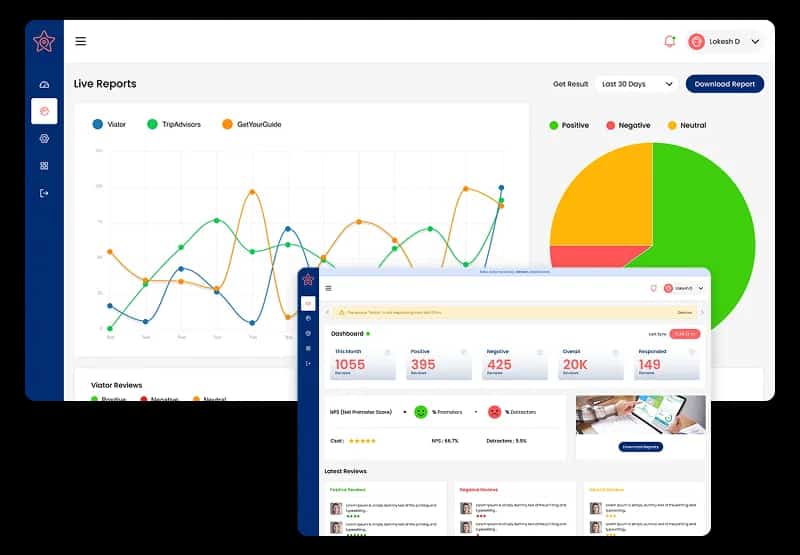
Every prompt, response, latency and cost is traced. Drift alerts and token budgets per tenant or workflow flag problems early.
On-premises and sovereign LLMs
Open models on your own servers or private cloud, including air-gapped setups, for data that cannot leave your perimeter.
Paying for a frontier model on every request?
Send us one workload, its prompt and its monthly volume. We will show where routing or a smaller fine-tuned model fits, and where it does not.
LLM engineering patterns we ship to production
Four patterns that decide cost and reliability more than the choice of model does.
Reasoning for planning, fast models for execution
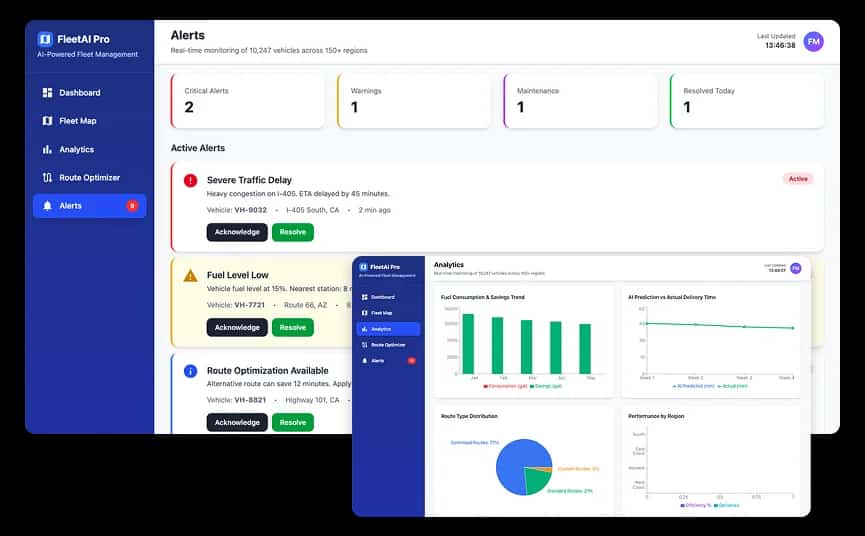
A reasoning model handles the hard planning step, and a fast, cheaper model handles tool calls and formatting, so reasoning costs apply only where they are needed.
Routing across models
A classifier picks the model per request, a frontier model for nuanced or regulated work and a fine-tuned open model for high-volume routine tasks.
Structured outputs everywhere
Every output that feeds a downstream system is constrained to a JSON schema and validated, which removes the malformed-response failure mode.
Multi-LoRA serving
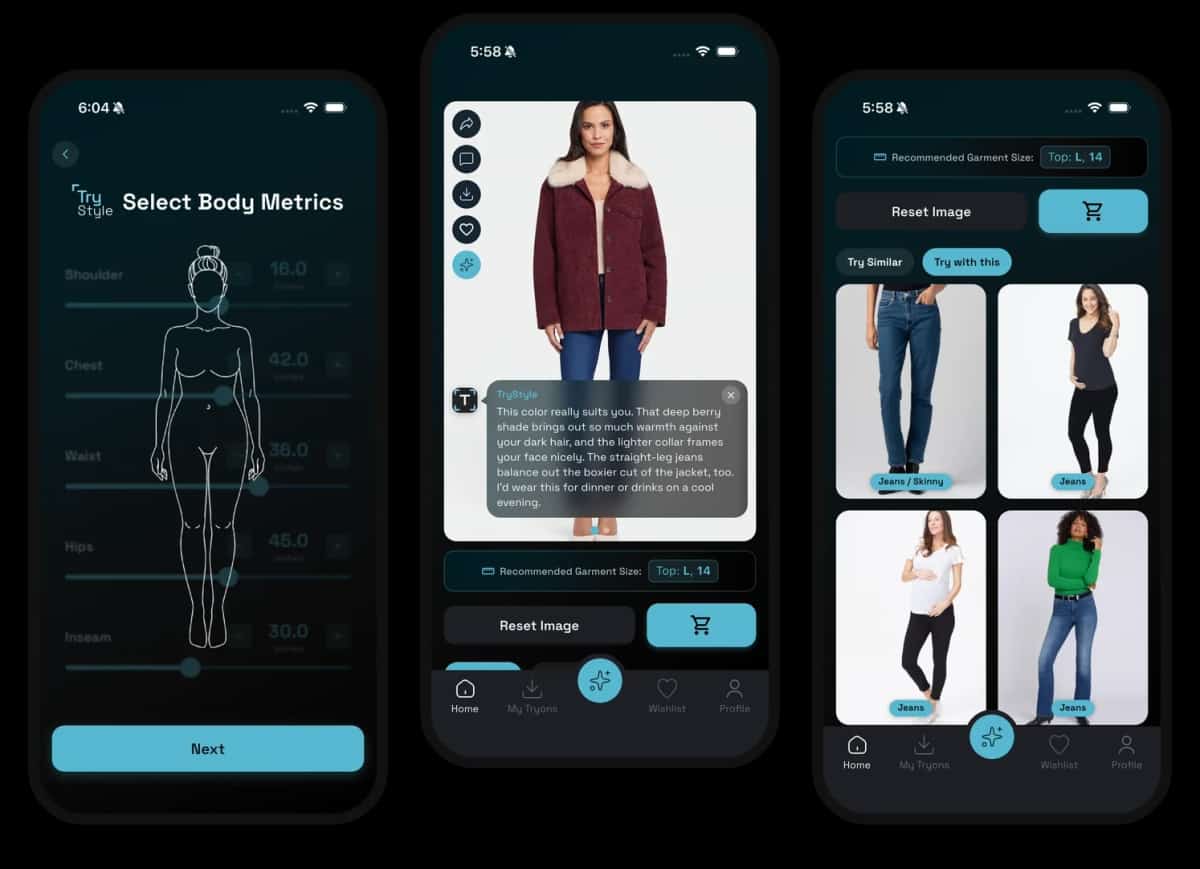
One base model serves many customer-specific adapters from the same GPU, so a multi-tenant SaaS gets per-tenant behaviour from one shared deployment.
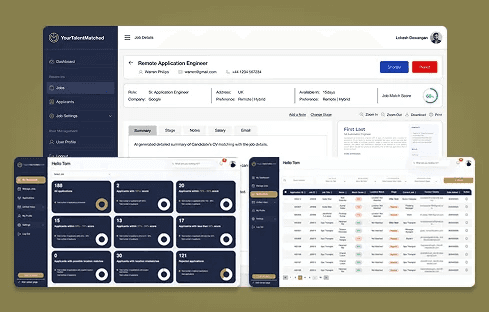
Talent Matched: a private LLM and voice screening for recruiters
Talent Matched needed candidate data kept away from third-party model APIs. We run an open-weight LLM and an embedding model for them on a dedicated GPU server, feed their AI agent from vector and graph retrieval, and score spoken screening answers. Recruiters get a ranked shortlist from a plain-English brief.
Ranking and shortlisting time, per the client
How we take an LLM to production
We set constraints, then benchmark on your data, and train a model only when prompts and RAG fall short.

One team, 14 years of shipping
projects shipped since 2012
AI systems running in production
clients across 45+ countries
years building software, since 2012
Guardrails on the way in and on the way out
Every production LLM we ship has defences against prompt injection, data leaks and unsafe output.
Prompt-injection defence
Input classifiers flag injection and jailbreak attempts before they reach the model.
PII redaction
Personal data is detected and masked in prompts and responses.
Audit logging
Every prompt, response and model version is logged for review.
Sandboxed tool calls
Code execution and sensitive APIs run with a limited blast radius.
Open-source and commercial models we deploy
Vendor-neutral by design. Business logic is decoupled from the model, so swapping models is a configuration change.
Where custom LLMs earn their cost
Domains with their own vocabulary, strict tone, or data that cannot leave the building.
Financial services
- KYC reasoning support
- Policy Q&A copilots
Healthcare
- Clinical documentation
- Prior-authorization drafts
Legal
- Contract clause extraction
- Regulatory change summaries
Retail and eCommerce
- Product descriptions at scale
- Review summaries
SaaS platforms
- Per-tenant fine-tunes
- In-app copilots
Media and publishing
- Editorial assistance
- Archive summaries
Developer tools
- Code review assistants
- Internal docs generators
Regulated and public sector
- On-premises deployment
- Air-gapped serving
LLM development cost
The discovery and architecture sprint is free. An LLM application or fine-tuning engagement starts at $14,999, with the schedule set in discovery.
Discovery and architecture sprint
Free, 1 to 2 weeks. We audit the workload, benchmark models on your data, make the fine-tune call and plan serving and cost, then send a written proposal with a fixed quote.
Best for teams that need a defensible plan first.

Dedicated LLM team
An LLM engineer, ML engineer, MLOps engineer and eval specialist work inside your process, from $1,799 a month per engineer.
Best for a model platform you will keep extending.

Fine-tuning engagement
From $14,999. We handle data curation, annotation, training, evaluation and deployment to production serving.
Best for a known workload that prompts and RAG cannot cover.
Rated 4.8/5 by the clients we build for
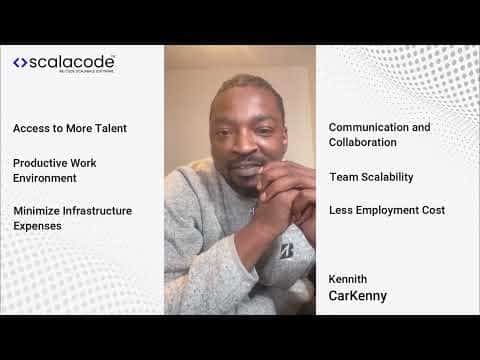
Verified reviews from Clutch and GoodFirms, and clients on camera.
33 verified reviews on Clutch
 Clutch review★★★★★
“What impressed me most was that they didn't just blindly build whatever we wrote down in the initial scope.”
Clutch review★★★★★“What sets ScalaCode apart is their technical AI expertise and an understanding of a client's organizational ethos.”
Clutch review★★★★★“What stood out to us as most impressive and unique about ScalaCode was their ability to humanize complex AI.”
Clutch review★★★★★“What I found impressive about ScalaCode was their ability to listen to the soul of an educational mission.”
 GoodFirms review★★★★★
“They built a high-performance, AI-powered platform that transformed video engagement for learning.”
Clutch review★★★★★“They managed to balance technical skill with an understanding of the marketing world.”
Clutch review★★★★★“Their team often proposed innovative features we hadn't considered.”
LLM development FAQs
We will answer anything not covered here on the call.
When should we fine-tune an LLM instead of using RAG?
Start with prompts and RAG, because fine-tuning adds data curation, training, evals and ongoing model maintenance. Fine-tune when you need a voice or format that prompts cannot hold, when a smaller tuned model must replace a large one for cost or latency, or when your vocabulary is far from the base model's training data. Knowledge that changes belongs in RAG either way.
Should we use an open-source or a commercial LLM?
Choose by workload and data constraints. Commercial frontier models give the strongest reasoning and tool use where your data can go to the cloud. Open models such as Llama, Qwen, Mistral and DeepSeek suit on-premises deployment, high volume, or a hard limit on unit cost, and most stacks we ship route across both.
How much does custom LLM development cost?
A free discovery sprint is the usual first step. An LLM application with prompt pipelines, RAG or fine-tuning and evals starts at $14,999. Model size, data quality and the evaluation rigour your use case needs set the final figure.
Can you host the model in our own cloud?
Yes. We deploy open models on your AWS, Azure or Google Cloud account or on your own servers with vLLM, Ollama, NVIDIA NIM or Triton, including air-gapped setups. Hybrid setups are common, with sensitive steps in your environment and non-sensitive steps on a hosted frontier model through AWS Bedrock or Azure OpenAI. Our MLOps engineers can also join your team to run it after launch.
How do you evaluate an LLM before launch?
Every model clears an eval suite before launch, a set of golden test cases, automated metrics and pass thresholds built from your own data. The same suite gates every later prompt change, fine-tune or model swap in CI. New models then ship behind flags to a small share of traffic and are compared on quality, cost and latency before promotion.
How do you reduce LLM inference costs?
We route each request to the cheapest model that handles it, split reasoning from execution, and constrain outputs to a schema so malformed responses stop triggering retries. Multi-LoRA serving and speculative decoding cut GPU cost on self-hosted models. We design for cost from the first sprint, because retrofitting it is expensive.
What is the difference between LoRA, QLoRA and full fine-tuning?
LoRA trains small adapter layers on a frozen base model, so it is fast, cheap, and many adapters can share one GPU. QLoRA loads the base model in 4-bit precision so larger models fit on smaller hardware. Full fine-tuning updates every weight, gives the biggest lift and costs far more.
How long does it take to ship a production LLM system?
The schedule is fixed in writing after the discovery sprint. A prompt and RAG application is the quickest to ship, a LoRA or QLoRA fine-tune spends most of its time on data and evals, and a full LLM platform with routing, a fine-tuning pipeline and observability takes the longest. Our engineers build with AI coding agents, which shortens each of these.
One team, matched to your working hours
We schedule 4 to 6 hours of daily overlap with US time and a full working day with the UK and Europe, so reviews, demos and fixes happen during your working hours.
They built a high-performance, AI-powered platform that transformed video engagement for learning.
The right model for your workload, at a cost you can defend
- 30 minutes with the ScalaCode team
- A clear recommendation on whether you need fine-tuning
- What is realistic, what it costs and how long it takes
“What sets ScalaCode apart is their technical AI expertise and an understanding of a client's organizational ethos.”
Laurence Longet, Director, MGEN (Clutch review)