
AI development services, from use case to production
ScalaCode provides AI development services for teams that need a working AI product on their own data. We scope the use case, prove it in a 3 to 4 week proof of concept, then ship custom AI development into production with tests, monitoring and a release process your engineers can run.
AI systems running in production
projects shipped since 2012
clients served since 2012
on Clutch, from 33 verified reviews
countries with live clients
9001:2015 certified delivery process
Trusted by teams at








Clutch 4.8/5Verified client reviews

GoodFirmsReviewed software partner
ISO 9001:2015Certified delivery process
GDPR compliantData handled under EU rules
What AI development services cover
Most of the effort in an AI project goes into data, integration, evaluation and release, and the model is one part of it.
- What are AI development services?
- AI development services are the engineering work of designing, building and running software that uses machine learning or large language models to do a business task. The work covers choosing the use case, preparing data, selecting or training a model, integrating it with existing systems, and testing and monitoring it once it is in production.
Related: RAG development answers from your documents. Agentic AI takes actions in your systems. LLM development covers fine-tuning and serving.
Custom AI development or an off-the-shelf tool
Many teams should start with a tool they can buy. Custom AI software development pays off when the task depends on your own data, your own workflow or a cost per request that a SaaS seat price cannot meet.
| Off-the-shelf AI tool | AI feature in your product | Custom AI system | |
|---|---|---|---|
| What you get | A hosted product your staff log in to | AI calls inside software you already run | A system built around your data, rules and integrations |
| Pick it when | The task is generic, such as meeting notes or writing help | Your users need AI inside the screens they already use | The task is specific to your business and repeats at volume |
| Typical timeline | Days to set up | A 3 to 4 week proof of concept, then the build | A 3 to 4 week proof of concept, then a build schedule fixed in writing |
| Data and control | Your data sits with the vendor | Your data stays in your stack, the model may be hosted | Your data, prompts, models and evaluation sets stay with you |
| Where it falls short | Cannot reach your internal systems or rules | Limited by what your current architecture exposes | Needs an owner for monitoring and updates after launch |
If you already know the answer must come from your own documents, start with RAG development.
AI development services we offer
One team covers the use case, the data, the model and the software around it, so the proof of concept and the production build share the same people and code.
AI use case discovery
A 1 to 2 week sprint that ranks your candidate use cases by value, data readiness and risk, and ends with a build plan and estimate. The sprint is free.
AI proof of concept
A working prototype on your own data in 3 to 4 weeks, scored against an evaluation set, so the go or no-go decision rests on measured results.
RAG and knowledge assistants
Assistants that answer from your documents, tickets and databases with citations and per-user access control.
RAG developmentAI agents and workflow automation
Agents that read, decide and act in your CRM, ERP or ticketing system, with approval steps where a mistake is costly.
Agentic AI developmentLLM application development
We build prompt pipelines, model routing, fine-tuning and serving for products built on large language models.
LLM developmentMachine learning models
We train forecasting, scoring and classification models on your historical data and deploy them behind an API or a batch job.
Machine learning developmentAI features in existing software
AI application development services for products already in production. We add summarising, search, extraction or recommendations to your current codebase through your normal release process.
Computer vision and document AI
We build OCR, layout parsing and object detection for drawings, forms, invoices and photos, with a review screen for low-confidence results.
AI evaluation and monitoring
We build evaluation sets from the questions and cases your users bring, add regression gates in CI and track quality, cost and latency after launch.
Have a use case and want a second opinion on it
Bring the use case, the data you have and the system it has to fit into. In 30 minutes the ScalaCode team will tell you whether a tool, a feature or a custom build fits, and what the first step costs.
Four patterns behind the AI software we ship
These choices decide accuracy, cost and how much your team can trust the output, more than the choice of model does.
Retrieval before generation
The model answers from passages retrieved from your own sources and cites them, so answers stay current when your documents change.
Human review on low confidence
Results below a confidence threshold go to a person to confirm or correct, and those corrections feed the next evaluation round.
Routing by cost and difficulty
A router sends routine requests to a small, cheap model and hard or sensitive ones to a frontier model, which keeps cost per request predictable.
Structured output into your systems
Any output that feeds another system is constrained to a schema and validated before it is written, so a malformed response never reaches your database.
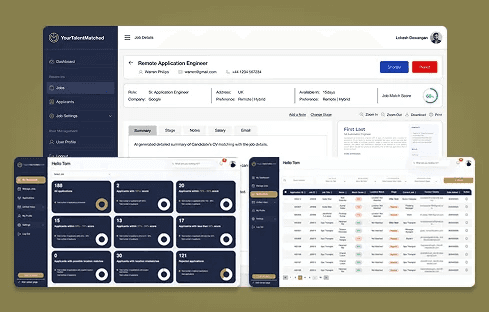
Talent Matched: AI candidate scoring and voice screening
A multi-tenant ATS and a candidate search engine share one AI agent, Tallie, which runs on a private LLM and ranks candidates for each role with the reasoning shown. Spoken screening answers are transcribed and scored too.
Ranking and shortlisting time, per the client
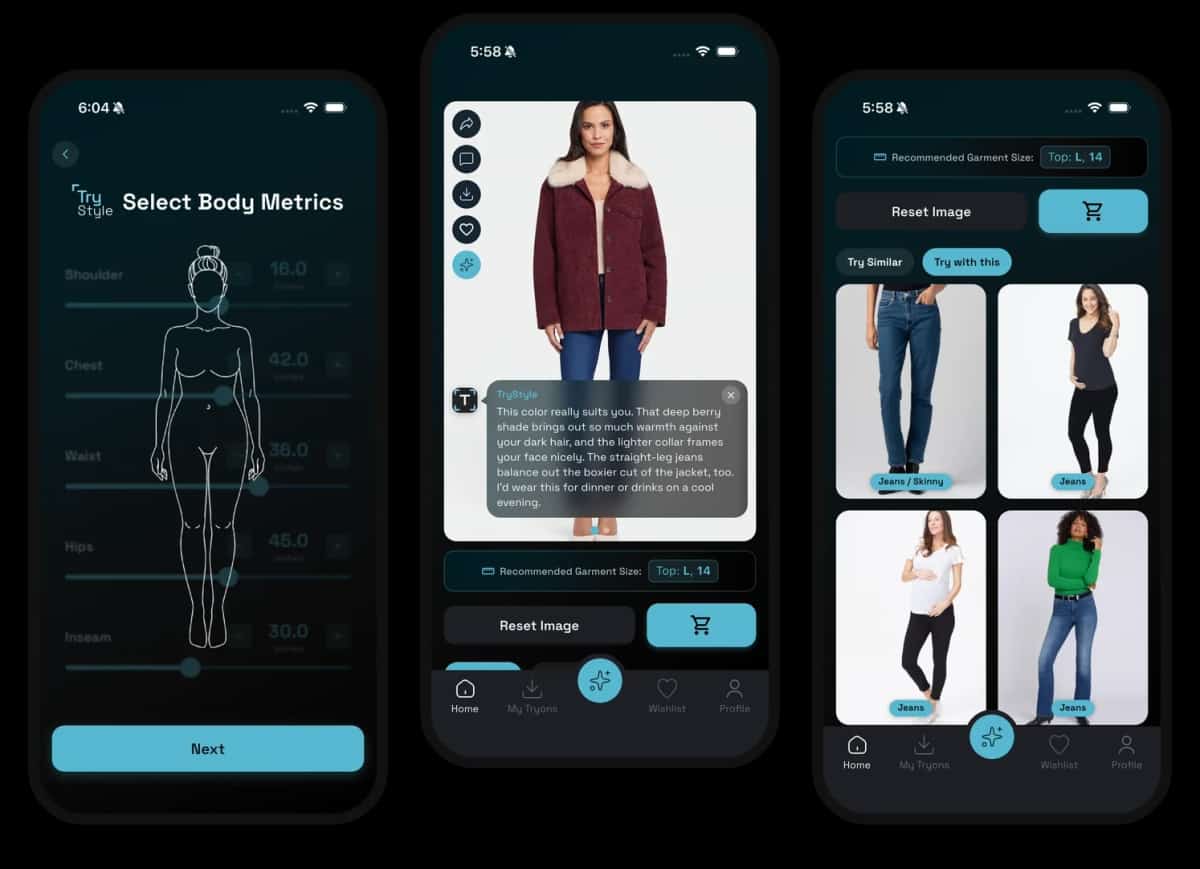
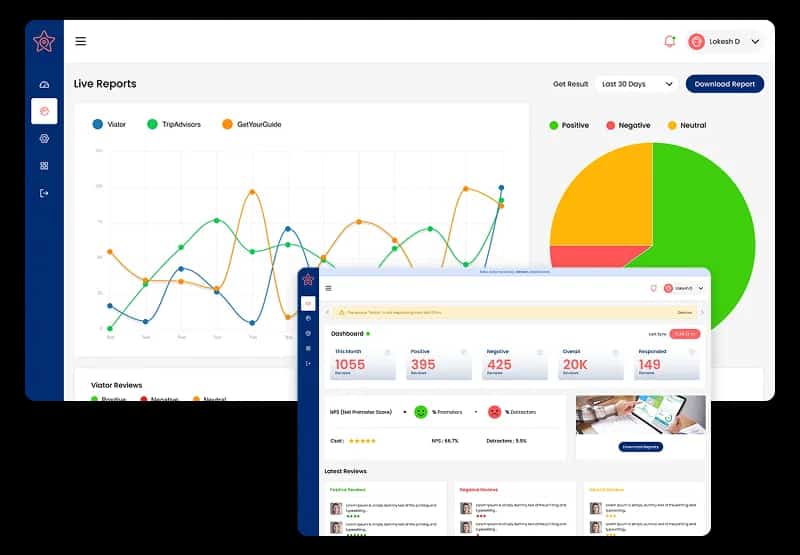
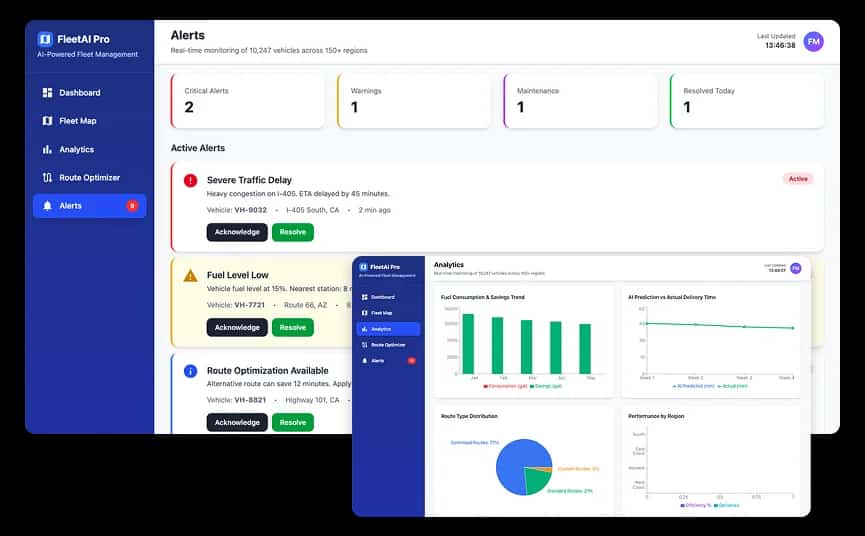
Our AI development process
A proof of concept takes 3 to 4 weeks. The production schedule is fixed in writing after it, based on your data, integrations and compliance scope.

One team, 14 years of shipping
projects shipped since 2012
AI systems running in production
clients across 45+ countries
years building software, since 2012
Your code, models and data stay yours
Every AI system we build is set up so your team can audit it, run it and change vendors later.
IP from the first commit
Code, prompts, trained models and evaluation sets belong to you from the first commit, and NDAs are standard.
Built in your repositories
We work in your GitHub or GitLab and your cloud accounts, so nothing has to be handed over at the end.
One accountable team
Your project is staffed by ScalaCode's own engineers from scoping to launch.
Guardrails on input and output
PII redaction and prompt-injection checks run on every request, and every prompt, response and model version is logged for audit.
Models and tools we build with
We pick per workload and per the cloud you already run. Business logic sits apart from the model, so a model swap is a configuration change.
Where custom AI development pays back first
Work that is repetitive, rule-bound and documented tends to make the strongest first AI use case.
Financial services
- Document checks for onboarding
- Policy and product Q&A
Healthcare
- Clinical note drafting
- Intake and triage forms
Legal
- Clause extraction
- Contract review queues
Retail and eCommerce
- Product content at scale
- Search and recommendations
Logistics
- Shipping document extraction
- Exception handling
Manufacturing
- Visual inspection
- Maintenance knowledge search
SaaS platforms
- In-app copilots
- Support deflection
Education
- Tutoring assistants
- Assessment feedback
AI development cost and engagement models
The discovery sprint is free and ends in a written proposal with a fixed quote. An AI proof of concept starts at $4,999 and takes 3 to 4 weeks.

Discovery sprint
1 to 2 weeks and free, ending in a written proposal with a fixed quote. Use case ranking, a data review, the architecture and an estimate for the build.
Best for teams choosing between several AI ideas.

Proof of concept, then build
A proof of concept from $4,999 in 3 to 4 weeks, scored on your data. If it passes, we quote the production build with a written schedule.
Best for one clear use case that needs proving first.

Dedicated AI team
AI engineers working inside your process from $1,799 a month per engineer. Matched profiles within 48 hours, and you interview and choose.
Best for an AI roadmap you will keep extending.
Rated 4.8/5 by the clients we build for
Verified reviews from Clutch and GoodFirms, and clients on camera.
33 verified reviews on Clutch
 Clutch review★★★★★
“What sets ScalaCode apart is their technical AI expertise and an understanding of a client's organizational ethos.”
Clutch review★★★★★“They managed to balance technical skill with an understanding of the marketing world.”
Clutch review★★★★★“Their engineers responded with remarkable agility.”
 GoodFirms review★★★★★
“Their team displayed exceptional technical expertise and a deep understanding of AI technologies, which significantly enhanced the functionality of our app.”
GoodFirms review★★★★★“They built a high-performance, AI-powered platform that transformed video engagement for learning.”
Clutch review★★★★★“What stood out to us as most impressive and unique about ScalaCode was their ability to humanize complex AI.”
Clutch review★★★★★“Their team often proposed innovative features we hadn't considered.”
AI development services FAQs
We will answer anything not covered here on the call.
How much do AI development services cost?
The discovery sprint is free and ends in a written proposal with a fixed quote. An AI proof of concept starts at $4,999, and a dedicated AI engineer starts at $1,799 a month. The production build is quoted after discovery, because data quality, integrations and compliance scope set the final figure.
How long does an AI development project take?
A proof of concept takes 3 to 4 weeks. The production timeline after that depends on how many systems it connects to and how strict the review and compliance steps are, and we put it in writing before the build starts. Our engineers use AI coding agents, which shortens the build.
Do we need our own data to start?
You need enough examples to judge the output, such as past documents, tickets or records and a list of the questions users ask. Most projects start on data the business already holds. Where data is thin, the discovery sprint tells you what to collect before a build makes sense.
Which models and platforms do you use?
We use OpenAI GPT, Claude and Gemini where data can go to a hosted model, and open models such as Llama, Mistral and Qwen when it has to stay in your cloud or on your servers. For forecasting and scoring we use classical machine learning such as XGBoost and PyTorch models. The choice is made per workload after a benchmark on your data. Narrow, high-volume tasks often suit a fine-tuned small language model.
How do you make sure the AI is accurate?
We build an evaluation set from the questions and cases your users bring before the build starts, and every prompt change, model swap or retrain is scored against it in CI. Low-confidence results can go to a person for review. After launch, dashboards and alerts track quality, latency and cost.
Who owns the models, code and data?
You do. Code, prompts, trained models and evaluation sets are yours from the first commit, NDAs are standard, and we work in your repositories and cloud accounts. To grow your own team, you can hire ML engineers or AI agent engineers.
Can you add AI to our existing software?
Yes. Most of our AI application development services work happens inside products that are already live. We work in your codebase, code review and CI pipeline, add the AI feature behind a flag, and release it through staging like any other change. Internal assistants built this way often grow into enterprise copilots.
What is the difference between custom AI development and AI software development?
The terms are used interchangeably. Both describe building AI that runs on your data and inside your own systems. Custom AI development usually signals that the model, prompts or training data are specific to your business.
One team, matched to your working hours
We schedule 4 to 6 hours of daily overlap with US time and a full working day with the UK and Europe, so reviews, demos and fixes happen during your working hours.
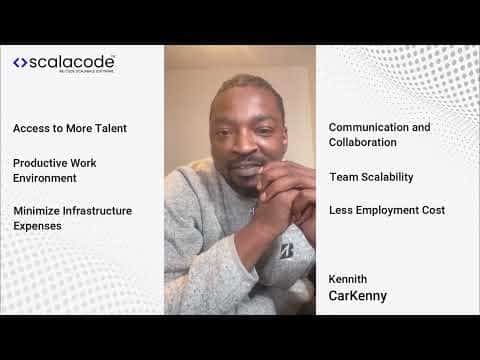
 Watch Kennith's review
CarKenny: an AI vehicle app, built with ScalaCode
Find out what your AI use case needs to reach production
- 30 minutes with the ScalaCode team
- Whether a tool, a feature or a custom build fits your use case
- What is realistic, what it costs and how long it takes
“What sets ScalaCode apart is their technical AI expertise and an understanding of a client's organizational ethos.”
Laurence Longet, Director, MGEN (Clutch review)