
AI in fintech for fraud signals, KYC checks and credit risk
ScalaCode builds AI for payment, lending and banking products that scores fraud and AML signals, checks KYC documents, models credit risk and answers customer questions, with every model decision logged for your risk and compliance teams.
AI systems running in production
building software since 2012
projects shipped since 2012
clients in 45+ countries
on Clutch, from 33 verified reviews
9001:2015 certified delivery process
Financial services teams and global brands we have worked with







What AI in fintech covers
Models that score, check, read and answer inside payment, lending and banking flows, with analysts deciding the hard cases.
- What is AI in fintech?
- AI in fintech is the use of machine learning and language models in financial products to score transactions for fraud, rank AML alerts, check identity documents, estimate credit risk, match payments to records and answer customer questions. Each model sits inside a regulated workflow, so its decisions are logged, explained and reviewed by people.
Four places fintech AI projects get stuck
The score cannot be explained
A credit or fraud score without reasons fails model risk review and cannot be explained to a declined customer. Every score ships with reason codes and a decision log your risk team can audit.
Outcome labels arrive late
Chargebacks and defaults land weeks or months after the decision, so training data trails the fraud and credit patterns of today. We audit labels in discovery and start with anomaly scoring where the history is short.
The model sits outside the money flow
A score in a dashboard that nobody checks before money moves changes no outcomes. The scoring API goes inside authorisation, onboarding or underwriting, with your rules as the fallback.
Documents still go to a person
KYC packs, bank statements and payslips arrive as photos and PDFs that analysts key in by hand. Document AI extracts the fields, checks them against each other and sends mismatches to review.
Financial AI we build for fintech products
Examples of where AI fits in payments, lending and banking. Where a use case has its own service page, the card links to it.
Fraud and AML signals
We score transactions, devices and behaviour in the payment path, and rank AML alerts so investigators open the strongest cases first.
See AI fraud detectionKYC document checks
ID documents, proof of address and selfies read and compared with the application. Expired documents, name mismatches and low-confidence reads go to an analyst.
See multimodal AI developmentCredit risk models
Scores built from bureau data, bank transactions and repayment history, with reason codes a lender can give a declined applicant.
See machine learning developmentSupport assistants
Chat and in-app assistants that answer from your product terms, fee schedules and help centre, and hand account-specific requests to an agent.
See AI chatbot developmentReconciliation
Payments matched to invoices, ledger entries and bank lines when references are missing or partial. Low-confidence matches wait in a queue for finance staff.
Statement and filing extraction
Bank statements, payslips and financial filings turned into structured data for underwriting, with each figure linked to the page it came from.
Have a fraud, KYC or credit decision to automate?
Bring a sample of the decisions, the data behind them and where they happen today. In 30 minutes we will tell you which ones a model could take and what a pilot costs.
Machine learning, an LLM or rules for each banking AI decision
Most fintech products need all three. Our view is that a language model should read and draft, and a trained model or a rule should make the decision that moves money.
| Trained ML model | Language model (LLM) | Rules | |
|---|---|---|---|
| Best at | Scoring structured data at volume | Reading documents and answering in plain language | Hard limits and regulatory blocks |
| Fintech examples | Fraud scores, credit risk, AML alert ranking | KYC document reading, support assistants, statement extraction | Sanctions matches, transaction limits, velocity caps |
| Explaining a decision | Reason codes from SHAP values | Cited source text, checked by a reviewer | The rule that fired |
| Where it sits | Inside the payment or underwriting path | Onboarding, back office and support | In front of every decision |
| Where it falls short | Needs labelled outcomes to train | Should not make final credit or fraud calls alone | Misses patterns nobody has written down |
Explainability and audit for financial AI
Model risk, data protection and card data rules are written into scope during discovery, before the first model is trained.
Decision log
Every score is stored with the model version, the inputs and the reason codes, so a decision can be traced months later.
Reason codes
Credit and fraud scores carry their top factors, in a form analysts, customers and auditors can read.
Card and account data
Card data stays tokenised, and document pipelines can mask account numbers and signatures before a hosted model sees the page.
Named approvers
New models and new cutoffs go live only after a named approver on your risk team signs off.

How a fintech AI project runs, from data audit to production
A proof of concept on your historical data takes 3 to 4 weeks. The schedule for a model inside your payment, onboarding or lending flow is agreed in writing after that.
Fintech and AI products we have shipped
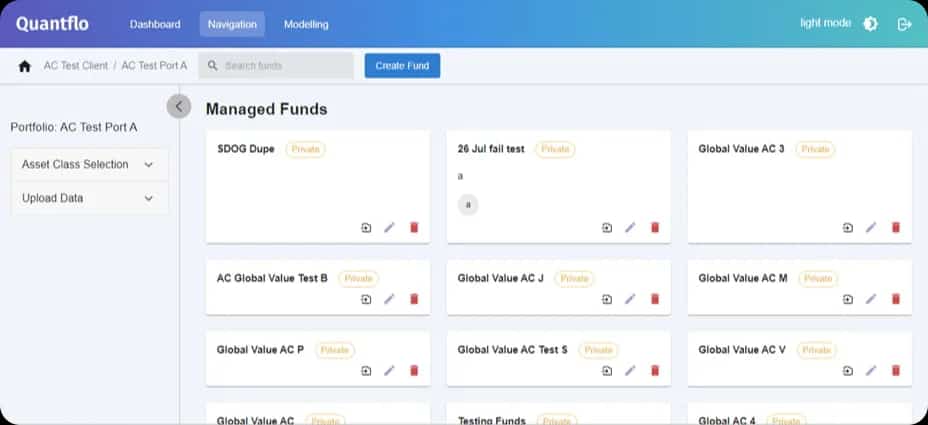
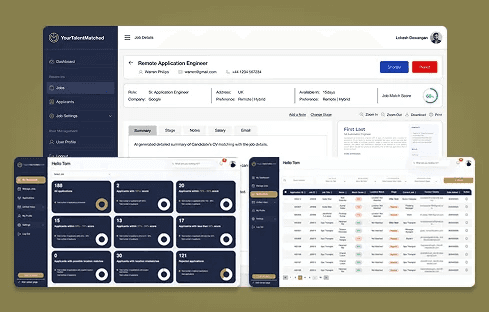
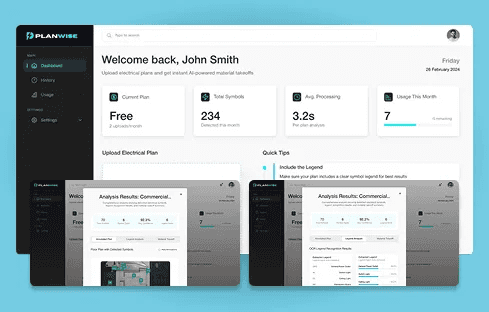
Quantflo and the digital asset marketplace are fintech builds. Talent Matched and Planwise are AI products from recruitment and construction that show how we take models into production.


One team, 14 years of shipping
projects shipped since 2012
AI systems running in production
clients across 45+ countries
years building software, since 2012
Rated 4.8/5 by the clients we build for
Verified reviews from Clutch and GoodFirms, and clients on camera.

33 verified reviews on Clutch
 Clutch review★★★★★
“They didn't just build an algorithm; they built a tool that respects the nuances of Indigenous reconciliation.”
Clutch review★★★★★“What stood out about Scalacode was their consultative approach and commitment to QA.”
Clutch review★★★★★“ScalaCode treated our financial ecosystem with the absolute seriousness it required.”
Clutch review★★★★★“What sets ScalaCode apart is their technical AI expertise and an understanding of a client's organizational ethos.”
 GoodFirms review★★★★★
“They built a high-performance, AI-powered platform that transformed video engagement for learning.”
Clutch review★★★★★“They managed to balance technical skill with an understanding of the marketing world.”
Clutch review★★★★★“They make every project comfortable, deliver on time, and are well-organized.”
AI in fintech FAQs
We will answer any other question on the call.
How much does AI in fintech cost to build?
The discovery sprint is free and ends in a written proposal with a fixed quote. A proof of concept on your historical data starts at $4,999, and dedicated ML engineers start at $1,799 a month. The production build is quoted after discovery, because data sources, latency and compliance scope set the figure.
Can regulators and auditors see why a model made a decision?
Yes. Each decision is logged with the model version, the inputs, the score and the top reason codes from SHAP values, and every model release carries a sign-off record. Your model risk team gets the documentation it needs for validation.
Can AI make credit decisions on its own?
We advise against it. A credit model should score and explain, and approval rules or an underwriter should make the final call on declines and edge cases. Lenders that must give adverse action reasons can take them from the model's reason codes.
How do you automate KYC document checks?
Document AI reads the ID, proof of address and selfie, extracts the fields and compares them with the application and with each other. Mismatches, expired documents and low-confidence reads go to an analyst, and every check is logged with its result. The identity verification vendors you already use can stay in the flow.
Should we use an LLM for fraud detection?
For scoring, no. Fraud scoring needs a trained model on structured transaction data that answers inside the payment path. An LLM helps around it, by summarising a case for an investigator or reading documents attached to a claim. Our AI fraud detection page covers the scoring side in detail.
Does our customer data leave our environment?
Training and scoring run in your cloud account. Where a hosted language model reads documents, account numbers, signatures and marked fields can be masked before the page reaches it. The code and trained models are yours, and NDAs are standard.
How long until a model is in production?
A proof of concept takes 3 to 4 weeks on your historical data. The timeline to a model running inside a live payment, onboarding or lending flow is fixed after the proof of concept and includes a shadow run before it acts on any decision. Our engineers use AI coding agents to shorten the build.
Have you built AI for a bank or fintech before?
Our published fintech work is Quantflo, a portfolio management system, and a digital asset marketplace with AML and KYC modules. Our published AI case studies come from recruitment and construction. On the strategy call we walk through the fraud, document and scoring patterns we would apply to your product.
They understood the business side of our requirements and often brought up solutions or ideas we hadn't considered.
Scope your fintech AI project in 30 minutes
- Which decisions a model could take, and which should stay with people
- Data, compliance and timeline covered up front
- Free, with no obligation to build with us