AI-Powered Automation: Transforming Business Processes in 2026
Discover how AI in automation is transforming businesses. Explore features, benefits, and top industry use cases of AI automation to boost efficiency and growth.

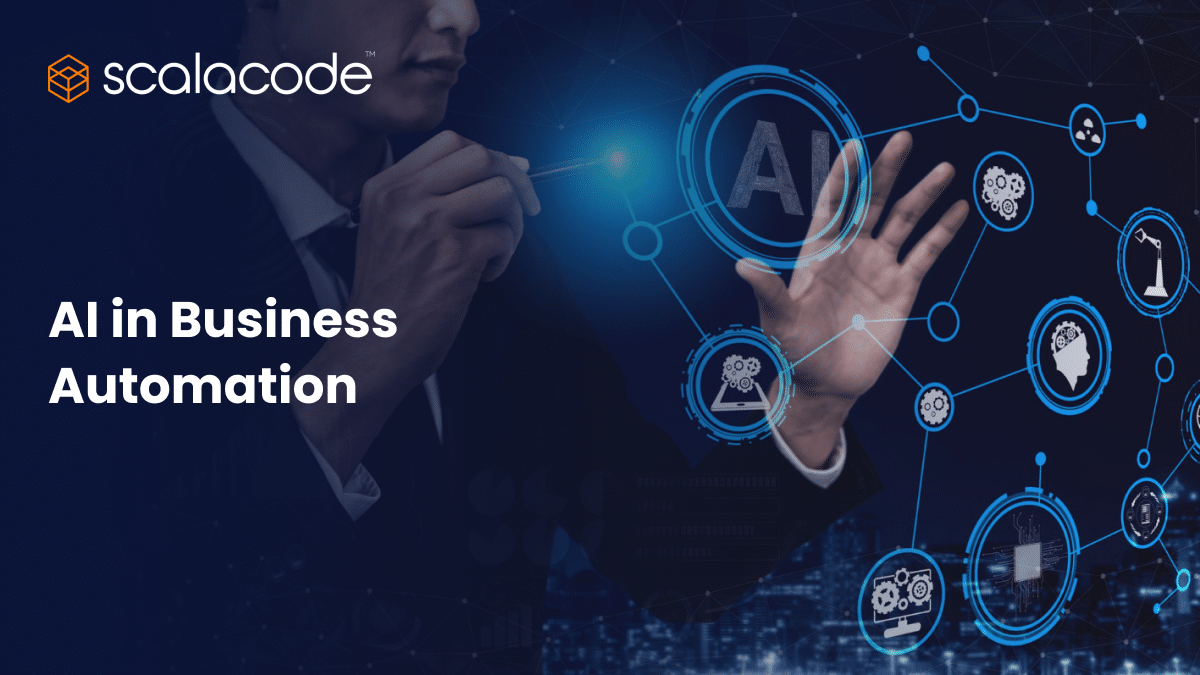
Artificial intelligence (AI) is modernizing business processes by driving efficiency, reducing costs, and enabling swift decision-making. The world has put its leg on the accelerator in adopting new technologies to speed up its business processes. Artificial Intelligence is one of the transformative technologies that reduces operational costs and improves customer experience. By automating monotonous and repetitive business processes that require a considerable amount of time, AI is setting new benchmarks for productivity.
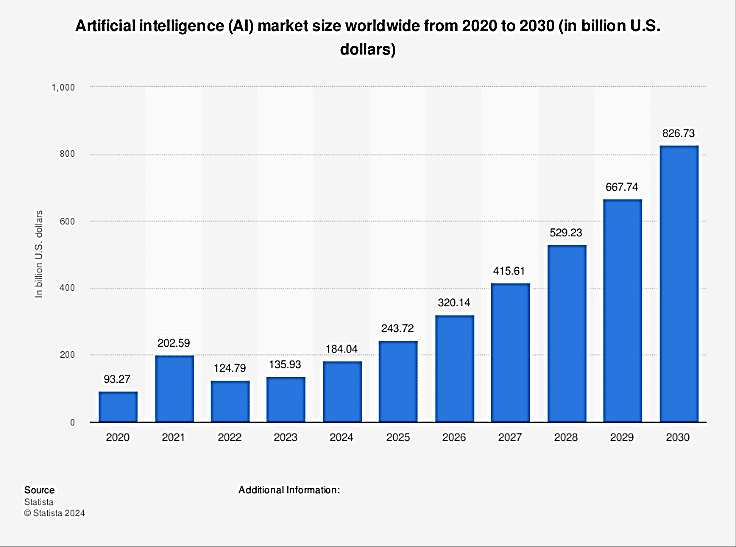 Image Source: Statista
The market for AI has reached beyond 184 billion U.S. dollars in 2024, a remarkable climb of nearly 50 billion compared to the previous year (2023). The growth is expected to continue and it will reach 826 billion U.S. dollars by 2030.
AI-driven automation blends AI and Automation to develop intelligent systems that can learn, adapt, and have independent decision-making abilities. Unlike traditional automation, AI-powered automation can recognize patterns, analyze data, and streamline business processes.
What is AI-Powered Automation? Key Features to Explore
Automation of business processes exhibits multiple features that are useful in converting vision into reality. Some critical features of AI in automation:
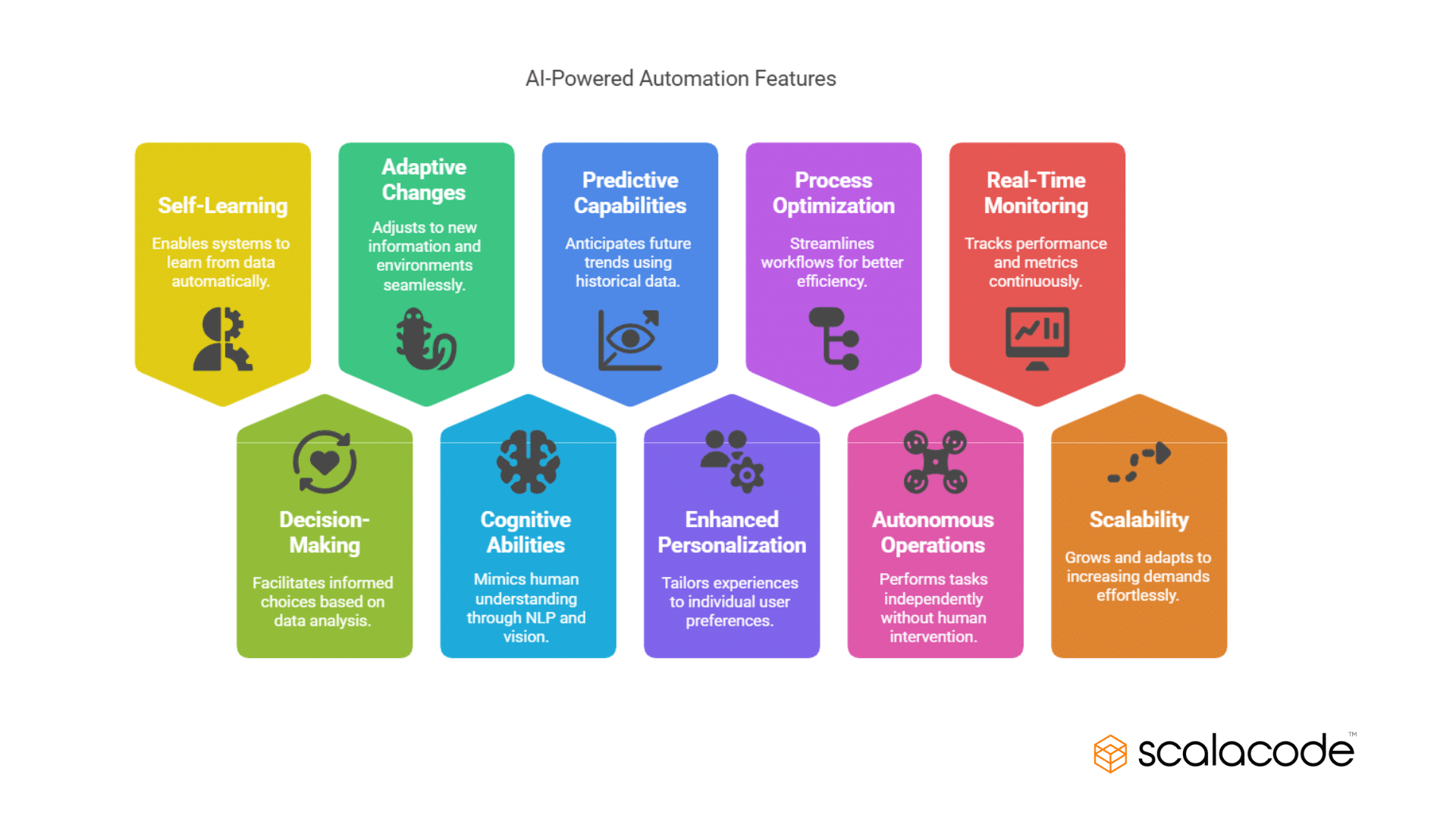
1. Self-Learning (Machine Learning)
AI-powered automation systems can learn from past data, experiences, and interactions to improve business performance over a period of time.
How does it work?
AI-powered automation uses machine learning algorithms to examine various data patterns. It ensures learning from successes and failures for better decision-making and is more efficient in processing huge volumes of data.
Example
AI-driven chatbots- They grasp knowledge from customer interactions to provide more relevant solutions in the future.
2. Decision-Making Capabilities:
Unlike traditional automation, AI-driven automation can analyze data and make independent decisions swiftly.
How does it work?
AI in automation uses data analytics and AI models with the aim of making smart choices. It decides the best action after accessing multiple factors. AI-driven automation facilitates working in real-time, adapting decisions to new inputs.
Example
AI-driven fraud detection systems- It is used to analyze transaction data and flag unusual patterns instantly.
3. Adaptive to Changes:
AI automation for business provides a system that can adjust to new environments, inputs, or changes in transformation in business processes. It does not require manual reprogramming.
How does it work?
AI-enabled automation uses real-time monitoring to support AI-powered workflows. It also utilizes feedback loops to detect changes. Based on new data patterns, it helps in the automatic updation of workflows and business processes. It also ensures continued efficiency irrespective of the change of conditions.
Example
AI-backed supply chain systems- They adjust inventory levels based on demand fluctuations and external factors.
4. Cognitive Abilities (NLP & Computer Vision):
AI in automation can analyze, interpret, and process human language (Natural Language Processing). It can also analyze images or videos (Computer Vision).
How does it work?
NLP: It helps AI systems in reading, writing, and understanding text-based data.
Computer Vision: It enables machines to “see” and interpret visual data (e.g., images, videos).
Example
AI chatbots– It understand user intent along with following the fixed scripts.
AI quality control systems– It facilitates inspecting manufacturing defects in real-time.
5. Predictive Capabilities:
AI-powered automation has the ability to predict potential issues, trends, or needs before they actually occur.
How does it work?
AI in automation for business uses predictive analytics predictive analytics to predict outcomes based on previous data records. It identifies risks as well as opportunities effectively helping businesses make data-driven decisions.
Example
AI-driven predictive maintenance– It forecasts and alerts factories about equipment failures, preventing downtime.
6. Enhanced Personalization
AI-powered automation provides personalized experiences tailored to users’ behavior and preferences.
How does it work?
Automation in AI collects and analyzes user data to understand their preferences. It adjusts interactions in real time to meet individual needs, enhancing customer engagement and satisfaction.
Example
Netflix’s recommendation system- It suggests shows depending on the user’s watch/search history.
E-commerce platforms- They offer personalized product recommendations based on browsing history.
7. Process Optimization & Efficiency
AI-powered automation streamlines workflows by detecting inefficiencies and recommending the best possible improvements.
How does it work?
AI automation uses AI-driven analytics to find hindrances in business processes. It automates repetitive tasks, saving plenty of time while allowing humans to focus on higher-value work. AI integration enhances speed, accuracy, and overall productivity.
Example
AI-powered document processing systems- They automatically extract and organize data from invoices, which saves considerable amounts of time.
8. Autonomous Operations
AI-backed automation systems are able to operate independently with minimal or no human involvement.
How does it work?
AI integration allows the use of AI models that ceaselessly monitor and adjust processes as per the requirement. It ensures round-the-clock operations with minimal downtime. It is able to self-correct errors and optimize workflows dynamically.
Example
Self-driving cars- They use AI to navigate roads, detect obstacles, and make independent decisions without human input while driving.
9. Real-Time Monitoring & Analysis
AI-powered automation ceaselessly analyzes and monitors business processes to ensure optimal performance.
How does it work?
Automation uses AI-driven analytics dashboards to keep records of key performance indicators (KPIs). In case of abnormalities or failures, it provides real-time alerts, helping businesses respond quickly to the issues or concerns.
Example
AI-powered cybersecurity systems- They help with real-time detection and mitigation of cyber threats in real-time.
10. Scalability & Continuous Improvement
AI-powered automation can scale up effortlessly as business demands grow while continuously improving performance.
How does it work?
AI in the automation industry enables handling increased workloads without losing efficiency. It learns from past performance and enhances accuracy timely. Hence, the need for frequent manual updates is reduced significantly.
Example
AI-driven cloud-based automation- It helps in scaling IT operations based on demand without manual intervention.
Top 5 Benefits of AI in Automation
The combined impact of AI and automation is increasing efficiency and changing the way of performing business operations are performed. Through the integration of AI into automation, organizations can reach a position where they can endure growth and innovation. Let us dig out the prominent benefits of AI in automation:
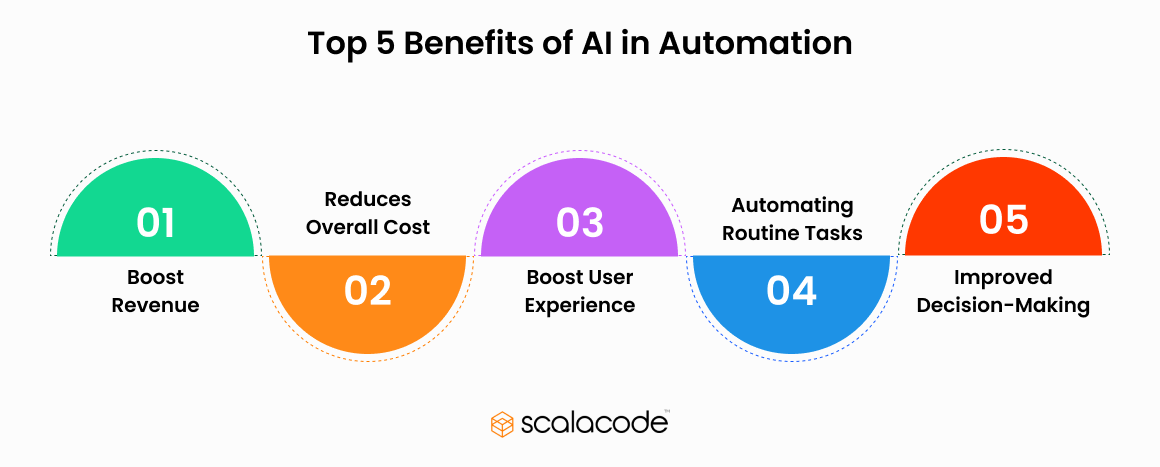
1. Boost Revenue
AI in automation facilitates businesses, irrespective of their size, to boost their revenue by improving efficiency, and customer experience, and enabling new revenue streams. Businesses get the chance to broaden their reach to the right audiences or potential buyers of their services and convert those leads into customers. It is done by automating marketing campaigns, sales processes, and customer interactions.
AI-backed analytics can easily detect upselling and cross-selling opportunities, elevating more sales. Every corporate sector uses AI to offer personalized recommendations that lead to a rise in customer expenditure.
2. Reduces Overall Cost
If you integrate AI into your existing automated solutions, you will surely get reduced operational costs. It will also ensure minimum human intervention in repetitive business operations that often make the workers feel monotony. AI-enabled chatbots have the capability to respond to customer queries in bulk without the need for human customer support agents. It reduces labor costs significantly.
Also Read: AI App Development Cost Estimation
When talking about the manufacturing sector, we can say that AI-driven predictive maintenance minimizes downtime and repair expenses. AI helps in inventory level optimization and wastage reduction to streamline supply chain management. Businesses can save expenditure in the long run by streamlining the business processes and reducing errors.
3. Boost User Experience
AI in automation enables companies to respond to customer queries precisely and offer them customized solutions quickly to solve their problems. Chatbots and virtual assistants provide round-the-clock digital customer support cutting out the wait times and resolving the queries at the blink of an eye.
Must Read: AI in UX Design
Integration of AI in automation enables studying the customer’s behavior and preferences thoroughly. Based on their analysis, they are free to offer them tailored recommendations to enhance engagement. It facilitates uninterrupted service delivery, reduces human errors improves customer trust in a brand, and encourages building long-lasting relationships.
4. Automating Routine Tasks
The automation integrated with AI saves plenty of time undoubtedly and requires minimum human intervention. You are free to use that time on other tasks that come above the priority list. In the human resource field, AI can mechanize resume screening, interview scheduling, and employee onboarding processes saving significant human efforts.
In the finance industry, AI in automation helps expedite various tasks like processing invoices, reconciling transactions, and detecting fraudulent activities. Process automation increases overall productivity and ensures accuracy while performing critical operations.
5. Improved Decision-Making
AI in automation provides actionable insights to boost decision-making by analyzing huge amounts of real-time and providing actionable insights. AI-enabled analytics is capable of identifying trends, predicting outcomes, and suggesting optimal strategies to expedite business operations.
Enterprises use AI for various tasks like demand forecasting, risk assessment, and market analysis to make informed decisions. You can eliminate human biases, and ensure objective decision-making based on data-driven insights through AI. It ultimately leads to better business outcomes.
Use Cases of AI in Automation: Driving Impact Across Industries
AI in automation is all set to evolve numerous enterprises irrespective of their size and revenue by streamlining business processes, enhancing efficiency, and enabling smarter decision-making. As we are moving towards advanced digitalization, transforming the way businesses operate is undoubtedly important.
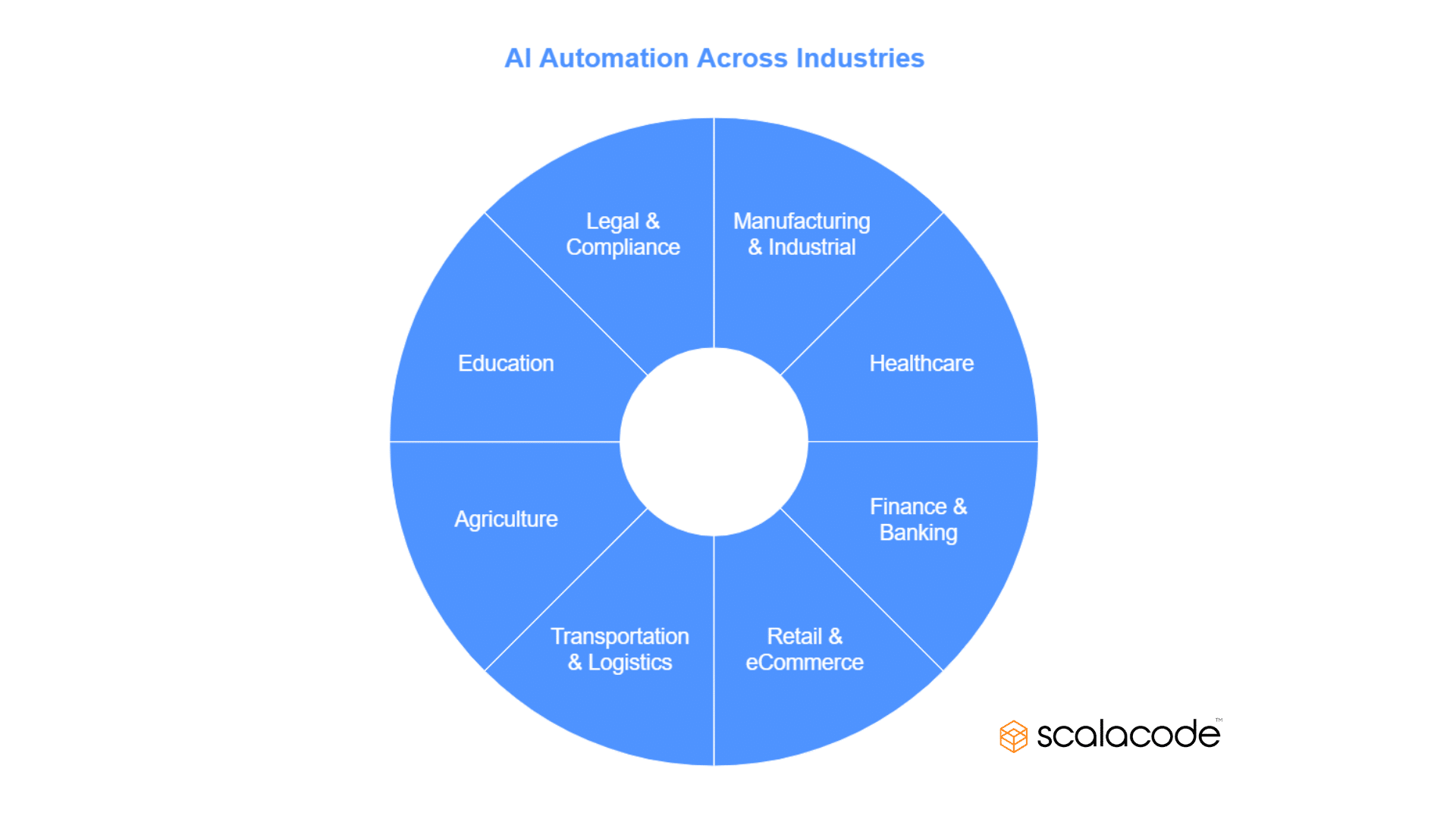
1. AI Automation in Manufacturing & Industrial
AI use cases in manufacturing can not skip optimizing production lines, reducing downtime, and enhancing quality control.
Benefits/ Features:
- Robotic Process Automation
- Predictive Maintenance
- Quality Control & Analysis
- Supply Chain Optimization
2. AI Automation in Healthcare
AI integration in healthcare automation ensures the upgrading of the patient care system, improving diagnostics, and streamlining hospital operations simultaneously.
Benefits/ Features:
- AI-Enabled Diagnostics
- Robot-Assisted Surgeries
- Drug Discovery
- Administrative Automation
3. AI Automation in Finance & Banking
AI automation benefits include improving fraud detection, risk management, and customer service.
Benefits/ Features:
- Fraud Detection
- Automated Trading
- Chatbots & Virtual Assistants
- Credit Risk Assessment
4. AI Automation in Retail & eCommerce
AI boosts customer experiences, optimizing inventory, and automating sales.
Benefits/ Features:
- Personalized Recommendations
- Inventory Management
- Automated Checkout
- Chatbots & Virtual Assistants
5. AI Automation in Transportation & Logistics
In supply chain management, AI is undoubtedly boosting efficiency, safety, and cost-effectiveness.
Benefits/ Features:
- Autonomous Vehicles
- Route Optimization:
- Warehouse Automation
- Fleet Management
6. AI Automation in Agriculture
It is one of the most common AI automation use cases where the aim is to increase crop yields, optimize resource usage, and reduce waste.
Benefits/ Features:
- Smart Irrigation
- Crop Monitoring
- Automated Harvesting
- Pest & Disease Detection
7. AI Automation in Education
AI is tailoring online learning experiences, machining administrative tasks, and improving accessibility.
Benefits/ Features:
- Personalized Learning Platforms:
- Automated Grading
- AI Tutors & Chatbots
- Administrative Automation
8. AI Automation in Legal & Compliance
AI is streamlining legal processes, contract analysis, and regulatory compliance.
Benefits/ Features:
- Contract Analysis
- Legal Research Automation
- Regulatory Compliance Monitoring
- AI Chatbots
9. AI Automation in Marketing & Advertising
AI is enhancing customer engagement, automating content creation, and optimizing ad campaigns.
Benefits/ Features:
- AI-Driven Content Creation
- Customer Sentiment Analysis
- Automated Ad Targeting
- Chatbots & Virtual Assistants
10. AI Automation in Energy & Utilities
AI is improving energy efficiency, optimizing grid management, and enhancing sustainability efforts.
Benefits/ Features:
- Smart Grids
- Predictive Maintenance
- Renewable Energy Forecasting
- AI-Driven Demand Response
AI development companies are bridging the gap between your vision and reality. Integrating advanced AI tools into your existing business solutions will drive your success. AI automation for business is indeed a game changer and it will help your business gain a competitive edge.
Final Words
Transform your business by embracing AI in automation incorporating latest AI trends to speed up the tasks. AI automation benefits you in multiple ways-boosting efficiency and customer satisfaction along with reducing costs. Gain a competitive edge and keep your business updated to cater to the growing customer’s demands through smarter decisions taken independently.
AI is revolutionizing rapidly and the possibilities for enterprises to choose AI-driven automation is at its peak and will continue to expand. Businesses that plan their future with AI integration will ensure its place in the top rising organizations to gain success in a short span of time. Are you looking forward to leveraging AI automation in your business? Connect with us.
FAQ
1. How does AI enhance business process automation?
By enabling intelligent capabilities like predictive analytics, NLP, and ML, artificial intelligence integration in the solutions can drive BPA. Businesses get the free hand to implement a more sophisticated automation driving data-driven decision-making abilities. It also offers real-time insights, and the ability to handle complex tasks that cannot be managed by older or traditional automation techniques. To help teams keep pace with these changes and build practical skills around automation tools, platforms like Coursiv can support structured learning and ongoing knowledge development.
2. What are some examples of business process automation?
Some of the crucial examples of BPA include- automated invoice processing, customer service chatbots, and workflow automation. These AI in automation solutions help streamline business processes, reduce manual effort, and improve precision across various business operations.
3. What are the benefits of AI-enabled automation for businesses?
Leverage multiple benefits of AI in the automation industry such as increased efficiency, reduced operational costs, minimized errors, enhanced productivity, and improved compliance. Businesses are free for their resource allocation and shift their focus on critical business strategies through the automation of repetitive tasks.
4. How can I get help with AI integration for my project?
Connect with a reliable AI consulting company, in case you are looking forward to integrating AI into your project. The companies can assist you in closely analyzing your vision and using their expertise to apply AI technologies to your business solutions.
Rajat
Project Manager, ScalaCode
Rajat has spent more than 8 years designing customer experiences for digital products and has led over 100 CX projects. His work centres on how customers move through a service and on the workflows behind it that keep them engaged. He writes about building customer experience strategies from usage data.
Talk through your project with ScalaCode
- 30 minutes with the ScalaCode team
- What is realistic, what it costs and how long it takes
- You decide afterwards whether to build with us