


Did you know data breaches cost organizations an average of $4.88M in 2024? With cyber threats increasingly growing in dimension and sophistication, businesses are under immense pressure to protect sensitive customer information and achieve a high degree of customer trust.
Fraud detection software becomes an innovative detection and prevention tool for organizations in real-time fraudulent activity surveillance-protecting financial and reputational assets. This guide will cover everything from core features to development processes and testing within these systems. It will also help you to discover the estimated cost and benefits of fraud detection development.
Whether you want to protect transactions for your small startup or need advanced analytics for a big corporation, this will take you through considerations when creating custom fraud detection software. So, without any further ado, let’s get started.
What is a Fraud Detection App?
Fraud Detection App is a fraud detection and prevention software that requires the analysis of data in real-time. It links with different data sources such as payments and transaction histories to create and process data.
An AI and a machine learning-enabled technology will help take charge of this data and dwell into it to find the behaviors that appear to be normal in a user and try to find out any differences that might lead to fraud.
It uses the same logic to determine any possible threat to the transaction. It would notify the system about unusual location logs attempts, outlier purchase amounts, and peculiar behavior from the user.
At the detection of fraud, alarms are usually raised by the system and might take actions such as blocking a transaction or invoking additional authentication measures to prevent losses and enhance security.
Fraud Detection Software Market: Some Key Statistics
The market size of the fraud detection market is growing rapidly, and so is the demand for an AI software development company. This is because a lot of businesses now want to build a fraud detection app. Let’s have a look at some of the key statistics showing how the market of fraud detection is becoming:
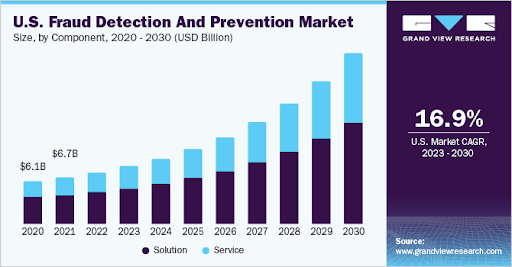
As per a report, the worldwide fraud detection & prevention market size was USD 25.67B in 2022 and is predicted to grow at a CAGR of 17.6% from 2023 to 2030.
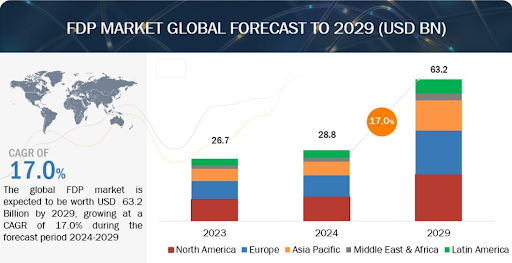
As per another report, the global FDP market will touch USD 63.2 Billion by 2029, growing at a CAGR of 17%.
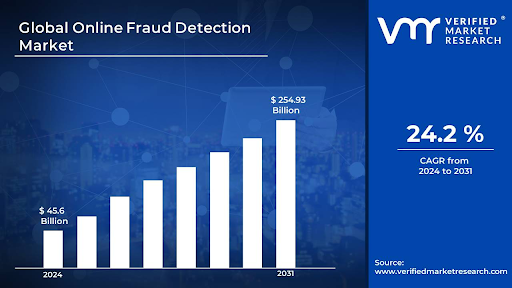
According to Verified Market Research, the boosted demand for security and compliance is propelling innovation and investment in the online fraud detection market.
Why Fraud Detection Software Development is Crucial?
Now that we know the demand for fraud detection is growing constantly, let’s find out its key benefits:
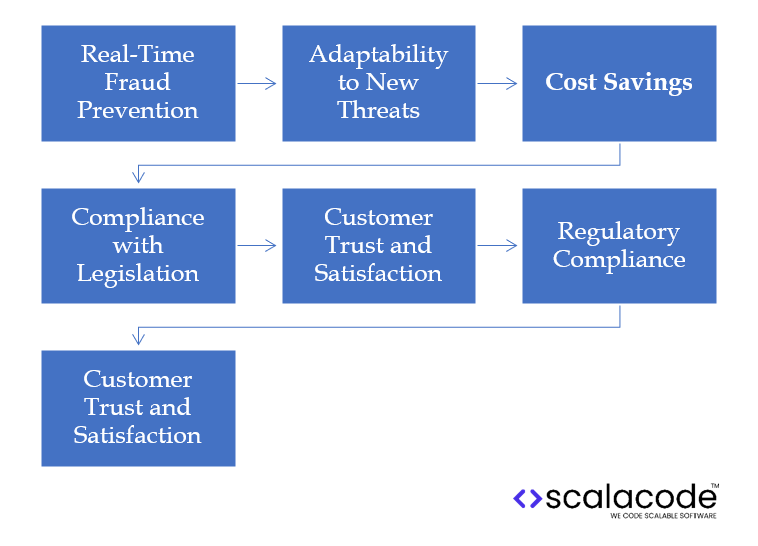
1. Real-Time Fraud Prevention
Fraud detection software enables a business to track, locate, and freeze fraudulent transaction activity. This real-time monitoring prevents loss from fraudulent transactions. This can halt further damage to a huge extent and reduces the level of manual intervention. And it accounts for immediate alerting of suspicious activities, thereby allowing for a quicker response from the enterprise.
2. Adaptability to New Threats
Advanced fraud detection techniques, including artificial intelligence (AI) and machine learning (ML), are adopted by fraud detection systems that are evolving with new patterns of falsehoods.
The systems continue to learn and adapt to improve detection for the future. Such an ability promises businesses to protect themselves from new, sophisticated, evolving fraud techniques that might have been possible to overlook.
3. Cost Savings
It saves the business a lot of money by giving up not only the chances of suffering huge penalties and losses but also charging back and incurring punitive costs due to controversies over legality.
In the future, such damage caused by fraudulent activities can be avoided by any organization, and all threats can be bypassed from primary sources. An organization can save on installing fraud detection software while its intervention occurs, as has already been discussed above.
4. Compliance with Legislation
Fraud detection software helps businesses adhere to stringent industry regulations, especially in industries such as banking, healthcare, and e-commerce. Data protection and security laws must be adhered to to avoid penalties and legal repercussions.
The software automatically maintains compliance through real-time monitoring and reporting, thus ensuring businesses meet the standards required.
5. Customer Trust and Satisfaction
A secure transaction environment does build customer trust. Anti-fraud software helps enterprises give customers a sense of security by keeping their critical information away from fraudsters. This higher level of security improves the reputation and increases loyalty for the business, thus making it capable of gaining better customer satisfaction in the long run.
6. Regulatory Compliance
Fraud detection software can ensure strict compliance with various industry regulations for banking, insurance, healthcare, and e-commerce businesses. This is important to avoid penalties and legal consequences from bad compliance with data protection and security laws.
The real-time reporting and monitoring features of the fraud detection software will automate the compliance, ensuring that a business meets the required standards.
7. Customer Trust and Satisfaction
Transactions are pretty secure within that environment, assuring the customer. Fraud detection applications make it easier for them to know that their money-transacting lives will not be at risk with fraudsters; that becomes a little more part of the reputation, a little more trust, and eventually more customer satisfaction.
Also Read: Top Mobile App Ideas in 2026
What Are the Key Features to Include in a Fraud Detection Software?
When you are creating a financial fraud detection application, it must incorporate essential features that not only displace fraudulent businesses but are also compliance-specific to industry standards. Below are the features or attributes you have to consider when designing your application:
1. Suspicious Behavior Detection
Your application should provide learner algorithms and statistical models that can detect unusual deviations in normal behavior. Therefore, early detection of fraudulent activities helps to intervene immediately before escalating fluke events.
2. Real-Time Processing
Ensure that the application processes the transactions in real time and sends alerts to all customers immediately after identifying any suspicious activity. This helps users act fast and possibly prevent fraud from happening.
3. Scalability and Robustness
Design the application so that the increasing data loads and transaction volumes can be sustained with increasing business growth, high performance, and accuracy under heavy usage: an ideal long-term solution for businesses-big and small.
4. Integration Capabilities
Your application should integrate with current financial systems besides other e-commerce sites and security infrastructures. Integration must thus be interference-free in the proper operation of an app without hindrance to business activities or fraud detection workflows.
5. User Behavior Analytics
Integrate user behavior analytics, behavioral biometrics, and heuristics within monitoring activity patterns; for instance, observation of unusual behavior, including login locations, or spending behaviours has the potential to identify fraud even when legitimate credentials are being utilised.
6. Adaptive Intelligence
Equip your app with intelligent adaptability to learn continuously from new data and improve its algorithms for fraud detection. In this way, the app remains current with the developments in fraud techniques and provides next-generation advanced protection against maturing threats.
7. Customization Flexibility
Customize App detection rules along with thresholds or policies. The flexibility here allows businesses to adapt the application to their specific needs and risk profiles, making sure it is in line with their own requirements of fraud prevention.
8. Robustness through Multi-Layered Security
Include really different types of fraud such as multi-layered security features. This makes everything more straightforward, ensuring that it is possible to access the area easily.
9. Global Threat Intelligence
Your app has to stay afloat with the latest world-class threat intelligence so that you always know which trends and techniques are being used worldwide to defraud. Thus, the app should be equipped to detect and act on any forthcoming fraud trends while also imparting increasing insight into risks, especially on the rise.
10. Detailed Reporting and Analytics
Include detailed reports and analytics in the app that can help with forensic study. These features help users track fraud patterns, understand incidents, and consult data-driven future prevention strategies around their results as recorded by the app.
11. Ease of Integration
The app should be such that even a non-technical person can integrate it easily with existing systems to include support for multiple data formats as well as communication protocols to ensure seamless data exchange with minimum disruption to the current business processes.
By including these key features, your fraud detection mobile app will offer businesses a reliable and robust tool to prevent fraud, safeguard sensitive data, and guarantee long-term victory in a competitive market.
How to Build a Fraud Detection Software?
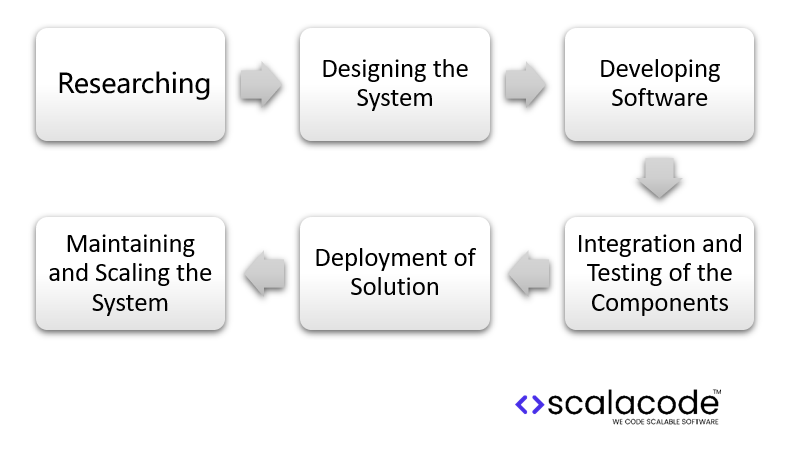
Building fraud detection software is done by following a series of successive steps: research, design, development, integration and testing, deployment, and maintenance and scaling. Each step assists in creating a robust yet adaptive solution that will detect fraudulent activity. Here’s a summary of the process:
1. Researching
The researching phase is where the actual understanding of the problem takes place, detecting fraud types and gathering some historical evidence. Collaboration with domain experts brings success metrics such as accuracy detection, false positive rate, and compliance with relevant regulations such as GDPR or PCI DSS.
2. Designing the System
The architecture of the proposed system is defined-all components including the data pipelines or streams, fraud detection engines or modules, and the alerting systems. The parts that may be concerned for selection as necessary for every with respect to scalability and security have also been identified for considering technology. Besides, the design of the system is supposed to meet future and current needs.
3. Developing Software
All developed activities are held in the construction resource, which includes mainly internal routine and pipeline processing transactions. Models of fraud detection are also developed by rule-based or machine-learner techniques. Version control and codes of standards make the process of development fast and collaborative.
4. Integration and Testing of the Components
Integration translates into the smooth operation of modules within the system. The last testing such as unit testing, performance measure, and adversary simulation establishes the system’s reliability and accuracy. Besides the functionalities, user acceptance testing ensures that all the software features expected by the relevant stakeholders are on board.
5. Deployment of Solution
The software is deployed live; real-time processing is a function of upscalable infrastructures like Docker and Kubernetes. Monitoring systems are designed to keep up with most performance, anomaly detection, and smooth operation.
6. Maintaining and Scaling the System
After deployment, regular updates of the system are carried out for bug fixing, improvement of features, and modification against new trends in fraudulent activities. Machine learning models are generally retrained, and the infrastructure is scaled up in compliance with the newly established regulations to meet the growing demand for data.
This methodical process ensures that an effective, dependable fraud detection system is capable of growing with emerging challenges.
Bonus Visit: Cost to Develop an AI-enabled Fintech App
What Factors Decide the Cost of a Fraud Detection Application Development?
The cost of developing a fraud detection app is going to vary because of many factors related to its complexity, technology, and required features. Some of the major elements that will influence cost include the following:

1. Complexity of App
- Basic Fraud Detection: Simple detection models like rule-based systems generally will not cost much development.
- Advanced Machine Learning Models: Applications that use real-time analysis and fraud prediction through AI and machine learning algorithms for fraud detection will take longer in terms of development, testing, and resources.
- Integration: More costly and complex integration of other systems/layers, such as payment gateways or banking platforms.
2. Features and Functions
- User Authentication: The introduction of other early developments: multi-factor authentication (MFA), biometric login (face, fingerprint recognition), or behavior analytics raises their development costs.
- Real-Time Monitoring: More infrastructure provides and efforts in the development of an app monitoring transactions or activities in real-time.
- Analytics & Reporting: Analytics and reporting require backend systems with advanced UI designing to produce reports and insights concerning detected fraud events.
- Alert System: Including the feature that has email, SMS, or push notifications for cases of detected fraud has added expense.
3. Technology Stack
- Integration of AI/ML: Integrating to machine learning models will take more resources and be quite costly in identifying unusual behavior patterns or anomalies.
- Data Security: High levels of security (encryption and secure storage) enforced through compliance with data protection laws such as GDPR may add to the development cost.
- Cloud Infrastructure: Cost of hosting the application on a scalable cloud solution e.g. AWS, Google Cloud or Azure might considerably escalate depending upon the scale and traffic of the application.
4. Geography of Development Teams
An offshore or onshore location could have a considerable impact on development costs. Developers in higher wage locations (like the USA and UK) would charge more for a developed application compared to developers in countries with comparatively cheaper locations (for example, East Europe and India).
5. Security Measures
- Data Encryption: Advanced data encryption is employed to safeguard sensitive user information during transactions.
- Secure Communication Channels: Secure APIs and data transfer over HTTPS are essential in fraud detection applications and would thus increase costs.
- Compliance of Laws: Regulation compliance like PCI DSS (Payment Card Industry Data Security Standard) or even GDPR becomes yet another dimension to time and money added to your project.
6. User Interface (UI) and User Experience (UX)
- Complex User Interface: Applications with a lot of complexity in UI like dashboards for fraud analysts or in-depth reports take a lot of time in design and development.
- Mobile and Web Platforms: Development on multiple platforms (iOS, Android, Web) will, of course, increase the cost, especially if the user experience change is made for each platform.
7. Testing and Quality Assurance
- Manual Testing: Long and tedious manual testing will be conducted as part of advanced software testing solutions to evaluate complex fraud detection models, with a strong focus on accuracy, false positives, and overall system reliability.
- Automated Testing: Automated testing systems will certainly increase costs but save long-term maintenance expenses.
- Security Audits: Security audits are times when fraud detection applications will define new investment costs they would undergo to understand the dimensions of failure.
8. Updates and Maintenance
- Maintenance: The application will also require ongoing maintenance to update the fraud detection algorithms, fix bugs, and maintain compliance after its launch.
- Scalability: The constant adjustment and optimization have to prepare the application for an increasing amount of data or traffic that may be needed as the business eventually grows.
9. Integration with Third-Party Services
- Payment Gateways: Integrating fraud detection with these external payment systems could, for example, be PayPal, Stripe, or even banking APIs, requiring additional effort and probably costs related to licensing.
- External APIs for Data: Enriched data from third-party services (like credit score data) or threat intelligence services will add to the project’s cost.
10. Development Schedule
- Fast-Track Projects: The rapid development of the app (e.g., for a time-sensitive launch) will then usually involve extra developer or overtime usage, raising the overall cost.
- Phased Development: Spending out costs is possible in a phased manner, and part of the development takes place in stages over time, but it could be costlier even at the end and longer because of iteration.
11. Support and Maintenance
- Customer Support: A fraud detection application often requires 24/7 monitoring. This is even more so in high-risk environments. This demands dedicated support teams and adds costs.
- Incident Response: A stand-alone system dedicated to fraud incidents, including alerts, investigations, and notifications to users, can further add to the cost.
What is the Estimated Cost of Building a Fraud Detection Software?
The creation of fraud detection software is a huge financial venture as its cost varies as per the level of complexity of the project as well as the technologies employed and the size of the team. Here we explore the costs incurred at every stage in an expansive detail and their influences on such costs.
1. Planning and Research Costs
- Estimated Cost: $5,000-$15,000
- Consultation Charges: With costs of $100 to $300 per hour, hiring fraud analysts and/or specialists in the domain to define the requirements and analyze patterns in fraudulent behavior costs almost $100 to $300 per hour.
- Participation of the Team: Business analysts and project managers working for 1-2 months add $5,000 to $10,000 to the budget.
- Compliance Review: Legal advisors will ensure compliance, which will vary from $1,000 to $5,000.
2. Costs of Design and Architecture
- Estimated Cost: $10,000-$25,000
- Software Architect Fees: An experienced architect will charge from $80 to $200 per hour to design a secure and scalable architecture, which translates into $10,000 to $20,000 over 4-6 weeks.
- Prototyping Tools: Tools like Figma or Lucidchart typically add $200-$1,000 during this phase as they price their licenses per user monthly at $10-$50.
- Security Design: Encrypting protocols and compliance definitions further incur $1,000, $3,000.
3. Development Costs
Estimated cost: $50,000-$150,000
Team Salaries:
- Junior Developers: $5,000-$8,000/month
- Senior Developer: $10,000-$15,000/month
- Data Scientists or ML Engineers: $12,000-$20,000/month
Development usually lasts around 4 to 12-month periods then, the costs thus will be dependent on the size of the team and expertise and will thus range between $50,000 and $150,000.
- Third-party Libraries and Tools: Open-source tools such as TensorFlow are free, but proprietary libraries or APIs may cost $5,000 to $15,000 a year.
- Cloud Infrastructure: Cloud infrastructure refers to development and testing environments within platforms such as AWS or GCP that would cost between $1,000 and $5,000 per month, according to the extent of usage.
4. Integration and Testing Costs
- Estimated Cost: $10,000, $30,000
- Integration with Existing Systems: The cost of connecting software to payment gateways or databases is $5,000 to $15,000, depending on the complexity.
- QA Engineers or Testers: Salaries for QA team members vary from $3,000 to $10,000 monthly, testing phases mostly ranging from 1 to 2 months.
- Test Automation Tools: Selenium or JMeter costs between $500 and $2,000 each year.
- Simulated Fraud Testing: Creating synthetic test datasets for models with an external provider would cost $1,000-$3,000.
5. Deployment Costs
- Estimated Cost: $5,000, $20,000
- Infrastructure Setup: Cloud set up including AWS, Azure, or GCP will cost about $500 and can go as high as $5,000 depending on the amount of data and compute requirements.
- Containerization Tools: Setting up Docker and Kubernetes for scalability would incur a lump sum of about $2,000-$5,000.
- Monitoring and Alerting Systems: Tools such as Prometheus, Grafana, or Splunk, costs about $1,000-$3,000 per year, for real-time monitoring and alerting.
6. Maintenance and Scaling Costs
- Estimated Cost: $10,000 to $50,000
- Model Retraining: ML models undergo necessary retraining based on new fraud patterns; this can amount to about $5,000 to $20,000 in annual costs for data labeling and computing resources.
- Cloud Cost: Ongoing expenditures for cloud storage and computing will be between $500 and $10,000, depending on usage.
- Support Staff Salary: IT support staff and DevOps engineers may cost you between $5,000 and $15,000 monthly.
7. Specific Costs Related to Technology
Machine Learning Tools:
- Open-source frameworks like TensorFlow or Scikit-learn: Free.
- Managed services like Amazon SageMaker: $0.04 to $0.10/hour of compute time.
Data Storage and Processing:
- SQL/NoSQL like PostgreSQL or MongoDB base level is free, while the enterprise options start at $5,000/year.
- Dedicated Data Warehousing: Snowflake: $25 per TB per month to store.
- Streaming and Real-Time Processing: Apache Kafka-an estimated cost of $2,000 to $5,000 per year, depending on usage.
Total Cost Breakdown
| Stage | Estimated Cost Range |
| Planning & Research | $5,000, $15,000 |
| Design & Architecture | $10,000, $25,000 |
| Development | $50,000, $150,000 |
| Integration & Testing | $10,000, $30,000 |
| Deployment | $5,000, $20,000 |
| Maintenance & Scaling | $10,000, $50,000 annually |
Must Visit: Top Software Development Companies in India
What Are Some Popular Fraud Detection Applications? Top 5
Fraud detection applications play a critical role in protecting businesses from customer fraud. These applications proved to be an essential part of securing financial transactions along with compliance aspects of the business itself. The following are the top five fraud detection apps available in the market, each featuring unique functionality, scalability, and performance:
1. SAS Fraud Management
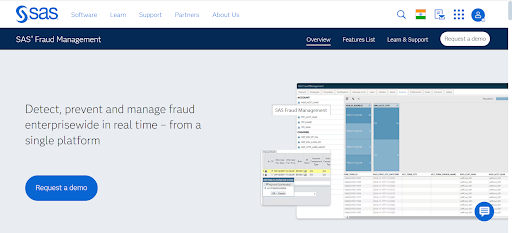
SAS Fraud Management uses advanced analytics and machine learning techniques to pinpoint fraud while it happens over the various transaction channels. It is customizable, and its detailed reports make it a good choice for massive companies and financial institutions that demand solid fraud protection.
2. Kount
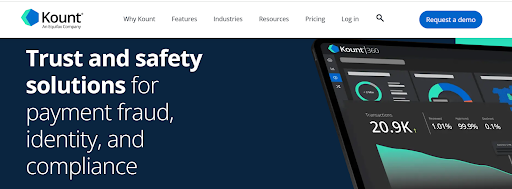
Kount applies AI-driven fraud detection to safeguard e-commerce and subscription businesses against fraudulent transactions. It minimizes chargebacks and is easy to integrate with many popular payment gateways, so it’s a great fit for online merchants.
3. Forter
Forter is a fraud detection solution designed for real-time decision-making without disrupting the customer experience. Using AI and machine learning protects businesses from fraud while minimizing chargebacks, making it suitable for a variety of industries.
4. Signifyd
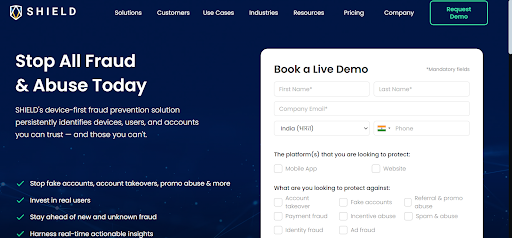
Signifyd offers 100% chargeback protection and uses AI to detect fraud. It provides real-time risk scoring, which makes it suitable for e-commerce businesses seeking a secure, hassle-free payment system.
5. Riskified
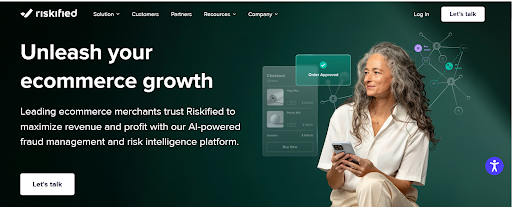
It uses machine learning to assess every transaction and then makes real-time decisions regarding fraud risk. Its platform provides guaranteed fraud protection, which can be very helpful for merchants who need to optimize both security and customer experience.
A lot of things are clear by now. However, if you are thinking about how to get such a feature-rich software, then we’ll cover that in our next section. ScalaCode, a leading app development company known for its cutting-edge enterprise web app development services, can help you out here.
How Can ScalaCode Help You Build a Fraud Detection App?
Building an app that gets successful among users is not easy anymore with the increasing competition. You need a trusted and expert team and that’s where ScalaCode comes into the picture. It’s the best mobile app development company in India with experience of more than 11 years.
We know the latest technologies and trends that make your app stand out in the market. Our software development services help your business to grow with the perfect blending of innovation and expertise.
Whether you want to implement advanced fraud detection strategies, like anomaly detection or ML models, we offer you end-to-end development solutions.
Parting Thoughts
Data breaches can completely destroy your business overnight. So, in order to keep it safe, you need state-of-the-art fraud detection software that not only analyzes the threat but helps you to fight against it. It should have all the necessary features that can check suspicious actions instantly, offer detailed insights for investigations, and adapt to the changing fraud strategies.
A trusted fraud mobile app development company like ScalaCode can help you in this. We know what it takes to build a world-class app, so don’t wait much. Contact us today to get your next hit app.