
Imagine a scenario where every student possesses their own instructor, who will guide them through learning, individualized instruction regarding their needs, preferences, and pace. Indeed, it is not a bright dream but everyday reality as a result of possibilities offered by Generative AI.
Parallelly, teachers are coming closer to knowing where the learners would, thereby making every learner be able to reach unmeasured potential.
This blog will explore everything in how generative AI makes waves in the education system and reads the personalized experience in learning. Without further ado, let’s go right to the persuasive beginning!
Understanding Generative AI
Generative artificial intelligence generates data, content, or information that is new or novel based on a pattern learned from previous data. This is something quite different from the interpretation or prediction of existing data. Instead, these intelligent machine systems create original text, images, music, code, or even video.
Some of the advances in this domain include Generative Adversarial Networks (GANs), Transformers, and Diffusion Models. They are all built entirely on computers, generating an output that looks much like it was completed by humans.
There are so many types of generative artificial intelligence. For example, tools like ChatGPT and DALL.E are great examples of how generative AI can perform human-like creativity.
The Market Scenario of Generative AI in Education
The increasing investments in EdTech and personalized learning are becoming major drivers in the rapidly increasing market of generative AI in education. This is one of the key reasons why generative AI development services are so high in demand. Here are a few major statistics that talk about the present phenomenon:
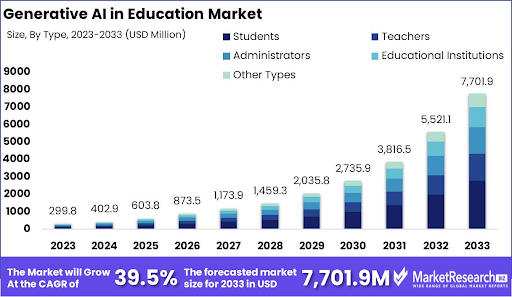
- The size of generative AI in the education industry is predicted at about $7,701.9 Mn by 2033 from $299.8 Mn in 2023. This means it is growing with a CAGR of 39.5% during the projection period from 2024 to 2033.
- The global AI in education market-size was predicted to be $5.88Bn in 2024 and is going to increase with a CAGR of 31.2% from 2025 to 2030 driven by the increasing demand for personalized learning experiences.

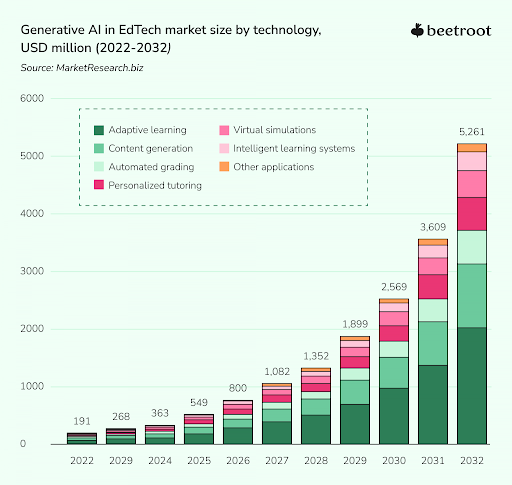
- The generative AI in education research projects its market size to reach $5.3 billion by 2032. This is growing at a 40.5% CAGR between 2023-2032.
Generative AI in Education: Different Applications
Generative AI has a lot of potential to change different domains. Here are some of the key applications of generative AI in education:
1. Custom-made Learning Materials
Generative AI provides an extremely customized learning experience. It personalizes the learning, strengths, interests, and other personal details of each student. For example, the struggling learner can have a whole lesson, quizzes, or some related activities that help him to learn in a better way. At the teacher’s end, it can create multiple things such as summaries, flashcards, and explainer videos, maximizing the information given to students on difficult-to-learn topics.
2. AI Tutors and Chatbots
This is another interesting benefit of AI in education. AI tutors and chatbots give much-needed rest to the teachers as they don’t have to pay attention to all the students simultaneously. AI-enabled tutors and chatbots, for example, provide timely educational help to all pupils as and when required.
All that would be left would be to suspend an action: answer any question asked within seconds, teach how the student solves the problem, and provide a comprehensive facility in subjects of interest. Just like a one-on-one teacher, they would do the same activity but conceptualize personalized misunderstanding levels according to a student’s individualized misunderstanding.
Hence, daily support all the time would allow easy and lighter access to education while reducing the need for human educators themselves. Chatbot development can enable real-time feedback, further enhancing a self-paced learning environment.
3. Immersive Learning Through VR and AR
Generative AI along with the virtual and augmented realities transforms traditional education to immersing learning such that the student learns experiences like exploring historical buildings, conducts experiments in a virtual laboratory, and generates three-dimensional simulations of concepts that are not easy to observe in science.
AI makes these scenarios more real and interactive, thus making engagement deeper and increasing understanding. Meet different types of learners, and make things easy to understand and fun to learn. Immersive learning will, for sure, go beyond retention; it will cultivate interest, spark creativity, and promote critical thinking.
4. Language Translation and Accessibility in Real Time
Generative AI has a potential to bring learning to worldwide access through real-time translation as well as other accessibility features. Such AI applications would actually create content in all languages, generate subtitles, and even translate to sign language so that no educational barriers would be left.
In addition, this brings learning materials for a diverse group of students such as those without disabilities or from a different language background. Furthermore, it can bring knowledge sharing and cross-cultural collaboration, thus enhancing the educational experience of students.
Benefits of AI for Personalized Education
Here are some key benefits that generative AI serves to education:
1. Engaging the Learner
Most students lose interest in lessons when the curricula are too easy or hard for them. However, personalized learning creates an infusion of information that is just right for their levels of ability, thus improving student engagement. Personalized learning technology increases student engagement by 10-20% compared to traditional methods.
2. Deeper Understanding of Concepts
Personalized learning actually lets learners concentrate on the components with which they have trouble and run them through sections they have already developed knowledge of. This means that the hard parts can be returned to, and then a stronger, deeper understanding can be formed. Research has shown that personal learning in this way generally leads to mastery of content.
3. Better Student Experience
Generative AI keeps up with continuous assessment which tends to show the areas that students need help. This means that feedback and support reach students almost immediately resulting in better grade performance and ultimately better learning outcomes. Among the students in Taiwan, the recipients of adaptive learning systems which profiled their emotional and cognitive performances excelled compared to those undergoing traditional methods.
4. Broader Access
Generative AI provides exceptional opportunities to students with disabilities or learning differences. Automatic alteration of the content by the AI tools for students with conditions like dyslexia or ADHD has made the learning environment inclusive. Nobody would be left behind, no matter the learning needs.
5. Lower Teacher Load
Most often, teachers handle a lot of tasks in their schools, especially with large classes. Generative AI can help take away some of this workload by automating several tasks such as grading and content generation. This would allow a teacher to spend more time mentoring pupils and focusing on their specific needs.
Also Read: Benefits of Blockchain in Education
Case Studies of Generative AI in Education
Generative Artificial Intelligence is revolutionizing the education sector through personalized learning, administrative management, and assistance to students with various needs. Here are three of the most prominent case studies illustrating its impact:
AI Language Learning from Duolingo

While most of them do understand, Duolingo also uses generative AI to create really personal language learning experiences for students. The adaptive algorithms measure the performance as well as the learning pace of students in real-time and change the lesson difficulty accordingly.
The AI chatbot from Duolingo lets students have simulated conversations with it, the objective of the tool is to help students practice speaking and listening skills in different languages. The tools should make language learning efficient but, at the same time, fun.
Khan Academy AI-Tutoring Tool, “Khanmigo”

One such ground-breaking invention by Khan Academy is “Khanmigo,” the generative AI tutor that emulates a personalized one-on-one teaching style. It provides contextual attention information for students, simplifies never-ending topics, and inspires them to solve solutions with an intelligent chat.
Beyond academia, Khanmigo also helps teachers to come up with various classroom strategies for providing many resources for personalization in terms of learning, for example, by developing new educational materials.
Socratic by Google: AI-Based Problem Solver
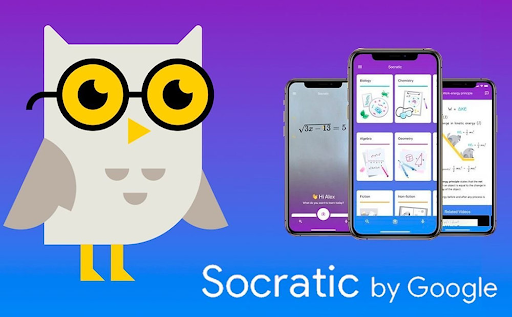
Google’s Socratic makes use of AI to change the way students think about academic problems. A user takes a picture of a question or writes it into the application, and Socratic provides step-by-step explanations, curated video tutorials, and related resources in response. So, this AI goes on to teach the underlying concepts that need to be understood so that a student can form a good concept of subjects like mathematics, science, literature, and social studies.
ScribeSense: An EdTech Company Automating Assessment
By replacing manual grading with generative artificial intelligence, ScribeSense will forever transform the grading system into a new dimension, automating assessments from all assignments performed, typed, and handwritten.
Besides the exact grading of diagrams and equations with very little human input, it brings detailed reports for teachers on class-wide and individual performance trends for data-driven adjustments in teaching. This minimizes the administrative load on teachers and frees more time for impactful student interaction.
Quizlet’s AI-Powered Learning Assistant

Quizlet has one of its platform’s most enriching features, where integrated generative artificial intelligence improves study efficiency and retention. Learners can generate their own tailored flashcards, sample practice quizzes, and even summary notes for study purposes.
Its AI-powered assistant throws instant explanations and produces truly interactive pathways for studying, thereby catering to students’ greatest and weakest learning preferences. Personalizes sheer memorization and transforms it into learning.
If you also want to create an app like this, you can hire a reliable AI mobile app development company in India.
Potential Challenges and Considerations while Implementing AI in Education
Artificial intelligence has great opportunities in education, but it also throws some challenges to consider. In context, UNESCO’s recommendations on AI addressed certain ethical considerations by indicating how deeply AI models human thought, reasoning, and social interaction, particularly in the earliest stages of education when a young person’s mind is most malleable. This brings to the education technology leaders three things to be cautious about as follows:
1. Data Privacy and Security
Good AI systems rely on huge amounts of student data to function properly, and this makes data privacy a primary concern. A data breach can have disastrous effects, from risking student security to harming institutional reputation and eroding trust among parents and educators alike.
The K-12 Cyber Incident Map, for example, has listed 1,619 known public cases of cyber incidents throughout US schools since 2016. In general, this information can only be protected using strong encryption protocols, compliance with data protection regulations, and constant monitoring.
2. The Emerging Role of Educators
AI would not take over the functions of teachers but redefine their roles. The role of teachers will increasingly shift from creating instructional materials to enhancing access to AI-generated content. For those who are not so technologically savvy or who are reluctant to adopt it, this transition can be challenging.
It becomes pivotal, then, that professional development and resources are made available to school teachers to feel they are adequately prepared and empowered to use AI in classrooms.
3. Equitable Access
AI technology will increase concern over the widening digital divide, especially as wealthier schools may have the luxury of adopting advanced and sophisticated AI tools. An underserved community will be left very far behind. Equitable access to AI-powered educational technologies ensures that all students, regardless of socio-economic background, can avail themselves of the same learning opportunities and advantages.
Learn More: Generative AI for Businesses
Beyond Personalized Learning: Future Innovations in Generative AI for Education
Generative AI in education can do much more than simply develop customized learning experiences for individual students. The possibilities for its innovative applications in education are so wide-ranging that they could potentially transform the entire landscape of how knowledge is imparted and acquired. Here are some forward-looking ideas for future innovations in generative AI for education:
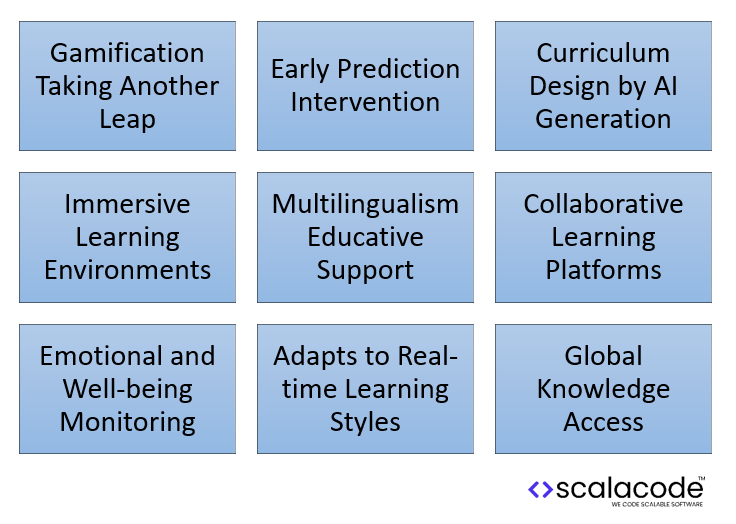
1. Gamification Taking Another Leap
Generative AI will make it possible to construct an adaptive, story-based, educational game for each student, with respect to his or her skills and preferences, that makes learning pretty fun while reinforcing key concepts.
2. Early Prediction Intervention
Through predictive algorithms, it can determine which students are most at risk and prescribe interventions early on, thus allowing targeted support from educators that will improve academic performance and decrease dropout rates. Furthermore, predictive models can identify learning behavior in order to predict the issues that students may face in future topics, allowing them to be prepared already.
3. Curriculum Design by AI Generation
Generative AI can help educators in constructing fluid and customizable curricula, adapting to the demands of the class. By analyzing different data such as student performance or emerging educational trends, AI would recommend the best lesson plans, activities, and resources that would contribute to enhancing learning experiences.
4. Immersive Learning Environments
AI, which is generative, can manufacture virtual and augmented reality-soaked environments that transport students inside the learning process, much like real-life situations. It is relatively real-life experience-based learning in subjects such as science, history, and vocational training, as it provides students with an interactive way to grasp concepts that can become quite complex.
5. Multilingualism Educative Support
AI-based translation technologies tend to complete language evolution gaps in education through on-demand translations and localized content which ensure equitable access to quality education for more diverse linguistic backgrounds of students.
6. Collaborative Learning Platforms
With Complementary Skills and Interests in Place, Generative AI offers excellent facilitative, collaborative learning. Because it could also generate group projects and discussions other than making them engaging, it would contribute more toward developing a mindset towards teamwork and peer learning for every individual.
7. Emotional and Well-being Monitoring
Highly emotional intelligent AI systems can track the mental and emotional well-being of students. It can even provide for necessary intervention, such as advice, or modify their course load with timely identification of any indication of stress, anxiety, or disconnection, for a complete overall development.
8. Adapts to Real-time Learning Styles
With this capability, Generative AI would adapt education content real-time according to the preferred learning style of the student, so that whether they were visual learners, audio or kinesthetic, material delivery would dynamically change to maximize engagement and retention.
9. Global Knowledge Access
With regard to huge data stores, they can make generation AI students have access to the latest knowledge around the world. Any child in some remote or underprivileged communities would benefit from such democratized learning materials.
How ScalaCode Can Assist You in Implementing AI in Education
ScalaCode is indeed a reliable eLearning software developing company that has a crucial role to play in empowering educational sectors to really utilize the great potential of AI technology in education. We specialize in designing innovative, customized solutions that are perfect matches with what teachers, administrators, and students need.
Our programmers are equipped with advanced AI algorithms, and they work on designing user-friendly, intelligent educational platforms. We provide personalized learning experiences, smart-generated content, and predictive analytics with automated processes that transform old-age schooling into interactive, futuristic systems.
Final Thoughts
Generative AI in education has changed the face of education forever; making the best of personalization and creating the greatest efficiencies possible. However, bringing AI into the educational fold must still be done with care and consideration. You must hire AI developers in India with sufficient expertise and knowledge.
With knowledge and experience in the field of elearning software, ScalaCode is able to guide the visionary educational institution into the adoption of artificial intelligence with confidence and ethical handling of its potential bounty and challenges. Together, we can mold a future-ready student within a stronger, fairer education system. So, what are you waiting for? Contact us today and let’s discuss your project today.
FAQs
Q1. What exactly is Generative AI, and how does it differ from other traditional AI?
Generative AI is artificial intelligence generating entirely new, entirely original data, content, or solutions after learning the patterns of the pre-existing data. Traditional AI, however, falls short of interpretation or prediction, which is primarily based on existing input. Generative AI is about output-producing brand-new, unique text, image, music, or video.
Q2. What benefits could generative AI bring about for individualized learning?
Generative AI will be using individualized lesson plans, quizzes, and flashcards by matching each student’s learning-slanting pace and preference to that student’s strengths and weaknesses. A user is interestingly engaged in real-time feedback to focus on weak learned areas to revisit the difficult parts.
Q3. What are some barriers to the application of AI in education?
Important challenges are data privacy and security issues, access equality to AI-powered tools, and teacher training for proper incorporation of AI in teaching. These barriers would require ethical AI principles, investment in infrastructure, and inclusive education policy.
Q4. Can generative AI replace teachers in the classroom?
Generative AI does not recruit teachers; instead, it complements their work by performing some of the jobs such as scoring, generating content, and individualized support. Therefore, there will always be children who will go to their teachers for guidance, for emotional support, and for development of critical thinking skills.
Q5. How can generative AI contribute to the benefits of accessibility in education?
Generative AI supplements its real-time contextual language translation with accompanying caption generation and alters learning materials for differently-abled or diverse learning students. In this way, students from diverse backgrounds and abilities can benefit equally from quality education.
Q6. How secure is the data that is used by AI in education?
AI-enabled educational data use strong encryption protocols and adhere to strict compliance with data protection legislation. However, continuous monitoring of those systems, along with the implementation of robust cybersecurity measures, would ensure the safety of student and teacher information.
Enable personalized learning, adaptive content, and real-time feedback.