
AI fraud detection services that score risk in real time
ScalaCode builds AI fraud detection services for fintech, insurance and eCommerce teams that want lower fraud losses and a shorter manual review queue. The models score transactions, accounts and claims on your own data, run next to your rules engine and send uncertain cases to your reviewers.
AI systems running in production
projects shipped since 2012
clients served since 2012
on Clutch, from 33 verified reviews
countries with live clients
9001:2015 certified delivery process
Trusted by teams at








Clutch 4.8/5Verified client reviews

GoodFirmsReviewed software partner
ISO 9001:2015Certified delivery process
GDPR compliantData handled under EU rules
What AI fraud detection services involve
The model is one part of the work. Most of the effort goes into fraud labels, features that are ready in milliseconds, the decision flow and the review screen your analysts use.
- What is AI fraud detection?
- AI fraud detection is the use of machine learning models to score each transaction, login, application or claim for the likelihood of fraud, based on patterns learned from past fraud and normal customer behaviour. Low scores pass, high scores are blocked or stepped up, and uncertain cases go to a human reviewer.
Related: Machine learning development covers the modelling behind fraud scores. AI applications lists the other AI products we build.
Rules, a machine learning model, or both
Rules catch the fraud schemes you already know and are easy to explain to an auditor. A model scores the patterns nobody has written a rule for yet, which is why most fraud teams run the two together.
| Rules engine only | ML model only | Rules plus an ML score | |
|---|---|---|---|
| How it decides | Thresholds and lists written by analysts | A risk score learned from labelled fraud history | Rules handle hard blocks and the score ranks everything else |
| New fraud patterns | Caught once someone writes a new rule | Flagged when behaviour looks like past fraud or departs from the norm | The score flags it, and analysts turn repeat patterns into rules |
| False positives | Climb as rules pile up and overlap | Controlled by where you set the score cutoff | Fewer overlapping rules, with cutoffs set to your review capacity |
| Explaining a decision | The rule that fired | Reason codes from SHAP values | The rule that fired or the top reason codes |
| Data it needs | Analyst knowledge of known schemes | Confirmed fraud labels such as chargebacks | Both, plus a feedback loop from your reviewers |
The modelling work behind the score is covered under machine learning development.
Fraud detection AI we build
Each system includes the data pipeline, the model, a decision API and a review screen, and plugs into the payment, onboarding or claims flow you already run.
Real-time transaction scoring
We score every card payment, wallet top-up or bank transfer for fraud before authorisation, with your existing rules as the fallback if the model is unavailable.
Application and new account fraud
We score sign-ups and credit applications by combining device, identity and behaviour signals. Borderline applicants go to manual review with a reason code.
Account takeover detection
We score logins and sessions against each user's usual pattern and trigger step-up authentication through the identity provider you already use.
Fraud rings and synthetic identities
Graph analysis links accounts that share devices, emails, addresses or payment details, and surfaces clusters that pass single-record checks.
AML alert triage
Our models rank anti-money laundering alerts by risk, so investigators open the strongest cases first. Your compliance team makes the final call, as covered under AI for fintech.
Refund, promo and chargeback abuse
Our models catch return fraud, promo code abuse and friendly-fraud chargebacks in eCommerce, and attach the evidence for each flag for your policy team. See AI for retail.
Insurance claims fraud scoring
We score claims at first notice of loss and flag them for investigation, drawing on claim history, provider patterns and document checks. More on our insurance software page.
Review queues for analysts
Analysts see the score, the reason codes and the linked accounts for each case on one screen. Every analyst decision flows back as a training label.
Monitoring and retraining
Drift alerts watch inputs and scores, and a retraining pipeline promotes a new model only after it beats the current one on recent fraud cases.
Reviewers spending their day on alerts that turn out to be legitimate
Bring your current rules, your chargeback or loss history and where the transaction data lives. In 30 minutes the ScalaCode team will tell you where a model is likely to help and what the first step costs.
Four patterns we ship in every fraud system
Fraud models break in production through slow scoring, stale features and labels that arrive weeks late, so these patterns go in from the first release.
Score in the payment path, with rules as the fallback
The score API sits inside the authorisation flow. If it times out, your existing rules decide alone, so a model outage never stops payments.
Shadow mode before cutover
A new model scores live traffic next to your current setup. Its decisions are logged and compared before it is allowed to block anything.
Three outcomes per score
Low scores pass, high scores are blocked or stepped up, and the uncertain middle goes to a reviewer. Cutoffs are set to the queue size your team can handle.
Reviewer decisions become labels
Every analyst decision and every chargeback is written back as a label, so the retraining pipeline keeps up with new fraud patterns.
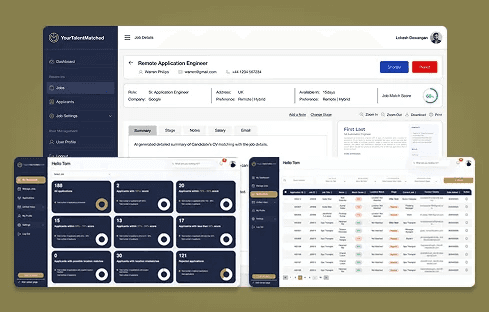
Talent Matched: AI scoring that ranks every candidate for recruiters
A multi-tenant ATS and the TM Discover search engine rank candidates for each role with semantic matching and a private LLM, and the AI agent explains every ranking. Recruiters work from the ranked list inside the platform they already use.
Ranking and shortlisting time, per the client
How we build a fraud model
A first model scored against your historical fraud cases takes 3 to 4 weeks as a proof of concept. Moving it into your payment or onboarding flow is planned in writing once it beats your current rules.

One team, 14 years of shipping
projects shipped since 2012
AI systems running in production
clients across 45+ countries
years building software, since 2012
Controls auditors and regulators ask about
Card data, identity data and decision logs carry compliance duties, so the controls are written into the scope during discovery.
A decision log for every score
Each decision is stored with the model version, the inputs, the score and the reason codes, so any outcome can be traced later.
Reason codes per decision
SHAP values turn each score into the top factors behind it, in a form analysts, customers and auditors can read.
PCI DSS and data access
PCI DSS controls for card data are scoped during discovery. Access controls carry through, and sensitive fields can be redacted from logs and training sets.
People decide the uncertain cases
Uncertain cases go to human review, and new cutoffs or retrained models wait for a named approver on your risk team.
Frameworks and platforms we work with
We fit the stack to the payment, data and cloud platforms you already run.
Where fraud models pay back first
A fraud model pays back fastest where the same decision repeats at volume and confirmed fraud is already recorded as chargebacks, write-offs or investigation outcomes.
Banking and lending
- Application fraud
- Transaction monitoring
Payments and wallets
- Authorisation scoring
- Merchant onboarding risk
Insurance
- Claims fraud scoring
- Application risk
Retail and eCommerce
- Checkout fraud
- Refund and promo abuse
Gaming and betting
- Bonus abuse
- Multi-accounting
Telecom
- SIM swap fraud
- Subscription fraud
Healthcare
- Billing anomalies
- Claims review
SaaS platforms
- Sign-up and trial abuse
- Subscription payment fraud
AI fraud detection cost
The discovery sprint is free and ends in a written proposal with a fixed quote. A fraud model proof of concept on your historical data starts at $4,999 and takes 3 to 4 weeks.

Discovery sprint
1 to 2 weeks and free, ending in a written proposal with a fixed quote. A data and label audit, a baseline, a go or no-go and a build plan.
Best for teams unsure whether their fraud labels are good enough.

Proof of concept, then build
A first model from $4,999 in 3 to 4 weeks, scored against your current rules. If it wins, we quote the production build with a fixed schedule.
Best for one fraud type with a clear owner on the risk team.

Dedicated ML team
ML and data engineers inside your process from $1,799 a month per engineer. You interview and choose who joins.
Best for fraud teams with a roadmap of models to build and run.
Rated 4.8/5 by the clients we build for
Verified reviews from Clutch and GoodFirms, and clients on camera.
33 verified reviews on Clutch

 Clutch review★★★★★
“What sets ScalaCode apart is their technical AI expertise and an understanding of a client's organizational ethos.”
Clutch review★★★★★“They didn't just build an algorithm; they built a tool that respects the nuances of Indigenous reconciliation.”
 GoodFirms review★★★★★
“They built a high-performance, AI-powered platform that transformed video engagement for learning.”
Clutch review★★★★★“What stood out to us as most impressive and unique about ScalaCode was their ability to humanize complex AI.”
Clutch review★★★★★“They managed to balance technical skill with an understanding of the marketing world.”
Clutch review★★★★★“Their team often proposed innovative features we hadn't considered.”
Clutch review★★★★★“What I found impressive about ScalaCode was their ability to listen to the soul of an educational mission.”
AI fraud detection FAQs
We will answer anything not covered here on the call.
How does AI fraud detection reduce false positives?
A model weighs many signals at once, so it can pass a legitimate customer that a single rule would have blocked. We set the score cutoffs with your risk team against the review capacity you have, and measure false positives on a hold-out set of recent cases before launch.
Can it work alongside our rules engine?
Yes, and most teams keep their rules. The model adds a risk score that your rules engine reads as one more input, while hard blocks such as sanctions matches stay as rules. If the model API is unavailable, the rules decide on their own.
How fast does the model score a transaction?
Fast enough to decide inside your authorisation or onboarding flow before the customer moves on. We agree the latency budget with you during discovery, design the feature lookups and serving setup around it, and load test against that budget before launch.
How do you keep the model current as fraud changes?
Reviewer decisions and chargebacks flow back as labels, and dashboards track drift in inputs and scores. A gated pipeline retrains the model, runs it in shadow mode and promotes it only after it beats the current model on recent fraud cases. New patterns your analysts spot can go in as rules straight away. You can also hire ML engineers to own the models inside your team.
How do you explain a fraud decision to auditors?
Each decision is logged with the model version, the inputs, the score and the top reason codes from SHAP values. Auditors can trace any outcome to the model and data that produced it, and every retrained model carries a sign-off record from a named approver.
How much does an AI fraud detection system cost?
The discovery sprint is free and ends in a written proposal with a fixed quote. A proof of concept on your historical fraud data starts at $4,999, and a dedicated ML engineer starts at $1,799 a month. The production build is quoted after discovery, because data sources, latency needs and compliance scope set the final figure.
How much fraud history do we need?
You need confirmed fraud labels, such as chargebacks, write-offs or investigation outcomes, for the fraud types you want to catch. The data audit in discovery tells you whether your history is enough. If it is thin, anomaly detection can run first while labels build up.
Does our transaction data leave our environment?
Training and scoring run in your cloud account. Access controls carry through, sensitive fields can be redacted, and PCI DSS controls for card data are written into the scope. The code and trained models are yours from the first commit, and NDAs are standard.
One team, matched to your working hours
We schedule 4 to 6 hours of daily overlap with US time and a full working day with the UK and Europe, so reviews, demos and fixes happen during your working hours.
What sets ScalaCode apart is their technical AI expertise and an understanding of a client's organizational ethos.
Find out where a fraud model would cut your losses
- 30 minutes with the ScalaCode team
- Whether rules, a model or both fit your fraud problem
- What is realistic, what it costs and how long it takes
“What sets ScalaCode apart is their technical AI expertise and an understanding of a client's organizational ethos.”
Laurence Longet, Director, MGEN (Clutch review)