
Within the time span of a moment, the idea behind the abbreviation AI (Artificial Intelligence) found its way into the realm of reality right from the fantastic world of science. What used to be solely a fictional invention in science-fiction films and novels is now embedded in every single detail of our existence in media fed directly into our cerebral cortexes, to the merging of humans with our environment.
This rapid advancement has produced some of the best AI trends that are capable of remodeling our future by impacting the industry and society in many ways.
Artificial intelligence is just not restricted to automating regular tasks, but it is more than that. Which shows that the prevalence of the AI era is no longer a distant dream: it’s here. From forecasting to making data-driven decisions, artificial intelligence has come a long way.
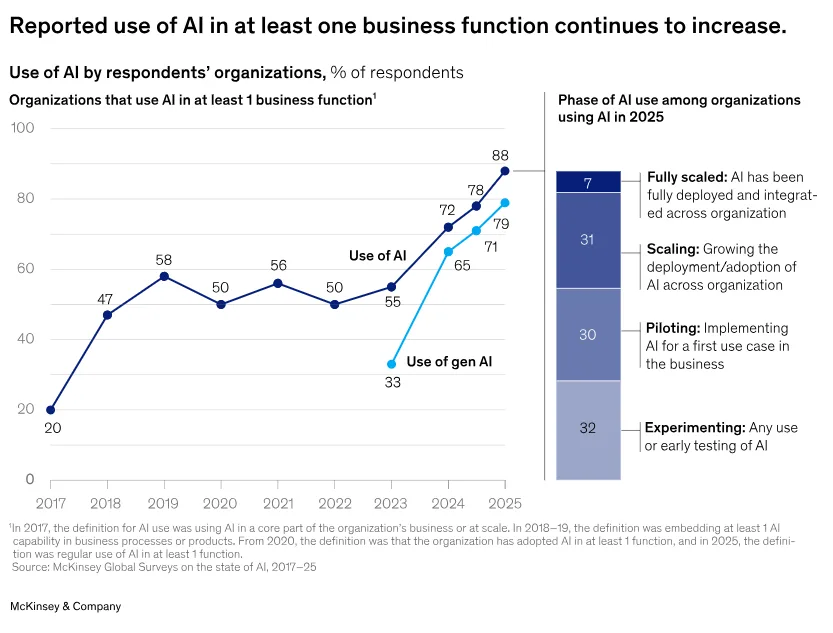
According to a survey by Mckinsey, the use of AI and Gen AI has accelerated in the past few years. This rapid advancement has produced some of the best AI trends that are capable of remodeling our future by impacting the industry and society in many ways.
In different fields, artificial intelligence tends to trend differently. For instance, contemplating the automobile industry, there is the Tesla car, which uses AI to determine routes and the performance of electric cars. Similarly, in the healthcare industry, the latest AI trends revolve around predictive analytics and personalized medicine.
But what about other sectors? What are the new trends in AI? How are artificial intelligence trends in business evolving? You might have these questions in your head. So, herein, we have decided to list down some of the emerging AI trends in 2026.
Let’s get to know the top 35 AI trends…
Artificial Intelligence Market Trends Report of 2026
As per Mordor Intelligence, the artificial intelligence market is expected to grow to USD 434.42 billion in 2026 and is forecast to reach USD 2,503.13 billion by 2031 at a 41.95% CAGR over 2026-2031.

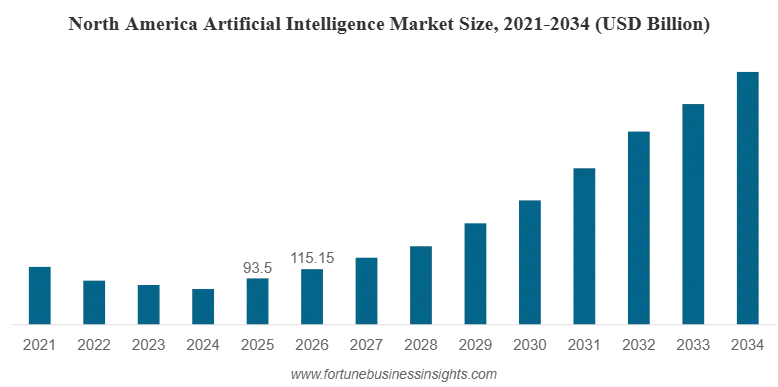
Whereas, as per Fortune Business Insights, the global artificial intelligence market size was valued at USD 294.16 billion in 2025 and is projected to grow from USD 375.93 billion in 2026 to USD 2480.05 billion by 2034, exhibiting a CAGR of 26.60% during the forecast period. North America dominated the global market with a share of 31.80% in 2025.
The top-performing companies are being influenced by emerging AI trends and continuously spending on AI consulting services. This proves the relevance of the technology for competitiveness.
Looking forward to the year 2026, some exciting AI technology trends are likely to emerge. Some of the recent artificial intelligence trends are mentioned below.
Top 35 AI Trends To Look For in 2026
Given the emergence of groundbreaking AI concepts like Artificial General Intelligence, Ethical AI, Generative AI, AI Agents, Multimodal AI, and Shadow AI, the future of AI appears incredibly promising.
To thrive in this dynamic landscape, every enterprise must proactively monitor and adapt to these evolving AI trends. This proactive approach is crucial for successful future-proofing in an ever-changing marketplace.
Here are 35 top AI trends for 2026 that will help the company understand how it can benefit from Artificial Intelligence for business development
1. Agentic AI for Business Automation
Agentic AI, which can perform tasks on its own, is definitely an AI trend to watch in 2026. There’s a lot of buzz around these autonomous AI programs. Everyone in the tech world is excited about the idea of AI working together to do real tasks, instead of just creating content.
Agentic AI is basically a new paradigm in AI where systems are designed to act independently and achieve goals with minimal human intervention. These agents can plan, execute, and adapt their behavior in dynamic environments, making them more capable of solving complex problems and interacting with the real world.
But, most of you might have a question – how it is different from Generative AI or traditional AI? Well, here is your answer!
Traditional AI vs. Generative AI vs. Agentic AI
| Feature | Traditional AI | Generative AI | Agentic AI |
| Core Function | Analyze existing data, make predictions, and automate tasks based on predefined rules. | Create new content (text, images, code, etc.) based on patterns learned from data. | Act autonomously to achieve goals, learn from interactions, and adapt to changing environments. |
| Level of Autonomy | Low: Relies on human input and predefined rules. | Low: Generates content based on prompts but lacks independent decision-making. | High: Can operate and make decisions with minimal human intervention. |
| Goal Orientation | Task-specific: Designed for specific tasks like classification, prediction, or automation. | Content creation: Focused on generating novel and creative outputs. | Goal-driven: Aims to achieve specific goals through independent actions and interactions. |
| Learning & Adaptation | Limited: Learns from data but within predefined boundaries. | Learns patterns from data to generate new content but adaptation is limited. | Continuous: Learns from experiences and adapts behavior to achieve goals in dynamic environments. |
| Examples | Spam filters, recommendation systems, AI fraud detection systems. | ChatGPT, DALL-E 2, Midjourney. | Autonomous robots, self-driving cars, AI-powered personal assistants. |
Talking more about this recent AI trend –‘Agentic AI’, this program has the potential to revolutionize various industries be it –
- Healthcare for the discovery of new drugs and personalized treatment plans
- Business for automating complex processes and optimizing supply chains
- Science for accelerating research and generating new hypotheses
- Environment for monitoring conditions and developing sustainable solutions
Moving on, Agentic AI, enabling independent action, is rapidly gaining traction. Tools like Salesforce’s Agentforce showcase this, automating tasks for businesses. While in the early stages, they require human oversight, and these AI agents adapt and make decisions, surpassing traditional automation.
2. Enterprise Generative AI
Most people have heard of ChatGPT, a powerful language model that can generate human-quality text. Did you know that ChatGPT acquired 1 million users just 5 days after its launch?
Yes, that’s true. You can see that in the below graph.
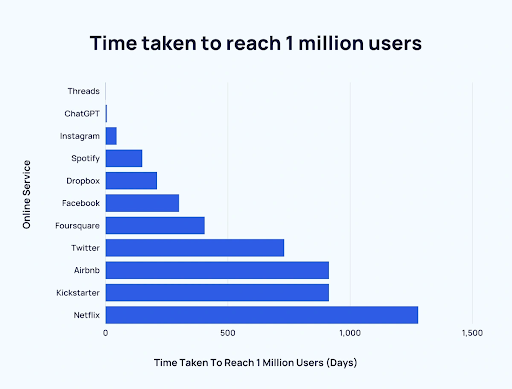
Now, what actually made this tool so popular was the ability to engage in natural language conversations. An AI-powered chatbot app like ChatGPT could understand and respond to prompts in a way that felt human-like. Besides, not just conversation, it’s a valuable tool for a variety of tasks. This ability to interact naturally with users was a key factor in its rapid adoption.
And, the secret element that is being used in this tool is Generative AI, which is now one of the biggest AI trends.
For many, generative AI development services may be a new term. So, let’s first understand what generative AI is.
Generative AI is a type of artificial intelligence that can create new content, such as text, images, or code, based on patterns it learns from existing data.
Based on Natural Language Processing (NLP), Large Language Models (LLMs), Generative Adversarial Networks (GANs), Variational Autoencoders (VAEs), Diffusion Models, Transformer-based architectures, and other advanced AI techniques, these systems can generate remarkably human-like content, from creative writing and realistic images to functional software code.
Generative AI, the latest trend in AI, has given rise to several popular tools, including:
| Type of Generative AI System | Examples | Key Players |
| Chatbots/LLMs | ChatGPT, Copilot, Gemini, LLaMA | OpenAI, Anthropic, Microsoft, Google, Baidu |
| Text-to-Image | Stable Diffusion, Midjourney, DALL-E | OpenAI, Midjourney, Stability AI |
| Text-to-Video | Sora |
As per the Statista report, the market for generative AI is growing very quickly. It was worth almost $45 billion in 2023 and is expected to grow by about $20 billion each year until 2030.

Therefore, no denying that in 2026, generative AI is expected to become even more sophisticated. It will be used widely to offer more personalized and creative outputs. The business leaders will tweak an AI model to generate content that aligns perfectly with their brand’s voice and style.
Apparently, it’s one of the top AI trends in marketing, helping brands engage with their audiences in unique ways.
Wondering how? No problem- check this blog on – how businesses can leverage Generative AI.
Furthermore, the major tech companies are heavily investing in the development and deployment of Generative AI. Some of them are:
- IBM
- Adobe
- Microsoft
- Meta, etc.
In short, this artificial intelligence-driven technology is poised to revolutionize numerous industries and reshape the future as we know it.
3. Predictive Analytics
Predictive analytics is an advanced analytical approach that uses historical data, statistical techniques, machine learning, and artificial intelligence to identify patterns and predict future outcomes. As a result, this helps businesses in anticipating the latest trends, customer behavior, risks, and operational issues. Not only this, but it also enables proactive decision-making and better strategic planning for all kinds of businesses.
Predictive Analytics Market Size
The global predictive analytics market size is projected to surpass USD 21.24 billion by 2026 and is anticipated to reach around USD 113.46 billion by 2035, expanding at a CAGR of 20.56% from 2026 to 2035.

Business Benefits of Implementing Predictive Analytics
- Improved decision-making
- Enhanced customer experience
- Cost reduction
- Risk management & fraud detection.
Explore More: Generative AI Vs Predictive AI
4. Conversational AI Powering Seamless Human-Machine Interaction
Conversational AI is another amazing artificial intelligence trend for 2026 that has seen a dramatic rise in recent years.
Think about chatbots and virtual assistants like Siri and Alexa – undoubtedly, they’ve become part of our daily lives. Haven’t they?
Of course! Research suggests a significant number of people will be using voice assistants. It’s estimated that:
- 88.8 million will use Google Assistant
- 84.2 million will use Siri
- 75.6 million will use Alexa.
This is where Conversational AI comes in. This technology allows machines to interact with humans in a natural, intuitive manner.
Companies are investing in these current trends in artificial intelligence to establish more natural interaction with their customers. This helps them keep customers happy and loyal. It’s a good idea to integrate conversational AI into an app by availing AI app development services from experts.
According to Gartner, conversational AI will reduce support costs by $80 billion by 2026.
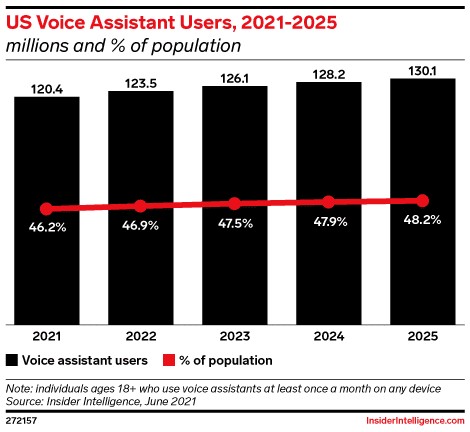
Besides, a forecast by eMarketer shows that the number of people using voice assistants in the US is increasing. This machine learning & artificial intelligence trend is driving the development of conversational AI software solutions.
Moreover, the conversational AI market trends are growing at a rate of approximately 25% each year. According to Markets and Markets, it is expected that conversational AI will increase from $13.2 billion in 2024 to $49.9 billion by 2030.
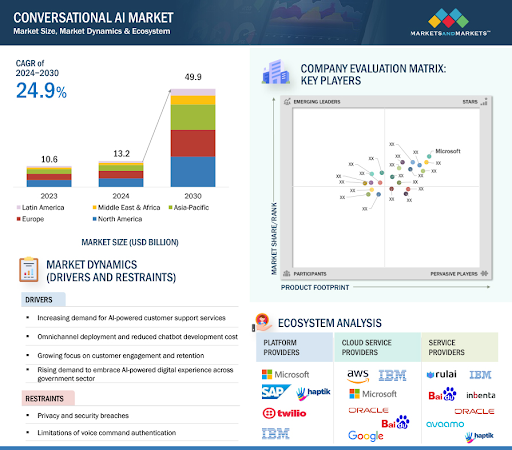
Therefore, businesses, whether small or large, need to understand that leveraging conversational AI solutions is a profitable deal for them. They can improve customer satisfaction, automate tasks, and gain valuable insights into customer behavior.
Partner with our Conversational AI development experts to build smarter, scalable, and secure AI solutions.
5. Multimodal AI
Multimodal AI is a young and dynamic market with many M&A activities taking place on a regular basis. Large firms are acquiring innovative firms with the aim of improving their competitiveness. This is one of the new trends in AI that organizations need to take note of.
But what is multimodal AI? Well, in layman’s terms, it’s an AI system that can work with multiple types of data at the same time, such as text, voice, and video. This is big because it emulates the way humans process information.
For instance, when reading a text, looking at a picture, and listening to music are activities that can access the media simultaneously. AI is gradually approaching that level of dealing with multiple tasks at once.
Moving towards the year 2026, there are numerous possibilities where multimodal AI can assist in training machine learning models. For instance, in healthcare, multimodal AI can combine medical images, patient records, and genetic data to provide better diagnostic and treatment options.
Grand View Research suggests that multimodal AI will be a significant part of emerging trends in artificial intelligence.
The market for multimodal AI is worth $1.34 billion in 2026 and is expected to grow by about 36% each year until 2030.

Thus, it’s true to say that by 2026, businesses will likely integrate multimodal AI to enhance user experiences, from customer service to content creation.
Learn More: Building Multilingual AI Assistants
6. Retrieval-Augmented Generation (RAG) for Enterprises
Retrieval-Augmented Generation (RAG) is an AI architecture that enhances large language models by combining them with enterprise data sources and internal systems. It utilizes documents, databases, and knowledge bases to provide you with the best results ever. With the help of implementing RAG, businesses can rely on it as it retrieves relevant, real-time information and uses it to generate accurate responses tailored to business needs.
Retrieval-augmented Generation (RAG) Market
According to a report published by MarketsandMarkets, the retrieval-augmented generation (RAG) market is projected to reach USD 9.86 billion by 2030, registering a CAGR of 38.4% during 2025–2030.
Why is RAG Important for Enterprises in 2026?
- Ensures AI outputs are grounded in enterprise data
- Scales across departments like HR, legal, sales, and support
- Enables secure, private, and compliant AI adoption
- Delivers up-to-date insights
7. Democratization of AI
The next 2026 artificial intelligence trends we have on the list are the Democratization of AI. AI democratization is all about making AI accessible to everyone, not just tech giants and large corporations. It means tools and platforms are becoming more user-friendly, allowing non-experts to build and deploy AI models. Democratizing AI involves making AI tools accessible to more employees, which can reduce costs, improve model accuracy, and boost business productivity.
Forbes reports that to maintain accurate and error-free data, 48% of businesses are optimizing the use of machine learning (ML), data analysis, and various other AI tools. That’s a significant shift. However, it’s crucial to ensure responsible and safe AI practices. To support this shift, many teams incorporate AI automation services to streamline model deployment, strengthen monitoring practices, and ensure that machine learning pipelines operate consistently in production environments.
Business leaders must understand who will use AI tools and establish clear standards. Upskilling employees can help mitigate talent shortages and improve efficiency. However, without proper guidance, AI can introduce biases and inaccuracies.
To minimize risks, businesses should:
- Upskill and reskill workers to ensure they have the necessary expertise.
- Implement a training plan for non-technical teams.
- Consider using MLOps technology to simplify AI development and deployment.
By addressing these challenges, businesses can fully realize the benefits of AI democratization.
AI democratization will empower more people to innovate, leading to a surge in AI-driven solutions across various industries.
8. Collaboration of Humans and Robots (CoBots)
You have seen robots in industries, especially in the automobile manufacturing industry, but have you heard of collaborative robots or CoBots?
These are robots meant to complement human ability in the performance of certain tasks, thereby making human chores easier. MarketsandMarkets has in its report estimated the CoBots market will be worth $11.8 billion by the end of the year 2030.
Automation tools can undertake monotonous and risky operations that otherwise would be handled by human beings, hence freeing up human resources to perform higher-level tasks.
It also helps in making the environments safer to work in thus boosting productivity at the same time. Well, if you’re in the manufacturing or logistics business, it will be beneficial for you to have a glance at this latest AI innovation.
CoBots is actually one of the newest trends of AI and look like they show how technology could enhance our lives and contribute to the safety of workplaces.
9. Ethical / Explainable AI
Ethical and Explainable AI (XAI) is a concept that deals with AI systems that are transparent, fair, accountable, and can be easily understood by humans. It makes sure that AI decisions are explainable, auditable, and trustworthy and reduces bias, discrimination, and unintentional harm, particularly in high-stakes business situations.
Why Ethical / Explainable AI Matters in 2026
- Rising AI regulations and compliance requirements
- Increased demand for trust and transparency
- Higher adoption of AI in critical sectors
- Growing concerns around bias, fairness, and accountability
Business Benefits of Implementing Ethical / Explainable AI
- Reduced risk and liability
- Improved trust and transparency
- Regulatory compliance
- Bias detection and fairness
- Better decision validation
9. Model Context Protocol (MCP) and Agent Interoperability
One of the defining trends of 2026 is the rise of Model Context Protocol (MCP) and open standards for agent-to-agent communication. Until recently, every AI agent was a walled garden — integrating one with your enterprise tooling meant writing custom connectors, brittle webhooks, and fragile prompts. MCP changed that. It gives any AI model a standardised way to discover, call, and compose tools, data sources, and other agents.
For enterprises, this trend has three immediate implications:
- Faster AI integration — connect AI agents to CRM, ERP, ticketing, and data warehouses in days instead of quarters. See our AI integration services for enterprise-grade implementation patterns.
- Multi-agent orchestration — specialised agents (research, drafting, compliance, execution) can collaborate on a single task through a shared protocol layer.
- Vendor portability — switch between GPT-5, Claude, Gemini, and open-source models without rewriting your integration surface.
Teams scaling agentic workloads in 2026 are investing in MCP-native architectures, governance for cross-agent communication, and a clean tool catalog — the same way API management matured in the 2010s. Companies are actively hiring OpenAI developers fluent in MCP, function calling, and the Assistants API, making it a top-three priority for AI-first teams.
10. Digital Twins
Digital twins, virtual representations of physical objects or systems, are becoming essential for simulation, monitoring, analysis, and optimization across various industries. For example, digital twins in healthcare, manufacturing, automotive, smart cities, energy, etc.
Digital twins, virtual representations of physical objects or systems, are becoming essential for simulation, monitoring, analysis, and optimization across various industries.
This disruptive AI trend is particularly helpful for enterprises and can lead to significant improvements in their efficiency and performance in the workplace.
According to Gartner, approximately 50% of large industrial companies will be using digital twins to enhance their operations.
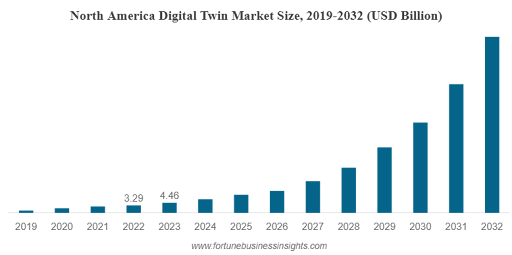
Further, as per the recent Fortune Business Insights, the market size of digital twins is ready to hit the figure of USD 259.32 billion by 2032. This result is driven by the increasing prevalence of IoT devices and sensors.
Moreover, the report suggests that the North American region currently dominates this market.
Besides, the key players of this AI trend who are leveraging digital twins include ANSYS Inc., Siemens AG, Hitachi Ltd., Autodesk Inc., Dassault Systemes SE, and PTC Inc.
11. The Quest for Artificial General Intelligence (AGI), Building Human-Level Intelligence
In the previous section, we discussed Agentic AI, a key component in the pursuit of Artificial General Intelligence (AGI).
Notable AI researcher Geoffrey Hinton has expressed concerns about the rapid progress towards AGI, suggesting it could be achieved sooner than many expect.
The quest for AGI, the development of artificial intelligence that can perform any intellectual task that a human can, has been a long-standing goal in the field of AI. While significant progress has been made in recent years, AGI remains an elusive goal. However, some experts believe that we are getting closer to achieving it than ever before.
Although the development of AGI is a complex and challenging task, it is one that is worth pursuing. If we can achieve it, it could lead to a brighter future for humanity. It is one of those AI trends in 2026 that holds immense potential to revolutionize various industries.
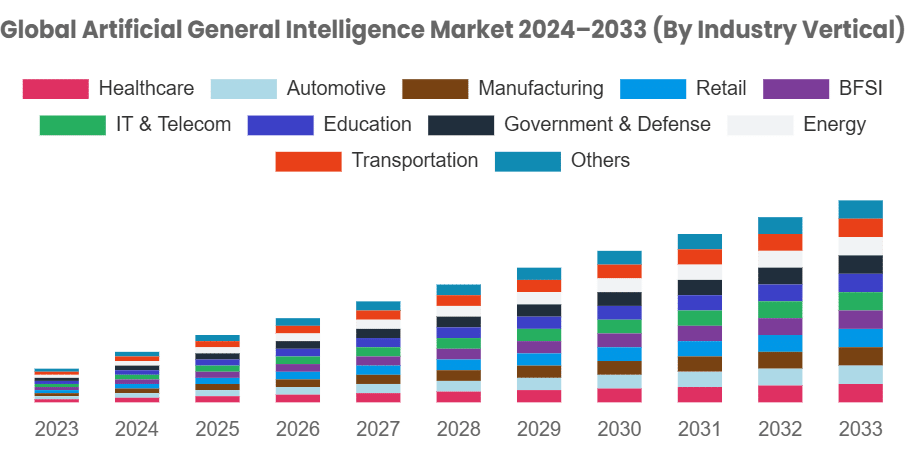
Major AI developers concentrated their research and development efforts on autonomous, cooperative machine-based problem-solving. Even non-AI companies began offering AI agents as a service (AI AaaS).
While leading AI labs pursue the ambitious goal of creating artificial general intelligence (AGI), most business applications require narrow, highly customized models. This trend emphasizes the importance of understanding the specific domain and intended use case of AI technology.
12. Sovereign AI
Sovereign AI refers to the development and deployment of AI systems within a country’s or organization’s legal, regulatory, and data-residency boundaries. It ensures that sensitive data, AI models, and infrastructure remain under local control, helping enterprises comply with data protection laws while safeguarding national and organizational interests. As governments and regulators introduce stricter data localization requirements, Sovereign AI is becoming a critical component of enterprise AI strategies in 2026.
In the case of businesses, Sovereign AI can allow them to implement the use of AI in a safe, regulatory, and trustworthy manner without having to be dependent on a foreign or centralized platform. It not only increases the privacy of data but also minimizes the security risks that can affect cross-border data and enables AI systems to adapt to the local languages, regulations, and industry requirements.
13. Responsible AI
Responsible AI is a concept of ethically, transparently, fairly, and accountably designing, developing, and deploying artificial intelligence systems. It aims at reducing biases, protecting users’ privacy, and ensuring data security, as well as making AI decision-making processes explainable and auditable.
With AI becoming an integral part of business processes, there is a need to have Responsible AI to ensure that customers, employees, and regulators all have confidence in the system.
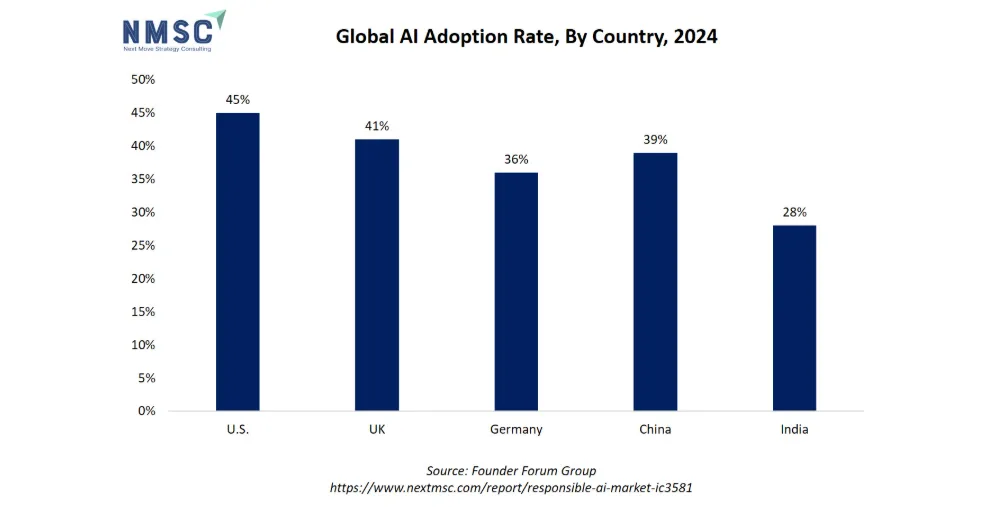
Responsible AI Market size Source
The Responsible AI Market size was valued at USD 1.58 billion by the end of 2025. The industry is projected to grow, hitting USD 10.26 billion by 2030, with a CAGR of 45.3% between 2025 and 2030.
14. AI Governance
“AI governance” refers to the policies, frameworks, and processes that guide how artificial intelligence systems are developed, deployed, monitored, and controlled within an organization. In addition to that, it also ensures that the AI usage aligns with legal requirements, ethical standards, data privacy laws, and internal business policies.
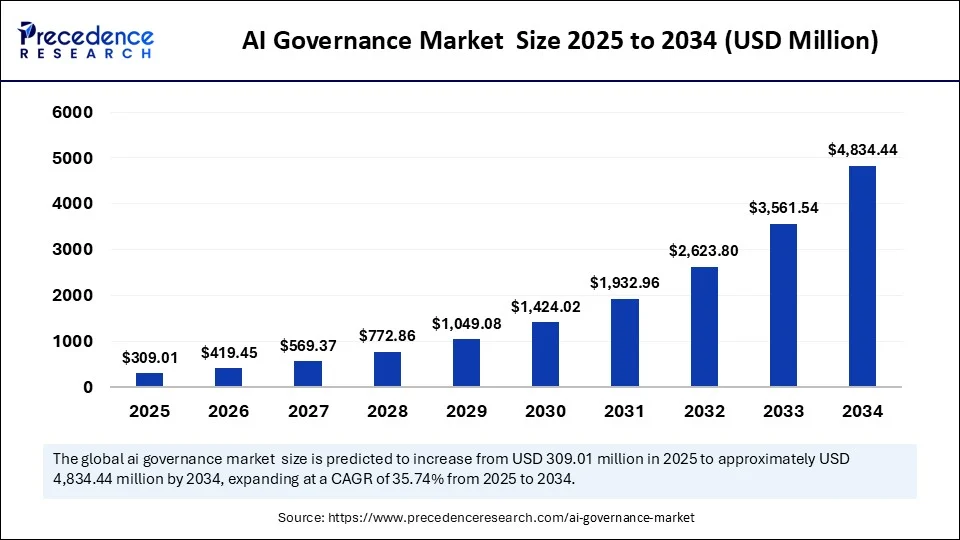
AI Governance Market Size
The global AI governance market size is valued at USD 309.01 million in 2025 and is predicted to increase from USD 419.45 million in 2026 to approximately USD 4,834.44 million by 2034, expanding at a CAGR of 35.74% from 2025 to 2034. The market growth is attributed to the rising adoption of AI across various industries and the need for transparent, accountable decision-making frameworks.
15. Adaptive AI
Another fascinating AI trend is Adaptive AI. This is where AI systems adapt and learn from their interactions in real time.
Adaptive AI systems are designed to learn from new data and adjust their behavior accordingly. This is particularly useful in dynamic environments where conditions can change rapidly. According to recent market research, the global adaptive AI market is predicted to increase at a CAGR of 42.6% from 2026 to 2030.
Traditional chatbots rely on predefined scripts. However, adaptive AI chatbots can analyze the tone, sentiment, and context of a conversation to provide more relevant and personalized responses. This is only one of its use cases; there are many more use cases of Adaptive AI for businesses.
16. Shadow AI
Shadow AI refers to the use of artificial intelligence tools and models by employees or teams without formal approval, governance, or oversight from an organization’s IT or compliance teams. However, Shadow AI poses significant risks, including data leakage of proprietary information, compliance violations (e.g., GDPR), and security breaches, as unauthorized AI tools can store inputs for training.
17. Sentimental AI
Sentimental AI, also known as sentiment AI, is a branch of artificial intelligence that analyzes human emotions, opinions, and attitudes from data such as text, voice, facial expressions, and behavioral signals. This AI model leverages natural language processing, speech analysis, and computer vision to help organizations understand how customers and employees feel, rather than just what they say.
Business Value of Sentiment AI
- Supports better, emotion-aware decision-making
- Helps businesses understand customer emotions
- Improves customer support quality by detecting dissatisfaction early
- Enables personalized interactions
- Tracks brand perception and customer sentiment
- Enhances employee engagement
18. Quantum AI
Quatam AI combines quantum computing with artificial intelligence to solve complex problems. By leveraging quantum principles such as superposition and entanglement, Quantum AI can process massive datasets and perform advanced optimization, simulation, and pattern recognition tasks at unprecedented speeds.
Along with that, it helps businesses tackle highly complex challenges such as risk modeling, portfolio optimization, drug discovery, supply chain optimization, and advanced forecasting. Moreover, it also enables companies to prepare for next-generation computing capabilities, gain early competitive advantages, and drive breakthrough innovation in industries.
Learn More: AI App Development Cost
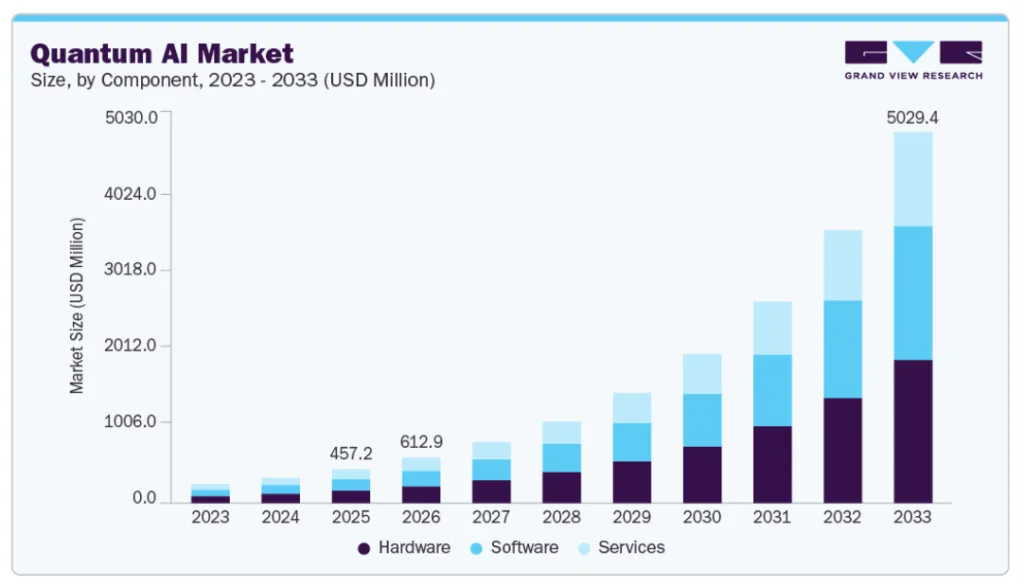
Quantum AI Market
The global Quantum AI market size was valued at USD 457.2 million in 2025 and is projected to reach USD 5,029.4 million by 2033, growing at a CAGR of 35.1% from 2026 to 2033.
19. Physical and Embodied AI
Physical and Embodied AI refers to artificial intelligence systems that are integrated into physical machines such as robots, autonomous vehicles, drones, and smart devices, enabling them to perceive, learn, and interact with the real world. In addition to that, embodied AI combines sensors, computer vision, robotics, and machine learning to perform tasks that require physical movement and real-time decision-making.
Business Benefits of Physical and Embodied AI
- Improves operational efficiency through intelligent automation
- Reduces human error and workplace accidents
- Enables 24/7 operations without fatigue
- Lowers labor and operational costs
- Accelerates warehouse, logistics, and supply chain operations
20. More Powerful Virtual Agents
Each day, virtual agents become more advanced. These intelligent assistants are capable of performing several activities, including customer care and data processing. 85 percent of customer engagement will be managed by virtual agents, as indicated by a report by Gartner, in the year 2026.
Why is this the case? It is because research done in the field of Natural Language Processing (NLP) and adaptive learning, such as Machine Learning (ML) is making these virtual agents evolve into humans. They comprehend and answer complicated questions, thus proving useful in different sectors.
21. Federated AI
Federated AI is a decentralized model of artificial intelligence where models are trained on more than one device or organization without the raw data being transferred to a central point. There is no need to communicate sensitive data, but instead, model updates are shared, and data is kept on a local and secure basis. The method is especially useful when dealing with sectors that process sensitive or controlled information, like healthcare, BFSI, and government.
In the business case, Federated AI allows businesses to work with others in a secure and data-driven way and preserve privacy and compliance with regulatory requirements. It minimizes the risks of data transfer and cross-organization learning and enables the AI models to take advantage of a wide range of data without jeopardizing the security. With the hardening of data privacy laws, Federated AI emerges as a necessary facilitator of scaling and privacy-focused AI use in 2026.
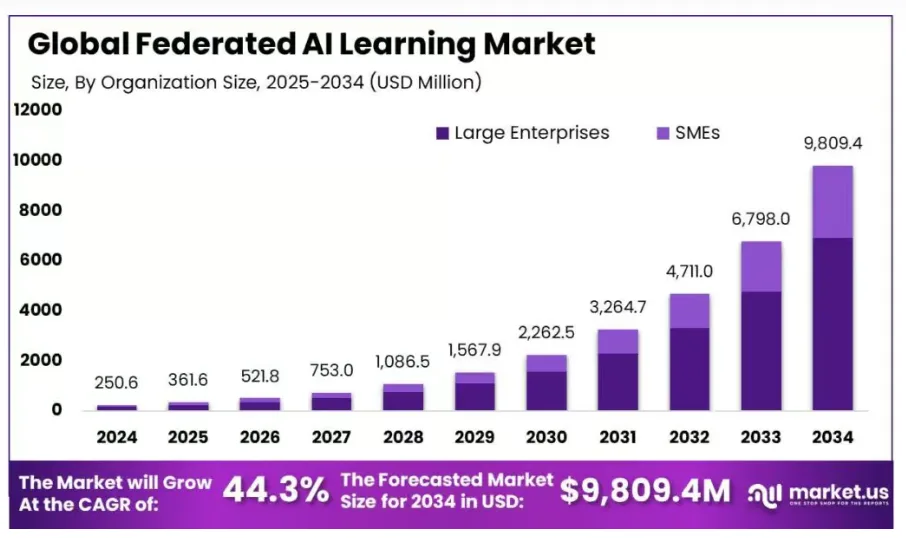
Federated AI Learning Market Size
The Global Federated AI Learning Market size is expected to be worth around USD 9,809.4 Million by 2034, from USD 250.6 Million in 2024, growing at a CAGR of 44.30% during the forecast period from 2025 to 2034.
22. Small Language Models
We are all familiar with large language models. One of its applications that we have discussed in this blog is ChatGPT, which utilizes GPT-4-Turbo .
But have you heard of small language models? Small Language Models (SLMs) are specialized AI models for Natural Language Processing (NLP) tasks. They are smaller and require less computational power than Large Language Models (LLMs). Currently, such AI models are in trend.
They are often used in applications like chatbots, virtual assistants, and text analytics tools in resource-constrained environments.
These models are expected to dominate, offering quicker, more accessible AI services. The beauty is that they can be deployed on devices with limited computational power, like smartphones and tablets.
Popular SLMs include Mistral’s 7B, Microsoft’s Phi-2, and Google’s Gemma. According to Grand View Research, the global small language model market size was estimated to reach USD 20,707.7 million by 2030, growing at a CAGR of 15.1% from 2024 to 2030.
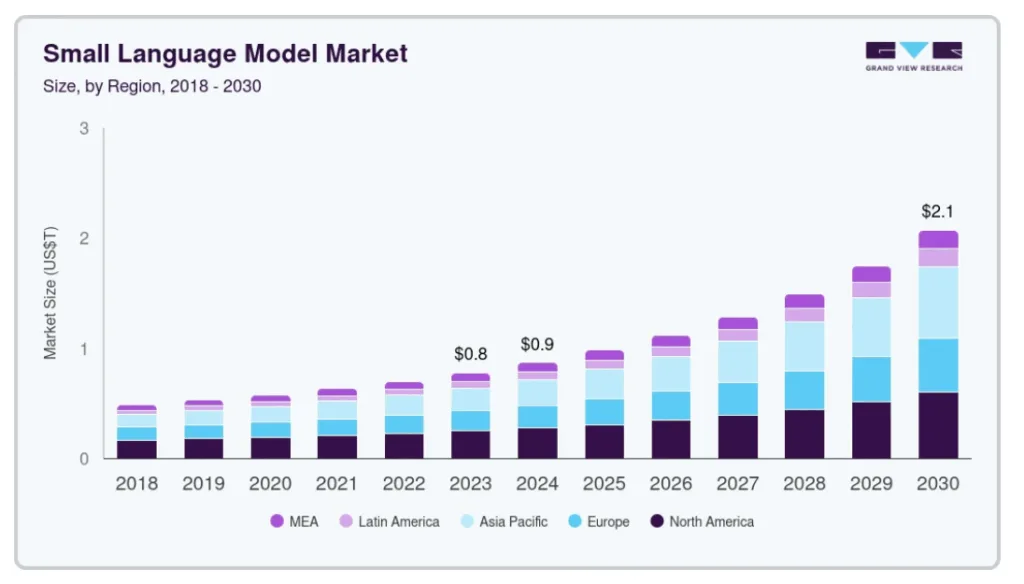
SLMs can be customized using techniques like LLM fine-tuning and Retrieval Augmented Generation (RAG) to enhance performance and align with enterprise objectives. Combining these methods can further improve accuracy and relevance.
23. Keeping AI Local for Security and Efficiency
The current tendency of AI is to emphasize local AI training and operations, mainly for sectors that deal with sensitive information. Running AI models on standard hardware helps organizations maintain control over their data and exposes less sensitive information to closed-source models or third-party vendors.
One of the trends being topped by AI is the local AI solution focus: enterprises realizing the importance of data protection and still able to enjoy all the powerful advanced AI capabilities. With RAG and similar techniques, organizations can reach the right information without really increasing the size of the model, leading to much faster operations and reduced costs.
Partner with experts to build scalable, secure, and high-impact AI solutions.
24. Edge AI Goes Mainstream
By 2026, Edge AI will no longer be a buzzword but part of our daily lives. The benefits of Edge AI come from processing data closer to its source, which can increase the speed and efficiency of a process.
This becomes even more critical for real-time applications such as autonomous vehicles. Did you know that in the next few years, the adoption of Edge AI is going to rise by 75%? Clearly, understanding current trends in artificial intelligence, like Edge AI, will be critical for any business looking to innovate.
25. Geometric Deep Learning
Of course, it is also important to mention the prospects of Geometric Deep Learning. This is one of the recent trends in deep learning, which allows systems to learn from data that is graph-like and in other shapes apart from plain space.
Geometric Deep Learning allows the network to be applied to geometrical data types that are not only in grids, like images, or in sequence, such as text.
Now imagine the degree of data understanding that is in the types of entities with such wide and intricate connections! It is predicted that this AI technology trend will revolutionize the world with great expectations in the area of biology and chemistry, as well as in analyzing social networks.
26. Employment & Copyright Law Violation
As more content generation using AI is performed, and the content is as if it were done by a human, questions of plagiarism are rising.
It is one of the newest tendencies of AI that you would like to know about. The original creative property developers are a cause of concern when they can have their content misappropriated with the help of AI techniques, hence legal/ethical scenarios.
However, this AI security trend is also creating new jobs at the same time. It is common knowledge that AI is taking over the most mundane and repetitive jobs in society. There is a need for more professional views that combine insights into the area of AI and copyright protection.
Thus, if you want to be certain that you are protected in your field of work in approximately ten years, then this application and probable future developments of artificial intelligence may be the field to consider.
27. Voice Biometrics
Another artificial intelligence trend in 2025-26 will be voice biometrics. This technology works based on the individual’s voice pattern to authenticate a user’s identity, which is something different from the normal use of passwords or PINs.
As per the latest research, the market size of voice biometrics across the world is likely to expand rapidly in the near future due to consumer preference and security concerns. Some of the leading technology developers have already integrated voice biometrics in some of their products and services, hence paving the way for further integration.
Experts predict that by 2026, voice biometrics will be implemented in a great number of contexts: in banking and finance, healthcare, and even in customer service. The use of this technology has the ability to improve security and user experience, which makes it one of the modern developments in AI.
Bonus Visit: Role of Artificial Intelligence in Customer Experience
28. AI Literacy Becomes Essential
With the growing ubiquity of AI, the ability to use and assess AI tools is fast becoming a critical skill across the board, from top executives to line employees. New trends in AI are all about ensuring that limitations and potential biases of the technology are well managed.
The demand remains strong for AI and machine learning talent, although the development of AI literacy does not require expertise in coding. Organizational and educational training have been gearing up to offer skill-based training for the workforce to be prepared to collaborate with the growing AI tools.
29. Regulation, Copyright, and Ethical AI Concerns
This old saying, ‘power corrupts,’ is very much true where immense power is concerned. Well, that is one thing that is true in the artificial intelligence trends.
Thus, ethical issues appear as AI is gradually being integrated into people’s lives. Ethical AI in the development and deployment of AI solutions with a focus on the principles of transparency and fairness without any element of bias.
By 2026, companies will have to pay much attention to explainable AI – the AI decisions that will be explained to a layman.
Furthermore, the popularity of keywords such as ‘AI risks’ has increased considerably.

In its report, McKinsey showed that the number of companies addressing AI-related topics such as security, regulation, privacy, and accountability remained stable since early last year.
However, there are indications that this trend is gradually being addressed, and more so, Governments are still slow to regulate for these risks. Whereas the EU has already been progressing further, the US has been almost backward in introducing laws. But now federal bodies are trying to intervene for AI regulation that eliminates unethical practices.
Furthermore, the Ethical AI trend will be essential in establishing trust to ensure it is embraced in the various sectors, most importantly in the health sector and the financial sector. A lot of regulatory agencies are now lobbying to set standards for how AI can be deployed and used more responsibly.
30. AI Will Make Personalization at Scale Possible
Giving customers tailored experiences in marketing, retail, and online services. This trend will improve customer satisfaction and brand loyalty.
The largest trends in AI include personalization at scale, revolutionizing how businesses interact with their customers. AI algorithms analyze user data to deliver personalized content, recommendations, and experiences. That increases engagement and loyalty, doesn’t it?
Expect to see the most complex AI systems offering real-time personalization across every touchpoint in the year 2026. Be it in the form of personalized marketing campaigns or tailored product recommendations, AI allows brands to connect with consumers on a deeper level.
This focus on personalization is one of the major aspects of emerging technologies in artificial intelligence that show the never-ending footsteps toward better customer experiences.
31. Inclusive Machine Learning
Inclusivity in AI is not just a buzzword; it’s a critical aspect of developing fair and unbiased algorithms. One of the latest machine learning new trends is focusing on creating models that are inclusive and representative of diverse populations.
Inclusive machine learning aims to address biases in AI models by ensuring that the training data is diverse and representative of all demographics. This involves collecting data from various sources and carefully curating it to avoid any form of discrimination.
In 2026, we can expect to see more efforts towards inclusive machine learning. Researchers and developers will work on improving data collection methods and developing techniques to identify and mitigate biases in AI models. This ML trend is essential for creating AI systems that are fair and equitable for everyone.
Explore More: AI in Procurement
32. Model Optimization is Getting More Accessible
Remember when optimizing an AI model was a task only for experts? Well, that’s changing. Thanks to advancements in AI technology trends in 2026, model optimization is becoming more accessible to a broader range of users. Tools like AutoML and platforms like TensorFlow and PyTorch are making it easier for non-experts to build and optimize models.
According to a report by O’Reilly, 51% of companies are already using or planning to use AutoML in the next two years. This trend is democratizing AI, making it more accessible for small and medium-sized businesses. In 2026, we can expect even more user-friendly tools that will allow businesses to harness the power of AI without needing a team of data scientists.
This shift is significant because it lowers the barrier to entry, allowing more businesses to benefit from AI. So, if you’ve been hesitant to dive into AI because of its complexity, 2026 might be your year to start.
33. Hyper-Personalization Redefined
Imagine a world where every interaction with technology feels tailor-made. That is what the promise of hyper-personalization promises to be—one of the most exciting trends in the dawn of AI emerging around the globe today. Since 2025, artificial intelligence has been on course to master the customization of experience-based services to customer preferences. Now, firms leverage AI analysis data and make near-intuitive consumer-related predictions and ultimately suggest tailor-made solutions by AI.
So, why does hyper-personalization matter? Well, studies indicate that personal experiences can boost sales up to 20%. That’s impressive. Expect hyper-personalization to change how we will interact with everything—from online shopping to entertainment—provided the trends of AI technology continue to advance.
34. Customized Local Models and Data Pipelines
One of the most recent directions deep learning is developing is toward the use of the so-called local models and data pipes. Instead of using just cloud-based solutions, AI models are now being adopted by businesses that run from their premises. This strategy does have certain advantages, such as reduction of time delays, greater data privacy, and better data management.
Such as the case of a company operating in such a highly regulated environment as finance and healthcare, this trend enables companies to keep such data inside their perimeter.
Also, such local models can be customized, further broadening the scope of applications for which they are intended. It is also predicted that these trends will grow in 2026 as businesses begin to appreciate the benefits of these localized AI solutions.
Must Read: Top AI App Ideas
35. AI as a Workforce Partner, Not a Replacement
There’s a common fear that AI will take over jobs, but in reality, AI is more of a partner than a replacement. By 2026, AI will be used to automate repetitive tasks, allowing humans to focus on more meaningful work. This is one of the latest AI trends that emphasizes collaboration between AI and humans.
In fact, studies show that AI can increase productivity by up to 40%. Isn’t that a positive outlook? As current trends in artificial intelligence progress, AI will become an indispensable tool in the workplace, enhancing rather than replacing human capabilities.
AI Trends and Use Cases Across Key Industries
As we have learned about the latest AI trends of 2026, let’s just understand how these AI trends are used across industries and what their best use cases are.
1. Healthcare
AI in the healthcare industry plays a huge role nowadays, as it helps in improving diagnostic accuracy, enabling early disease detection, and supporting personalized treatment plans. Not only this, but these facilities also help in improving patient care and provide them with the appropriate care and support in minimal time.
Key Trends Involved:
- Predictive Analytics
- Multimodal AI
- Digital Twins
- Virtual Agents
Use Cases:
- Early disease detection and diagnosis
- Personalized treatment and care planning
- AI-powered virtual health assistants
- Hospital operations and resource optimization
Business Impact:
Improved patient outcomes, reduced treatment costs, faster clinical decision-making, and enhanced operational efficiency.
2. Manufacturing
AI in Manufacturing helps in building smarter and more resilient production environments; as a result, companies can optimize operations, reduce downtime, improve product quality, and make data-driven decisions.
Key AI Trends Involved:
- Digital Twins
- Edge AI
- CoBots (Collaborative Robots)
- Predictive Analytics
Use Cases:
- Predictive maintenance and equipment monitoring
- Automated quality inspection
- Smart factory and process optimization
- Supply chain forecasting
Business Impact:
Reduced downtime, improved product quality, higher production efficiency, and lower operational costs.
3. BFSI (Banking & Finance)
The banking and finance industries that leverage artificial intelligence can have multiple advantages, like AI can help them enable intelligent risk assessment, fraud prevention, and personalized financial services. In addition to that, artificial intelligence can also help them to process massive volumes of transactional data in real time while ensuring regulatory compliance and security.
Key AI Trends Involved:
- Enterprise Generative AI
- Predictive Analytics
- Voice Biometrics
- Responsible AI
Use Cases:
- Fraud detection and anomaly monitoring
- AI-driven virtual assistants and customer support
- Credit scoring and loan risk assessment
- Regulatory compliance and reporting
Business Impact:
Enhanced security, faster financial decision-making, improved customer experience, and reduced fraud losses.
4. Retail & E-commerce
AI in retail helps retailers in understanding customer behavior, personalizing shopping experiences, and optimizing inventory management. In addition to that, AI-powered product recommendation systems in e-commerce enable businesses to suggest relevant items to customers and improve overall customer satisfaction.
Key AI Trends Involved:
- Conversational AI
- Sentiment AI
- Multimodal AI
- Predictive Analytics
Use Cases:
- Personalized product recommendations
- Demand forecasting and inventory optimization
- AI chatbots for customer engagement
- Customer sentiment and behavior analysis
Business Impact:
Higher conversion rates, improved customer loyalty, optimized inventory, and increased revenue.
5. Logistics & Supply Chain
AI is driving greater visibility, agility, and efficiency across logistics and supply chain operations. By analyzing real-time and historical data, AI helps organizations optimize routes, manage inventory, and respond proactively to disruptions.
Key AI Trends Involved:
- Adaptive AI
- Edge AI
- Predictive Analytics
- Federated AI
Use Cases:
- Route optimization and delivery planning
- Real-time shipment tracking
- Inventory forecasting
- Warehouse automation
Business Impact:
Lower logistics costs, faster deliveries, improved supply chain resilience, and enhanced operational visibility.
So, these were the AI industry trends that you can have if you belong to any of these industries. Not only this, but artificial intelligence also offers benefits in industries like gaming, education, entertainment, transportation, agriculture, and many more.
Challenges with Solutions in Adopting AI Trends
While implementing artificial intelligence trends, your business developers may face some challenges like data quality issues, high implementation costs, security issues, etc. Therefore, we have created this section for you, where we have listed all the major challenges with solutions that you can practice while integrating new technologies into your legacy system.
| Challenge | Business Impact | Practical Solution |
| Data Quality & Availability | Poor data quality leads to inaccurate AI outputs, unreliable insights, and flawed decision-making. | Implement strong data governance, unify data sources, and invest in data cleansing and validation processes. |
| High Implementation Costs | High upfront costs can delay AI adoption and limit experimentation across business units. | Prioritize high-ROI use cases, adopt cloud-based or hybrid AI models, and scale solutions incrementally. |
| Lack of Skilled Talent | Talent shortages slow deployment, increase dependency on vendors, and raise operational risks. | Upskill internal teams, use low-code/no-code AI platforms, or collaborate with AI solution partners. |
| Integration with Legacy Systems | Incompatibility with legacy systems results in fragmented workflows and operational inefficiencies. | Use APIs, middleware, and modular architectures to enable seamless and phased AI integration. |
| Data Privacy & Security Risks | Data breaches and compliance violations can lead to legal penalties and loss of customer trust. | Apply privacy-by-design principles, encryption, federated learning, and robust access control mechanisms. |
| Ethical & Bias Concerns | Biased or opaque AI decisions can damage brand reputation and customer confidence. | Adopt responsible AI frameworks, conduct bias audits, and implement explainable AI techniques. |
| Regulatory & Compliance Uncertainty | Regulatory non-compliance can result in fines, operational disruptions, and legal exposure. | Establish AI governance teams, monitor regulatory changes, and ensure compliance-ready AI systems. |
| Change Management & Resistance | Employee resistance reduces AI adoption, productivity gains, and overall transformation success. | Communicate AI’s value. Clearly involve stakeholders early and position AI as a human augmentation tool. |
| Scalability Challenges | AI pilots may fail to deliver value at scale, limiting enterprise-wide impact. | Design scalable architectures, adopt MLOps practices, and continuously monitor model performance. |
| Shadow AI Usage | Unauthorized AI tools increase security vulnerabilities and compliance risks. | Define clear AI usage policies, provide approved AI tools, and enforce governance and monitoring controls. |
Partner with an AI company that helps you adopt trends confidently and scale successfully.
How Businesses Can Successfully Implement AI Trends
To fully leverage top AI trends and to get measurable results, one should know the correct way of implementing AI trends in the business. In this section, we are going to discuss which AI trends could be the best fit for you based on your business needs and requirements.

1. Align AI Initiatives with Business Objectives
First, you need to align your business objective with AI business trends and determine which trend can be the most appropriate choice for your organization. Choosing the correct AI trend for your business is important as it helps in addressing real operational challenges, maximizing return on investment, and ensuring that AI initiatives deliver measurable business value.
2. Build a Strong Data Foundation
The main success in emerging AI trends 2026 is to gather and integrate well-structured and high-quality data. The businesses should make sure that data is accurate, well-integrated, and safely handled across systems. Effective data management enhances the reliability of AI models, their adherence, and accuracy in decision-making.
3. Start Small and Scale Strategically
Conduction of AI projects via pilot projects can be used to enable organizations to test use cases with little risk. When demonstrated to be successful, the solutions can be replicated across departments with flexible and modular architectures. This strategy will guarantee quicker ROI and restrained growth.
4. Invest in the Right Talent & Skills
AI solutions require the services of skilled professionals to be built, deployed, and maintained. It is advisable that organizations aim at upskilling their current team and recruit specialized talent where necessary. AI adoption and lessening the skills divide can be achieved through strategic partnerships as well.
5. Leverage the Right Technology Stack
The proper choice of AI tools and platforms will guarantee performance, scalability, and cost efficiency. Depending on the workload needs and the sensitivity of such data, businesses have to select deployment models: cloud, edge, or hybrid. An appropriate tech stack will facilitate the long-term development of AI.
6. Establish AI Governance and Ethical Frameworks
Well-developed governance systems guarantee that AI systems are transparent and responsible. Solving prejudice, explainability, and compliance with regulations can contribute to developing trust in users and stakeholders. Legal and reputational risks are minimized as well by ethical AI practices.
7. Focus on Change Management and Adoption
The adoption of AI will require acceptance and organizational preparedness. Adoption is promoted by the use of clear communication, leadership support, and training of employees. Placing AI as an enabling factor instead of a displacing one aids in the minimization of resistance.
8. Continuously Monitor and Optimize AI Systems
The AI systems must be constantly checked to ensure that they are accurate and relevant. Frequent performance reviews, retraining of models, and feedback can be used to change AI solutions to the changing business requirements. Constant improvement guarantees sustainability and stability.
How Can ScalaCode Help You?
Scalacode helps businesses adopt, implement, and scale AI solutions that deliver real business value. From identifying the right AI trends to building enterprise-ready AI systems, we support organizations at every stage of their AI journey. Our expertise ensures secure, scalable, and responsible AI adoption aligned with your business goals.
How ScalaCode Supports Your AI Initiatives:
- They identify high-ROI AI use cases to solve your business challenges
- We design and build custom AI solutions based on your business needs
- Prepare your data for AI success through data integration
- We implement responsible AI practices based on your business goals
Wrap Up
So, there you have it – the top AI trends to look out for in 2026. From Agentic AI to ethical concerns, the landscape of artificial intelligence is rapidly changing. Thus, staying updated on these AI/ML trends will help you navigate the evolving world of AI. But for that, you need to partner with an AI development company. They ensure you remain at the forefront of this technological revolution.
Whether you are looking into AI trends in marketing, exploring emerging trends in artificial intelligence, or just curious about the latest machine learning trends for 2026, there is no denying that the future of AI is bright and full of possibilities.
FAQs
-
What does AI mean in 2026?
In 2026, social AI and organizational AI should become even deeper in the life and business environment. It will be very useful in terms of handling normal workflows, providing better data insight for decision-making, and providing better and efficient services to the customers in the corporate field.
-
Where is AI headed in the future?
AI is evolving every moment into a foundational technology that may be embedded in all business operations. In the future, AI may move from supporting tasks to driving decision-making, automation, and optimization across departments.
-
What are the top AI trends in 2026?
In 2026, artificial intelligence is shifting from generative AI experiments to agentic AI that can autonomously plan, decide, and execute tasks across business functions. In addition to that, businesses are adopting multimodal AI to process text, images, audio, and videos in a unified way.
-
How can businesses use Generative AI?
Businesses can use Generative AI in multiple ways, like improving efficiency, innovation, and customer engagement. Not only his, but generative AI also helps automate content creation, enhance customer support through AI chatbots, accelerate software development, analyze large data sets, and personalize user experiences across digital platforms.
-
What is Agentic AI?
In simple words, “agentic AI” refers to a system that can independently plan, execute, and optimize tasks based on defined goals. Unlike traditional AI, Agentic AI can make decisions, interact with tools, and adapt to changing conditions with minimal human intervention.
-
Which industries benefit most from AI trends?
Well, AI is revolutionizing every industry; hence, almost all the trending industries like eCommerce, healthcare, finance, retail, and a lot more can benefit from the advantages of artificial intelligence and boost the business ROI.
-
What challenges could businesses encounter in the adoption of AI by the year 2026?
Well, adopting or implementing artificial intelligence in the legacy system can be a bit difficult, as there can be multiple challenges like poor data quality, integration complexities, and a lack of AI-ready infrastructure. Resolving these challenges could be difficult; hence, you hire experienced developers to do that.
-
Which AI trend will deliver the biggest ROI for enterprises in 2026?
Agentic AI — specifically AI agents built on frameworks like OpenAI Assistants, CrewAI, and LangGraph — is delivering the highest ROI in 2026. Enterprises deploying agentic workflows for customer support, research, procurement, and internal operations report 30–60% reductions in cycle time and cost. The biggest wins come from teams that pair agent development with strong integration (MCP, function calling) and governance, not from standalone chatbots. Explore how to build production AI agents for a deeper implementation playbook.
-
How should a CTO prioritise among 35+ AI trends?
Start with three questions: (1) Which trend maps to a measurable business outcome in the next two quarters — not a vague productivity gain? (2) Do we have the data foundation and governance to run it safely? (3) Do we have AI engineering talent, or a trusted partner, to build and support it? In 2026, the winning trio for most enterprises is Agentic AI for process automation, RAG for knowledge-grounded applications, and Responsible AI plus Governance as the non-negotiable bedrock. Everything else is a second-wave bet. Our AI consulting services help enterprises make these prioritisation calls with a clear business lens.