
NLP development services for sentiment, classification and extraction
ScalaCode provides NLP development services for teams sitting on support tickets, reviews, survey answers and documents nobody has time to read. We build natural language processing solutions that score sentiment, apply text classification and pull fields out of documents, then measure them on your own data before launch.
AI systems running in production
projects shipped since 2012
clients served since 2012
on Clutch, from 33 verified reviews
countries with live clients
9001:2015 certified delivery process
Trusted by teams at








Clutch 4.8/5Verified client reviews

GoodFirmsReviewed software partner
ISO 9001:2015Certified delivery process
GDPR compliantData handled under EU rules
What NLP development services cover
Most of an NLP project is spent on labelling examples, building the evaluation set and wiring results into the systems people already use.
- What is natural language processing?
- Natural language processing (NLP) is the branch of AI that lets software read and interpret human language. NLP systems classify text, detect sentiment, extract names, dates and amounts, summarise documents and translate between languages, turning free text such as emails, reviews and contracts into structured data that reports and workflows can use.
Related: LLM development covers fine-tuning and serving large models. The AI engineering hub covers RAG, agents and machine learning.
Classic NLP models, LLMs or a mix of both
A fine-tuned classifier is cheap and fast at volume, and a large language model handles nuance and new categories with few examples. Many production pipelines use both, with the classifier taking the clear cases.
| Fine-tuned classic model | Large language model | Hybrid pipeline | |
|---|---|---|---|
| Best for | High-volume tagging with fixed categories | Nuanced text, new categories, summaries | Large volumes with a long tail of hard cases |
| Data it needs | Hundreds to thousands of labelled examples | A short prompt, examples and an evaluation set | Labelled examples for the classifier, rules for escalation |
| Cost per document | Very low, often CPU only | Per-token API cost or GPU hosting | Low, with LLM cost only on escalated items |
| Speed | Milliseconds per item | Slower, seconds on long inputs | Fast on most items |
| Changing categories | Needs relabelling and retraining | Edit the prompt and rerun the evaluation | Prompt change first, retrain when volume justifies it |
When the task is generating text or answering questions, the work moves into LLM development.
Natural language processing solutions we build
Each solution covers data labelling, the model, an evaluation set from your own text and the integration that puts results where your team works.
Sentiment analysis development
We score sentiment per topic as well as per message, so one review can praise the price and complain about delivery.
Text classification
We sort tickets, emails, claims and documents into your categories and send each to the right queue, with a confidence score on every label.
Entity and field extraction
We pull names, dates, amounts, product codes and clauses from free text and write them to structured fields your systems accept. Contract work is covered under legal AI.
Document processing
We parse PDFs, scans and forms with layout-aware OCR, so tables and key fields come out in the right order.
Voice of customer analytics
We group survey answers, app store reviews and chat logs into themes, trend them over time and link each theme back to example quotes.
Multilingual NLP
Classification and sentiment work across the languages your customers write in, with a separate evaluation set for each language you rely on.
Summarisation
We write short summaries of long tickets, calls, contracts and reports and check each one against the source, so it states only what the text says.
Intent detection and routing
We tag incoming messages by intent and urgency, so complaints and cancellation requests reach a person first.
NLP feasibility sprint
A 1 to 2 week review of your text, labels and target metric, ending with a baseline score and a build plan. The sprint is free.
Reading tickets and reviews by hand today
Bring a sample of the text, the categories you track and where the results need to land. In 30 minutes the ScalaCode team will tell you which approach fits and what the first step costs.
Sentiment analysis development
Sentiment analysis development goes wrong on sarcasm, mixed opinions and domain words, so these four patterns go into the pipeline from the first release.
Aspect-level sentiment
Each message is split into the topics it mentions, such as price, delivery or support, and each topic gets its own sentiment score.
Classifier first, LLM for hard cases
A fine-tuned classifier handles the clear messages at low cost. Low-confidence items go to a large language model with your label definitions.
Human review queue
Items the models disagree on land in a review queue. Reviewer corrections become new training examples for the next model version.
Results where people work
Scores and labels are written back to your help desk, CRM or warehouse, so reports and routing rules use them without a new tool.
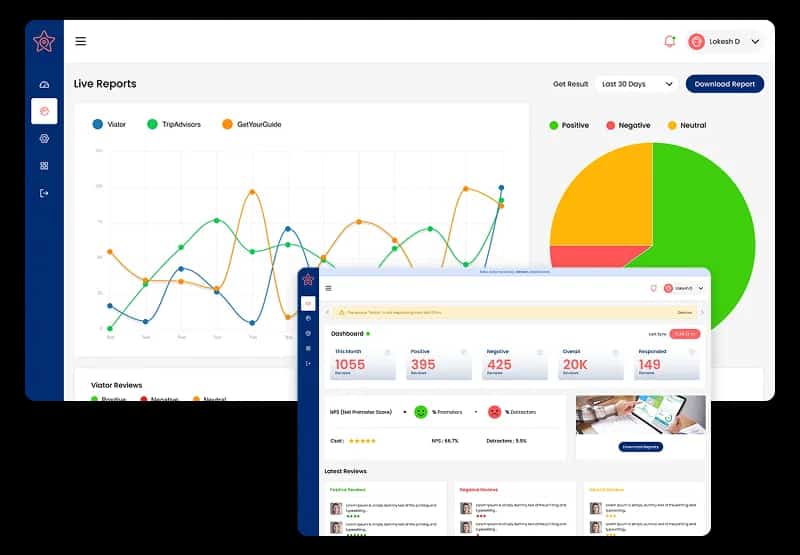
TourReview: an AI review analysis platform for tour operators
ScalaCode built TourReview, a platform that gathers customer reviews for tour operators from several online sources and analyses them with OpenAI. Operators see sentiment, highlighted keywords and overall performance in one dashboard.
review aggregation
How we take an NLP model to production
A first model on your text takes 3 to 4 weeks as a proof of concept. The production pipeline with integrations, review screens and monitoring gets its own written plan after that.
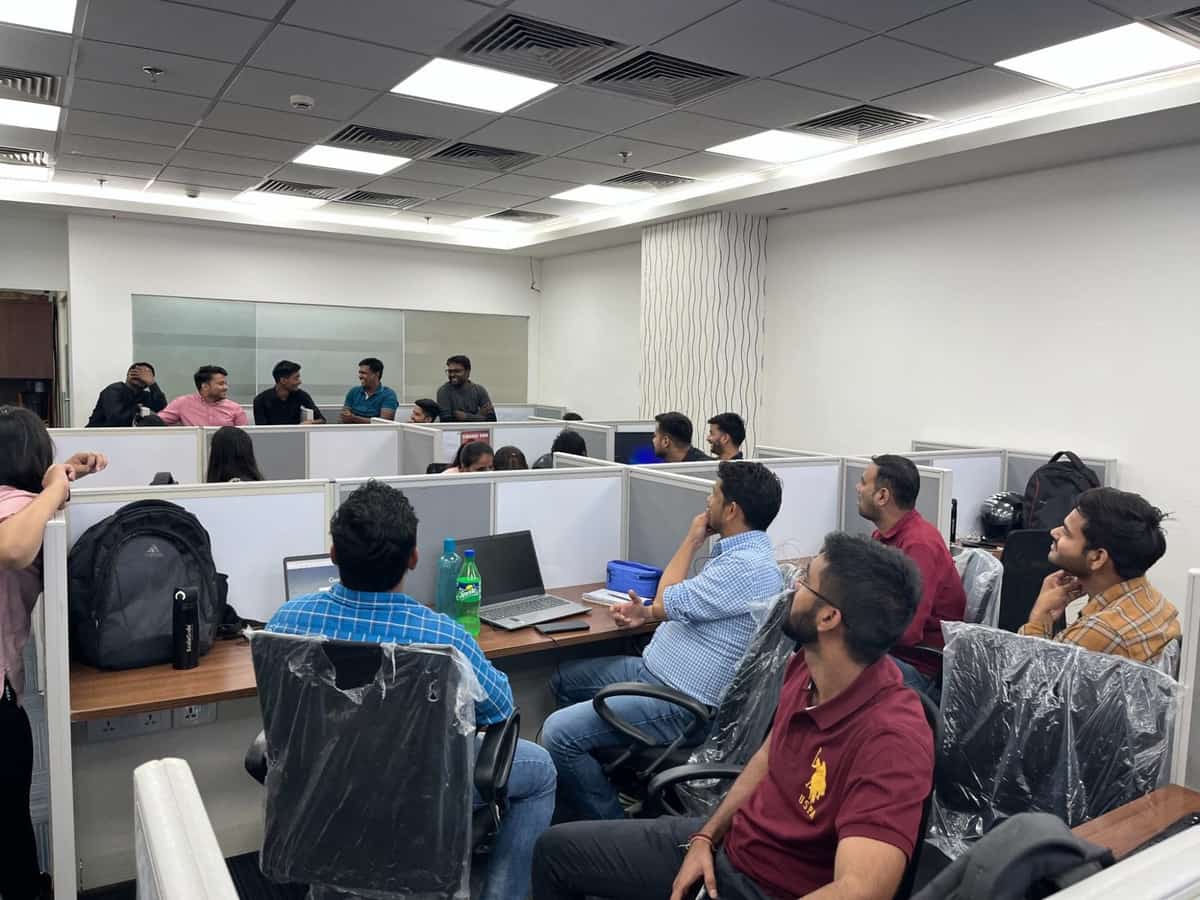
One team, 14 years of shipping
projects shipped since 2012
AI systems running in production
clients across 45+ countries
years building software, since 2012
Controls for customer text and documents
Tickets, reviews and contracts carry personal data, so the pipeline treats them that way from the first sample.
Redaction before processing
Names, emails, card numbers and other sensitive fields can be redacted before text reaches a model or a log.
Models where your data lives
We use hosted models through the OpenAI, Anthropic Claude or Google Gemini APIs, or open-weight models such as Llama and Mistral on your own infrastructure.
Compliance in the scope
SOC 2, HIPAA and GDPR controls your business needs are written into the scope during discovery.
Your code, your models
Code, labelled data and trained models are yours from the first commit, and NDAs are standard.
NLP frameworks and platforms we work with
We fit the stack to the systems your text already sits in.
Where text classification and sentiment pay back
NLP pays back fastest where the same kind of text arrives every day in volumes nobody can read by hand.
Financial services
- Complaint classification
- Document field extraction
Insurance
- Claims note triage
- Policy clause extraction
Retail and eCommerce
- Review sentiment by product
- Return reason tagging
Healthcare
- Patient feedback themes
- Clinical note coding support
Logistics
- Delivery complaint routing
- Shipping document extraction
SaaS platforms
- Support ticket routing
- Churn signals in feedback
Legal
- Contract clause search
- Document classification
Hospitality
- Guest review analysis
- Request tagging
NLP project cost and engagement models
The discovery sprint is free and ends in a written proposal with a fixed quote. A proof of concept on your text starts at $4,999 and takes 3 to 4 weeks.

Discovery sprint
1 to 2 weeks and free, ending in a written proposal with a fixed quote. A label scheme, an evaluation set plan, a baseline and a build plan.
Best for teams unsure which approach their text needs.

Proof of concept, then build
A first model from $4,999 in 3 to 4 weeks, scored on your own evaluation set. The production build is planned from its scores.
Best for one text stream with a clear owner.

Dedicated NLP team
NLP and data engineers inside your process from $1,799 a month per engineer. You interview and choose the people.
Best for several text pipelines you will keep extending.
Rated 4.8/5 by the clients we build for
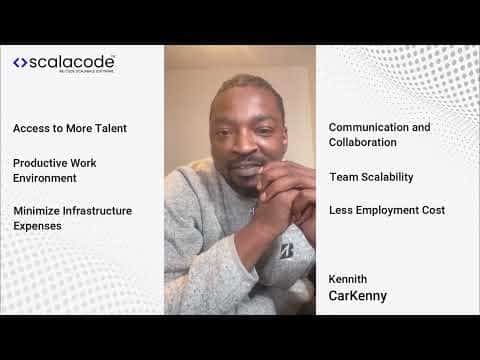
Verified reviews from Clutch and GoodFirms, and clients on camera.
33 verified reviews on Clutch
 Clutch review★★★★★
“What sets ScalaCode apart is their technical AI expertise and an understanding of a client's organizational ethos.”
Clutch review★★★★★“They didn't just build an algorithm; they built a tool that respects the nuances of Indigenous reconciliation.”
 GoodFirms review★★★★★
“They built a high-performance, AI-powered platform that transformed video engagement for learning.”
Clutch review★★★★★“What stood out to us as most impressive and unique about ScalaCode was their ability to humanize complex AI.”
Clutch review★★★★★“They managed to balance technical skill with an understanding of the marketing world.”
Clutch review★★★★★“Their team often proposed innovative features we hadn't considered.”
Clutch review★★★★★“What I found impressive about ScalaCode was their ability to listen to the soul of an educational mission.”
NLP development services FAQs
We will answer anything not covered here on the call.
What can NLP do with our customer feedback?
NLP can sort feedback into themes, score sentiment for each product or service aspect, flag urgent complaints and trend all of it over time. Natural language processing solutions for feedback usually start with surveys, reviews and support tickets, because that text already sits in one system and has a clear owner. Review and feedback analysis for stores is covered under AI for retail. Hotels and tour operators use the same analysis on guest reviews, covered under travel and hospitality.
Should we use an LLM or a classic NLP model?
Use a fine-tuned classic model when categories are fixed and volumes are high, because it is cheap and fast per item. Use a large language model when the text is nuanced, categories change often or you have few labelled examples. Many pipelines combine both, sending only low-confidence items to the LLM. A fine-tuned small language model is often enough for the high-volume share.
Does NLP work in languages other than English?
Yes. Multilingual models and large language models handle text in many languages, and they can handle messages that mix two languages. Quality varies by language, so we build a separate evaluation set for each language you depend on and report scores per language before launch. Multilingual services matter most in government and public sector work.
How accurate is sentiment analysis?
Accuracy depends on your domain, your label definitions and how much sarcasm and mixed opinion your text holds, so we measure it on your data before quoting a figure. We score each model on an evaluation set built from your own reviews or tickets and report precision and recall per label. Aspect-level sentiment analysis development usually needs more labelled examples than a single positive or negative score.
How much does an NLP project cost?
The discovery sprint is free and ends in a written proposal with a fixed quote. A proof of concept on your text starts at $4,999, and a dedicated engineer starts at $1,799 a month. The production build is quoted after discovery, because volume, languages and integrations set the final figure.
Can NLP results feed our dashboards and CRM?
Yes. Labels, sentiment scores and extracted fields are written back through published APIs to tools such as Salesforce, HubSpot, Zendesk or Microsoft Dynamics, or to your warehouse as tables your BI tools already read. Text classification results can also drive routing rules in your help desk.
How long does an NLP project take?
A proof of concept takes 3 to 4 weeks on your own text. The production timeline for a pipeline with integrations, a review screen and monitoring depends on the number of languages and systems involved, so we set it after the proof of concept. Our engineers use AI coding agents to build faster.
Can NLP power a support chatbot?
Intent detection and classification are often the first layer of a support assistant. When the goal is a bot that answers customers, we build it as an AI chatbot or assistant on the same evaluation approach, with human handoff where judgment matters. To staff it yourselves, you can hire chatbot developers.
One team, matched to your working hours
We schedule 4 to 6 hours of daily overlap with US time and a full working day with the UK and Europe, so reviews, demos and fixes happen during your working hours.
What stood out to us as most impressive and unique about ScalaCode was their ability to humanize complex AI.
Find out what your tickets, reviews and documents can tell you
- 30 minutes with the ScalaCode team
- Whether a classic model, an LLM or a mix fits your text
- What is realistic, what it costs and how long it takes
“What sets ScalaCode apart is their technical AI expertise and an understanding of a client's organizational ethos.”
Laurence Longet, Director, MGEN (Clutch review)