
Hire MLOps engineers who keep models healthy in production
Hire MLOps engineers from our in-house team in India to build the pipelines, rollouts and monitoring your models run on. They release new models through canary and shadow deployments and retrain them when the data drifts.
Clutch 4.8/5 from 33 verified reviews
50+ AI systems in production · ISO 9001:2015

to matched profiles
Trusted by teams at







What an MLOps engineer does on your team
MLOps sits between the people who train models and the platform that serves them, and owns everything a model needs after the notebook.
- What does an MLOps engineer do?
- An MLOps engineer builds and runs the systems that move machine learning models from training into production and keep them working there. The role covers training and retraining pipelines, model registries, feature stores, model serving on CPUs and GPUs, safe releases such as canary and shadow deployments, and monitoring for drift, latency and errors.
MLOps, ML platform and AI infra engineers available to hire
Hire one engineer to get a first model released properly, or a small platform team for many models.
ML platform engineer
Builds the shared platform every model team uses, with experiment tracking, a model registry, pipelines and the serving layer.
Model deployment engineer
Packages models behind APIs or batch jobs and releases them through canary and shadow deployments.
Model monitoring engineer
Monitors input drift, prediction drift, latency and errors, and routes alerts to the model owner.
See AI evaluation and observabilityRetraining pipeline engineer
Sets up scheduled or drift-triggered retraining for the models your ML engineers build, gated so a new model is promoted only after it beats the current one.
Feature store engineer
Builds feature pipelines and a feature store, so training and live scoring read the same feature values.
AI infra engineer
Runs GPU serving for deep learning and open-weight models, with autoscaling and batching to keep inference cost in check.
See cloud and DevOpsFour gaps that sink MLOps hires
Containers and CI pipelines are a common skill. Running models that change with their data is rarer, and our vetting looks for these four gaps.
DevOps skills only
Models also need versioned training data, experiment tracking, drift checks and retraining. The systems design interview covers rollout, monitoring and retraining for a model in production.
All-at-once model releases
Switching every request to a new model at once turns a weak model into an incident. Our engineers release through canary and shadow deployments, so a new model proves itself on live traffic first.
Monitoring that watches servers only
Uptime dashboards stay green while predictions drift away from reality. Monitoring covers input drift, prediction drift and the business metric the model serves.
A platform bigger than the problem
A full ML platform for two models costs more to run than it saves. Engineers size the platform to the number of models and teams, and start with MLflow and one pipeline.
How our MLOps engineers release and maintain models
These four patterns go in with the first model, so later releases follow the same safe path.
Shadow deployment
The new model scores live traffic alongside the current one. Its outputs are logged and compared, and users only ever see the current model's answers.
Canary release
The new model serves a small share of traffic first. The share grows while its metrics hold, and traffic moves back to the current model if they drop.
Gated retraining
Drift or a schedule triggers retraining, and the new model is promoted only if it beats the current one on a hold-out set. High-stakes models wait for a human sign-off.
One feature pipeline
The same versioned code computes features for training and for live scoring, which removes training-serving skew.
How we vet MLOps engineers
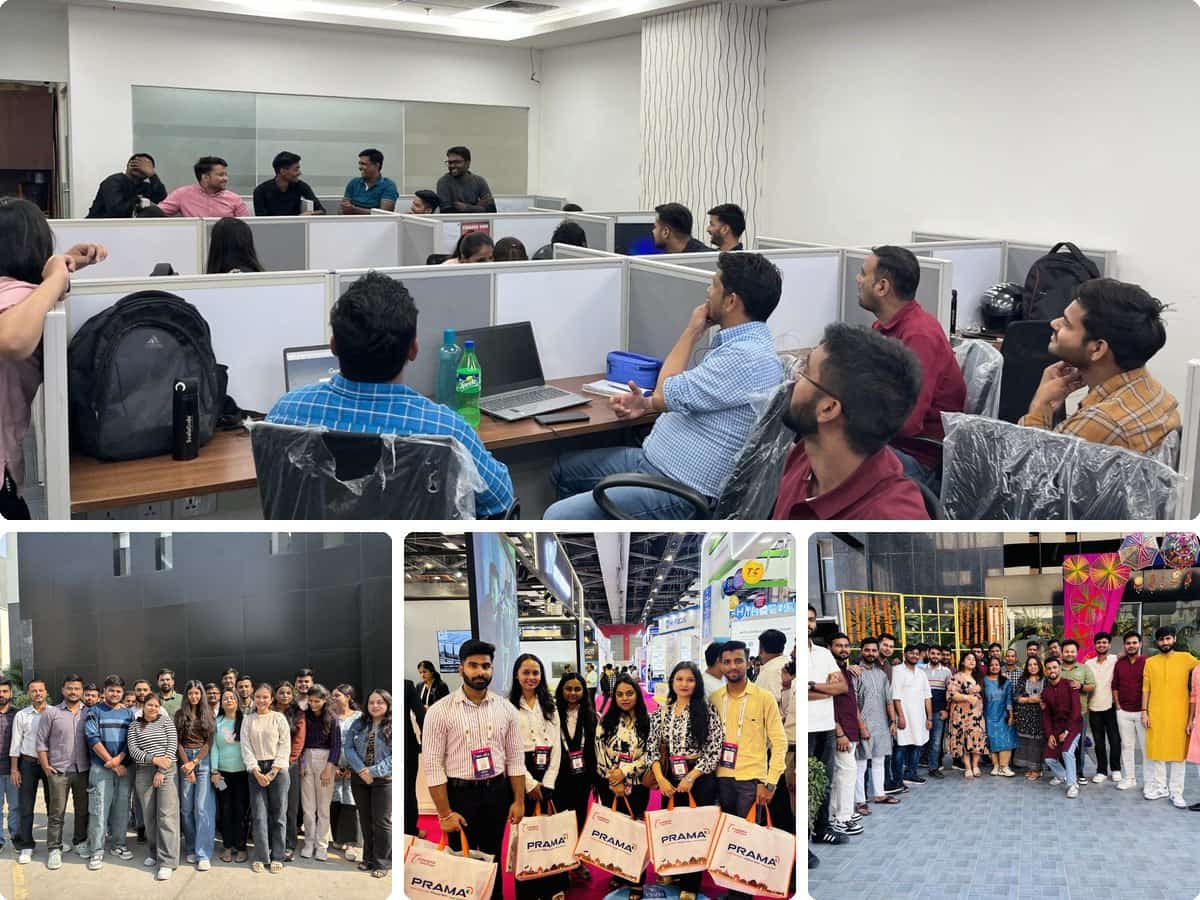
Every engineer on the roster is full-time and in-house. You see the vetting notes during CV review, before you commit to anything.
Get your models out of notebooks this quarter
Tell us where your models run today and what breaks. You get vetted MLOps profiles within 48 hours.
Tools our MLOps engineers use
Engineers work with the cloud and tools you already run, and add only what the models need.
Cost to hire MLOps engineers
Dedicated MLOps engineers start from $1,799 a month, full-time, the same rate as every other role.
| Dedicated team | Fixed-scope project | Team extension | |
|---|---|---|---|
| How it is priced | From $1,799 a month per engineer, full-time | Fixed quote after a free discovery sprint | Billed monthly per engineer |
| Best for | Running and improving models in production over time | A defined build with agreed milestones | A specific skill gap in a team you already run |
| Who manages day to day | You, inside your process | ScalaCode, against agreed milestones | Your leads, with our engineers reporting in |
Monthly means full-time and dedicated, 160 hours. Compare every option on the Engagement models page.
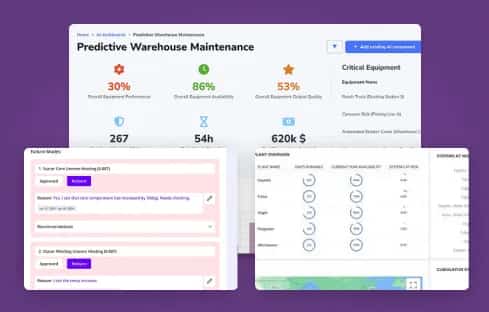
Predictive maintenance for warehouse equipment at a global logistics provider
ScalaCode built a predictive maintenance system for the warehouses of a global logistics provider. IoT sensors track equipment health, a Python machine learning model predicts maintenance needs, and a Vue.js dashboard alerts staff before equipment fails.
equipment monitoring
More AI systems our engineers built
All case studies
What clients say about our AI engineers
Verified reviews from Clutch and GoodFirms, and clients on camera.

33 verified reviews on Clutch
 Clutch review★★★★★
“What sets ScalaCode apart is their technical AI expertise and an understanding of a client's organizational ethos.”
Clutch review★★★★★“They didn't just build an algorithm; they built a tool that respects the nuances of Indigenous reconciliation.”
 GoodFirms review★★★★★
“They built a high-performance, AI-powered platform that transformed video engagement for learning.”
Clutch review★★★★★“What stood out to us as most impressive and unique about ScalaCode was their ability to humanize complex AI.”
Clutch review★★★★★“They managed to balance technical skill with an understanding of the marketing world.”
Clutch review★★★★★“Their team often proposed innovative features we hadn't considered.”
Clutch review★★★★★“What I found impressive about ScalaCode was their ability to listen to the soul of an educational mission.”
Hire MLOps engineers FAQs
Dedicated MLOps engineers start from $1,799 a month, full-time.
How much does it cost to hire an MLOps engineer?
Dedicated MLOps engineers start from $1,799 a month, full-time and billed monthly. Project work starts with a free discovery sprint.
What is the difference between an MLOps engineer and a DevOps engineer?
A DevOps engineer automates builds, infrastructure and releases for application code. An MLOps engineer does the same for models, which adds versioned training data, experiment tracking, a model registry, drift monitoring and retraining. If your models already run and the trouble is drift or slow releases, hire for MLOps.
How do you release a new model without breaking production?
Through shadow and canary deployments. In shadow mode the new model scores live traffic next to the current one and only the logs are compared. In a canary release it serves a small share of traffic first, and the share grows while its metrics hold.
When should a model be retrained?
When monitoring shows input or prediction drift, or on a schedule that matches how fast your data changes. Our engineers gate retraining, so a new model is promoted only after it beats the current one on a hold-out set, and high-stakes models wait for a named approver.
Do we need a feature store?
Most teams with a few models do not. A feature store such as Feast earns its place when several models share features, or when training and serving compute the same feature in two places and the values drift apart.
Can your MLOps engineers serve models on GPUs?
Yes. They deploy deep learning and open-weight models on GPU instances with NVIDIA Triton or vLLM, on Kubernetes or on AWS SageMaker, Azure Machine Learning or Google Vertex AI, with autoscaling and request batching to control cost.
Can the engineer work inside our cloud and security policies?
Yes. Engineers work in your cloud accounts, repositories, tracker and CI under your access policies. Where SOC 2, HIPAA or GDPR apply, the controls are written into scope during discovery.
How fast can an MLOps engineer start?
Matched profiles reach you within 48 hours of the first call. After you interview and choose, onboarding takes about a week.
Who owns the pipelines, models and infrastructure code?
You do. We sign a mutual NDA before sharing CVs, and the pipelines, infrastructure code and models live in your repositories and cloud accounts from the first commit.
Your engineers work in your hours
Timezone overlap is built in. Your matched engineers keep 4 to 6 hours of daily overlap with US hours and a full working day with the UK, Europe and the Middle East, so standups, reviews and fixes land during your working day.
 Watch Ruairi's review
Rally Sports: a live-stream app on AWS
Tell us how your models run today and we will send matched MLOps engineers
- Profiles matched on cloud, stack and model types within 48 hours
- Vetting notes shared with every profile
- You interview and choose who joins

“They delivered on time and even offered ideas I hadn't considered.”
John-Paul Hatala, CEO, SnagPad