

Key Highlights
- Over 80% of global enterprises now digitally transforming their business ecosystems and rely on mobile apps to run daily operations.
- Enterprise mobile app development are driving a major shift in business operations.
- These apps have become the backbone for improving employee collaboration, data accuracy, and decision-making speed.
- Businesses adopting custom enterprise mobile apps experience up to 35% faster workflow automation and 25% higher operational efficiency.
- The integration of AI, Cloud, and IoT technologies is transforming traditional enterprise systems into smarter mobile ecosystems.
- Choosing the right enterprise mobile app development company can drastically impact scalability and long-term ROI.
- This blog breaks down everything, from development stages to cost estimation, tech stack, and best practices, to help you build a future-ready enterprise app.
Does your business really need to shift to Enterprise mobile app development solutions? In the modern era, the central question is, what exactly do businesses need to survive in this competitive, cutthroat market?
Do you:
- Want to enhance profit, growth, or improve customer satisfaction?
- Want to centralize scattered enterprise data across departments?
- Want to automate workflows and make smarter, faster decisions?
While all the businesses are running in the same direction to chase these goals. With the emerging technologies like AI, ML, Blockchain, Big Data, and more, it has become really difficult to survive with traditional business apps.
Businesses worldwide are investing in enterprise mobile app development not just for survival, but also to leverage revenue-generating opportunities and stay updated with the latest IT trends.
According to Statista, the enterprise mobile app development market is projected to surpass $752.57 billion by 2027, proving how important it is to have mobile app development for enterprises. Another report from Gartner says that 80% of businesses are already set with a mobile app strategy that helps improve customer satisfaction and enhance decision-making by the end of 2025.
Whether you’re planning to build a custom enterprise mobile app from scratch or upgrade your existing enterprise system to boost your productivity and streamline your workflows, enterprise mobile apps can be your game-changer.
So whatever the driving force behind it, all you need to do is to upgrade the system…
At ScalaCode, we’ve seen firsthand examples that how a well-designed enterprise app can transform organizations and enable them to find business-generating opportunities.
As a leading enterprise mobile app development company, we help global businesses build apps that are reliable, future-ready, and tailored to specific needs. Here is our comprehensive guide, which takes you through all aspects of developing enterprise mobile apps and step-by-step guide to enterprise mobile app development.
With this blog, we help you understand the process, benefits, cost factors, and why choosing the right enterprise mobile app development platforms and solutions matters.
What is Enterprise Mobile App Development?
In simple terms, enterprise mobile app development solutions are crafted to simplify the internal operations and workflow of the enterprises. Unlike traditional customer apps that are designed for entertainment or public use, enterprise apps focus on solving internal challenges of businesses.
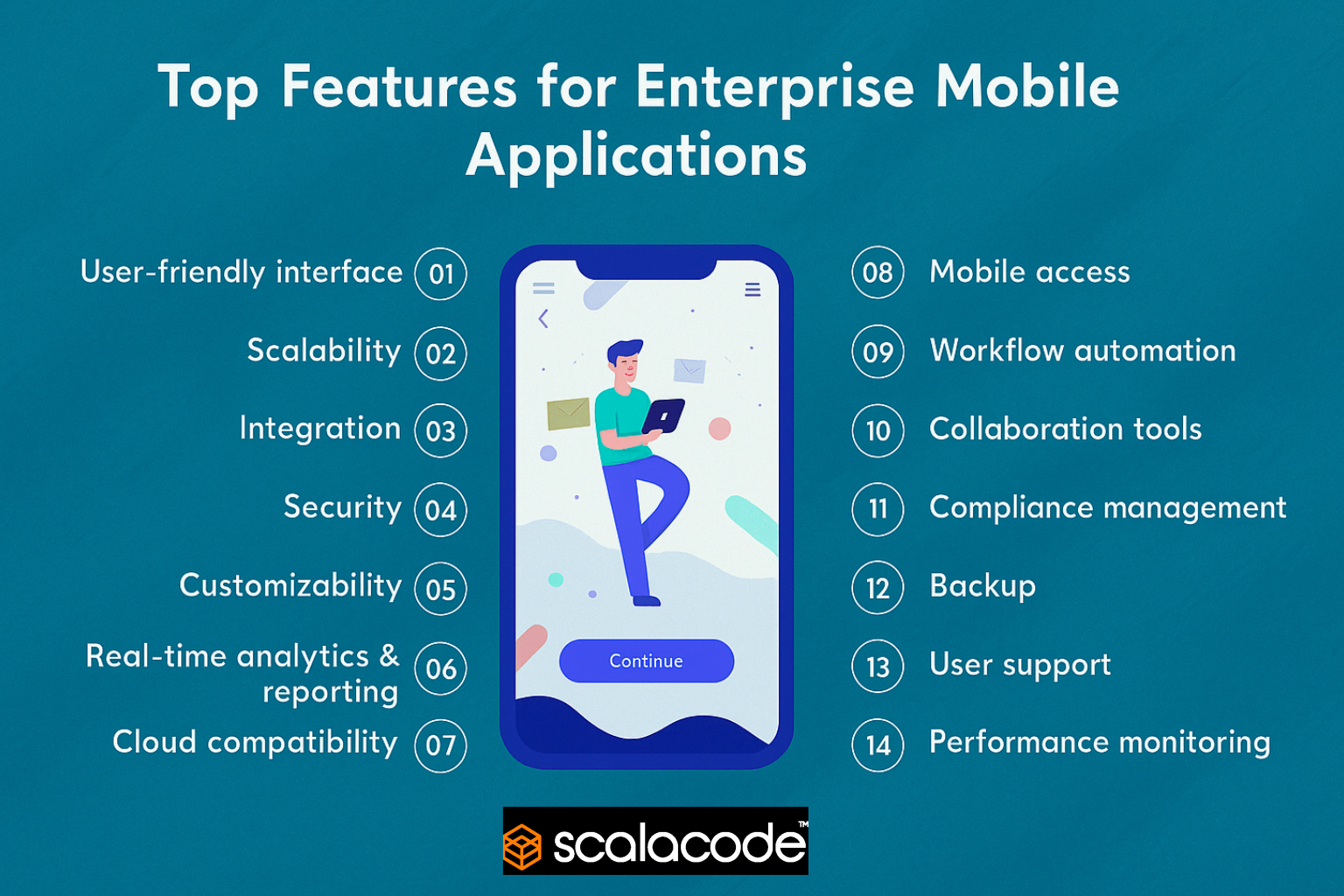
Custom enterprise mobile apps are basically secure and scalable apps that are designed to streamline workflows, enhance collaboration and able to integrate with existing enterprise systems.
Before you get straight to hire best enterprise mobile app development company to get started, it is worth understanding that what makes these enterprise app stands apart from traditional apps:
Key Highlights of Custom Enterprise Mobile App Development:
- Built with data governance, encryption, and compliance with global standards.
- Designed to handle a wide user base across departments and geographies.
- Ensuring seamless integration and connection with existing enterprise tools and platforms.
- Tailored with a user-friendly interface for excellent productivity and ease of use.
Types of Enterprise Mobile App Solutions:
Mobile enterprise app development can deliver solutions for a wide range of departments, such as:
- HR apps to simplify the employee onboarding and screening process.
- CRM apps to give sales teams real-time customer insights.
- Supply chain management apps to bring transparency in logistics.
- Finance apps to track and approve transactions securely.
In a nutshell, enterprise mobile app development is not about “just building an app.” It’s about creating a digital foundation that empowers you with smarter, faster, and automated business operations.
Also Read: Best Mobile App Ideas
Enterprise Mobile App Development Process: A Step-By-Step Guide
Building a successful enterprise app requires more than just excellent coding skills. To build such apps, you need to hire an enterprise mobile app development company that can understand your vision and requirements. It demands a well-structured and business-centric approach to create a scalable app that aligns with business goals.
Here’s a step-by-step guide on how the enterprise mobile app development process unfolds:
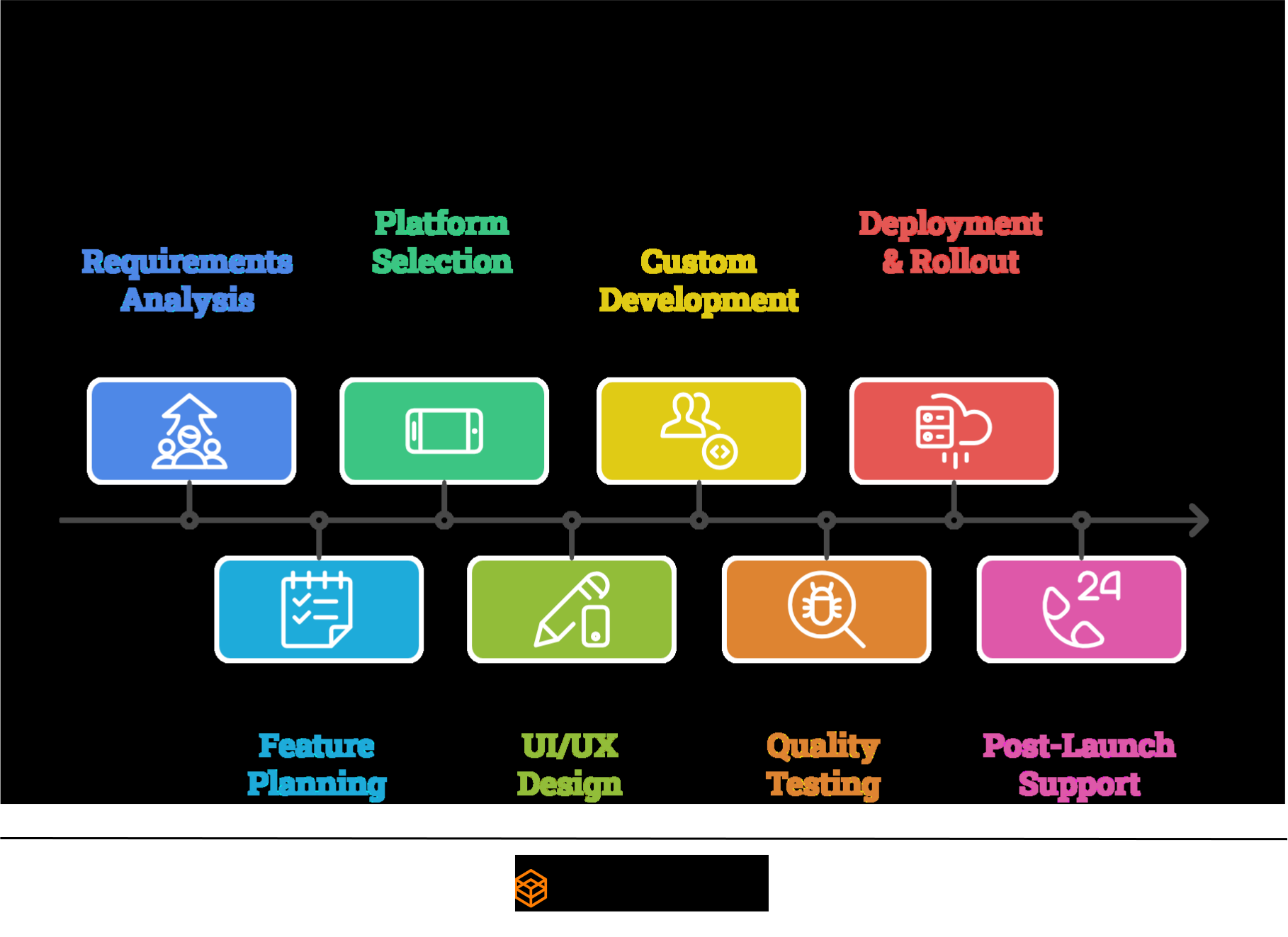
Step 1: Analysing Business Requirements
Most businesses often jump straight to the development process without having clear thoughts on requirements. But every successful project starts with clarity, where experts get deep into your project requirements, identify the scope of implementation and improvements by analyzing the existing workflows. With enterprise software development services, experts can customize the roadmap strategy tailored to your business needs.
Step 2: Feature Planning & Prioritization
The success of the app is majorly depending upon the choice of features you prioritize implementing in the app. And this is where most businesses make a blunder, as adding each feature in the app will add up to the budget.
Therefore, not every feature needs to be implemented in the first release. This is where enterprise mobile app development firms can help you decide which features can help leaving the biggest impact. Majorly, it includes features like authentication, data encryption, integration with existing systems and more.
Step 3: Choosing the Right Enterprise Mobile App Development Platform
The next step is to decide whether you are developing native, hybrid, or cross-platform. Factors like security, integration, performance, and budget guide this decision.
For enterprises looking to tap into AI-powered experiences, we often recommend integrating advanced capabilities from our AI in Mobile App Development services.
Step 4: UI/UX App Design
Enterprise apps demand strong architectural foundations and a user-friendly UI/UX design that ensures seamless app navigation. We create secure back-end frameworks and intuitive UI/UX to maximize adoption. Special focus is placed on data governance, compliance, and role-based access.
Step 5: Custom Enterprise Mobile App Development
This is where the actual coding happens. Hire mobile app developers to build front-end interfaces, back-end systems, and integrate APIs or third-party tools. Cloud-native solutions are prioritized for scalability.
Step 6: App Quality Testing
No enterprise can afford to have a system that has a risk of system downtime or data leaks. This is where, after coding an app, a team conducts deep app testing to check functional, performance, and security checks to ensure the app is enterprise-ready.
Step 7: Deployment & Rollout
After validation, we deploy the app across enterprise systems. A phased rollout strategy ensures smooth adoption with minimal disruption to business processes.
Step 8: Post-Launch Support & Continuous Optimization
Enterprise apps require constant evolution. Our team provides ongoing maintenance, feature upgrades, and security patches to ensure your app scales with your business needs.
By following this enterprise mobile app development process, organizations can confidently build applications that enhance efficiency, strengthen data security, and deliver measurable ROI.
ScalaCode can be your trusted partner in accelerating your business growth.
Benefits of Enterprise Mobile App Development for Businesses
Enterprise mobile app development services ensure a wide range of benefits that are undeniable. Businesses adopting enterprise mobility have reported significant changes in terms of mobility, collaboration, and more.
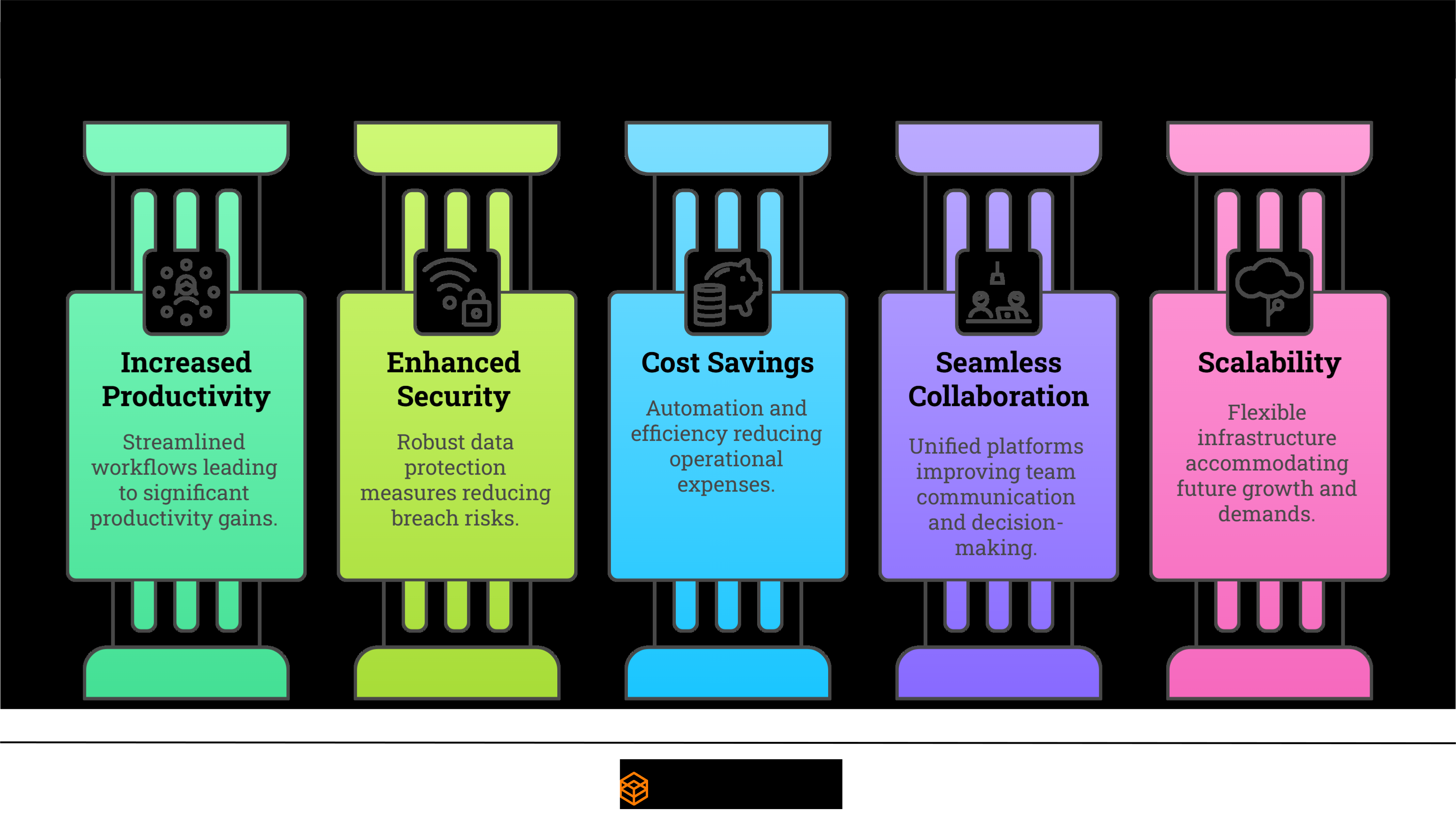
1. Increased Productivity
Collaborating with one of the top enterprise mobile app development companies in the USA can be really rewarding, as they help customize the apps that streamline workflows.
Research from Adobe suggests that 47% of companies saw productivity improvements of 30% or more after adopting enterprise apps.
2. Enhanced Security & Data Compliance
Did you know that the cost of a data breach is approximately $4.44 million in 2025, and only 30% organizations have AI access controls?
Enterprise apps are built by following global compliance and boasting strict access controls and monitoring. The strong encryption incorporated in enterprise apps can ultimately strengthen data security and add a layer of protection to reduce risks of data breaches.
3. Cost Savings in Operations
Studies say that IT leaders can save up to 50% of time and businesses can reduce costs by 10-50% by automating tasks. This is all that is needed to hire an enterprise mobile app development agency that can help you customize applications, increasing work efficiency.
Report says that 63% employees have too much tasks to handle each day, which increases the stress and slow down their efficiency. Ultimately, each task takes long hours to get completed and results in a higher budget drain.
4. Seamless Collaboration & Communication
As enterprise applications are easy to integrate with various systems, therefore it deliver a unified experience to employees.
With collaborative apps, teams can have a centralized platform to share files, chat in real-time, and manage projects on the go. This improves decision-making speed across distributed teams.
5. Scalability & Future-Readiness
With cloud-based, custom enterprise mobile app development, organizations can scale seamlessly as users, data, and features can easily grow without any infrastructure limit.
In the USA, the right choice of a super app development company can help you go far beyond the basic efficiencies and enable you to get ready to accommodate future demands with modern enterprise applications.
In a nutshell, most organizations have already recognized the need for having enterprise mobile app solution, but the central question that arises here is “how much does it cost to build an enterprise mobile application?”.
How Much Does It Cost to Develop an Enterprise Mobile App?
While planning to create a plan for enterprise mobile app development, one of the first questions that every business asks is, “How much will it cost?”
Well, the reality is, there is no standard cost of app development. Different businesses have different requirements; therefore, another level of complexity is required. Hence, the cost of enterprise mobile app development depends on multiple factors.
If it comes to average app estimations, enterprise mobile app development cost ranges from $30,000 to $100,000+, depending on the scale and complexity of the solution.
To help you estimate better, here’s a breakdown:
| App Complexity | Development Timeframe | Key Features | Estimated Cost (USD) |
| Basic Enterprise App | 2 to 4 months | Simple dashboard, user roles, basic integrations | $30,000, $50,000 |
| Mid-Level Enterprise App | 4 to 7 months | Advanced analytics, workflow automation, APIs, data sync | $50,000, $75,000 |
| Complex Enterprise App | 7 to 12 months | AI integration, IoT, data warehousing, custom dashboards, high security | $100,000+ |
But why is there a huge gap between these prices? What factors actually influence the app development cost? Here, we have details…
Bonus Visit: AI App Development Cost
Factors Influencing the Enterprise Mobile App Development Cost
So how to set the right budget for your enterprise mobile app? To discover how much it will cost you, first, you need to understand what exactly goes into the mobile app development cost structure. But the answer will depend on several factors that influence the overall budget and timeline. Here’s a breakdown:
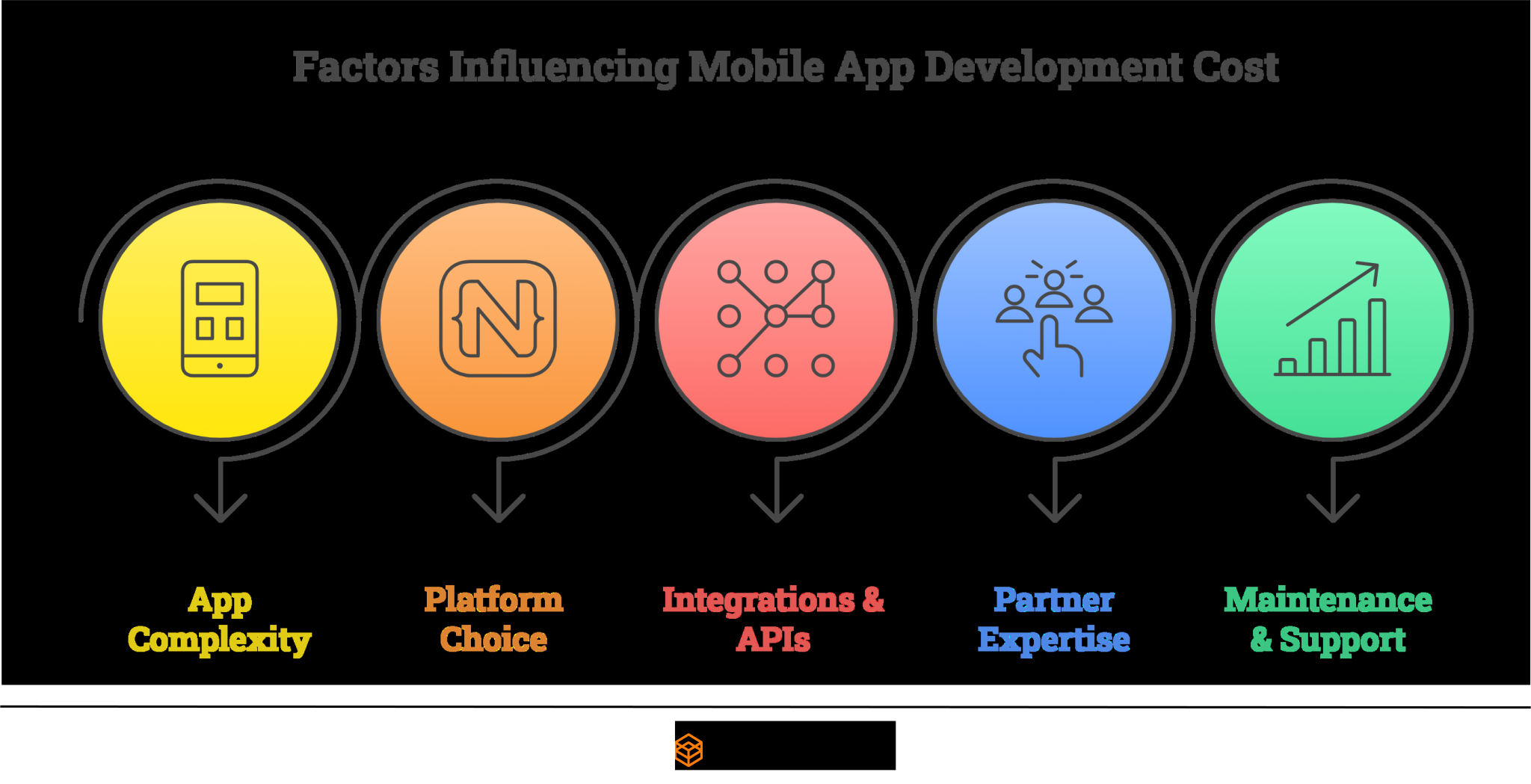
1. App Type or App Complexity
Simple enterprise apps with simple features will take less development time and ultimately cost you less.
For example, basic apps with simple features like login, dashboards, and notifications are less expensive compared to advanced solutions with AI integration, analytics dashboards, and offline capabilities.
The more complex the workflows required in the enterprise apps, the higher the investment will be.
2. Choice of Enterprise Mobile App Development Platform
Building a native app for iOS and Android separately usually costs more than creating a cross-platform app with frameworks like Flutter or React Native.
Usually, enterprises must evaluate performance needs, scalability, and long-term maintenance costs before deciding. But if you are still hunting for an Android App Development Companies in USA to create a Native app using Java and Kotlin, then assume the starting cost of $30,000 to 50,000+ for each platform.
Whereas cross-platform frameworks can be developed using a single codebase, therefore it can use 80% same code for all apps and save upto 40% in cost.
3. Integrations & APIs
The core focus on developing the enterprise apps is to deliver a collaborative experience. This often needs integration with existing ERP, CRM, HR, or finance or other systems.
Now the complexity of these integrations significantly impacts the overall enterprise mobile app development cost. Integrating an enterprise app with legacy workflows is are little more complex as it requires modernization and some upgrades in existing features to make it
4. Development Partner’s Expertise & Location
Costs also vary depending on whether you hire in-house teams, freelancers, or partner with an experienced enterprise mobile app development company in USA, India, or globally.
India is globally recognized for hiring resources at affordable pricing due to excessive market competition and excellent coding skills. Apart there is no language barriers. In India, you can hire app developer at half of the price compared to the USA, Australia, Canada and more.
Outsourcing to specialized firms like ScalaCode ensures better ROI as we enable you to collaborate with pre-vetted top-tier mobile app developers. In addition, we enable you to leverage our flexible engagement models and enables you to hire developers are hourly, monthly and fixed billing.
5. Post-Launch Maintenance & Support
Enterprise apps require continuous updates, bug fixes, and scaling to meet the evolving business needs. Budgeting 15 to 20% of the initial development cost annually for maintenance is a safe benchmark.
According to Clutch, the cost of building an enterprise mobile app can range anywhere from $50,000 to $500,000+, depending on the scope. While this may sound like a big investment, in long-term gains in productivity, security, and scalability outweigh the initial expense.
ScalaCode offers tailored pricing models to suit different industries and needs.
How to Choose the Right Enterprise Mobile App Development Partner?
The success of the enterprise app lies in the expertise of the developers and the skills that they pour into the project. Selecting the right partner is as important as the app idea itself.
Generally, this is where businesses make a major blunder by making a decision based on the pricing of the developer. Well, a poor choice can lead to delays, cost overruns, and security risks.
Choosing the right partner ensures a smooth enterprise mobile app development process. But it requires the right strategy which helps you shortlist the right talent.
Here are the key factors to consider when choosing an enterprise mobile app development company:

1. Proven Expertise in Enterprise Solutions
Search for the enterprise mobile app development company in USA or India with a track record of building secure, scalable apps for global enterprises. Instead just directly falling for the lower hourly cost, it is worth reviewing their case studies, client success stories, and industry-specific experience.
2. Technical Knowledge & Service Portfolio
Your partner should offer a broad range of enterprise mobile app development services and expert in handling the full-cycle of enterprise app development. From consulting to UI/UX designing to API integrations- make sure they offer complete services.
3. Adhering to NDA and Security-First Approach
Enterprise app security is non-negotiable. Ensure that the company you are planning to collaborate with must sign an NDA to maintain the privacy and security of your project.
Apart, the company follows best practices like role-based authentication, end-to-end encryption, and compliance with other regulations to maintain data security.
4. Agile Development Process
Make sure that you are partnering with a firm that follows an agile development process, maintaining transparency and ensuring faster delivery of the project.
With agile methodology or iterative approach, developers can ensures the app is delivered in the committed timelines and meets business goals without scope creep.
5. Post-Launch Support & Maintenance
Enterprise apps need continuous upgrades and maintenance. Therefore, choose a partner who offers 24/7 support, monitoring performance and long-term maintenance.
How ScalaCode is the best enterprise mobile app development company to collaborate with:
At ScalaCode, we bring together technical expertise, industry experience, and a client-first approach to deliver enterprise apps that scale with your business.
- Recognized among the best enterprise mobile app development companies for reliability and innovation.
- Expertise across industries, including finance, healthcare, retail, logistics, and manufacturing.
- Skilled in emerging technologies like AI, cloud, and IoT for next-gen enterprise apps.
- Global delivery model with cost efficiency and uncompromised quality.
ScalaCode ensures your mobile transformation journey is smooth, secure, and future-ready.
Future Trends in Enterprise Mobile App Development
Technology is evolving rapidly, and enterprise apps are no exception. Businesses investing in enterprise mobile app development should invest in the latest technology trends if they really want to stay ahead of the competition.
Here are the top trends shaping the future of enterprise mobile app development platforms and services:
1. Artificial Intelligence (AI) & Machine Learning (ML)
Incorporating AI capabilities into enterprise apps can 10x your productivity and enable you to cater to modern business needs without any hiccups. Now the question is what AI brings to enterprise apps:
- Assuring predictive analytics for better decision-making
- Automating processes and replacing the manual workflows
- Instant customer support and providing instant responses to queries
Implementing AI in mobile app development can unlock a wide array of benefits. From chatbots handling employee queries to AI-based fraud detection, the integration of AI is redefining mobile enterprise app development.
2. Cloud-Native Enterprise Apps
Cloud adoption is on the rise, with Gartner forecasting 85% of enterprises will embrace cloud-first strategies by 2025.
Cloud-native apps offer scalability, flexibility, and easier integration with enterprise systems, making them a cornerstone of future enterprise mobile app development services.
3. Low-Code / No-Code Platforms
To reduce development time and costs, enterprises are increasingly using low-code/no-code tools. These platforms allow rapid prototyping while still enabling custom enterprise mobile app development for complex use cases.
4. Enhanced Security Frameworks
With cyberattacks costing businesses an average of $10.5 trillion annually by 2025 (Cybersecurity Ventures), enterprise apps will adopt zero-trust security, biometric authentication, and advanced encryption methods.
5. IoT & Edge Computing Integration
As connected devices multiply, enterprise apps will integrate with IoT systems for real-time monitoring, predictive maintenance, and supply chain optimization. Edge computing will further improve performance by processing data closer to the source.
6. Super Apps for Enterprises
Borrowing from consumer trends, enterprises are now exploring super apps that unify multiple workflows. Whether it be HR, communication, approvals, or reporting, enterprises can get everything into a single mobile platform. Super mobile apps are gaining hype in 2025 and allowing enterprises to experience a unified experience.
In a nutshell, the future of enterprise mobile app solutions revolves around implementing high-end security, intelligence, and seamless scalability. Enterprises that embrace these trends will not only be able to stay ahead of the competition but also be able to provide better services to their customers.
Learn More: Top Mobile App Development Trends
Why Choose ScalaCode for Enterprise Mobile App Development?
When it comes to enterprise mobile app development, choosing the right partner makes all the difference. At ScalaCode, we combine innovation, technology expertise, and industry-best knowledge to deliver apps that go beyond your expectations.
Here’s why global businesses trust us as their enterprise mobile app development company:
1. Proven Track Record
Being in the industry for over two decades, ScalaCode has set a track record of delivering 1200+ enterprise apps to global clients across 22+ countries. With our 98% client retention rate, our team has been globally recognized for enterprise app development..
2. Full-Cycle Development Services
At ScalaCode, we are backed by highly skilled mobile app developers with 5+ years of experience, trained in handling the full-cycle app development process.
From strategy and design to development, testing, deployment to app maintenance- our team offers end-to-end enterprise mobile app development services. With us, you don’t need multiple to hire multiple experts for each task.
3. Skilled & Dedicated Developers
Our team of experts stays ahead of the curve with the latest technologies like AI, IoT, and cloud. Whether it’s custom enterprise mobile app development or building apps on modern platforms, our developers deliver excellence and enable you to incorporate the latest technology trends.
4. Team Availability and Transparency
Our skilled team of experts is flexible to work with different time zones, and they align their availability as per your working hours. Moreover, at ScalaCode, we are available to communicate at different corporate tools, including Slack, Skype, Teams, and more. Our focus is on maintaining consistent communication between teams and clients to build long-term relationships.
5. Global Delivery with Cost Efficiency
With development centers in India and a presence across the USA, we balance quality with cost-effectiveness, making us one of the best enterprise mobile app development companies worldwide.
Conclusion
By the end of this blog, it is fair enough to say that Enterprise mobile app development is no longer optional, it’s a strategic move that allows businesses to unlock new dimensions. With a rightly developed app, businesses can streamline operations, enhance collaboration, and drive growth. From initial discovery to post-launch support, it requires a structured approach to ensure that your enterprise app is secure, scalable, and aligned with business goals.
By understanding the enterprise mobile app development process, evaluating cost factors, and incorporating the latest technologies, businesses can stay ahead of the competition and able to identify future business opportunities.
Partnering with a trusted enterprise mobile app development company like ScalaCode ensures you have the expertise, technology, and strategy to succeed.
Common FAQs
-
What is enterprise mobile app development?
Enterprise mobile apps are nothing but comprehensive applications that are specially developed to streamline the internal processes of enterprises. Whether it be automating manual processes, collaborating with teams, or integrating apps with existing systems.
-
How much does enterprise mobile app development cost?
The cost to create an enterprise mobile app ranges from $30,000 to $50,000+, depending on the various factors. These are the rough estimations, as no business has the same requirements, so there is no standard cost. The ultimate cost will depend on the app’s complexity, features, UI/UX design, app testing, and more.
-
How long does it take to build an enterprise mobile app?
Usually, the average timelines of app development will range from 4-5 months. But the ultimate development timeline will depend upon the complexity of the app, features, integrations, and more.
-
Should I choose native, hybrid, or cross-platform for enterprise apps?
The final decision of choosing the enterprise mobile app development platforms will depend on your targeted audience, budget, and business requirements. So here is what each platform offers you:
● Native Apps: Offering high performance and full platform access, ideal for critical enterprise apps.
● Hybrid/Cross-platform Apps: Ensuring faster development and cost-effectiveness, suitable for apps targeting multiple platforms.
-
How do I choose the right enterprise mobile app development company?
Choosing the best enterprise mobile app development company is a complex task. However, to make the right decision, we recommend that you consider these parameters:
● Analyze proven experience in enterprise apps.
● Strong technical expertise in AI, cloud, and security.
● Transparent processes and Agile development.
● End-to-end services, including post-launch support.ScalaCode is recognized among the best enterprise mobile app development companies and offers full-cycle services to global enterprises.
-
How is enterprise mobile app development different from regular mobile app development?
Enterprise apps are designed to focus on business efficiency, scalability, and security, while consumer apps target individual users to deliver convenience. Whether it be for entertainment, shopping, or social purposes. Enterprise apps must integrate with internal systems, comply with regulations, and handle sensitive data securely.