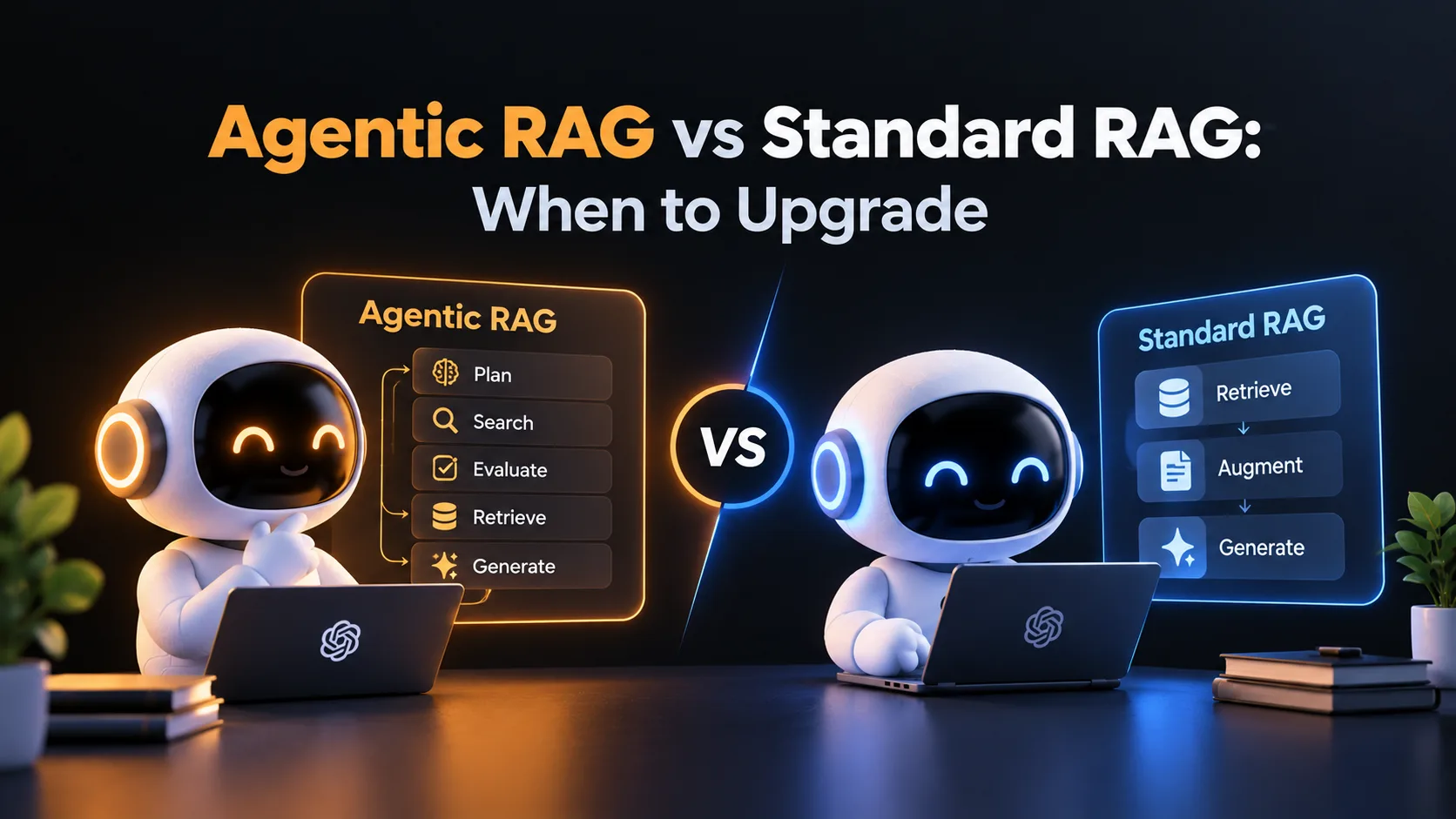

The tech industry is moving to the verge of breakthrough innovations that are transforming the global cooperative sector. Technology trends are aiding tech leaders to gain a competitive edge and dominate the industry. From the accelerating data security needs to AI advancements, the landscape is changing fast. Emerging tech trends are filtering into our daily lives but are meant to reshape industries, economies, and the corporate sector in a larger vision.
As per a recent report by Techjury, finding out the number of jobs that can be taken away because of automation gives us a shocking figure. Let us explore the critical tech trends that are most likely to rule over the corporate sector in 2026 and help the business formulate its strategy.
Top 20 Technology Trends That are All Set to Rule in 2026
The year 2026 is awaiting various new technologies that will dominate the market and modernize business operations. Here are some of the top trending technologies:
1. Agentic AI
Agentic AI is an artificial intelligence program and one of the top technology trends that can plan and perform complex, multi-step tasks autonomously. These agents are built on the foundation models and can operate independently, interrelate with each other, and learn new information.
Key Features:
- Designed for deep research
- A virtual workforce of agents to assist
- Offload and augment the work of humans
- Can plan and take action to achieve goals
Real Time Applications:
- Personalized Healthcare (AI in Diagnostics and Treatment)
- Smart Assistants (Personalized AI Bots)
- AI in Customer Service (Chatbots and Virtual Agents)
- AI in Fraud Detection and Cybersecurity
- Marketing and Advertising (Dynamic Ad Personalization)
Challenges:
- Requires robust guardrails to ensure alignment
- Risk Management and Governance
Also Read: AI Agent Development Explained: A Comprehensive Guide
2. Digital Trust & Cybersecurity
Digital trust and cybersecurity deal with the technologies and practices that are aimed at assuring secure, transparent, and trustworthy digital interactions. This involves checking identity, data protection, encryption, detection of threats, and blockchain-based systems of trust.
Key Features:
- Analyze vast amounts of data for abnormal patterns
- Predict potential threats for businesses
- Implement real-time defenses in no time
Real Time Applications:
- AI-based Fraud Detection
- Zero-Trust Security Models
- Digital Identity Verification and Remote Authentication
Challenges:
- Integration with Legacy Systems
- Regulatory Compliance Complexity
- Data Privacy vs. Personalization
3. Quantum Technologies
Quantum-based systems use the peculiarity of quantum mechanics to perform some complex calculations exponentially faster than a classical computer. This system of secure communication makes sensors with higher sensitivity levels than those based on classical devices.
Key Features:
- Exponentially faster than classical computers
- Protects data from security risks
- Comes with the advent of quantum computing
Real Time Applications:
- Quantum Cryptography for Secure Communication
- Quantum Computing in Drug Discovery
- Optimization in Supply Chain and Logistics
- Climate Modeling and Weather Forecasting
Challenges:
- PQC algorithms are not drop-in replacements
- Current applications may have performance issues
- Require testing and may need to be rewritten
4. Future of Bioengineering
Bioengineering is the combination of engineering with biology to achieve critical health outcomes and enhance human performance, revolutionise food value chains, and develop novel products and services.
Key Features:
- Integration of biology with AI, robotics, and nanotech
- Custom gene editing (CRISPR), organ-on-chip systems
- Personalized medicine and synthetic biology advancements
Real Time Application:
- CRISPR-based gene therapies
- Lab-grown organs and tissues
- Wearable biosensors
Challenges:
- Ethical concerns around genetic modification
- High R&D costs and regulatory approval barriers
- Data privacy issues in genome and health data usage
5. Future of Energy & Sustainability Technologies
The technologies of energy and sustainability are one of the top technology trends 2026 and are a wide range of innovations that are aimed at ensuring that the world’s energy levels are changed into sustainable and resilient energy levels.
Key Features:
- This includes the spectrum of technologies
- Particularly focusing on clean electrons
- Transforming the global energy landscape
- Improve sustainability by reducing the carbon footprint
Real Time Applications:
- Smart Grids and IoT-based Energy Management
- Green Hydrogen Production and Usage
- Carbon Capture, Utilization, and Storage (CCUS)
Challenges:
- Will need new hardware, cloud services, skills, and tools
- Algorithms and applications will be required
- Complex migration to new computing platforms
- Energy prices may rise in the short term
6. Digital Twin
Digital twins are one of the top trends in technology and are computerized models of real equipment to simulate, monitor, and maintain. They are widely applicable in manufacturing, automotive, and urban planning to maximize procedures and forecast any problems.
Key Features:
- Enable companies to test impacts and changes
- Reducing real-world testing costs
- Real-time simulation of physical assets
- Remote monitoring and control
Real Time Applications:
- Aerospace
- Digital Twin in Manufacturing
- Energy Sector
- Manufacturing
Challenges:
- High initial setup cost
- Data integration and standardization
- Cybersecurity risks
- Lack of skilled workforce
7. Neuromorphic Computing
Another top emerging technology trend for 2026 is Neuromorphic computing, which entails creating a computer chip resembling the neural pathways and systems of the human brain. These chips have essential differences in the processing of information when compared to conventional computers.
Key Features:
- More efficient in handling tasks
- Pattern recognition and sensory data processing
- Can produce substantial energy efficiency
- Computational power improvements
Real Time Applications:
- Edge AI in IoT Devices
- Brain-Computer Interfaces (BCIs)
- Robotics and Drones
Challenges:
- Lack of Standardized Architecture
- Programming Complexity
- Limited Ecosystem and Tooling
- Commercial Viability and Scalability
8. Voice-Activated Technology
Voice-activated technology is one of the top technology trends, and it has increased along with its capability to receive and process natural human communication in a better way. The technology is extensively applied to smart speakers, home automation, and customer service bots.
Key Features:
- It enhances accessibility and convenience
- Interaction with the latest technologies
- Increasingly integrated into vehicles and public spaces
Real Time Applications:
- Google Assistant
- Amazon Alexa
- Apple Siri
- VOCALLS
Challenges:
- Struggle with understanding different accents
- Unauthorized data access and breaches
- Building, training, and maintaining accurate voice systems
9. Synthetic Media
The next top technology trend in 2026 is synthetic media, which means media that is completely AI-created, such as deepfakes, virtual influencers, you know, sometimes it is called automated video content, as well.
Key Features:
- AI-generated content
- Personalization at scale
- Realistic human-like interaction
- Cost-effective content creation
Real Time Applications:
- AI-Generated News Anchors
- Corporate Training & Education
- Marketing & Advertising
- Entertainment & Film Production
- Voice Cloning for Virtual Assistants & Dubbing
Challenges:
- Ethical concerns around misinformation
- Copyright and ownership issues
- Lack of regulation and legal frameworks
- Public trust and authenticity detection
10. Digital Humans & AI Companions
Digital humans are realistic artificial intelligence-driven virtual avatars that are intended to replicate the behavior, expressions, and conversation of humans. AI companions are emotional, intelligent, virtual companions that interact with users to offer support, entertainment, or even companionship.
Key Features:
- Human-like appearance and gestures
- Natural language understanding
- Emotion recognition and response
Real Time Applications:
- UneeQ digital humans used in banking
- Replika AI, an AI companion app offering emotional support
- Soul Machines creates AI instructors for personalized learning experiences
Challenges:
- Emotional authenticity
- Privacy concerns
- Ethical dilemmas
- High development costs
11. Fully Decentralized Web
A fully decentralized web is a form of architecture and organization of the internet in which there is no concentration of governance on centralized servers. It employs such technologies as blockchain, IPFS, and smart contracts to ensure users own the data and identity, with the possibility to govern data and digital assets on their own.
Key Features:
- Peer-to-peer architecture
- User ownership of data and digital identity
- Trustless transactions
- Tokenized economies
Real Time Applications:
- Decentralized Finance (DeFi)
- Decentralized Storage
- NFT Marketplaces
Challenges:
- Scalability and speed limitations
- User onboarding complexity
- Regulatory uncertainty
- Lack of mainstream adoption
12. Atmospheric Engineering (Geoengineering)
Atmospheric engineering is one of the top emerging technology trends for 2026 that describes large-scale technological interventions in the atmosphere to withstand climate change. It also entails methods such as solar radiation management and carbon dioxide removal to control the world’s temperatures.
Key Features:
- Climate intervention at scale
- Solar Radiation Management (SRM)
- Carbon Dioxide Removal (CDR)
- Emergency response potential
Real Time Applications:
- Direct Air Capture Plants
- Marine Cloud Brightening Trials
- Enhanced Weathering Techniques
Challenges:
- Ethical and political controversy
- Unpredictable side effects
- Lack of global governance and accountability frameworks
- High costs and technical uncertainties
13. Polyfunctional Robots
The polyfunctional robot is a top technology trend, and it is also a technologically savvy machine with AI that can deliver various complex tasks under distinct circumstances and switch functions accordingly.
Key Features:
- Multi-tasking capabilities
- AI integration for perception
- Autonomous learning through ML
- Human-robot collaboration (HRC)
Real Time Applications:
- Healthcare Assistance- Robear (Japan)
- Warehouse Automation- Boston Dynamics’ Stretch
- Disaster Response, ANYmal Robot
Challenges:
- High development and maintenance costs
- Complex programming and training requirements
- Safety and compliance concerns
14. 6th Generation (6G)

6G (Sixth Generation), also known to be the next evolution of wireless interaction tools, is all set to capture the market as it is expected to offer 100x speed than 5G. It has ultra-low latency and AI-driven connectivity. Most probably, it is expected to be launched in the coming years. It is one of the most recent trends in technology.
Key Features of 6G
- Terahertz (THz) Spectrum
- 1 Terabit per Second
- AI-Driven Networks
- Holographic Communication
- Ultra-Low Latency (Sub Millisecond)
- Full IoT & Smart Cities Integration
- Space & Satellite Integration
Here is the technological advancement flow from 1G to the upcoming 6G technology trends:

Image Source: Science Direct
Applications of 6G
- Metaverse & XR: Over the top VR/AR experiences
- Brain-Computer Interfaces (BCI): Mind-control device operation
- Autonomous Vehicles: Safer driving through data sharing between cars
- Remote Surgery: Doctors/Surgeons can operate remotely.
- Hyper-Smart Cities: AI-driven architecture with live monitoring.
Challenges for 6G
- Need new architecture (5G towers won’t be enough to cater to the advances in technology requirements.
- High power utilization (requires a breakthrough in energy tech)
- THz signals scuffle with penetration (antennas & new materials required)
15. Advanced Blockchain Technology
A decentralized and distributed ledger system that keeps the transaction records safely is what we call blockchain technology. It consists of a chain of interconnected blocks carrying transaction lists, a timestamp, and a unique cryptographic hash of the last block. Blockchain technology’s structure ensures security, trust, and stability despite the absence of a centralized authority.
It is indeed one of the remarkable tech trends in 2026 that will drive security. Businesses feel the urgency of gaining a competitive edge by incorporating latest advanced technologies into their solutions.
Key Features
- Quantum-Resistant Cryptography
- AI-Integrated Smart Contracts
- Zero-Knowledge Proofs (ZKPs) for Privacy
- Layer 2 Scaling Solutions
- Multi-Chain & Cross-Chain Interoperability
- Decentralized Identity (DID) & Self-Sovereign Identity (SSI)
- Blockchain for IoT (Internet of Things)
- Sustainable Blockchain (Green Tech)
- Decentralized Autonomous Organizations (DAOs) 2.0
- Blockchain-Based CBDCs & Tokenization
Application of advanced Blockchain technology trends
- Finance: Fully decentralized banking with top AI trends solutions.
- Healthcare: Store medical records and instant credentials verification.
- Gaming & Metaverse: Play-to-earn (P2E) games, virtual assets, and NFT-based economies.
- Supply Chain: Real-time tracking (blockchain-driven) and fraud-proof logistics.
- Voting Systems: Transparent and safe digital voting mechanisms.
Challenges
- Quantum Threats to Security
- Scalability Issues
- Interoperability & Cross-Chain Risks
- Regulatory Uncertainty
- Environmental & Energy Concerns
- Smart Contract Vulnerabilities
- Data Security vs Data Transparency
- User Adoption & Complexity
- Governance Challenges
Also Read: Top Mobile App Development Trends
16. Future-driven AR, VR, and MR
AR: Augmented Reality (AR) is a technology that overlays digital content onto the real world, including sounds, 3D models, and text globally using AR glasses, headsets, or smartphones. AR enhances the real environment with the inclusion of interactive virtual elements.
VR: Virtual Reality (VR) is a technology that builds a fully immersive digital environment which allows users to interact with a digitalized world. It uses VR headsets, controllers, and haptic feedback devices. In contrast with AR, which covers digital elements in the real world, VR wholly substitutes simulated environments in place of real-world surroundings.
MR: Mixed Reality (MR) is a technology that merges real and imaginary worlds to open the gate for users to interact with digital objects (which may not exist in reality). MR blends VR & AR to ensure a seamless experience where we can anchor, manipulate, and respond to virtual elements in real-time.
Unlike AR, MR allows users to communicate with virtual objects naturally rather than covering digital elements. Unlike VR, MR enhances the real world rather than completely substituting it.
Let us analyze this with a clear comparison of features, benefits, and challenges of AR, VR, & MR with the following table:
| Category | AR (Augmented Reality) | VR (Virtual Reality) | MR (Mixed Reality) |
| Key Features/ Future Trends |
|
|
|
| Benefits & Applications |
|
|
|
| Top Challenges |
|
|
|
17. Next Gen Cyber Security
AI-driven advanced and automated security solutions built to safeguard networks, data, and devices from evolving cyber threats are referred to as Next-Gen Cyber Security. To create a proactive, intelligent, and resilient defense system against cyberattacks, it integrates AI, ML, zero trust, quantum-resistant encryption, blockchain, and automated threat detection.
Key Features
- Predicting and preventing attacks in real-time using AI & ML.
- Ensuring continuous identity verification with zero trust security.
- Defending against quantum computing threats with quantum-safe encryption.
- Protecting IoT, 5G, and cloud environments with automated monitoring.
- Enhancing privacy and security with blockchain and decentralized identity.
Applications of Next Gen Cyber Security
- AI-Driven Fraud Detection & Response
- Zero Trust Security
- Quantum-Safe Encryption
- Cloud Security & Compliance
- IoT & 5G Security
- Dark Web Intelligence
- Blockchain-Based Security
- Deepfake & Phishing Detection
- Cybersecurity for Autonomous Vehicles
- Biometric & Behavioral Authentication
Challenges
- AI-driven cyber attacks are becoming more advanced.
- Quantum computing threatens traditional encryption.
- IoT devices increase attack surfaces.
- Cloud environments are at risk of misconfigurations.
Explore More: Top Cross-Platform App Development Frameworks
18. Future-driven Edge Computing
Edge computing is a distributed IT infrastructure that processes the client’s data that is close to the originating source at the periphery of the network.
For many applications that need rapid processing, low latency, and minimal data transmission, it can prove to be effective. Edge computing accelerates data processing and reduces the load on the cloud.
According to Statista, the global market of edge computing is estimated to touch $350 billion by 2027.

Key features
- Ultra-Low Latency
- AI & Machine Learning at the Edge
- 5G & Beyond Integration
- Enhanced Security & Privacy
- Decentralized & Distributed Computing
- Energy Efficiency & Sustainability
- Real-Time Data Processing & Analytics
- Autonomous & Self-Healing Systems
- Scalability & Interoperability
- Edge-to-Cloud Orchestration
Applications of Edge Computing
- Enabling real-time processing for self-driving cars, it reduces reliance on cloud connectivity for navigation and safety.
- Edge AI and IoT sensors enable real-time traffic management, smart lighting, and waste management.
- Processes patient data at the edge, enabling real-time diagnostics, remote surgeries (via robotic systems), and emergency response.
- Predictive maintenance, quality control, and process automation in factories using real-time edge analytics.
- Enhances network efficiency, reduces latency, and improves bandwidth utilization in 5G networks.
- Edge-based facial recognition, intrusion detection, and AI-powered security monitoring help in instant threat response.
- Reduces game lag and latency in cloud gaming services. For example- Google Stadia, Xbox Cloud Gaming, and NVIDIA GeForce Now.
- Improves fraud detection, secure transactions, and AI-driven financial services.
Challenges
- Security & Data Privacy Risks
- Infrastructure & Deployment Costs
- Limited Processing Power & Storage
- Scalability & Interoperability
- Data Synchronization & Consistency
- AI & Machine Learning Model Deployment
- Power & Energy Efficiency
- Network Latency & Connectivity Issues
- Compliance & Regulatory Challenges
- Managing Large-Scale Edge Networks
19. Next Level Automation
Next-level automation points to a more advanced process of automation that goes much beyond basic iterative task execution. It basically incorporates elements like AI, ML, and complex decision-making abilities that permit systems to automate processes and analyze data. It also has adaptive quality and the capability to make smart choices with minimum human intervention.
Key Features
- AI-Powered Decision-Making
- Hyper Automation
- Self-Learning & Adaptive Systems
- Edge AI & Real-Time Processing
- Autonomous Robotics & Cobots
- Digital Twins & Predictive Analytics
Applications of Next Level Automation
- AI-powered smart factories, autonomous production lines, predictive maintenance.
- AI-driven robotic surgeries, automated diagnostics, remote patient monitoring.
- Self-driving cars, drone deliveries, and AI-controlled traffic management.
- AI-powered automated warehouses, cashier-less stores, personalized shopping.
- Fraud detection, AI-driven investment decisions, smart contract automation.
- AI-driven traffic management, energy optimization, and public service automation.
- AI-powered virtual assistants, robotic process automation (RPA) for HR & customer service.
- AI-driven precision farming, automated irrigation, and robotic harvesting.
Challenges
- Job Displacement & Workforce Adaptation
- Cybersecurity Risks & AI Vulnerabilities
- High Implementation Costs
- Data Privacy & Ethical Concerns
- Interoperability & Integration Challenges
- Reliability & Technical Failures
20. Low-Code/No-Code Software Development
Low-code and no-code are software development methodology that permits users to build apps without extensive coding knowledge. They use drag-and-drop interfaces, visual workflows, and pre-built templates to streamline the software development process.
Let us take one step forward to discover the basis points of difference between low-code and no-code before you choose ideal software development services:
| Parameter | Low-Code | No-Code |
| Who uses it? | Developers & tech-savvy professionals | Business users & non-developers |
| Coding Requirement | Minimal coding for customization | No coding required |
| Customization | High flexibility & customization | Limited to pre-built functions |
| Use Cases | Complex applications, enterprise software | Simple apps, workflows, websites |
| Examples | OutSystems, Mendix, Microsoft PowerApps | Bubble, Zapier, Wix, Shopify |
Key Features
- Drag-and-drop interface, Easily design UI and workflows
- Pre-built components, Ready-to-use templates, forms, and integrations
- Automation & workflows, Automate tasks without coding
- AI-powered development, AI assists in code generation & debugging
- Cross-platform compatibility, Build apps for web, mobile, and desktop
- APIs & integration support, Connect with external databases, CRMs, and cloud services
- Security & governance, Built-in security compliance, role-based access, and encryption
The global market size of low-code/no-code was recorded as USD 11.45 billion in 2019. It is expected to rise at a compound annual growth rate (CAGR) of 22.7% from 2020 to 2027.

Image Source: spreadsheetweb
Applications of Low-Code/No-Code
- Automate workflows, internal tools, and customer portals
- Build online stores and inventory management systems
- Develop patient tracking and telemedicine apps
- Create e-learning platforms, student management tools
- Build custom CRM, chatbots, and lead management tools
- Track supply chains, inventory, and production workflows
Challenges
- Limited Customization
- Scalability Issues
- Security Risks
- Vendor Lock-In
Benefits of Integrating New Technology Trends into Your Business Solutions
Keeping an eye on tech trends 2026 is undoubtedly significant as it helps to ensure gaining a competitive edge. Whether you are a business owner or doing something different, you can’t afford to keep yourself unaware of the technology trends capturing the market. Premium digital transformation services help you meet your desired organizational goals.
Let us discuss in this section- why it matters to be informed about the new technology trends?
1. Staying Ahead in the Market
You need to be adaptive and flexible while staying updated with the most recent technological advancements. Through digital marketing trends utilization, companies can enhance ROI. Individuals can demonstrate their knowledge and readiness for changes in the work market by keeping up to date.
2. Early Identification of Opportunities and Difficulties
Trends might point to possible avenues for expansion, such as using novel approaches or investigating unexplored markets. They can also draw attention to possible obstacles, allowing you to make necessary adjustments before they affect your objectives.
3. Developing abilities and Remaining Relevant
Because industries are always changing, the abilities that are required today might not be necessary tomorrow. Keep yourself up to date by reading trade journals, blogs or by signing up for updates.
4. Promoting New Concepts and Solutions
Staying tuned with the current trends in technology promotes originality and inventiveness. You can solve the problems in effective ways or develop new methods with the gained knowledge.
5. Increasing Credibility and Trust
Being knowledgeable demonstrates your dependability and commitment to your industry. Whether through subscriber updates or industry blogs, sharing trend insights establishes you as an authority and fosters confidence.
Quick Recap
We are all set to embrace the top emerging technology trends 2026 that include agentic AI, Quantum technologies, energy & sustainability, digital twin in multiple industries like healthcare, cybersecurity, 6th Generation (6G), blockchain technology, etc.
All the small to big enterprises need to adopt these latest technologies in their business to improve their business and enhance ROI. To integrate these technologies into your business, you must contact an all-in-one organization which have masters in integrating the latest technologies into the current system.
Looking for top-notch mobile app development services? We offer the best business solutions, integrating future-proof technology trends or software development trends to give a push to your business. Schedule a free consultation now!