
Enterprise software development, delivered in phases you can plan around
ScalaCode is an enterprise software development company that builds ERPs, workflow systems and integrations for operations and IT leaders. Each phase ends with working software your teams use while the next phase is built, against milestones agreed before the first sprint.


500+ projects shipped since 2012
ISO 9001:2015 certified, Clutch 4.8/5

clients across 45+ countries
Trusted by teams at







Clutch 4.8/533 verified client reviews
GoodFirmsReviewed software partner
ISO 9001:2015Certified delivery process
GDPR compliantData handled under EU rules
What enterprise software development covers
Integration, data migration and access control sit underneath every screen and decide most of the risk.
- What is enterprise software development?
- Enterprise software development is the design, engineering and rollout of software that runs core operations across an organisation, such as ERP, workflow, finance, HR and supply chain systems. It includes integration with existing platforms, data migration, access control and audit trails, delivered in phases so daily operations keep running.
Related: custom software development, cloud and DevOps and AI strategy.
Enterprise application development we deliver
Systems that carry daily operations, built around the platforms you already run.
ERP and back-office systems
Inventory, procurement, finance and order management built around your own process, or modules that extend the ERP you have.
Workflow automation
Approvals, hand-offs and requests that now run on email and spreadsheets, moved into one system with an audit trail.
See custom software developmentSystem integration and APIs
APIs and sync jobs that connect your CRM, ERP, HR and finance systems, so data moves between them without re-keying.
Employee and partner portals
We build self-service portals for staff, suppliers and dealers, with role-based access and single sign-on.
Legacy modernisation
Ageing applications moved to a supported stack and the cloud one module at a time, while the old system stays in use.
See cloud and DevOpsData and reporting platforms
Pipelines bring data from several systems into one warehouse, with dashboards in Power BI, Tableau or Looker.
AI inside enterprise systems
Document extraction, search and assistants added to the systems your teams already use, starting from a measured use case.
See AI strategyCompliance and audit systems
Change management, access reviews and audit reporting, built so evidence for an audit comes from the system itself.
Not sure whether to rebuild or modernise?
Bring a description of the system and the pain it causes. We will tell you which route fits your budget and your tolerance for risk.
Modernising enterprise software without stopping operations
Most enterprise projects replace a system that is still in daily use, so the migration path decides the risk.
Technical audit
We review the code, data model, integration points and undocumented business rules, and talk to the people who know them, before proposing a plan.
Module-by-module migration
One module moves at a time behind a routing layer while the legacy system keeps running. New features ship on the new stack.
Parallel run
For high-risk modules, old and new run side by side for an agreed window, and we compare outputs before cutover.
Data migration with rollback
Migration scripts are rehearsed on copies of production data, run in off-peak windows and backed by a tested rollback plan.
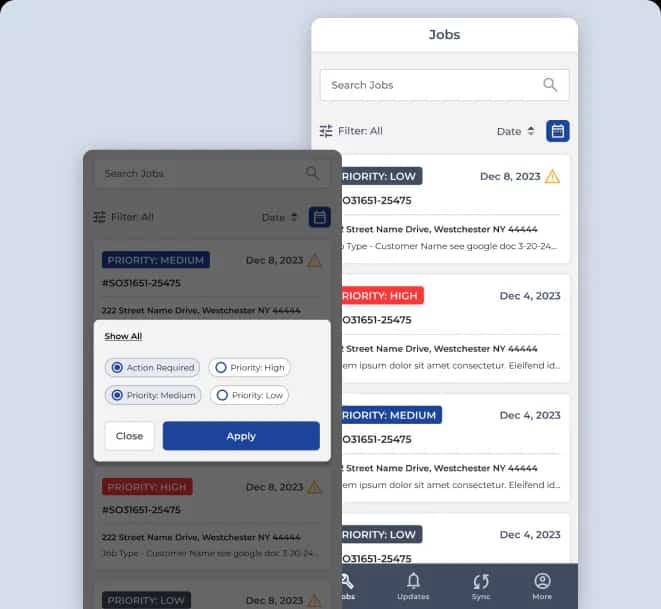
Field service apps integrated with NetSuite: web, Android and iPhone
ScalaCode built web, Android and iPhone apps for a field service company to replace its Service Pro software. Field workers view jobs, complete inspections, add photos and notes, and everything syncs with NetSuite through a secured backend.
apps replacing Service Pro
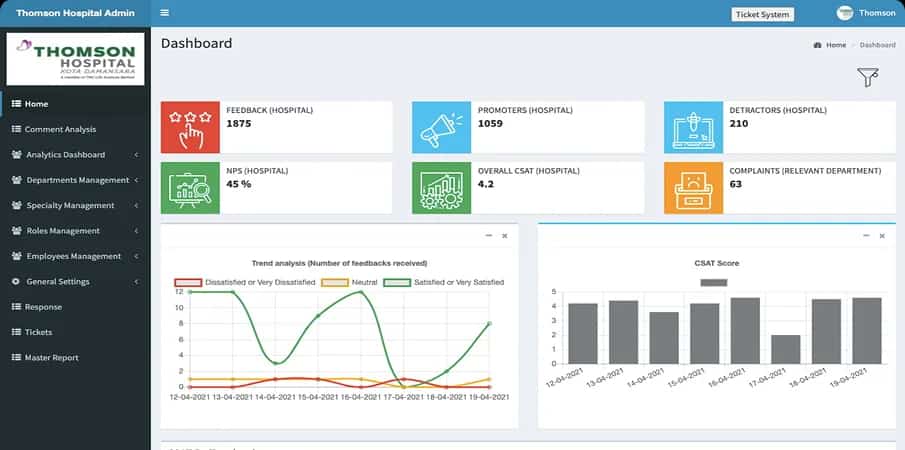
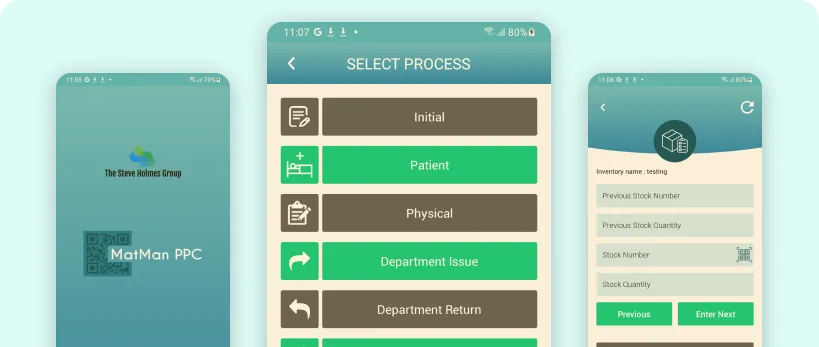
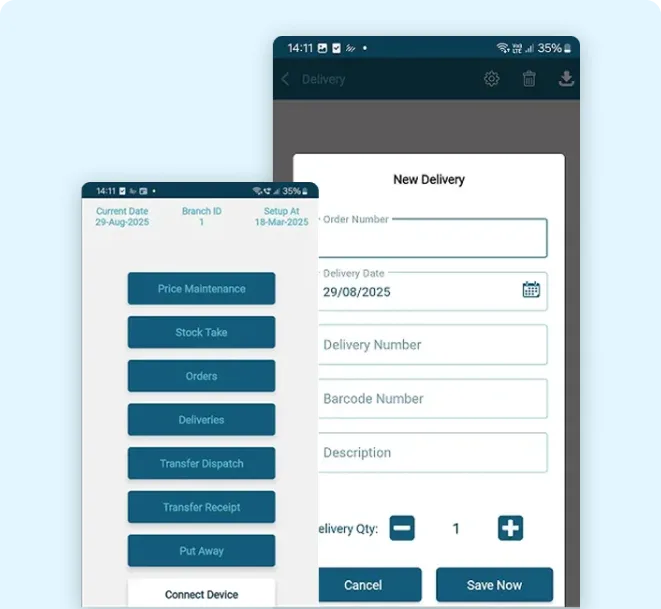
How we deliver enterprise software
Builds run in phases that each end with software your teams use. Discovery fixes the phase plan in writing, and AI coding agents help our engineers ship each phase faster.
Security and compliance
Compliance requirements such as SOC 2, HIPAA or GDPR are written into the scope during discovery, and controls are documented as we build for your audit cycle.
Certified delivery process
Delivery follows an ISO 9001:2015 certified quality process.
Your repositories and pipeline
We work in your GitHub or GitLab, code review and CI pipeline, so every change is traceable.
Tested before production
Automated tests run on every change, and every release goes through staging before production.
Access control and audit logs
Role-based access, single sign-on with your identity provider and audit logs are part of the build spec.
The enterprise stack we work in
Chosen per project, to fit the platforms and skills your IT team already has.
Enterprise software services by industry

One team, 14 years of shipping
projects shipped since 2012
AI systems running in production
clients across 45+ countries
years building software, since 2012
Enterprise software development cost
Enterprise software starts from $24,999, with phased delivery against agreed milestones. It follows a free discovery sprint.

Phased project
Scope, milestones and price agreed per phase after discovery. We own delivery of each phase to rollout.
Best for a new system or a defined modernisation.

Dedicated team
Engineers who work only on your systems, from $2,499 a month for senior engineers.
Best for a platform your IT team will keep extending.

Time and materials
Pay for the hours used while the scope is still moving.
Best for audits, integrations and requirements still being written.
Rated 4.8/5 by the clients we build for
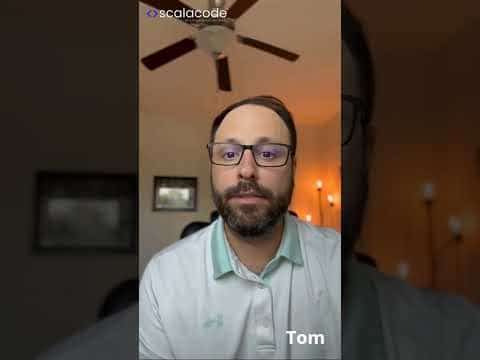
Verified reviews from Clutch and GoodFirms, and clients on camera.
33 verified reviews on Clutch
 Clutch review★★★★★
“They understood the business side of our requirements and often brought up solutions or ideas we hadn't considered.”
 GoodFirms review★★★★★
“Scalacode delivered a secure, scalable, and efficient platform exceeding our expectations.”
 Trustpilot review★★★★★
“The application was basically built from scratch, and was complicated, as the software was to be integrated with a certain Medical EHR software.”
Clutch review★★★★★“Working with ScalaCode was a rewarding experience. They brought structure, innovation, and a deep sense of partnership to the project, helping us take a meaningful step forward in how we manage and support our growing product ecosystem.”
Clutch review★★★★★“What set ScalaCode apart was their deep understanding of both the technical and practical aspects of our industry.”
Clutch review★★★★★“Their team quickly adapted and implemented updates without disrupting operations.”
GoodFirms review★★★★★“They translated complex requirements into an intuitive, scalable solution.”
Enterprise software development FAQs
Enterprise software starts from $24,999 after a free discovery sprint. Ask anything not covered here on the call.
How much does enterprise software development cost?
Enterprise software development starts from $24,999 for a phased build. Each phase is priced against agreed milestones after a free discovery sprint. The number of systems to integrate, the volume of data to migrate and the compliance scope drive the cost most.
How long does an enterprise software project take?
Enterprise software projects run in phases that each end with working software in use. Discovery takes 1 to 2 weeks and fixes the phase plan and schedule in writing, and our engineers use AI coding agents to ship each phase faster. Larger programmes continue phase by phase after the first release.
Can you integrate with SAP, Salesforce or Microsoft Dynamics?
Yes. We connect new software to SAP, Salesforce and Microsoft Dynamics through their published APIs, with error handling and logs for every record that moves between systems. Discovery maps each integration point, the data each system owns and who approves changes before any code is written. Java services often sit between these systems, and our Java developers can join your team for that work.
Can you modernise our legacy system without downtime?
Yes, in most cases. We replace the legacy system one module at a time while the old one stays in use, and run old and new side by side on high-risk modules to compare outputs before cutover. Data migration is rehearsed in advance and backed by a rollback plan. On a large codebase, AI code optimization can flag dead code and risky modules before the move.
How do you handle security and compliance?
Compliance requirements such as SOC 2, HIPAA or GDPR are written into the scope during discovery. Automated tests run on every change, every release goes through staging before production, and access control and audit logs are part of the build. Delivery follows an ISO 9001:2015 certified process.
Who owns the code and IP?
You own the code and IP from the first commit, and NDAs are standard. We work in your GitHub or GitLab, your code review and your CI pipeline, so the code and its history stay in your accounts throughout.
Will our IT team be able to run the system after handover?
Yes. Handover includes runbooks, recorded walkthroughs and a 30-day question window. Your engineers can review code throughout the build, so they know the system before it reaches them.
How do you keep our team informed during delivery?
Your team sees working software at the end of every two-week sprint and gets a written status every week. Our engineers keep 4 to 6 hours of overlap with US working hours.
They understood the business side of our requirements and often brought up solutions or ideas we hadn't considered.
Plan your first phase in 30 minutes
- 30 minutes with the ScalaCode team
- Which systems to replace, extend or connect first
- What is realistic, what it costs and how long it takes