
AI integration services for the systems you already run
Our AI integration services add language models and machine learning to your CRM, ERP, support desk and internal tools through their existing APIs. Access rules carry through to the AI, every call is logged, and your users keep working in the screens they know.
AI systems running in production
clients served since 2012
shipping software since 2012
on Clutch, from 33 verified reviews
countries with live clients
9001:2015 certified delivery process
Trusted by teams at








Clutch 4.8/5Verified client reviews

GoodFirmsReviewed software partner
ISO 9001:2015Certified delivery process
GDPR compliantData handled under EU rules
What AI integration services involve
Most of the engineering sits in the adapter layer, permissions and logging. Calling the model is the smallest part of the job.
- What is AI integration?
- AI integration is the work of connecting AI models to the software a business already runs, such as CRMs, ERPs and support desks. It covers the adapters that pass data to the model, the access rules and redaction applied on the way, and the step that writes results back into the original system.
Related: RAG development grounds the model in your documents. AI strategy decides which integration to build first.
Choosing an AI API integration pattern
The right pattern depends on whether a user waits for the answer and whether the AI writes back to your system.
| In-screen assist | Background processing | Knowledge assistant | Agent with tool access | |
|---|---|---|---|---|
| How it works | A user action calls the model and the result appears in the same screen | Events from your system queue up and the model processes them in batches | The model answers staff questions from your documents and records | The model reads and updates records through approved APIs |
| Pick it when | Staff need a draft, summary or suggestion on the record they are viewing | Volume is high and nobody waits on the result, such as invoice or ticket intake | Answers live in policies, manuals or past cases | A multi-step task crosses several systems |
| What changes in your system | A button or panel in the existing screen | A queue and a write-back step | A search or chat panel, plus an index of your content | Scoped API credentials and an approval queue |
| Where it falls short | Adds model latency to the user's wait | Results arrive minutes later | Only as good as the documents behind it | Needs the strongest controls and human review |
When answers must come from your own documents with citations, the work moves into RAG development.
Enterprise AI integration we deliver
Enterprise AI integration that fits the architecture you have, with the adapter, permissions and monitoring built by one team.
AI in your CRM
Call summaries, draft replies and account briefs appear inside Salesforce or Microsoft Dynamics and are written back to the record. A fuller assistant becomes one of our enterprise copilots.
AI in your ERP
We extract invoice, order and supplier document data and post the structured fields into SAP or your ERP for review.
Support desk integration
Ticket triage, suggested answers and case summaries appear inside the support desk your agents already use.
Knowledge search over your content
Staff ask questions in plain language and get answers with links to the policy, manual or past case they came from.
See RAG developmentAI API integration
We connect OpenAI, Anthropic Claude and Google Gemini APIs through a gateway that handles keys, retries, logging and cost limits.
Open-weight models on your infrastructure
We deploy Llama or Mistral in your cloud or data centre when data cannot leave your perimeter, including small language models tuned for one task.
Machine learning in your workflow
We push forecasts, scores and classifications into the screens and reports where your teams make the decision.
New AI features in your own apps
We add AI to the custom web and mobile software you own, built in your repository and release process.
See custom software developmentEvaluation and monitoring
We build evaluation sets from questions your users ask and track quality, latency and cost after launch.
Want AI inside one screen your team uses every day
Tell us the system and the task. We will show you how the integration would work, what it touches and roughly what it costs.
How AI fits into your existing architecture
Four patterns keep the AI inside your current systems and rules, so there is nothing to rebuild.
Adapter layer between your system and the model
A small service talks to your system's existing API on one side and the model on the other, so the core application code stays as it is.
Permissions carried through
The adapter passes the user's identity, and the AI only reads records that user can already open in the source system.
Redaction before the model
Personal and confidential fields are masked before any prompt leaves your environment, and restored only where policy allows.
Human approval on write-back
Changes the AI proposes to records, payments or customer messages wait in a review queue, and every decision is logged.
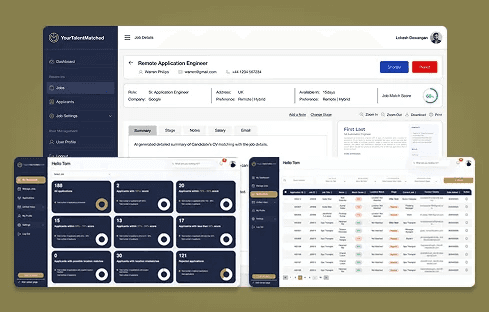
Talent Matched: one AI agent integrated across two recruitment products
Tallie, an AI agent, works inside both a multi-tenant ATS and the TM Discover search engine. It reads and acts on data only through MCP servers hosted by each product, and spoken screening answers are transcribed and scored.
Ranking and shortlisting time, per the client
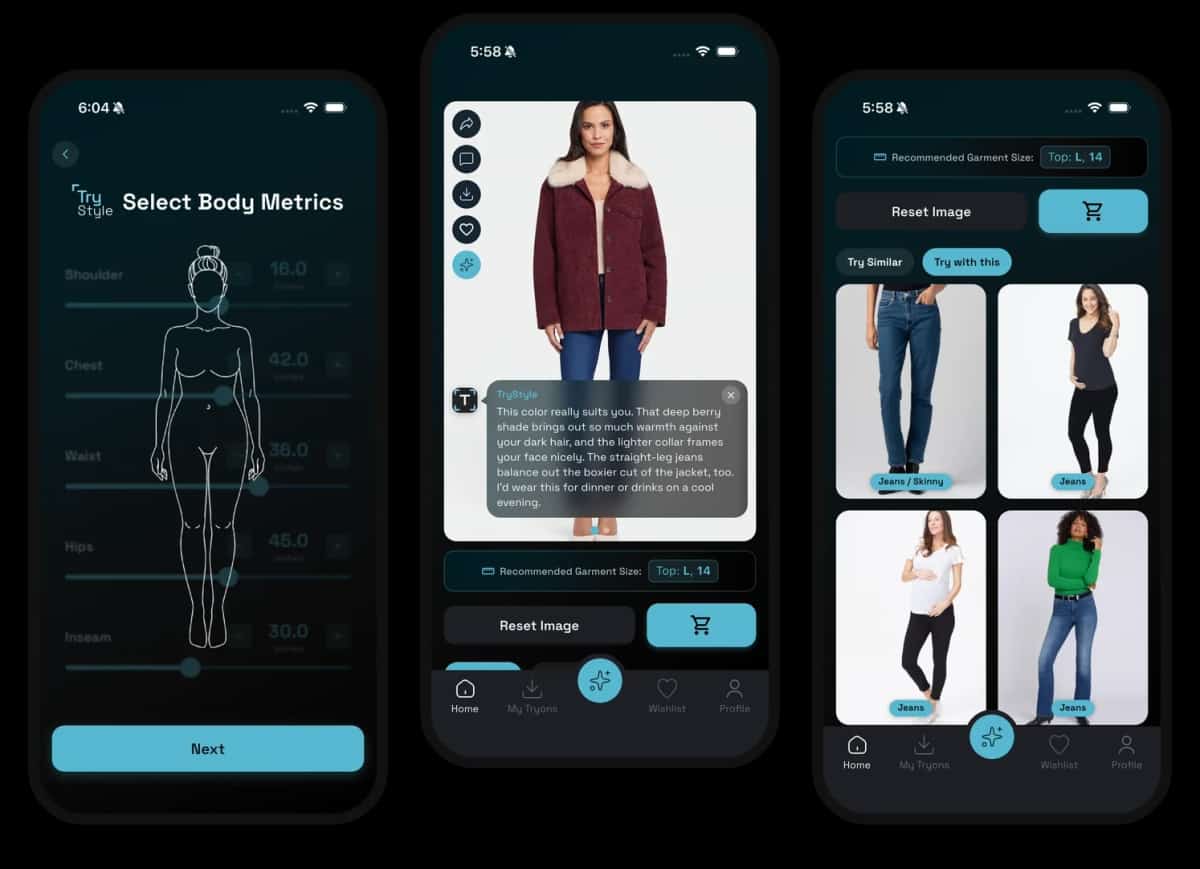
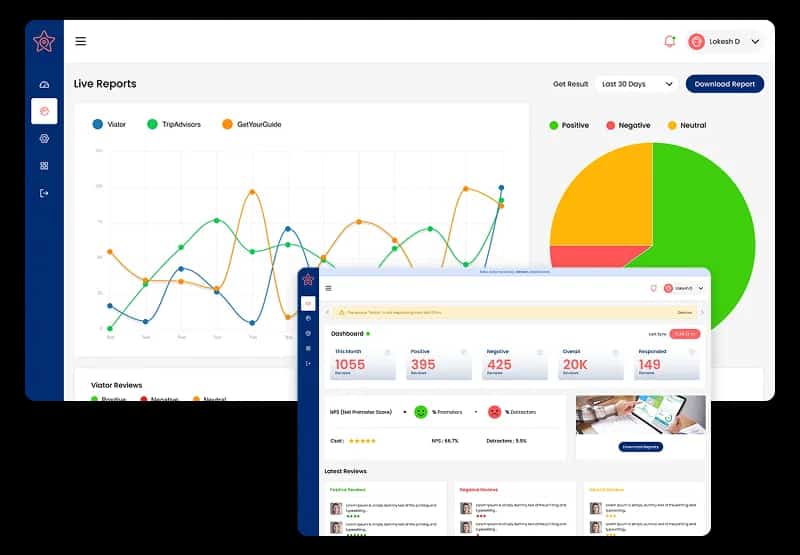
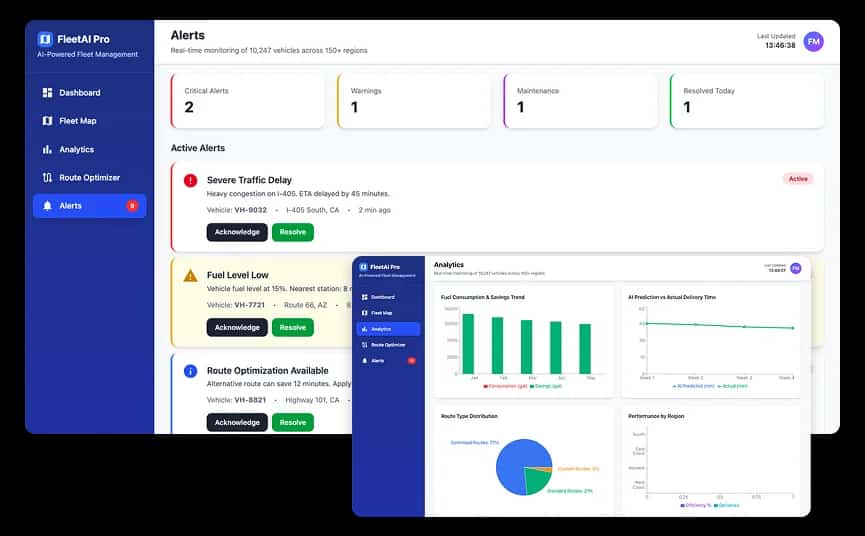
How an AI integration project runs
A proof of concept on one workflow takes 3 to 4 weeks. The production integration plan follows, sized to your systems and compliance scope.
One team, 14 years of shipping
projects shipped since 2012
AI systems running in production
clients across 45+ countries
years building software, since 2012
Your data rules apply to the AI
Controls are mapped to GDPR, HIPAA and the EU AI Act where they apply, and built into the integration from the first sprint.
Access control carried through
The AI reads only the records the signed-in user can open in the source system.
Field-level redaction
Sensitive fields can be redacted before any model sees them.
Audit logs
Every prompt, response, model version and approval is logged for review.
Human review
Proposed changes to records and customer messages wait for a person to approve them.
Systems and models we connect
Business logic sits in the adapter and stays separate from the model, so changing models is a configuration change.
Where AI integration pays back first
Workflows with high volume and a system of record that already holds the data the AI needs.
Financial services
- Document checks in onboarding
- Case summaries for reviewers
Healthcare
- Clinical note drafts for review
- HIPAA-aware redaction
Retail and eCommerce
- Product content in the catalogue
- Support ticket triage
Logistics
- Shipping document extraction
- Exception alerts for dispatch teams
Manufacturing
- Maintenance manual search
- Quality report extraction
SaaS platforms
- In-app assistants
- Per-tenant data controls
Legal and compliance
- Contract clause review
- Policy Q&A for staff
Professional services
- CRM account briefs
- Proposal drafting
AI integration cost
Most integrations start with a free discovery sprint. A proof of concept on one workflow starts at $4,999.

Integration discovery sprint
1 to 2 weeks and free, ending in a written proposal with a fixed quote. Systems review, integration design, data controls and a costed build plan.
Best for teams choosing which system and workflow to start with.

Integration proof of concept
From $4,999, 3 to 4 weeks. One workflow connected to a model on your data and scored against an evaluation set.
Best for proving one integration before a wider rollout.

Dedicated AI developers
AI engineers who work inside your repositories, CI and tracker, from $1,799 a month per engineer.
Best for a series of integrations across several systems.
Rated 4.8/5 by the clients we build for
Verified reviews from Clutch and GoodFirms, and clients on camera.
33 verified reviews on Clutch
 GoodFirms review★★★★★
“They built a high-performance, AI-powered platform that transformed video engagement for learning.”
GoodFirms review★★★★★“Their team displayed exceptional technical expertise and a deep understanding of AI technologies, which significantly enhanced the functionality of our app.”
 Clutch review★★★★★
“What sets ScalaCode apart is their technical AI expertise and an understanding of a client's organizational ethos.”
Clutch review★★★★★“What stood out to us as most impressive and unique about ScalaCode was their ability to humanize complex AI.”
Clutch review★★★★★“They managed to balance technical skill with an understanding of the marketing world.”
Clutch review★★★★★“Their team often proposed innovative features we hadn't considered.”
Clutch review★★★★★“They didn't just build an algorithm; they built a tool that respects the nuances of Indigenous reconciliation.”
AI integration services FAQs
We will answer anything not covered here on the call.
Which systems can you integrate AI into?
We integrate AI into CRMs such as Salesforce and Microsoft Dynamics, ERPs such as SAP, support desks, and the internal tools and custom apps you own. Any system with an API, webhooks or a database we can reach through a secure adapter is a candidate.
Will AI integration change our existing architecture?
Very little. The AI connects through your systems' existing APIs and a separate adapter service, so the core application stays as it is. The usual additions are the adapter, a queue for background work and a panel or button in the screen where users see the result.
How do you keep our data secure?
Access controls from the source system carry through to the AI, so it reads only what the signed-in user can open. Sensitive fields can be redacted before any model sees them, every call is logged, and open-weight models can run on your own infrastructure when data must stay inside it. NDAs are standard and the IP is yours from the first commit.
How long does an AI integration take?
A proof of concept on one workflow takes 3 to 4 weeks. The production timeline depends on how many systems it touches and the compliance scope, and it is fixed in writing after the proof of concept. AI coding agents help our engineers build the integration faster. A 1 to 2 week discovery sprint comes first when the starting point is not yet agreed.
How much does AI integration cost?
AI integration starts with a free discovery sprint. A proof of concept on one workflow starts at $4,999, and the production build is quoted from the design once the systems and scope are clear.
Which AI models do you integrate?
We integrate OpenAI, Anthropic Claude and Google Gemini through their APIs, and run open-weight models such as Llama and Mistral on your infrastructure. We test candidates on your own workflow and pick on accuracy, latency, data residency and cost, and the adapter lets you change models later.
What does an AI integration company need from our team?
We need API access or a sandbox for each system, a technical contact who knows the data model, and someone who owns the workflow and its metric. We work in your GitHub or GitLab, CI and project tracker, so your engineers can review every change. If you want engineers inside your team for the long run, you can hire AI agent engineers.
How do you test an AI integration before it goes live?
We build an evaluation set from questions and records in your own workflow, with the outputs your team would accept. Every change runs automated tests and the evaluation set, and the integration runs in staging against copies of your data before production.
One team, matched to your working hours
We schedule 4 to 6 hours of daily overlap with US time and a full working day with the UK and Europe, so reviews, demos and fixes happen during your working hours.
What sets ScalaCode apart is their technical AI expertise and an understanding of a client's organizational ethos.
AI inside the systems your team already uses
- 30 minutes with the ScalaCode team
- Which system and workflow to integrate first
- What it would cost and how long it takes

“Their approach, dedication and project execution played a critical role in TipStars' success.”
James Ellis, Founder, TipStars