
Machine learning development, from your data to a model in production
ScalaCode is a machine learning development company that builds forecasting, scoring and classification models on your historical data. We deploy each model behind an API or a batch job and monitor it for drift, with a retraining pipeline your team can run after handover.
AI systems running in production
projects shipped since 2012
clients served since 2012
on Clutch, from 33 verified reviews
countries with live clients
9001:2015 certified delivery process
Trusted by teams at








Clutch 4.8/5Verified client reviews

GoodFirmsReviewed software partner
ISO 9001:2015Certified delivery process
GDPR compliantData handled under EU rules
What machine learning development involves
Most of the engineering time goes into data preparation, evaluation and deployment, and the training run itself is a small part of it.
- What is machine learning development?
- Machine learning development is the work of building software that learns patterns from historical data to make predictions, such as a demand forecast, a fraud score or a document category. It covers preparing data, engineering features, training and evaluating models, deploying them to production and monitoring them for drift.
Related: LLM development covers language tasks. The AI engineering hub covers RAG, agents and generative AI.
Picking the model family for the problem
On tabular business data, tuned gradient boosting often matches deep learning at a fraction of the training and serving cost. We benchmark a simple baseline first and move to a heavier model only when the results justify it.
| Gradient boosting | Deep learning | Large language model | |
|---|---|---|---|
| Best input | Rows and columns from your warehouse | Images, audio, sensor streams and long sequences | Free text, documents and conversations |
| Typical tasks | Forecasts, churn and credit scores, pricing | Defect detection, OCR, speech, large-scale time series | Extraction, summaries, Q&A and drafting |
| Data it needs | Labelled history with the outcome you predict | Large labelled sets, or a pretrained model to adapt | A set of examples and an evaluation set |
| Cost to run | Low, often CPU only | GPU for training and often for serving | Per-token API cost or GPU hosting |
| Explaining a result | Feature importance with SHAP values | Harder, needs saliency or probing methods | Needs evaluation sets and output review |
When the input or output is language, the work moves into LLM development.
Machine learning development services we offer
Each service covers the data pipeline, the model, deployment and monitoring, so a model that passes evaluation can go straight into production.
Demand and sales forecasting
We forecast by product, store or region, accounting for seasonality, promotions and holidays, and write the results back to your warehouse on a schedule.
Churn, credit and risk scoring
Our scores rank customers, applicants or accounts by the likelihood of an outcome, with SHAP explanations for each score.
Fraud and anomaly detection
Our models flag unusual transactions, sensor readings or usage patterns, tuned to the false-positive rate your review team can handle. Payment fraud has its own page under AI fraud detection.
Classification and routing
Our models sort documents, tickets, leads or images into categories and route each one to the right queue or person.
Recommendation systems
We build product, content and next-best-action recommendations, with fallbacks for new users and new items that have no history yet.
Computer vision
We build object detection, OCR and visual inspection for drawings, products and photos, with a review screen for low-confidence results.
ML consulting and feasibility
A 1 to 2 week review of the decision, the data and a baseline model, ending with a go or no-go and a build plan. The sprint is free.
MLOps and model deployment
We serve containerised models by API or batch job, with an experiment tracker, a model registry and CI that tests every change. You can also hire MLOps engineers to run it.
Monitoring and retraining
Drift alerts watch inputs and predictions, and a retraining pipeline promotes a new model only after it beats the current one on a hold-out set.
Running forecasts or scores in a spreadsheet today
Bring the number you predict, how it is calculated now and where the data lives. In 30 minutes the ScalaCode team will tell you whether a model is likely to do better and what the first step costs.
Four MLOps patterns we ship with every model
Models usually fail in production through data problems and silent drift, so these patterns go in from the first release.
One feature pipeline for training and serving
Features are computed by the same versioned code for training and for live scoring, which removes training-serving skew.
Shadow deployment before cutover
A new model scores live traffic alongside the current one, its outputs are logged and compared, and it takes over only when it wins.
Gated retraining
Drift or a schedule triggers retraining, and the new model is promoted only if it beats the incumbent on a hold-out set. High-stakes models wait for a human sign-off.
Batch or online, per use case
Nightly forecasts land as tables in your warehouse, and decisions made in the moment, such as fraud checks, call a low-latency API.
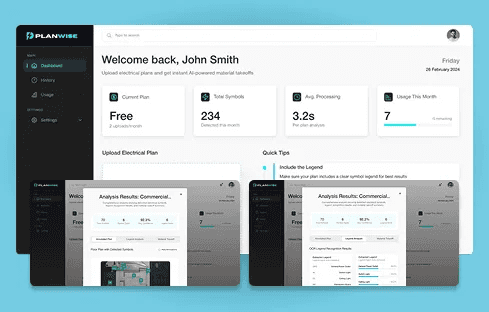
Planwise: computer vision that counts symbols on electrical plans
OCR pulls each drawing's own legend, and vision models classify lighting, power, fan and data points against that legend. Electricians review every detection on the plan and correct edge cases before the takeoff report is exported.
Takeoff cycle time, per the client
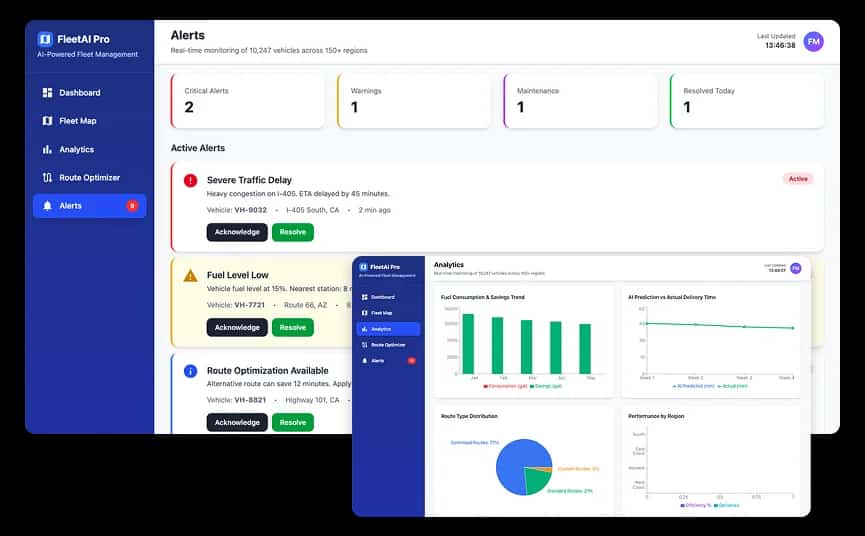
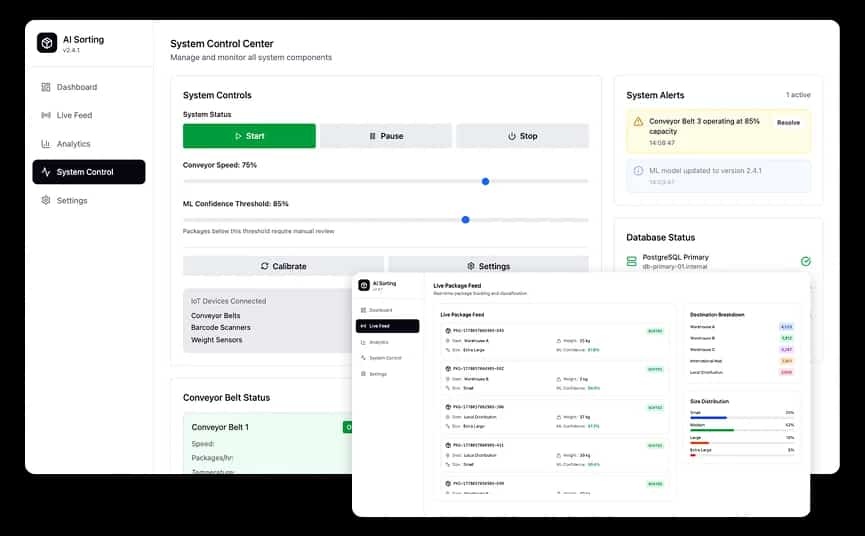
More AI products we shipped
All case studies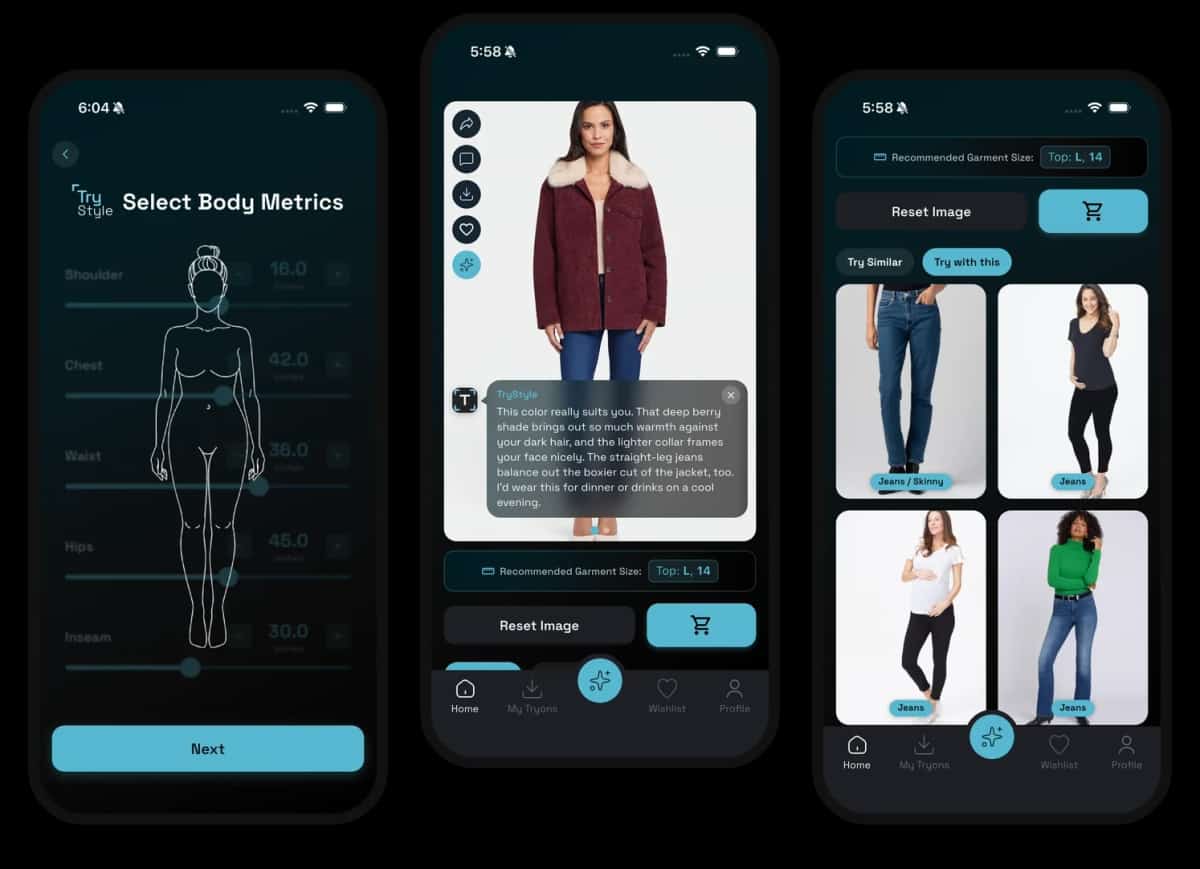
How we take an ML model to production
A first model on your data takes 3 to 4 weeks as a proof of concept. The production system with pipelines, deployment and monitoring is scheduled after that, based on what the model needs.

One team, 14 years of shipping
projects shipped since 2012
AI systems running in production
clients across 45+ countries
years building software, since 2012
Controls for models that make decisions
Credit, pricing and clinical models need an audit trail, so every model we ship can be traced and explained.
Reproducible models
Each production model traces back to its data version, code commit and parameters in the model registry.
Explainability reports
SHAP feature importance explains the model as a whole and, where needed, each individual prediction.
Human sign-off on high-stakes changes
Retrained credit, pricing or clinical models wait for a named approver before they are promoted.
Your data, your cloud
Training runs in your cloud account, the code and trained models are yours from the first commit, and NDAs are standard.
Frameworks and platforms we work with
We fit the stack to the data platform and cloud you already run.
Predictive analytics development by industry
Predictive analytics development pays back fastest where the same decision repeats at volume and the history is already recorded.
Financial services
- Credit and fraud scoring
- Customer churn prediction
Insurance
- Claims triage
- Risk segmentation
Retail and eCommerce
- Demand forecasting
- Product recommendations
Logistics
- Delivery time prediction
- Inventory forecasting
Manufacturing
- Predictive maintenance
- Visual quality inspection
Healthcare
- Appointment no-show prediction
- Patient risk flags
SaaS platforms
- Churn and expansion scoring
- Usage forecasting
Energy and utilities
- Load forecasting
- Meter anomaly detection
Machine learning development cost
The discovery and feasibility sprint is free. A proof of concept on your data starts at $4,999 and takes 3 to 4 weeks.

Discovery and feasibility
1 to 2 weeks and free, ending in a written proposal with a fixed quote. A data audit, a baseline, a go or no-go and a build plan.
Best for teams unsure whether their data is ready.

Proof of concept, then build
A first model from $4,999 in 3 to 4 weeks, scored against your baseline. If it wins, the production build is planned and quoted from those results.
Best for one forecast or score with a clear owner.

Dedicated ML team
ML and data engineers inside your process from $1,799 a month per engineer. Matched profiles within 48 hours, and you interview and choose.
Best for a portfolio of models you will keep growing.
Rated 4.8/5 by the clients we build for
Verified reviews from Clutch and GoodFirms, and clients on camera.
33 verified reviews on Clutch
 Clutch review★★★★★
“They didn't just build an algorithm; they built a tool that respects the nuances of Indigenous reconciliation.”
Clutch review★★★★★“What sets ScalaCode apart is their technical AI expertise and an understanding of a client's organizational ethos.”
 GoodFirms review★★★★★
“They built a high-performance, AI-powered platform that transformed video engagement for learning.”
Clutch review★★★★★“What stood out to us as most impressive and unique about ScalaCode was their ability to humanize complex AI.”
Clutch review★★★★★“They managed to balance technical skill with an understanding of the marketing world.”
Clutch review★★★★★“Their team often proposed innovative features we hadn't considered.”
Clutch review★★★★★“What I found impressive about ScalaCode was their ability to listen to the soul of an educational mission.”
Machine learning development FAQs
We will answer anything not covered here on the call.
How much does a machine learning project cost?
The discovery and feasibility sprint is free. A proof of concept on your data starts at $4,999, and a dedicated ML engineer starts at $1,799 a month. The production build is quoted after discovery, because data quality, integrations and monitoring needs set the final figure.
How much data do we need?
The task decides it more than a fixed row count. A forecast needs history that covers several seasonal cycles, and a classifier needs labelled examples of every class you care about, including the rare ones. The data audit in discovery tells you whether your data is enough and what to start collecting if it is short.
How long does it take to build an ML model?
A first model on your data takes 3 to 4 weeks as a proof of concept. The timeline for a production system with feature pipelines, deployment, monitoring and retraining depends on data quality and the systems it connects to, and we fix it after the proof of concept. AI coding agents speed up the engineering work.
Should we use machine learning or a large language model?
Use machine learning when you predict a number or a category from structured data, such as demand, churn or fraud risk. Use a large language model when the input or output is free text. Many systems combine both, with an LLM extracting fields from documents and an ML model scoring the result.
How do you monitor models after launch?
We track input drift, prediction drift, the business metric the model serves, and latency and errors on the serving side, using tools such as Evidently AI or Arize with Prometheus and Grafana. Alerts go to the model owner. Retraining is gated, so a new model is promoted only after it beats the current one on a hold-out set.
Can you work with our data warehouse?
Yes. We work in Snowflake, BigQuery, Databricks, Redshift and Postgres, build features with dbt or Spark inside your platform, and write forecasts and scores back as tables your BI tools already read. Your data stays in your cloud account.
Do you offer ML consulting without a build?
Yes. The discovery and feasibility sprint is free and ends with a data audit, a baseline model and a build plan, with no commitment to build with us. If you have a data team already, our ML engineers can join it.
Who owns the trained models and code?
You do. The code, feature pipelines, trained models and evaluation results are yours from the first commit, NDAs are standard, and we work in your GitHub or GitLab and your cloud accounts.
One team, matched to your working hours
We schedule 4 to 6 hours of daily overlap with US time and a full working day with the UK and Europe, so reviews, demos and fixes happen during your working hours.
What sets ScalaCode apart is their technical AI expertise and an understanding of a client's organizational ethos.
Find out whether your data can support a production model
- 30 minutes with the ScalaCode team
- Whether machine learning, an LLM or a simple rule fits your problem
- What is realistic, what it costs and how long it takes
“What sets ScalaCode apart is their technical AI expertise and an understanding of a client's organizational ethos.”
Laurence Longet, Director, MGEN (Clutch review)