
When it comes to developing an app, why is there an entire focus on choosing the best web development frameworks?
Let’s make it simple to catch the hype
Have you ever accessed Facebook, Instagram, or Netflix-like apps? Reports say the average user visits these apps 40 times a day, and the monthly active users on these apps are skyrocketing!
Do you also resist coming back to these apps? I’m sure, yes!
But the question is, what’s so engaging and attractive that holds you on these apps and makes you curious about coming back to them?
Well, it’s only its smartly designed app interface that makes navigation over these apps super easy and convenient, even for first-time users. Secondly, it’s the power pack backend that makes these apps work like a well-oiled machine. For any app, its frontend and backend play a major role in its success.
Whether you are a developer or an aspiring entrepreneur looking to venture into digital platforms, the first thing you need to decide upon is, “What technologies, tools, and frameworks are best to create web solutions?”
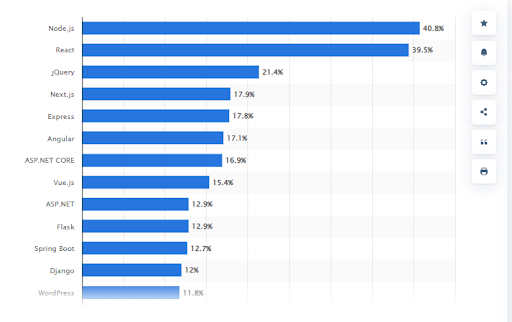
According to Statista, the sheer number of web development frameworks and tools available in the market can quickly spin your head when it comes to choosing the best web development frameworks.
Without having the right web app development framework, developers have to code repeatedly, which may lead to inefficiencies and cause a risk of potential bugs. Maintaining such apps becomes a real draining task for developers.
This is where potential web development frameworks act as a group of libraries and tools that simplify developers’ ability to create and maintain apps efficiently and ensure optimum performance even while scaling.
So, considering the market trends, evolving needs of the businesses, and coding complexities, here we have listed 13+ top web app development frameworks for 2025, streamlining the web development project.
But let’s start with the basics…
Understanding the Concept of Web Development Framework
Web development frameworks refer to the pre-built set of tools, libraries, and best practices designed to make the website and web app development process easier, faster, and more efficient. Using these tools and libraries, developers can cut down on the need to code from scratch for every project.
Smart usage of these tools enables developers to handle common tasks like routing, database connections, user authentication, and UI rendering without any hassle.
In simple terms, a web development framework is the backbone of web projects that decides how your app functions and appears to the users. It allows developers to focus on the unique features and logic of their applications rather than reinventing the basic functionalities.
So, what type of web development frameworks will be worth choosing, and for what purpose? Let’s continue reading it…
Types of Web App Development Frameworks
Developing a web app is like building a house. For a potential foundation of the building, you need both the structure and the interior design. Web development also works in the same way, and that’s where web frameworks come in.
In the world of web development, frameworks generally fall into two main categories, each handling the critical part of the project.
1. Backend Frameworks (The Hidden Engine Room of the App)
Take backend frameworks as the hidden part of your web app, where all the core processing of the app happens. Right from managing data, handling user requests, API integrations, user authorizations, and more.
It makes sure that everything works properly behind the scenes and that data moves freely between the server, database, and frontend. Django, Ruby on Rails, Laravel, and Express.js are a few examples of well-known backend frameworks.
Major Key Highlights
- Seamlessly manage server requests and responses
- Connecting and managing the databases
- Handle authentication, security, and API integrations.
2. Frontend Frameworks (The Beautiful UI that Users Can Navigate)
The frontend refers to the front face of the app that users can see, touch, and interact with. From the button they click to the animation they watch to the layouts they navigate, everything falls under frontend development of the app.
And did you know that poorly designed apps are one of the top reasons behind app abandonments?
The frontend frameworks basically focus on what users see and interact with in their browsers. The frontend frameworks like React, Angular, and Vue.js help developers craft engaging and responsive user interfaces.
Major Key Highlights
- Managing the UI component and interactions
- Handling the responsiveness and performance of the app
- Simplifying the user navigation and state management
3. Full-Stack Frameworks (All-in-One Development Tool)
To speed up the development lifecycle, sometimes you want a team that can do everything and is capable of handling both sides of the app, the hidden system and the outward design.
That’s where full-stack frameworks come into the role. These tools, like Next.js and Meteor.js, cover both frontend and backend, offering an end-to-end solution to streamline development.
These frameworks handle and streamline the entire development process, offering an end-to-end approach.
Major Key Highlights:
- Combining client-side and server-side development
- Provide integrated tools and workflows
- Enable faster development and easier deployment
In a nutshell, choosing from the modern web app development frameworks is a tough task, as each option comes with its strengths. So here we have listed some of the popular frameworks for web development that you should try in 2025.
Top 13+ Most Popular Web Development Frameworks
Choosing to develop a scalable web application for your brand involves much more than just writing code. Here, developers and companies alike depend on robust frameworks that offer the necessary resources, appropriate organization, and industry best practices to help shorten the development cycle.
Hence, web development frameworks are the foundation of creative web projects, whether they are used for creating dynamic user interfaces, controlling server-side logic, or managing full-stack solutions.
We take you through the most well-liked and extensively used web development frameworks that are currently influencing the market in this blog guide. To choose the best option, let’s consider each framework’s advantages, disadvantages, and applications.
1. React (Frontend JavaScript Framework)
React, developed by Facebook, is one of the most widely used JavaScript frontend libraries, leveraged for building interactive user interfaces. It popularized the concept of reusable, self-contained components, making front-end development more modular and maintainable.
React focuses on a virtual DOM approach, allowing high-performing, dynamic interfaces, and pairs well with countless tools, libraries, and frameworks in the React ecosystem, like Redux, Next.js, and React Native.
According to the reports, 40% of developers are relying on React, and leading tech giants like Instagram, Airbnb, and Netflix are already leveraging this framework for frontend development.
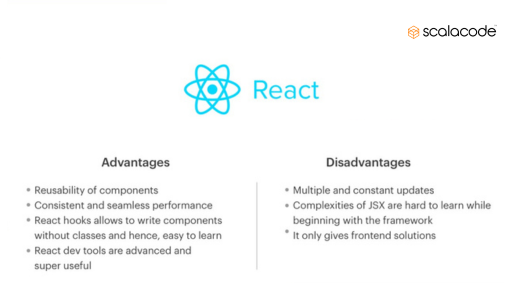
Benefits:
- Bringing HTML into your JavaScript allows developers to write code quickly.
- Allows complex UI to be broken down into smaller components.
- The virtual DOM helps React re-render automatically and increase page performance.
- Offering pre-built tools that will enable developers to inspect and debug the DOM quickly.
Problems:
- It has less community support, even though it is one of the most widely used Java web application frameworks.
- It has become difficult for developers to create appropriate documentation due to the ongoing advancements in technology.
Read More: A complete guide to hiring a React Native developer with Scalacode.
2. Angular (Frontend JavaScript Framework)
Angular is another popular web development framework, used by almost 17.1% of developers. You will be surprised to know that 1.21% of the top 1 million websites are using Angular.
Though compared to React, Angular is much less popular among developers, still, 54,104 websites are using Angular in the US. But why does it have a strong market in the United States?

Well, Angular is a full-featured frontend framework supported and maintained by Google. It not only ensures a strong future for this framework but also offers everything that any developer would require to build a scalable, enterprise-grade web application.
Angular comes packed with built-in tools like routing, state management, HTTP services, and form handling, and that’s all integrated in one united solution.
Benefits
- It provides access to built-in tools and libraries and cuts down on the need for integrating third-party integrations.
- It uses TypeScript as a programming language that makes it easy to code and maintain an app.
- Offering strong community support as compared to React and extensive documentation.
- Angular is a perfect modern web development framework for building enterprise-grade applications.
Problems
- Requires a steep learning curve due to its complex architecture.
- It comes with a heavier bundle size compared to some other frameworks, which may impact the app’s performance.
3. Vue.js (Frontend JavaScript Framework)
While talking about the top web apps, Alibaba, Netflix, and Grammarly are the few names that are on the lips of every second person using modern apps. But do you know all these web apps’ front ends are powered by Vue.js?
Yes, according to BuiltWith data, over 4.6 million live websites are built with Vue.js, and the total number of sites, including live and historical, exceeds 9.4 million.

Vue.js is one of the most progressive JavaScript frameworks, enabling developers to create both mobile and desktop apps with web interfaces. It may have started as a simple library but scaled up into a powerful, full-fledged framework.
Benefits:
- It is simple and easy to learn, especially for the developers who have a knowledge of HTML, CSS, and JS.
- Vue.js ensures flexible integration; therefore, it can be used as a library or a full framework.
- For smooth UI updates, it ensures two-way data binding.
- Detailed documentation and growing community support.
Problems:
- It offers a smaller ecosystem compared to React and Angular.
- It limits flexibility while working on large-scale projects with multiple developers.
Read More: Which one to choose: React vs. Vue.js for the next web development project in 2025?
4. Next.js (Full-Stack React Framework)
Next.js is a full-stack React-based framework, released in 2016, but is becoming an ideal option for developing e-commerce and SaaS-based applications. It provides a powerful set of features like server-side rendering, static site generation, and hybrid rendering to the table, which makes the entire app development easier for developers.
With built-in routing, image optimization, and automatic code-splitting functionalities, full-stack developers consider Next.js a go-to framework for building production-ready React applications.
Benefits:
- Built-in support for SSR and SSG that improves SEO.
- Excellent developer experience with strong documentation.
- Offering easy-to-use file-based routing systems.
- Its automatic code-splitting feature helps optimize the app’s performance.
Problems:
- Though it is not a front-end-friendly framework, when using it as a full-stack framework, developers need to develop the entire UI layer from scratch.
- The usage of Next.js is limited to its file-based router, so for dynamic routes, you need to depend on a Node.js server.
5. Django (Python-Based Backend Framework)
Django is one such powerful backend framework, well used by the top tech companies, including Google, YouTube, and Instagram Threads. Django is popular for its “battery-included” approach, which allows developers to create scalable web apps in a quick time frame.
The best highlight of Django as a backend framework is that it adopts automation as much as possible. Django offers everything out of the box, whether it be ORM, authentication, admin dashboards, or forms, making it ideal for developers who want to focus on building their app without any stress of reinventing the wheel.

Benefits:
- It comes with many built-in features that help in reducing the development time.
- Django follows the “Don’t Repeat Yourself” principle for easy code maintenance.
- Ideal for complex enterprise-grade projects, as it ensures high security with built-in protection against common attacks.
- It ensures scalability to both small- and large-scale projects.
Problems:
- Using Django for smaller and lightweight projects might feel heavier.
- Its monolithic structure makes it less flexible for microservices.
6. Laravel (Backend PHP Framework)
Laravel is a modern PHP-powered backend framework that offers robust tooling and an active ecosystem. It offers everything from routing, middleware, and templating to powerful tools like Eloquent ORM, queues, event broadcasting, and testing support.
Consider Laravel as a modern toolbox for PHP developers that allows them to leverage clean code and easy-to-use tools. It also has a robust ecosystem of packages and tools that allow developers to extend its functionalities and features depending on the needs.
From developing a simple blog site to large-scale SaaS products, Laravel is a widely accepted framework. Still in a dilemma about whether hiring a Laravel developer is a worthy decision? If yes, then continue reading the benefits of Laravel.
Benefits:
- It offers elegant, extensive syntax that enhances developer productivity.
- Laravel boasts a powerful ecosystem, including tools like Laravel Forge and Vapor.
- Laravel developers can access a wide choice of built-in features for authentication, queues, and migrations.
- Ensuring an active community and extensive learning resources.
Problems:
- Performance may be required to optimize apps handling heavy traffic.
- Relies heavily on third-party packages and extensions to provide additional functionality.
7. Ruby on Rails (Backend Ruby Framework)
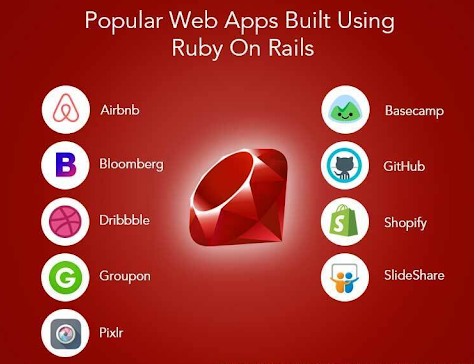
Ruby on Rails (RoR) is another popular web development framework for model-view controllers that uses Ruby. RoR is a dynamic web development framework that allows backend developers to build an app ten times faster than a standard Java platform.
Though it is a beginner-friendly framework, it is widely trusted by various tech giants, including Airbnb, GitHub, Hulu, and more. So, if you are planning to launch an app on the market and are short on time, it may be a perfect time to hire a software development company offering RoR development services.
Benefits:
- It ensures rapid app development, and all thanks to its convention-driven design.
- RoR offers a large set of built-in tools for easy web app development.
- The strong focus is on testing and code quality.
- It has a mature ecosystem with many libraries available on the platform.
- Highly scalable, making it an ideal option for web apps that handle large amounts of traffic and data.
Problems:
- The functionality mainly depends on Ruby being installed on the server. It makes it difficult to deploy Rails applications, especially in environments where Ruby is not widely used or supported.
- The improper RoR documentation can slow runtime performance and web application development speed.
8. jQuery (Frontend Framework)
Though released back in 2006, jQuery is still considered one of the most popular frontend frameworks, as it sounds even in today’s tech world. Although it is technically a library, not a full-fledged framework, jQuery simplified JavaScript programming at a time when cross-browser compatibility and DOM manipulation were far more complex than they are today.
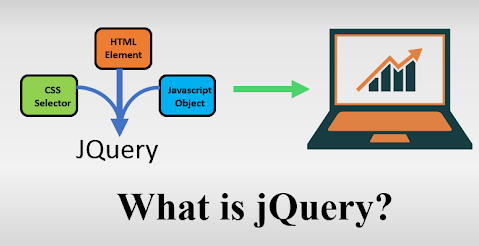
But the question is, what keeps jQuery the most popular web development framework even in 2025?
Even after nearly two decades, its simplicity, broad adoption, and continued support make it stand out in the market. It allows developers to write less code to achieve more functionality, from handling events and animations to making AJAX requests and manipulating HTML documents.
jQuery is simply based on the “Write Less, Do More” principle and makes the coding experience easier for developers. It is still a go-to choice for building large-scale modern web apps that require quick prototyping, simpler projects, and required legacy modernization.
Benefits:
- It is flexible and easy DOM manipulation for adding and removing elements in the app.
- It’s quite simple to send HTTP/AJAX requests in jQuery.
- Enhances dynamic content rendering with minimal JavaScript.
- It is compatible with nearly all browsers, making it an extremely versatile option for front-end development.
Problems:
- The performance is quite slow compared to new-age modern web development frameworks.
- Direct manipulation of the DOM and outdated API patterns are considered obsolete in modern development.
9. Backbone.js (Frontend Java Framework)
Backbone.js is one of the lightweight frontend JavaScript frameworks that offer structure to web applications by providing models, views, collections, and routers, all connected via events.
Being designed with simplicity and flexibility in mind, Backbone.js is particularly well-suited for building single-page applications and where efficient data management and dynamic UI updates are essential.
Built on the Model-View-Controller (MVC) architecture, Backbone emphasizes a separation of concerns. It enables developers to create organized code where the view handles user interface logic, while the model manages the underlying data and state. This makes it easier to manage complex apps and scale them over time.
Backbone.js offers developers a lot of control over how to architect their apps, making it flexible for JavaScript developers.
Benefits:
- Backbone.js is a fast and lightweight framework, making it an ideal option for SPAs.
- Easy to learn, beginner-friendly, and flexible for custom architecture.
- It provides fine-grained control over components and flow.
- Easily extendable with additional tools and libraries.
Problems:
- It lacks a predefined structure, so you need to hire an app developer to create its architecture while using Backbone.js.
- Requires writing more boilerplate code to manage data flow between models and views.
- Not as feature-rich or modern as newer frameworks like React and Vue.
10. Blazor (Frontend + Full-Stack .NET Framework)
Blazor is a front-end framework developed and maintained by Microsoft, allowing developers to build interactive web app UIs using C# instead of JavaScript. It runs via WebAssembly in the browsers or on the servers, offering .NET developers a way to create rich web applications with shared logic between client and server. It’s particularly appealing for teams deeply invested in the Microsoft ecosystem.

Benefits:
- It enables .NET developers to build SPAs without JavaScript.
- Blazor shares a C# codebase between client and server.
- It ensures strong integration with the .NET ecosystem.
- Since it is backed and maintained by Microsoft, it has a strong future.
Problem
- Large initial load times for Blazor WebAssembly apps.
- Smaller community compared to JavaScript frameworks.
11. ASP.NET (JavaScript Framework for Backend Web Development)
Even though Microsoft released ASP.NET in 2002, it remains a popular backend web development framework for creating feature-rich websites, dynamic web apps, and enterprise-grade portals.
With considerable development over time, ASP.NET has become a contemporary, open-source, cross-platform replacement that works with Windows, Linux, and macOS.
It has a significant performance advantage over interpreted languages because it is constructed with compiled programming languages like C# and Visual Basic. It makes use of the .NET ecosystem to offer scalable architecture, integrated security features, strong server-side capabilities, and smooth database integration. All things considered, ASP.NET’s advantages make it a great option for complex business applications.
Whether you’re developing APIs, real-time applications, or web portals, ASP.NET offers an efficient and productive development experience with extensive tooling support via Visual Studio. Prominent platforms like StackOverflow and Getty Images are trusting ASP.NET to power their high-performance backend systems.
Benefits:
- It offers high performance due to compiled languages such as C#, VB.NET, and more.
- Developers will be privileged with cross-platform and open-source ASP.NET Core capabilities.
- Its built-in features for authentication, routing, caching, and more make it stand out while developing the backend of the app.
- Ideal option for developing enterprise and cloud-based applications as it ensures a powerful backend system.
Problems:
- Steeper learning curve for beginners, especially those who are unfamiliar with the .NET ecosystem.
- It comes with a heavier setup compared to more lightweight backend frameworks.
- As it is tightly coupled with Microsoft technologies, which may limit the flexibility for some teams.
12. Express.js (Backend Node.js Framework)
Express.js is one of the most popular lightweight backend frameworks built on top of Node.js. It provides a strong enough approach to handle routing, middleware, and HTTP requests while leaving the rest open for developers to make their own architecture.
This is also called the “de facto standard” for Node.js backend development and is widely used in combination with frontend frameworks like React, Vue, and Angular to build full-stack JavaScript applications. But before you hire a backend developer, you need to understand what benefits and drawbacks it brings along for web app development.
Benefits:
- The minimalist and flexible features of Express.js allow web app development companies to customize fully.
- It has a vast middleware ecosystem for adding functionalities.
- It ensures strong integration with the Node.js ecosystem.
- Offering fast performance due to the lightweight nature of the framework.
Problems:
- Comparatively, it is less structured and requires developers to define the architecture themselves.
- Lacks built-in features like ORM or authentication.
13. Ember.js (Frontend JavaScript Framework)
Ember.js is an opinionated, open-source frontend JavaScript framework designed for building complex, large-scale, client-side applications. It follows the convention over the configuration principle, which means developers can write less boilerplate code and focus more on building features.
Ember provides an integrated development stack with a powerful templating engine based on Handlebars, a robust system, a strong data layer, and built-in management. One of its outstanding features is it allows for two-way data binding, which ensures the user interface automatically updates whenever the underlying data changes and makes the real-time apps work seamlessly.
Benefits:
- It offers easy-to-use and well-structured APIs for a smoother learning curve.
- It ensures high performance due to efficient data binding and rendering.
- Ember.js comes with a complete frontend stack (router, services, CLI, asset pipeline).
- It is backed by a strong community with extensive documentation and support.
Problems:
- Ember.js is less flexible for projects that need highly customized architecture.
- The steeper learning curve is for small projects or beginners.
- Type-checking and the object model could be used for further improvements.
14. LitElement (Frontend Web Component Library)
LitElement is one of the fastest frontend libraries built on top of the Web Components standards. It enables developers to create highly reusable, encapsulated components that can be used across different frameworks.
LitElements is developed and maintained by Google and is based on Lit-HTML, which makes apps run faster, and its high-templating engine updates only dynamic parts of the DOM.
The simplicity and interoperability of LitElement are what make it stand apart. It works seamlessly with other frontend frameworks like React, Angular, and Vue, or without any. It is a perfect fit for teams looking to build modern, standard-compliant UI components without the overhead of a full-fledged framework.
Benefits:
- Permit developers to produce native web elements that work on various platforms and projects.
- Incredibly light and low overhead, which results in outstanding runtime performance.
- For effective, fine-grained DOM updates, it makes use of Lit-HTML.
Problems:
- smaller and more recent community in contrast to mainstream frameworks.
- There aren’t many built-in tools, and complex app development might call for extra libraries.
How to Choose the Right Web Development Framework?
Whether you are a startup or a leading entrepreneur, everyone aims to achieve the best performance of their web apps. So when it comes to selecting the right web development framework, keep in mind that they are foundational decisions for the app that can make or break your project’s success.
From development speed to long-term scalability, it all depends on the frameworks that you finalize for the project.
However, with countless frameworks available for web app development, it is important to evaluate your options strategically. Here we have listed a few parameters that you need to consider while choosing the best web application development frameworks in 2025 for your next project:
1. Easy to install and set up
Choosing a framework that is easy to install and quick to set up can significantly reduce the setup time and get your team coding an app faster.
Look for the tools that come with well-defined installation guides, minimal dependencies, and straightforward configuration processes. The smoother the setup process, the faster you can focus on building features.
2. Consider a Community Support
Go for a framework that offers large community support and ensures well-structured documentation with clear explanations and code samples.
It allows developers to easily understand the complexities and enables them to implement features efficiently. Moreover, a large and active community ensures quick troubleshooting support when needed.
3. Select for Open Source Frameworks
It’s essential to go over any licensing terms of any framework before establishing it. Select a framework based on open source that fits your distribution or company goals from the many that are accessible for free.
4. Adaptability and versatility
Your app should be able to grow with your business. Make sure the framework can adapt to changing requirements, whether you intend to scale to millions of users or add sophisticated features later.
Therefore, choose a framework that offers flexible design, plugin support, and the capacity to communicate with other tools or APIs, regardless of whether you are creating an MVP solution or an entire app.
5. Financial and Economic Constraints
Not every system is entirely free to be utilized. Some may charge extra for the extensions, organizing, or support services, whereas others may require paid licenses.
Be sure to account for both immediate and long-term costs when determining the cost constraints. Select the one that satisfies technical requirements and finally falls within your budget.
Conclusion
Hopefully, this blog has given you detailed insights into the top web development frameworks widely used for backend and frontend development. Different web app development frameworks are available for different development needs, and each brings its strengths and challenges. So, considering the latest coding needs, learning curve of developers, app scalability, and user-friendliness of the tools, in this blog, we have listed some of the most popular web development frameworks.
Though we have made it easier to choose the most suitable web application framework for various projects, still, if you are in a dilemma of what to choose when, then hire a web app development company. Scalacode is one such leading software development company, backed by a team of 300+ in-house experts, ensuring in-depth IT counseling services to enable you to meet your business goals by choosing the best choice of tools, technologies, and frameworks.
If you are all set with your project requirements and looking for an expert team to assist you in navigating the best web app development frameworks, then you can drop a query or book a 15-minute free consultation slot with us!
FAQs- Top Web Development Frameworks
Q1. What is the Difference Between Frontend Frameworks and Backend Frameworks?
When it comes to understanding the difference between frontend and backend development frameworks, always remember that the front side of the app, which includes all the navigation, buttons, images, UI/UX, design, and more elements, is handled via frontend frameworks.
While backend development frameworks handle all the processing happening behind an app. So, backend frameworks are the backbone of your app that decides how your app works.
Here’s a quick comparison between frontend and backend frameworks:
| Feature | Frontend Frameworks | Backend Frameworks |
| Purpose | Handles UI/UX and client-side logic | Manages server-side logic, database, and APIs |
| Used For | Building the visual elements of web apps | Processing requests, data handling, and server logic |
| Runs On | Web browser (client-side) | Web server (server-side) |
| Examples | React, Angular, Vue, Ember.js | Node.js, Django, ASP.NET, Laravel |
| Languages | HTML, CSS, JavaScript | JavaScript (Node.js), Python, PHP, C#, Java |
| Main Focus | User interface, responsiveness, interactivity | Business logic, database operations, APIs |
| Tools & Features | DOM manipulation, routing, and state management | REST APIs, authentication, and server configuration |
| End User Access | Directly visible and interactive | Works behind the scenes |
Q2. What are the Benefits of Using Web Development Frameworks?
The right choice of web app development framework gives you a structured and standardized way of building a web app, which ultimately enhances your development speed and code maintainability.
The best benefit of using the frameworks is that they come with built-in tools, libraries, and well-structured documentation that simplify common development tasks such as routing, state management, and enhancing security.
While there are a plethora of frameworks available to choose from in 2025, the best ones can promote code reusability and reduce the risk of having coding bugs, and help teams to build robust and efficient apps faster.
Q3. What are the Future-Ready Web Development Frameworks?
If you are willing to make your app exist in the market even for the next few decades, then make sure that you are using future-ready frameworks and understanding the evolving trends.
Some of the future-ready frameworks are those that practically support scalability, performance optimization, and modern development practices. These include:
- React: Ensuring a strong ecosystem, performance, and community support.
- Vue.js: Lightweight and flexible for progressive web app development.
- Next.js: Offering server-side rendering with React and simplifying the development process.
- ASP.NET Core: Ideal for scalable, enterprise-grade backend solutions.
Q4. How Can Scalacode Help You Choose the Best Web Development Framework?
At Scalacode, we are working with certified web app developers. Our dedicated team of developers helps you navigate the complex business landscape by assisting with the best web frameworks by deeply analyzing your project goals, technical requirements, and scalability needs.
Instead of randomly using any framework, our experts evaluate the critical factors of the web frameworks, like performance, flexibility, team skill set, and long-term maintainability, while recommending the ideal tech stack to the clients.
Whether you’re building a fast MVP or a scalable enterprise app, we ensure you start with the right foundation tailored to your vision and business requirements.
Q5. Which is the Best Framework for Enterprise Grade App Development?
For enterprise-grade application development, the best framework largely depends on your specific requirements, including tech stack, scalability, team expertise, and security.
But still, ASP.NET Core is often the go-to choice for enterprise-level backend development. It offers high performance, scalability, built-in security features, and long-term support for mission-critical applications.
On the other hand, for frontend development, Angular is the preferred choice for enterprises as it ensures a TypeScript foundation and opinionated structure.