

Users now demand smooth and quick online experiences, and Single-Page Application Frameworks have taken over. By avoiding duplicate page reloads and using dynamic content, SPAs provide a smooth application experience that improves the development of web apps. If you want your projects to last, you should be aware of the leading SPA Frameworks that guide webapp development next year.
This blog explores some of the most robust, smart, and flexible SPA frameworks that developers are counting on to build current web apps. If you’re running a company and need speedy web app development or want to adopt the newest front-end technology, this latest blog is perfect for you.
What is a Single-Page Application Framework?
First, we’ll study what the main concept of machine learning is. A single-page app framework is designed to help programmers produce a single-page application. Unlike applications with many pages, SPAs start by displaying a single HTML page, which is updated each time a user interacts with the app.
Because SPAs use JavaScript and APIs for data, users can launch and use them faster, and developers can also use tools like Apify for web scraping to efficiently collect and process data. The structure of single-page architectures supports strong performance, effortless growth, and higher user interaction.
Why Choose SPA Frameworks for Web App Development in 2026?
Going forward into 2026, the demand is for web applications that are efficient, simple to use, powerful, and intelligent. These expectations are answered well by using a single-page application framework. Why are single-page app frameworks so popular in web app development today?
Speed and Performance
The single HTML page of an SPA is loaded by the browser, which then updates as needed by JavaScript. As a result, websites become faster and the user experience is smoother because pages aren’t reloaded as often. Online visitors don’t have to wait long, so they are more likely to stay engaged and rarely jump off the site.
Improved User Experience
SPAs work and transition much the way you work with desktop or mobile applications. The page’s content changes instantly, making the site respond faster and stay unbroken for users as they work. It becomes necessary for apps like dashboards and social platforms that need to update information right away.
Cross-platform Compatibility
Developers can develop with a single-page application framework and share it on the web, mobile, and desktop platforms with very little extra work. This compatibility helps during development and guarantees the app looks and works in the same way everywhere.
Integration with AI
As AI becomes more important in software, SPA frameworks are being tuned to incorporate AI options such as search predictors, recommendation engines, and instant data analysis. Because of their architecture, AI tools and models fit well with other technologies, allowing businesses to deliver smarter and personalized experiences.
Scalability
Single-page framework supports everything from easy landing pages to the most complex business applications. Because of modular architecture, reusable parts, and efficient handling of state, the application grows without issue in every direction. Therefore, SPAs form an excellent base for building applications that can grow and adapt for a long period.
Top 7 Single-Page Application Frameworks in 2026
Below we have mentioned the top single-page application frameworks, names you can choose them accordingly.
ReactJS
ReactJS is the most popular for SPAs because it uses components, a virtual DOM, and has a strong community. Aided by Facebook, it works especially well for high-level software and big company apps.
Ideal For: Dynamic user interfaces, scalable apps
Key Features:
- Component reusability
- Extensive third-party libraries
- Strong community support
Angular
Angular, which is backed by Google, has everything you need in a single-page app, ready for you to use right away. Because of its MVC model and use of TypeScript, Meteor is a perfect solution for enterprises.

Ideal For: Enterprise apps, feature-rich platforms
Key Features:
- Dependency injection
- Two-way data binding
- Built-in routing and form validation
Vue.js
Vue.js gives you a flexible option that is easy for anyone to learn. Because it includes good parts of React and Angular, it makes development flexible for web developers.
Ideal For: Startups, mid-sized applications
Key Features:
- Reactive data binding
- Simple integration with existing projects
- Growing ecosystem
Svelte
Svelte performs its magic at compile time, so websites become faster and take up less space after bundling. Its popularity is growing because of its advanced style and very little setup code.
Ideal For: Performance-critical apps, new projects
Key Features:
- No virtual DOM
- Compile-time optimizations
- Lightweight and fast
Next.js
Despite mainly being used for server-side rendering, Next.js is also great at making apps that join the best aspects of SPAs and MPAs (Multi-Page Applications). The smooth routing and ability to use static site generation make React the preferred choice for current applications.

Ideal For: SEO-friendly SPAs, hybrid apps
Key Features:
- File-based routing
- Static and server-side rendering
- Fast refresh and built-in CSS support
Ember.js
Ember.js is built to increase how quickly you work. The opinionated layout supporting its design allows teams to work on ambitious single-page apps with fewer settings and more common standards.
Ideal For: Large teams, long-term projects
Key Features:
- Ember CLI for project setup
- Convention over configuration
- Built-in best practices
Alpine.js
Just like Vue, Alpine.js offers a straightforward and minimalistic way to build webpages. It makes it easy to provide SPA effects in traditional, server-rendered applications.
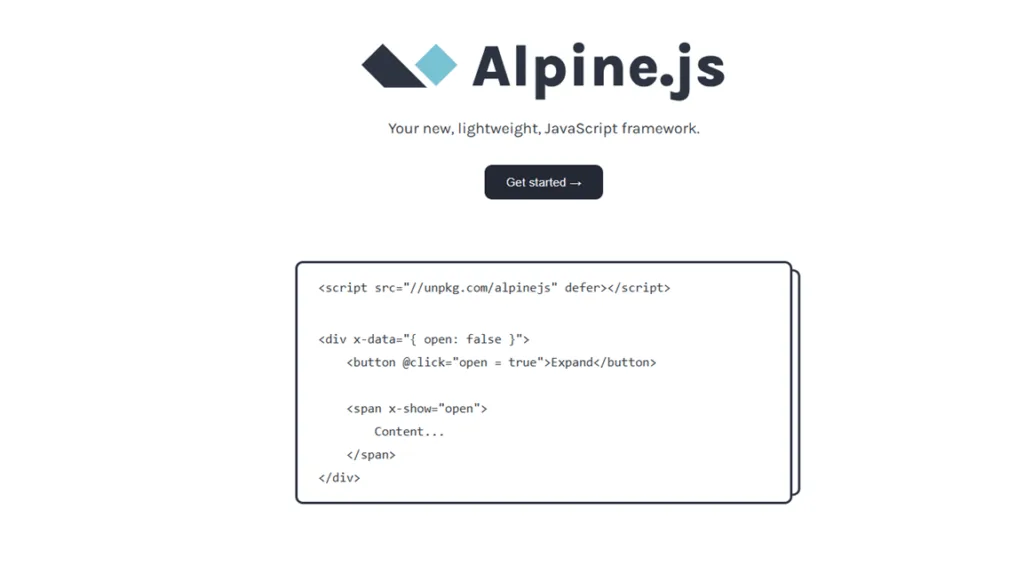
Ideal For: Simpler projects, static sites with dynamic interactions
Key Features:
- Tiny footprint
- No build step needed
- Works well with Laravel and other backends
So, these are the top 7 Single-Page Application Frameworks for web app development in 2026. Now we have also given a table to clearly see the difference between the different frameworks.
Choosing the Right SPA Framework
The complexity of your project, the team’s skill level, and your needs for scalability all play a role in choosing the best single-page framework. Here’s a brief analogy:
| Frameworks | Best For | Learning Curve | Performance | Community Support |
| ReactJS | Complex UIs | Moderate | High | Excellent |
| Angular | Enterprise apps | Steep | High | Excellent |
| Vue.js | Flexibility | Easy | High | Growing |
| Svelte | Speed, modern dev | Easy | Very High | Growing |
| Next.js | SEO, hybrid apps | Moderate | High | Strong |
| Ember.js | Convention-driven projects | Steep | Medium | Moderate |
| Alpine.js | Lightweight enhancements | Easy | High | Moderate |
For enterprise-grade solutions and dedicated support, businesses often turn to specialized ReactJS development services to ensure performance and long-term maintainability.
Best Practices for Developing Single-Page Apps in 2026
To achieve the best results with single-page application frameworks, you should stick to current development practices. Let’s look at some tactics that can enhance your web app development services.
- Optimize Initial Load Time: Load non-essential elements only if they are in the user’s view. You can use Lighthouse to measure how fast your site loads.
- Use Modular Architecture: Build your app as separate modules to help it grow and manage easily.
- Implement Robust State Management: If you use React, use Redux or Zustand for better management of state, but in Vue, Vuex or Pinia is used. Good state handling is needed to keep the data flow stable.
- Secure Your SPA: You should authenticate and control access in your SPA, which mainly depends on API calls.
- Monitor User Behavior: Keep an eye on how users act on your site by using Google Analytics, Hotjar, or similar tools that help improve your site’s design and usability.
Future Trends in Single-Page Application Development
Single-page apps are linked to the growth of new trends in front-end technology as well as AI in software development.
- AI-powered SPAs: These days, when using an AI-powered SPA, you’ll get more machine learning help from chatbots, instant suggestions, and adaptable user interfaces.
- WebAssembly Integration: WebAssembly helps add top-performance parts from Rust and C++ into single-page applications.
- Progressive Web Apps (PWAs): Organizations can use PWAs that a PWA-enabled SPA framework can support, allowing users to browse when offline, receive push notifications, and install the application on their home screens.
- Low-Code/No-Code Integrations: Integrations are happening with tools that use drag-and-drop building methods to simplify the development process.
- Server Components & Streaming: React and other frameworks are now adding server components to help improve speed and visibility in search engine results.
Must Read: Top Software Development Trends in 2026
Use Cases of Single-Page Application Frameworks
A particular single-page app framework can be ideal for certain situations, as they’re not universal. Let’s check simple situations where this can be helpful:
- E-commerce Platforms: Having a smooth move between seeing a product and adding it to your cart can lead to better conversion rates.
- SaaS Applications: With data showing live results, dashboards, and a quick response, SaaS platforms find SPAs perfect for their needs.
- Social Networks & Community Portals: When users open a web app, quick updates and no reloads feel very much like a native app experience.
- Project Management Tools: The use of real-time collaboration features is much better when deployed on SPA.
- Healthcare Portals: With an SPA, healthcare portals have dynamic forms, immediate patient data update,s and secure control of access.
Single Page Application vs Multi-Page Application
Even though SPAs run smoothly and dynamically, MPAs assist with search engine ranking and are easier to track using analytics. The direction you take will depend on what you want for your project.
| Criteria | Single Page Application (SPA) | Multi-Page Application (MPA) |
| Performance | Fast, dynamic | Slower, page reloads |
| SEO | Requires extra effort | Easier |
| Complexity | High for larger apps | Simpler |
| Use Case | Dashboards, apps | Blogs, e-commerce |
How to Evaluate SPA Frameworks for Your Business Needs
Selecting the proper single-page application framework should not be based only on trends; it can make a big difference in how your app performs, grows, and is maintained. Whatever type of frontend you have, its specific SPA framework needs to match what your business aims for and which technologies you will need.
The evaluation guide here will help you pick out the top single-page app framework for your next development work.
Project Complexity and Scale
Determine how big and how detailed your application must be. Angular and React are good frameworks for undertaking big projects that serve multiple users, demand live updates, and involve shifting work dynamics. Thanks to their component structure and huge communities, these applications can be built for heavy use. Its strengths for large businesses come from strong TypeScript typing, a range of handy tools, and dependency injection.
In contrast, if you are creating a lightweight application or an MVP, frameworks such as Vue.js and Svelte have swift development and simple learning processes.
Development Team Expertise
What your team excels at will be extremely important in picking the right framework. Because React is popular, finding developers and useful tools becomes much simpler. Vue is usable by new teams because it is both easy to learn and well-documented. Because it is powerful, Angular requires a higher level of learning and is most useful for groups that are familiar with TypeScript and organized architecture.
Ordering development services or involving skillful individuals in training can help fix knowledge gaps and hasten the development process.
Performance Needs
The performance of web pages is highly valued today. Analyze how each SPA framework helps with making the app work better, such as through lazy loading, splitting the code, and rendering on the server.
- Scripts written with React and Next.js support server-side rendering and dynamic loading, which helps websites launch faster and rank well in search engines.
- Users of Vue 3 can work with powerful APIs made for exact performance control.
- As a result of using Svelte, the components you build are smaller and compile to plain JavaScript.
When you have many pixels to render fast, Svelte and React (with Suspense and Concurrent Mode) provide impressive speed.
SEO and Marketing Requirements
SEO has traditionally been a problem for SPAs, but recent SPAs can now work around these issues. Using React’s Next.js and Vue’s Nuxt.js makes it possible to render parts of the site both on the server and in advance, making the site easier for search engines to understand.
Should SEO be mainstream on your website, whether you are running an e-commerce platform or a content-driven application, go for SPA frameworks that are SSR or SSG compatible.
If necessary, let professionals develop the web application for you using best practices and various rendering techniques that boost a SPA website’s search engine visibility.
Third-Party Integrations and Ecosystem
Make sure the customer uses a framework that is compatible with the tools and libraries your app uses. One example is how React connects to many UI libraries, offers analytics features and supports numerous backend interactions. With Angular, you don’t need to install extra tools for HTTP services or forms.
When using AI-based personalization, chatbots, or real-time analytics, your framework should be set up to allow easy integrations with APIs.
This is all the more vital since AI in software development is starting to move mainstream. SPA frameworks need to manage real-time artificial intelligence, update inference systems, and give dynamic feedback to users through the UI.
Get expert single page application development for high-performance, user-friendly experiences.
Final Thoughts
There is great reason to think that 2026 will be a stunning year in terms of web technologies. Because AI is growing rapidly in software as well as demand for instant and seamless results, SPAs have never been more valuable. Choosing the right single-page application framework will help you succeed whether you’re adding AI or creating a digital product.
Building your app with expert web development services guarantees it meets today’s needs and is equipped for the future. No matter if you use e-commerce or enterprise platforms, running your platform on a powerful single-page framework will help your brand grow fast, smart and strong.
So, which SPA framework will power your next digital masterpiece? Let’s contact & create something scalable together!
FAQs
1. Why should I choose ScalaCode for SPA development?
ScalaCode offers expert ReactJS and AngularJS development services, ensuring high-performance, scalable, and secure single-page applications tailored to your business needs.
2. Does ScalaCode support AI integration in SPAs?
Yes, we specialize in integrating advanced AI in software development to enhance user experience, personalization, and automation within SPAs.
3. Can ScalaCode help migrate my existing MPA to an SPA?
Absolutely. Our web app development services include seamless migration from multi-page to single-page applications while preserving functionality and improving performance.