
AI code optimization for codebases that have grown hard to change
ScalaCode runs AI code optimization for engineering teams whose codebase slows every release. We use AI code review, AI-assisted refactoring and test generation inside your GitHub or GitLab, a ScalaCode engineer checks every change, and your team merges it through your normal code review.
projects shipped since 2012
AI systems running in production
clients served since 2012
on Clutch, from 33 verified reviews
countries with live clients
9001:2015 certified delivery process
Trusted by teams at








Clutch 4.8/5Verified client reviews

GoodFirmsReviewed software partner
ISO 9001:2015Certified delivery process
GDPR compliantData handled under EU rules
What AI code optimization covers
AI tools draft code changes quickly. Most of the engineering effort goes into tests that prove behaviour stayed the same and into reviewing each change before it merges.
- What is AI code optimization?
- AI code optimization is the use of AI models and coding assistants to review, refactor, test and document an existing codebase so it becomes easier and safer to change. Engineers direct the tools, check every proposed change against tests and code review, and merge only the changes that keep behaviour the same or improve it.
Related: Custom software development covers new builds and rebuilds. AI applications lists the AI products we build.
Assistant licences, an AI-assisted refactor or a rewrite
Coding assistant licences help with new code, and a full rewrite is rarely the cheapest fix. Most hard-to-change codebases improve fastest with a test safety net and targeted refactors of the modules that slow every release.
| Assistant licences only | AI-assisted refactor | Full rewrite | |
|---|---|---|---|
| What changes | Engineers get suggestions in the editor | Target modules are refactored and covered by tests | The system is rebuilt, often on a new stack |
| Pick it when | The codebase is healthy and the team wants speed on new work | A few modules slow every release and tests are thin | The stack is unsupported or the design no longer fits the product |
| Risk to production | Low, changes go through your normal review | Low, each change ships with tests and review | High until the new system matches the old one |
| Timeline | Days to roll out | A 1 to 2 week discovery sprint, then phased sprints | Phased delivery against agreed milestones |
| Where it falls short | Leaves existing debt in place | Needs an owner on your team for each module | New features wait while it runs |
If a rebuild is the right answer, see custom software development.
AI code review and refactoring we deliver
Each engagement runs in your repositories and CI, and every AI-generated change goes through tests and engineer review before it reaches your merge queue.
AI code review in your pull requests
AI code review comments on every pull request in GitHub or GitLab, tuned to your conventions so human reviewers spend less time on trivial comments.
AI-assisted refactoring
We refactor tightly coupled modules, duplicated logic and long functions with AI help, in small pull requests that each keep behaviour the same.
Tests for untested code
Characterisation tests record what the code does today. AI drafts them and an engineer checks them, so later refactors have a safety net.
Framework and dependency upgrades
We upgrade languages, frameworks and libraries to supported versions, with AI handling repetitive edits and tests confirming nothing broke.
Performance profiling and fixes
We profile slow endpoints, queries and jobs, with AI helping read traces and draft fixes that engineers verify against benchmarks.
Security and quality checks
Static analysis and dependency scanning run in CI, AI drafts fixes for the findings, and an engineer approves each one.
Documentation for forgotten code
AI drafts module notes, architecture diagrams and onboarding docs, and the engineers who worked through the code check them.
Developer AI assistants
We set up AI assistants for your engineers, from a coding assistant rollout to an assistant that answers questions about your own code and docs.
Codebase takeover
When the original team has moved on, we take the codebase over after a technical audit and run the optimization work from there.
Every release held up by the same few modules
Bring the repository, the parts your team avoids touching and how releases run today. In 30 minutes the ScalaCode team will tell you where AI-assisted work is likely to help and what the first step costs.
Four guardrails on every AI-generated change
AI tools can produce a large change faster than anyone can review it, so these guardrails go in before the first refactor.
Tests before refactors
We add characterisation tests around a module before touching it, so any change in behaviour fails the build.
Small pull requests
AI-generated changes are split into small, single-purpose pull requests that a reviewer can read in one sitting.
Engineer review, then your merge
A ScalaCode engineer checks every AI-generated change, and your engineers approve and merge it through your normal code review.
Staging before production
Automated tests run on every change, and every release goes through staging before production with a rollback ready.
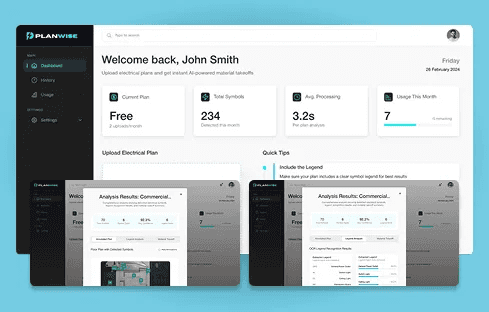
Planwise: AI output that people check before it is used
OCR pulls each drawing's own legend, and vision models count lighting, power, fan and data points against it. Electricians review every detection on the plan and correct edge cases before the takeoff report is exported, the same check-before-use rule we apply to AI-generated code.
Takeoff cycle time, per the client
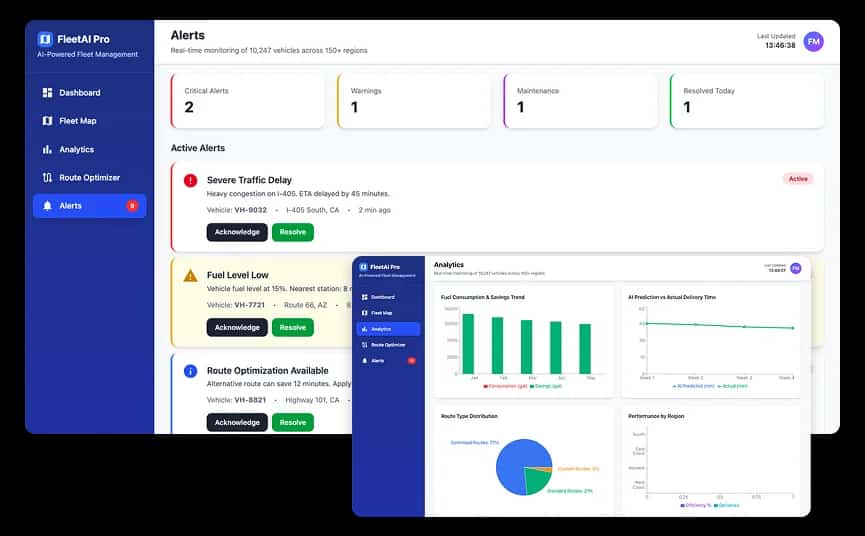
How an AI-assisted refactor runs
A discovery sprint of 1 to 2 weeks maps the codebase and picks the first target. Refactoring then runs in phased sprints, and each change merges only after tests and review.
One team, 14 years of shipping
projects shipped since 2012
AI systems running in production
clients across 45+ countries
years building software, since 2012
Controls for AI tools that touch your code
Source code is often a company's most sensitive asset, so the data flow for every AI tool is agreed with your security team during discovery.
Models on your infrastructure when needed
We use OpenAI, Anthropic Claude or Google Gemini through their APIs, or open-weight models such as Llama and Mistral on your own infrastructure when code cannot leave it.
Your repositories, your access rules
We work in your GitHub or GitLab with the access your team grants, and secrets or customer data can be excluded from what the AI tools see.
Your engineers own the merge
We open pull requests. Only your team approves and merges them, through the branch protection you already use.
IP and confidentiality
The code and every change are yours from the first commit, NDAs are standard, and our own engineers do the work.
Tools and languages we work with
We use the repositories, CI and coding assistants you already have, and add what is missing.
AI code optimization by industry
The pattern repeats across industries. A product grew quickly, the original team moved on, and each release now takes longer than the last.
SaaS products
- Slow release cycles
- Untested core modules
Fintech
- Security fixes in CI
- An audit trail for each change
Healthcare
- Models on your own infrastructure
- HIPAA controls in scope
Retail and eCommerce
- Checkout and search performance
- Platform upgrades
Logistics
- Legacy integration code
- Slow batch jobs
Manufacturing
- Ageing internal tools
- Documentation for old systems
Enterprise IT
- Many repositories, mixed standards
- Shared review rules
Startups after rapid growth
- Code written against deadlines
- Code from a team that left
AI code optimization cost
A free discovery sprint maps the codebase first. Ongoing refactoring runs with dedicated engineers from $1,799 a month each.

Discovery sprint
1 to 2 weeks and free, ending in a written proposal with a fixed quote. A codebase audit, a ranked list of targets and a plan for the first refactor.
Best for teams unsure where to start.

Scoped project
A defined refactor, upgrade or test coverage project, quoted as a fixed price after the discovery sprint and delivered in phased sprints.
Best for one module or upgrade with a clear finish line.
Dedicated engineers
ScalaCode engineers inside your repositories and process, from $1,799 a month for mid-level and $2,499 for senior. You interview and choose.
Best for a backlog of debt you want paid down release by release.
Rated 4.8/5 by the clients we build for
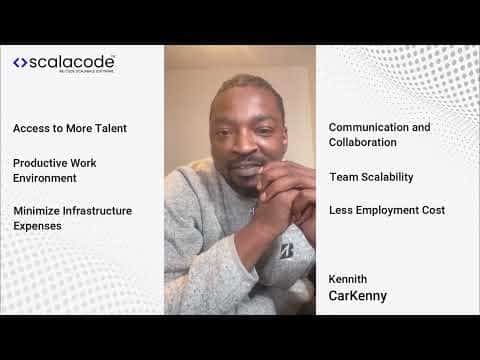
Verified reviews from Clutch and GoodFirms, and clients on camera.
33 verified reviews on Clutch
 Clutch review★★★★★
“What sets ScalaCode apart is their technical AI expertise and an understanding of a client's organizational ethos.”
 GoodFirms review★★★★★
“They built a high-performance, AI-powered platform that transformed video engagement for learning.”
Clutch review★★★★★“What stood out to us as most impressive and unique about ScalaCode was their ability to humanize complex AI.”
Clutch review★★★★★“They managed to balance technical skill with an understanding of the marketing world.”
Clutch review★★★★★“Their team often proposed innovative features we hadn't considered.”
Clutch review★★★★★“They didn't just build an algorithm; they built a tool that respects the nuances of Indigenous reconciliation.”
Clutch review★★★★★“What I found impressive about ScalaCode was their ability to listen to the soul of an educational mission.”
AI code optimization FAQs
We will answer anything not covered here on the call.
Will AI-generated changes break our code?
Every change runs against tests before review, and we add characterisation tests around a module before refactoring it, so a change in behaviour fails the build. A ScalaCode engineer reviews each change, your team approves the merge, and every release goes through staging before production.
Does our code leave our environment?
Only if you allow it. The data flow for each AI tool is agreed with your security team during discovery. Where code must stay inside, we run open-weight models such as Llama or Mistral on your infrastructure, and secrets or sensitive files can be excluded from AI context in every setup.
Which languages and frameworks do you cover?
We work most often in TypeScript and JavaScript with Node.js and React, Python, Java, and C# with .NET. For a less common language or framework, the audit in discovery confirms whether the AI tools and our engineers cover it well before any work is quoted.
Can you add tests to a codebase that has none?
Yes, and that is usually the first piece of work. We start with characterisation tests that record what the code does today, drafted with AI and checked by an engineer, then add unit tests as each module is refactored.
How much does AI code optimization cost?
The discovery sprint is free. Dedicated engineers start at $1,799 a month for mid-level and $2,499 for senior. A scoped refactor or upgrade is quoted as a fixed price after discovery, since codebase size and test coverage set the effort.
Do our engineers stay in control of merges?
Yes. We open pull requests in your GitHub or GitLab, and only your team approves and merges them through the branch protection rules you already have. Our work shows up in your project tracker like any other team's.
Can you take over a codebase from another team?
Yes. We start with a technical audit of the code, the infrastructure and the release process, then take over maintenance and the optimization work. The code stays yours from the first commit. Our delivery process sets out how the handover and first sprints run.
Do you replace tools like GitHub Copilot?
We work with the coding assistant licences you already hold. Our part is setting them up for your conventions, adding AI code review to your pipeline, and doing the refactoring and test work with an engineer checking each change.
One team, matched to your working hours
We schedule 4 to 6 hours of daily overlap with US time and a full working day with the UK and Europe, so reviews, demos and fixes happen during your working hours.
Working with ScalaCode was a fantastic experience, marked by their expertise and support.
Find out which parts of your codebase to fix first
- 30 minutes with the ScalaCode team
- Where AI-assisted refactoring and tests fit your codebase
- What is realistic, what it costs and how long it takes

“They delivered on time and even offered ideas I hadn't considered.”
John-Paul Hatala, CEO, SnagPad