RMEPOS: an Android stock and order app for SUNMI L2S Pro terminals
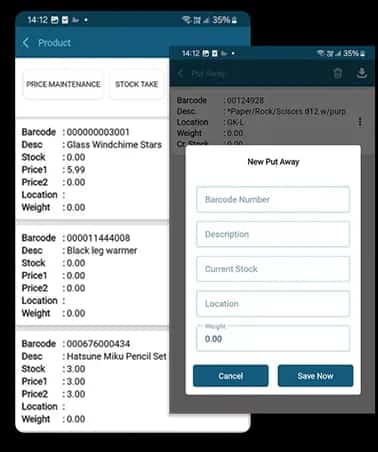
ScalaCode replaced RMEPOS's DOS-based Unitech HT630 stock terminal with an Android app for rugged SUNMI L2S Pro devices. Store teams handle orders, deliveries, price checks, stock takes and transfers offline, and data syncs with the EPOS system when the device connects.
RMEPOS, a retail solutions provider
RMEPOS relied on a Unitech HT630 DOS handheld for inventory and order management. It worked, but it lacked flexibility, modern usability and efficient integration with EPOS systems, so RMEPOS needed a replacement that store teams would adopt quickly.
What replacing a DOS terminal involved
Migration without disruption
Stores had to keep trading while the DOS terminal was replaced with an Android app.
Large EPOS files on a handheld
Import and export files run past 100,000 lines and 6 to 7 MB, and the device had to stay responsive.
Accurate data across branches
Stock and order data had to stay synchronised between branches, including after offline work.
A UI that prevents errors
High-frequency stock operations needed a simple interface that keeps mistakes low.
Security on rugged hardware
Performance and security standards had to hold on the SUNMI devices.
An offline-first Android app built in stages
We wrote the app in Kotlin with a modular architecture and delivered it in phases, starting with orders and deliveries and moving on to stock functions.
- 01
Discovery and design
We started by studying the legacy workflows and EPOS data formats. Wireframes and mock-ups then shaped workflows designed to cut down user errors.
- 02
Orders and deliveries
Staff create and update orders, then track each delivery by branch ID and order details, with a confirmation step at the end.
- 03
Price checks and stock takes
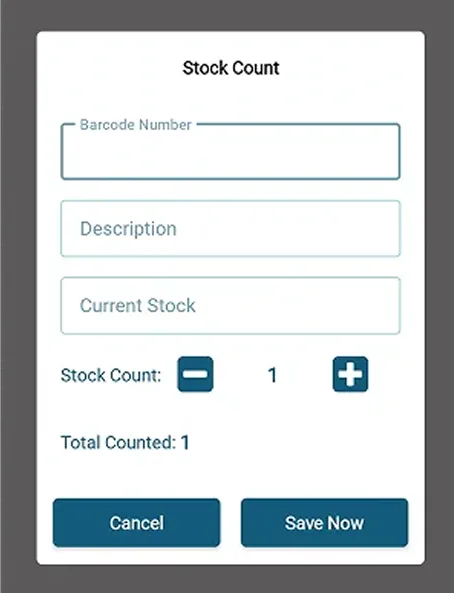
Scanning an item checks its details and updates the shelf price. During a stock audit, staff can enter counts live and correct them.
- 04
Transfers and receipts
Every stock movement between branches is recorded, so each one can be traced.
- 05
Offline data handling
SQLite, the Android File API and Kotlin coroutines import and export the PLU.EXP and IMP files, and the data syncs with EPOS once the device connects.
- 06
Testing, rollout and support
Before rollout on SUNMI devices the app went through unit, integration, performance and security testing. Staff were trained, and maintenance support was free for 180 days.
Store teams moved from DOS to Android
RMEPOS store teams run orders, deliveries, price updates, stock takes and transfers on SUNMI L2S Pro terminals, online or offline. Password protection, secure storage and HTTPS transmission protect the data, and the modular design leaves room for new features.
stock and order operations
rugged Android terminals
What RMEPOS runs on
Kotlin, Android SDK, Jetpack Compose, XML
SQLite, Android File API, Kotlin Coroutines
Espresso, JUnit
GitHub, GitLab, Jira, Trello
Plan a build like RMEPOS for your business
- 30 minutes with the ScalaCode team
- What is realistic, what it costs and how long it takes
- You decide afterwards whether to build with us