
Data engineering services that get your data ready for reporting and AI
ScalaCode builds the pipelines, warehouses and APIs that move data out of your apps, ERP, devices and third-party sites into one place your reports and models can rely on, with documentation your team can run.


500+ projects shipped since 2012
ISO 9001:2015 certified, Clutch 4.8/5
AI systems running in production
Trusted by teams at






Clutch 4.8/533 verified client reviews
GoodFirmsReviewed software partner
ISO 9001:2015Certified delivery process
GDPR compliantData handled under EU rules
What data engineering services cover
Analytics and AI projects depend on the data underneath them, so the pipelines come first.
- What is data engineering?
- Data engineering is the work of collecting data from operational systems, devices and external sources, cleaning and modelling it, and loading it into a warehouse or lake where reports, machine learning models and AI assistants can use it. It covers ingestion pipelines, data modelling, quality checks, orchestration, access control and the monitoring that keeps data fresh.
Related: RAG development, machine learning development and cloud and DevOps.
Four reasons reports and models stop matching the business
Each of these is designed out before the first pipeline runs in production.
A source system changed and nobody noticed
A renamed column or a new status code quietly breaks every report built on top of it. Pipeline changes are tested automatically and released through staging first.
Business logic lives in spreadsheets
Revenue, margin or an active customer is calculated differently in each team's file. Each metric is defined once in a modelled layer, version-controlled and reviewed like code.
Tables multiply and nobody owns them
The warehouse fills with copies, and analysts guess which one is current. Every table has a documented source, owner and refresh schedule.
AI was planned before the data was ready
A RAG assistant or a forecast model can only be as good as the records and documents it reads. We check the data the first model needs and build the pipeline that feeds it before the model.
Enterprise data pipelines and platforms we build
Pipelines and stores sized to the questions you need answered, in the cloud you already run.
Ingestion pipelines
Scheduled and event-driven pipelines that pull from databases, SaaS APIs, files and webhooks into one store, with retries and a log for every run.
Warehouse and lakehouse builds
We build a warehouse in Snowflake, BigQuery, Databricks, Redshift or Postgres, modelled so each business metric is defined once.
ERP, CRM and legacy extraction
We connect SAP, Salesforce and Microsoft Dynamics through their published APIs, and older systems through exports, database replicas or file drops.
See enterprise software developmentReal-time and device data
Streaming pipelines process data from GPS units, sensors, barcode scanners and live feeds as events arrive.
Web data collection
We collect public data such as reviews, prices and listings from many sites on a schedule and load it into one structured store.
Tested pipelines
Automated tests run on every pipeline change, and each release goes through staging before production.
AI-ready data for RAG
We ingest, clean and chunk documents and map their permissions, so an assistant answers from current, approved content.
See RAG developmentFeature pipelines for machine learning
Training and scoring datasets built inside your warehouse with dbt or Spark, and predictions written back as tables your BI tools read.
See machine learning developmentDashboards and reporting
Power BI, Tableau or Looker dashboards on the modelled layer, so every team reads the same numbers.
Bring a list of your systems and the report your team argues about
In 30 minutes the ScalaCode team will tell you which sources to connect first, which platform fits and what the first phase costs.
Data pipeline development: four patterns and where each fits
Start with batch unless a decision depends on data that is minutes old. Streaming costs more to build and to run, so we use it only for the feeds that need it.
Batch loads into a warehouse
Hourly or nightly loads from apps and SaaS tools. Suits finance, sales and operations reporting where a few hours of delay is acceptable.
Change data capture
Row-level changes copied from a production database as they happen, without heavy queries against it. Suits near-real-time reporting on transactional systems.
Event streaming
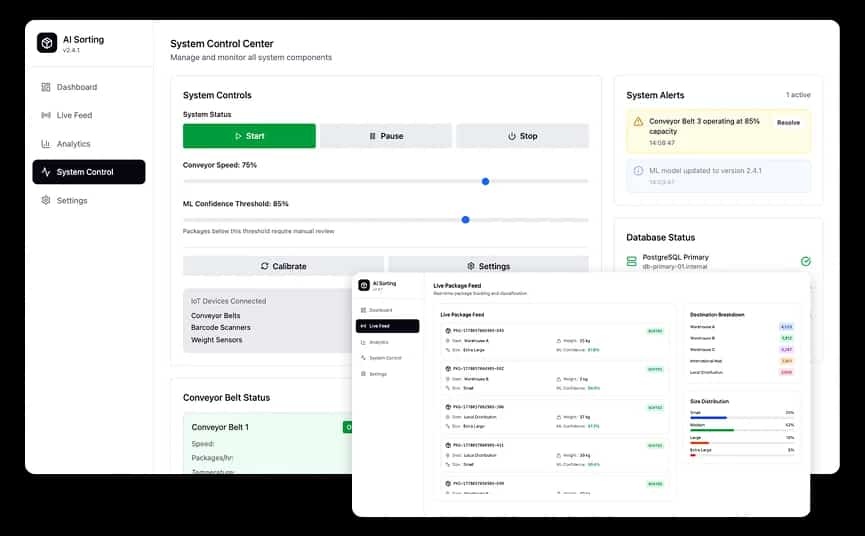
Events from devices, GPS units and apps are processed within seconds. It suits fleet tracking, sorting lines and alerts where minutes matter.
Document pipelines for AI
Files, wikis and tickets are cleaned, chunked and indexed with their access rules. It suits RAG assistants and internal search.
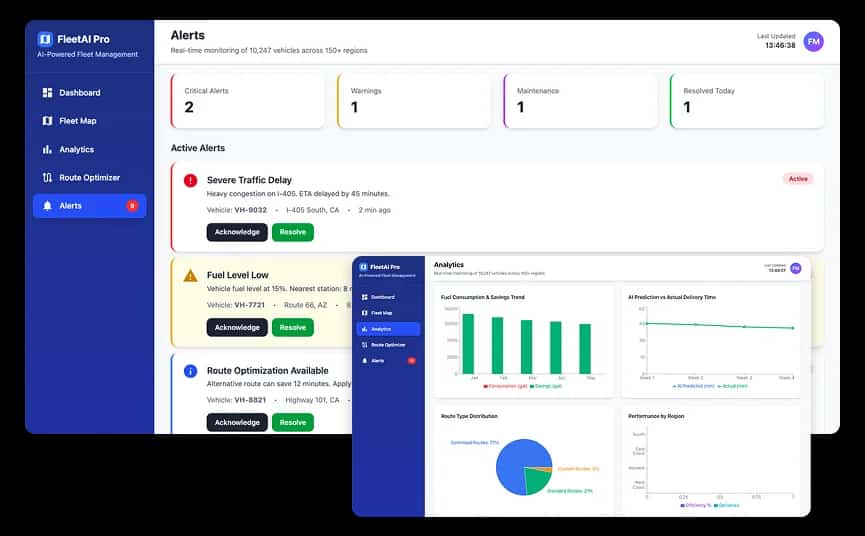
AI fleet optimisation: route planning and delivery time prediction for a logistics fleet
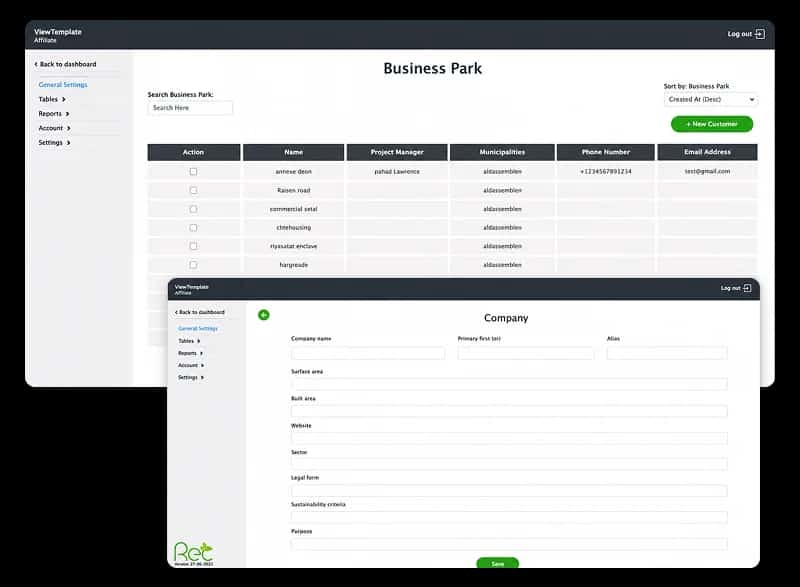
ScalaCode built an AI fleet optimisation system for a logistics enterprise. A Python and TensorFlow engine plans routes from live traffic and weather data and predicts delivery times, and fleet managers monitor every vehicle from a Vue.js dashboard.
route adjustments
How a data engineering project runs
The first phase connects the sources behind the report or model that matters most, then each later phase adds sources.
Data security built into the pipelines
Compliance requirements such as SOC 2, HIPAA or GDPR are written into the scope during discovery, before any data moves.
Your accounts and repositories
Pipelines and storage run in your cloud accounts and your GitHub or GitLab, under the access policies your security team sets.
Tested before production
Automated tests run on every change, and every release goes through staging before production.
Certified delivery process
Delivery follows an ISO 9001:2015 certified quality process.
The data platform stack we work in
We build inside the warehouse and cloud you already run. If you have not chosen one, we pick on data volume, team skills and cost.

One team, 14 years of shipping
projects shipped since 2012
AI systems running in production
clients across 45+ countries
years building software, since 2012
Data platform development cost
Data engineering is priced after a free discovery sprint, because cost depends on how many sources you have and how clean they are. Dedicated data engineers start from $1,799 a month, full-time.

Project-based
Sources, platform and milestones are agreed after the data audit. We own delivery of each phase through to handover.
Best for a first warehouse or a defined set of pipelines.
Dedicated team
Data engineers who work only on your platform, inside your process and tools.
Best for a platform that keeps adding sources and models.
Hire AI and data engineers
Time and materials
Pay for the hours used while the scope is still moving.
Best for audits, single integrations and clean-up sprints.
Rated 4.8/5 by the clients we build for
Verified reviews from Clutch and GoodFirms, and clients on camera.
33 verified reviews on Clutch

 Clutch review★★★★★
“They managed to balance technical skill with an understanding of the marketing world.”
Clutch review★★★★★“They didn't just build an algorithm; they built a tool that respects the nuances of Indigenous reconciliation.”
Clutch review★★★★★“Their team quickly adapted and implemented updates without disrupting operations.”
 GoodFirms review★★★★★
“Their team demonstrated deep knowledge in cloud security, automation, and performance optimization, allowing us to handle vast amounts of financial data efficiently.”
GoodFirms review★★★★★“Their team proposed an innovative and scalable solution, ensuring seamless data integration with third-party platforms.”
GoodFirms review★★★★★“We now have a branded product that is in production and being used in a pilot phase with historic data migrated. The envisaged project has become a reality.”
 Trustpilot review★★★★★
“ScalaCode help the client to maintain a consistent process for managing, organizing and securing data through it entire life cycle.”
Data engineering services FAQs
Data engineering is scoped in a free discovery sprint. Ask anything not covered here on the call.
How much do data engineering services cost?
Data engineering projects are priced after a free discovery sprint. The number of sources, how messy they are and how fresh the data must be drive the cost most. For ongoing capacity, dedicated data engineers start from $1,799 a month, full-time.
Do we need a data warehouse before we start an AI project?
It depends on what the first model reads. A RAG assistant over documents needs a clean, permission-aware document pipeline, while a forecasting or scoring model needs historical records in one queryable place, which usually means a warehouse. We build the data layer the first use case needs, then extend it.
Should we use Snowflake, BigQuery, Databricks or Postgres?
Start with what your team and cloud already use. Postgres is often enough for modest data volumes and a handful of sources, BigQuery suits Google Cloud estates, Snowflake suits teams that want separate compute per workload, and Databricks fits teams with heavy Spark or ML work. We make the call in discovery, on your volumes and skills.
Batch or real-time pipelines: which do we need?
Most reporting runs well on hourly or nightly batch loads, which cost less to build and run. Choose streaming when a decision depends on data that is seconds or minutes old, such as fleet routing, sorting lines or fraud alerts. Many platforms mix both, with streaming only for the feeds that need it.
Can you pull data from our ERP, CRM, devices and legacy systems?
Yes. We connect to SAP, Salesforce and Microsoft Dynamics through their published APIs, to GPS units, scanners and IoT devices through their data feeds, and to older systems through database replicas, exports or file drops. On our AI fleet optimisation project, a Node.js backend tied the platform to existing GPS devices and ERP systems. Smart meters and SCADA exports are common sources in energy and utilities.
How do you stop bad data from breaking our reports?
Automated tests run on every pipeline change, and every release goes through staging before it reaches production. The discovery sprint maps which reports and models depend on each source, so changes are planned with the teams that use them.
Can you work inside our existing cloud and data stack?
Yes. We work in your cloud accounts, your GitHub or GitLab, your code review and CI, and your project tracker. If you already run Snowflake, BigQuery, Databricks, Redshift or Postgres, we build inside it and leave the platform choice as it is.
Who owns the pipelines and the data?
You do, from the first commit. Pipelines, models, infrastructure code and documentation live in your repositories and cloud accounts, and the data stays in your environment. NDAs are standard.
They built a high-performance, AI-powered platform that transformed video engagement for learning.
Map your sources and first pipeline in 30 minutes
- 30 minutes with the ScalaCode team
- Which sources to connect first and which platform fits
- What the first phase costs and how long it takes