
Multimodal AI development for documents, images and video
ScalaCode provides multimodal AI development for systems that read scanned documents, photos, drawings and video alongside text. We build on vision language AI models or specialised computer vision models, test them on your own files, and send low-confidence results to a person for review before they reach your systems.
AI systems running in production
projects shipped since 2012
clients served since 2012
on Clutch, from 33 verified reviews
countries with live clients
9001:2015 certified delivery process
Trusted by teams at







Clutch 4.8/5Verified client reviews

GoodFirmsReviewed software partner
ISO 9001:2015Certified delivery process
GDPR compliantData handled under EU rules
What multimodal AI development covers
Most of the engineering goes into file handling, evaluation on your own documents and the review step for uncertain results.
- What is multimodal AI?
- Multimodal AI is artificial intelligence that processes more than one type of input, such as text, images, scanned documents, audio or video, in a single system. A multimodal LLM can read a photographed invoice, describe a drawing or answer a question about a chart, and return structured data that other software can use.
Related: RAG development covers search and answers across large document sets. The AI engineering hub covers LLMs, agents and machine learning.
Vision language AI or a specialised model
A vision language model handles varied documents and open questions with little training data. A specialised model is cheaper and faster per image when the task is narrow and repeats at volume, such as finding one kind of defect on one production line.
| Vision language model | Specialised vision model | OCR with rules | |
|---|---|---|---|
| Best input | Mixed documents, photos and screenshots that vary in layout | One kind of image at high volume, such as a line camera | Clean forms with a fixed layout |
| Training data | A few examples in the prompt, plus an evaluation set | A labelled image set for every class it must detect | A template and rules per layout |
| Cost per image | Per-token API cost or GPU hosting | Low once trained, can run on CPU or edge devices | Low |
| New layouts | Usually handled without retraining | Needs new labelled examples | Needs a new template |
| Typical tools | OpenAI, Claude, Gemini, Llama and Mistral vision models | PyTorch, YOLO, OpenCV | Tesseract, Google Vision API, AWS Textract |
When the goal is answering questions across many documents, see RAG development.
Multimodal AI we build
Each system covers file intake, the model, a review step and the export into your software, so a pipeline that passes evaluation can go into production.
Document and invoice extraction
We pull fields, line items and tables from scanned PDFs and photos into JSON, and link each value to where it appears on the page. It suits claim forms and estimates in insurance.
Drawing and plan reading
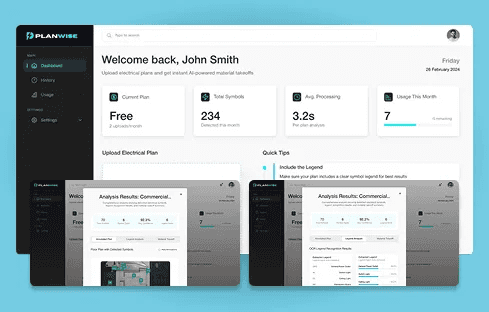
We read symbols, labels and counts from engineering drawings and floor plans against the drawing's own legend, with a review screen on the plan.
Visual inspection and defect detection
Our computer vision flags defects or missing items in product, part and site photos and routes borderline images to an inspector.
Video analysis
We sample frames from recorded or live video, check them for events, objects or safety rules, and save the matching clips for review. The same pipeline can tag footage for media and entertainment teams.
Image search and tagging
We describe and embed images so staff can search a photo library or catalogue in plain language, and write tags back to your system.
Visual try-on and image generation
Shoppers see clothing on their own photo or live camera feed, and product images are generated or edited inside web and mobile shopping flows. More under AI for retail.
Multimodal feasibility sprint
A 1 to 2 week test of candidate models on a sample of your files, ending with a measured shortlist and a build plan. The sprint is free.
Questions over charts and diagrams
A multimodal LLM answers questions about charts, diagrams and scanned pages and cites the page it used.
Human review queues
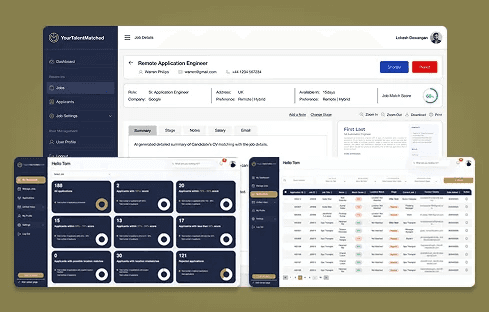
Low-confidence fields and images go to a review screen where staff confirm or correct them, and each correction joins the evaluation set.
Your team still keys in data from scans and photos
Bring a sample of the documents or images and where the data needs to go. In 30 minutes the ScalaCode team will tell you which model approach fits and what a proof of concept costs.
Four patterns we build into multimodal systems
Multimodal systems fail on poor scans, unusual layouts and confident wrong answers, so these patterns go in from the first release.
OCR and vision together
OCR extracts the text and the page image goes to the vision model as well, so the model can check tables, layout and handwriting against the text.
Schema-checked output
Results are constrained to a schema, and totals and dates are cross-checked before anything is written to your system.
Confidence routing
Each field or detection carries a confidence score, and anything below the threshold your team sets goes to human review.
A model per task
A specialised model handles the narrow, high-volume step, and a vision language model takes the varied cases it cannot.
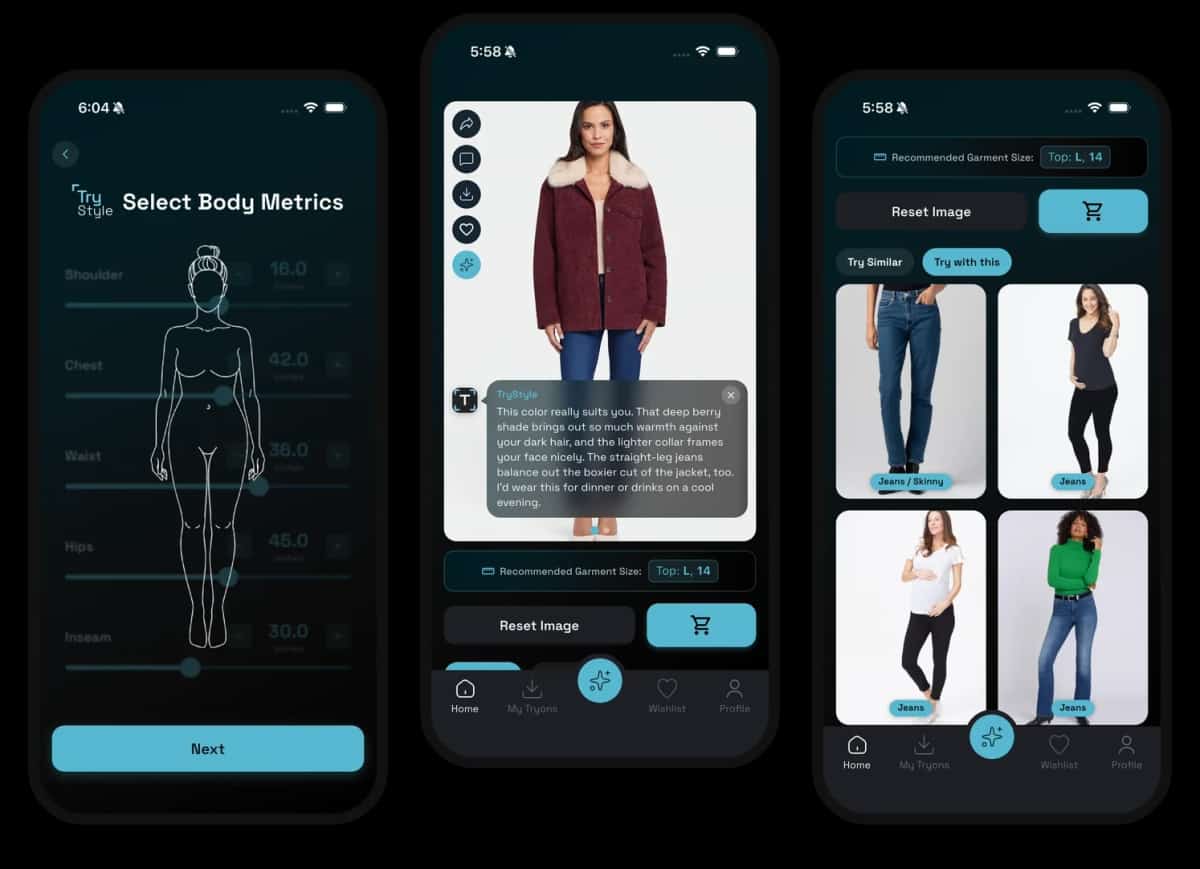
Try Style: photo, garment and body models in one try-on
Each try-on combines the shopper's photo, their height and the retailer's garment images. 3D body models turn the photo into measurements and a size, a diffusion model renders the garment on the shopper, a language model describes the look, and a video model can turn it into a 360° clip.
With a written description of the look and optional video
How we build multimodal AI on your files
A proof of concept on your own documents or images takes 3 to 4 weeks. The production system with review screens, integrations and monitoring is planned once the proof of concept meets its scores.
One team, 14 years of shipping
projects shipped since 2012
AI systems running in production
clients across 45+ countries
years building software, since 2012
Controls for documents and images
Scans and photos often hold personal, financial or health data. SOC 2, HIPAA or GDPR controls are written into the scope during discovery.
Files stay in your cloud
Uploads, extracted data and logs are stored in your cloud account, the code is yours from the first commit, and NDAs are standard.
Redaction before the model
Account numbers, signatures and other fields you mark can be masked before an image is sent to a hosted model.
Open-weight models on your servers
Where files cannot leave your network, Llama or Mistral vision models run on your own infrastructure or private cloud.
Human review where it matters
Results that feed payments, claims or compliance decisions pass a person before they are final.
Multimodal models and tools we work with
We pick models after testing them on your files, and host them where your data policy allows.
Computer vision development and multimodal AI by industry
Multimodal AI pays back where staff read the same kinds of documents or images every day and type what they see into another system.
Construction
- Takeoffs from drawings
- Site photo checks
Manufacturing
- Visual quality inspection
- Reading labels and gauges
Retail and eCommerce
- Product tagging from photos
- Virtual try-on
Logistics
- Proof-of-delivery photo checks
- Bill of lading extraction
Financial services
- KYC document extraction
- Statement reading
Healthcare
- Referral form extraction
- Insurance card capture
Insurance
- Claims photo triage
- Policy document extraction
Real estate
- Floor plan reading
- Listing photo tagging
Multimodal AI development cost
The discovery sprint is free and ends in a written proposal with a fixed quote. A proof of concept on your own files starts at $4,999 and takes 3 to 4 weeks.
Discovery sprint
1 to 2 weeks and free, ending in a written proposal with a fixed quote. A model test on a sample of your files, a measured shortlist and a build plan.
Best for teams unsure whether AI can read their files well enough.

Proof of concept, then build
A working pipeline on your files from $4,999 in 3 to 4 weeks, scored against your evaluation set. The production build is scheduled from those results.
Best for one document or image type with a clear owner.

Dedicated AI team
AI engineers inside your process from $1,799 a month per engineer, working in your GitHub or GitLab, CI and project tracker.
Best for a backlog of document and image workflows.
Rated 4.8/5 by the clients we build for
Verified reviews from Clutch and GoodFirms, and clients on camera.
33 verified reviews on Clutch
 GoodFirms review★★★★★
“They built a high-performance, AI-powered platform that transformed video engagement for learning.”
 Clutch review★★★★★
“What sets ScalaCode apart is their technical AI expertise and an understanding of a client's organizational ethos.”
Clutch review★★★★★“What stood out to us as most impressive and unique about ScalaCode was their ability to humanize complex AI.”
Clutch review★★★★★“They managed to balance technical skill with an understanding of the marketing world.”
Clutch review★★★★★“Their team often proposed innovative features we hadn't considered.”
Clutch review★★★★★“They didn't just build an algorithm; they built a tool that respects the nuances of Indigenous reconciliation.”
Clutch review★★★★★“What I found impressive about ScalaCode was their ability to listen to the soul of an educational mission.”
Multimodal AI development FAQs
We will answer anything not covered here on the call.
What can multimodal AI do that text-only AI cannot?
Multimodal AI reads information that exists only as an image, such as a scanned invoice, a handwritten form, a floor plan, a chart or a product photo. Text-only AI needs that content typed or extracted first, and it loses the layout, tables and visual detail along the way.
Which multimodal models do you use?
We use vision language models from OpenAI, Anthropic Claude and Google Gemini through their APIs, and open-weight Llama and Mistral vision models on your infrastructure. For narrow, high-volume tasks we train specialised computer vision models in PyTorch. The choice for each task follows a test on your files.
Can multimodal AI read scanned documents and tables?
Yes. We combine OCR with a vision language model so the system reads text, table structure and handwriting from scans and photos, and returns each value with its location on the page. Poor scans and unusual layouts are part of the evaluation set, and low-confidence values go to human review.
How accurate is multimodal AI on our data?
Accuracy depends on your files, so we measure it field by field on an evaluation set built from your own documents or images before launch. You see the results in the proof of concept, and a confidence threshold decides which results are accepted and which go to a person.
How much does a multimodal AI project cost?
A proof of concept on your files starts at $4,999 and takes 3 to 4 weeks. The discovery sprint is free, and a dedicated AI engineer starts at $1,799 a month. The production build is quoted after discovery, because file volume, integrations and review needs set the final figure.
Can it run on our own infrastructure?
Yes. Open-weight Llama and Mistral vision models and specialised vision models can run on your own servers or private cloud, so files stay inside your network. Hosted APIs from OpenAI, Anthropic and Google suit teams whose data policy allows them, and one system can use both.
Should we use a multimodal LLM or a specialised vision model?
Use a multimodal LLM when inputs vary and questions are open, such as invoices from hundreds of suppliers. Use a specialised model when the task is narrow and repeats at volume, such as one defect type on one line, because it is cheaper and faster per image.
Who owns the models and code?
You do. The code, prompts, trained models and evaluation sets are yours from the first commit, NDAs are standard, and we work in your GitHub or GitLab and your cloud accounts.
One team, matched to your working hours
We schedule 4 to 6 hours of daily overlap with US time and a full working day with the UK and Europe, so reviews, demos and fixes happen during your working hours.
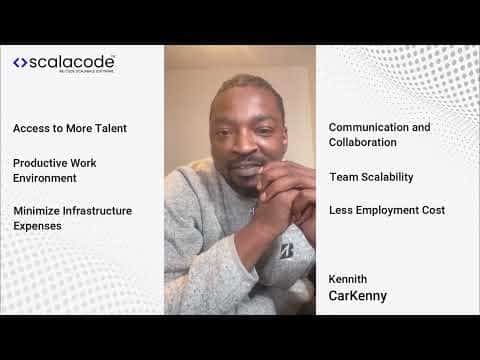
 Watch Kennith's review
CarKenny: an AI vehicle app, built with ScalaCode
Find out whether AI can read your documents and images
- 30 minutes with the ScalaCode team
- Whether a vision language model or a specialised model fits your files
- What a proof of concept costs and how long it takes
“What sets ScalaCode apart is their technical AI expertise and an understanding of a client's organizational ethos.”
Laurence Longet, Director, MGEN (Clutch review)