

Heading into 2026 and beyond, the technological advances continue as one of the most rapidly growing industries is SaaS application development.
You might find it interesting that the SaaS market was worth USD 315.68 billion in 2025 and is predicted to reach USD 1,228.87 billion overall in 2032.
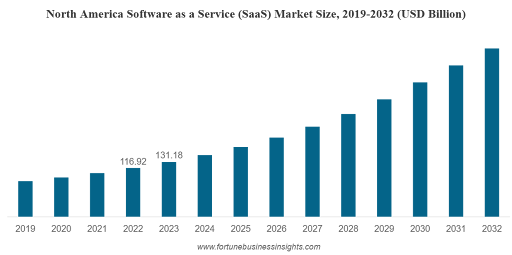
Yes, indeed, one can easily identify it as a sheer increase in sales and not an ordinary one, and that’s why business leaders cannot take their eyes off it.
This speaks volumes not of a trend, but of a new normal of how organizations embrace software solutions.
So, Why is SaaS so Popular?
SaaS stands for Software as a Service, and it has grown to be one of the most vital things in the digital landscape; it has changed the way business is conducted. That being said, can that be the reason it’s in such heavily popular?
Well, the growth of SaaS application development holds various compelling reasons.
SaaS Application Development allows companies access to applications over the internet, getting rid of the trouble of hefty on-premise infrastructure maintenance. If that is not a game-changer, what is?
Moreover, many companies are reducing costs by combining similar software applications. This is especially common among SaaS companies (62%) but also happens in transitioning companies (48%) and traditional organizations (20%).
Another interesting fact, in a survey, it was found that:
- Over 70% of business software is now SaaS-based.
- By 2026, nearly all business apps will be SaaS.
- 54% of companies use SaaS to boost efficiency.
- Despite security concerns, 78% of organizations store sensitive data in SaaS apps.
- 80% of businesses aim to fully transition to SaaS by 2026.
- 73% of corporate leaders rely on SaaS to achieve their objectives.
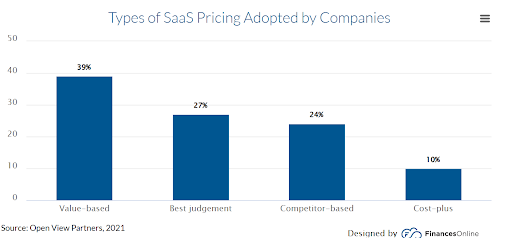
- Many SaaS companies (39%) set prices based on the value their product offers to customers. However, some still rely on guesswork (27%) or copy their competitors’ prices (24%).
What are the Benefits of SaaS Application Development?
SaaS application development is not a technical term but a strategic approach that helps in simplifying and enhancing business operations. But what does it all mean? What benefits does it offer? Let’s break it down.

1. Cost-Efficiency
Well, the major center of attraction of SaaS application development is that it is cost-effective. In opting for SaaS solutions, businesses can save enormously on on-premises hardware, software licensing, and maintenance at the beginning.
Accenture also found that moving workloads to the public cloud led to Total Cost of Ownership (TCO) savings of 30-40%.
2. Accessibility and Convenience
Imagine having access to the most critical applications anywhere in the world at any moment in time. Well, this is totally workable through SaaS. Users are able to log on via a web browser, as there will not be any need for installations.
For companies with a distributed workforce, remote work allows easy accessibility to critical applications, boosting productivity and collaboration.
3. Scalability and Flexibility
Another reason why businesses are flocking towards SaaS application development is its incredible scalability. As your business grows, so do your software requirements. SaaS solutions come in flexible subscription models, which can be scaled either way with no hassles. This adaptability will guarantee companies pay for only what they need and when they need it.
4. Regular Updates and Maintenance
Who loves software updates? Admittedly, most of us find it pretty boring stuff. In a SaaS model, these are done through automation. Updates and maintenance are handled by the provider, and users can be assured that the software is up-to-date with the latest features and security patches. Thus, users can devote their attention to getting work done with no need to bother with technical glitches.
5. Enhanced Collaboration
SaaS applications often come with collaboration tools that make it easier for teams to work together. Features like real-time editing, sharing, and communication tools facilitate seamless teamwork, no matter where your team members are located. This is one of the common benefits one gains with SaaS app development.
In short, is the fact that the SaaS application development is efficient, affordable, and can easily be spread out.
If you are considering stepping into the world of SaaS applications, you are at the right place.
Still, you might think about the costs of creating a SaaS app or the general workflow in the process.
Do not panic, we are here to help you understand the process that is necessary to accomplish to create a successful SaaS application.
Steps to Build a SaaS Application
Whether you’re a startup or an established business looking to expand into the SaaS realm, understanding the SaaS app development process is crucial.
Software-as-a-service applications are one of the fastest-growing segments within the cloud computing industry. But, where do you start with it? Here is a simple step to build your own SaaS application.

Step 1: Ideation and Market Research
The first thing that anyone who wants to start an invention needs to do is, of course, assure the idea.
However, you need to define the problem that your SaaS application should solve. Before moving out, it is accordingly important to ensure your idea has some market value by conducting extensive research.
For example, who are your competitors in your business and what do they have in store for everyone? An understanding of the user is significant, as is an appreciation of the needs of the users.
After all, knowing what your customers want can shape the entire SaaS app development process. Use tools like surveys or focus groups to gather insights and analyze current market trends. Remember, a well-researched idea lays the foundation for a successful SaaS application.
Step 2: Define Your Business Model
Once you have your idea, you are going to want to figure out how to make money. Just select a business model that best fits your goals. The most common business models in SaaS are:
- Subscription-based: where users pay a recurring fee, typically monthly or annually, for continued access to the application.
- Freemium: where the basic features of the application are free, but users can pay for advanced features.
- Usage-based: where users pay based on their usage, such as the number of transactions or amount of data processed.
Moving on, consider what works for an application and your target audience. Consider your SaaS app development cost and how your selected model will help you to cover it while ensuring profitability.
Step 3: SaaS App Development Strategy
Next, it is about planning the development process. Divide your project into smaller tasks and define what needs to be done. You need to decide whether to choose the in-house development or the dedicated remote saas development team.
Of course, you need to weigh up both options with pros and cons. Though in-house development allows for more control over the development process, outsourcing saves your time and resources.
Statistically, outsourcing SaaS development from India reduces development costs by up to 60%. However, make sure you choose the option that best fits your business needs.
Step 4: Plan the Features and Functions
Once you’ve nailed down your business model, it’s time to focus on what your SaaS application will do. Define the key features and functions of your application. What are the must-have features that solve the problems identified in your market research?
Remember, the success of your SaaS application development depends on how well you address your customers’ pain points. Moreover, here are some types of SaaS applications that you consider developing.
| Type of SaaS Application | Description | Examples |
| CRM (Customer Relationship Management) | Manages customer interactions and relationships | Salesforce, HubSpot, Zoho CRM |
| ERP (Enterprise Resource Planning) | Integrates various business functions like finance, HR, and operations | SAP, Oracle NetSuite, Microsoft Dynamics 365 |
| HR & Payroll | Manages HR functions, payroll, and employee data | Workday, BambooHR, Gusto |
| Project Management | Organizes and tracks projects and tasks | Asana, Trello, Monday.com |
| Marketing Automation | Automates marketing tasks like email campaigns and social media | Marketo, HubSpot Marketing Hub, Pardot |
| Accounting & Finance | Manages accounting, invoicing, and financial reporting | QuickBooks, Xero, Sage Intacct |
| Collaboration Tools | Facilitates team collaboration and communication | Slack, Microsoft Teams, Google Workspace |
| Customer Support | Manages customer support tickets and interactions | Zendesk, Freshdesk, Help Scout |
| Document Management | Stores and manages documents and files | Dropbox, Google Drive, SharePoint |
| E-commerce | Enables online sales and store management | Shopify, Magento, WooCommerce |
Step 5: Design SaaS Applications Architecture
This is one of the important parts of SaaS application development i.e. building a scalable architecture. Why is it important? The more load increased, your application can handle with no problem, when your user base increases.
One such approach may be the multi-tenanted architecture where a single instance of your software serves multiple customers, efficient, and cost-effectively, will let you scale up faster and with ease.
Besides, during design, your target should be a friendly interface. After all, in SaaS application development, the role of a user is huge: You want your app to be intuitive and entertaining for them.
Identify wireframes and prototypes that will give you a skeletal appearance of your application, layout, and functionality. This helps to test the design for feedback in its early stages and make necessary adjustments before the final build.
Step 6: Development
Now comes the very important step in SaaS app development- the actual coding. This will include front-end and back-end development, integrating third-party services, making sure data is secure, and more.
Common technologies to develop SaaS applications include:
- Frontend: HTML, CSS, JavaScript frameworks like React or Angular
- Backend: Python, PHP, Laravel, Node.js
- Database: MySQL, PostgreSQL, or NoSQL alternatives like MongoDB
- Cloud Services: AWS, Google Cloud, or Microsoft Azure
Just choose the right technology stack fitting your project needs, and be assured it will scale in the future.
Moreover, in most SaaS app development processes, it starts with the building of an MVP. An MVP enables you to launch a functional version of your application by adding just enough features to satisfy the early adopters.
It helps gather user feedback about what is working and what is not. Besides that, an MVP can substantially reduce the cost of SaaS app development since it is focused on core functionalities at the very beginning.
Step 7: Security and Compliance
Above all, security is a major concern in SaaS application development. When users let you handle important data, they trust that their inputs are safe with you, right?
Strong encryption methods, secure storage of the data, and other relevant regulation adherence, such as GDPR or HIPAA, if applicable. Also, regular security audits can very well help identify vulnerabilities before they become widespread problems.
Step 8: Test the Application
Of course, testing is one of those high-priority steps in SaaS application development. Ensure every feature is rigorously tested both manually and with automated testing. Pay extra attention to usability, performance, and security testing.
The goal is to catch bugs and fix them before deployment. After all, isn’t retaining customers all about a seamless experience?
Step 9: Deployment and Launch
Once your application is polished and tested, it is time to deploy it. Avail a good cloud service provider for hosting your SaaS application. While one is releasing a product, the main focus should be on how he or she exposes the product to attract early users.
Free trials can be one of the best ways to draw in new customers. Besides, user feedback collection is useful for continuous improvements.
Also Read: Top SaaS Trends of 2026
Step 10: Post-launch Support and Maintenance
After launching, that does not mean your work is done. Support and maintenance are very important activities to keep your SaaS application running without any disturbance.
Performance monitoring will be a must-activity to ensure seamless and efficient functioning, resolving emerging issues on time, and upgrading the application with features.
In fact, this works not only in keeping existing users happy but also in retaining them for a longer period. Do you know it costs five times more to gain a new customer than to retain a customer? Thus, user satisfaction is very crucial.
Cost of SaaS App Development
Finally, let’s talk about the cost of developing a SaaS application. Really subjective, it would depend on a lot of factors, such as complexity, features, expertise, and location.
Let’s have a brief look at those factors-
1. Complexity of App
The complexity is the backbone of any SaaS application. This includes functionality, modules, features, and integration challenges that developers have to go through. For instance, consider the popular SaaS product, Grammarly.
It serves one purpose, but the complex functionalities, along with its integration with AI and Big Data at the back end, make it complex. In other words, the more complex your app is, the more expensive it will become.
Here is a rough idea of how complexity drives the cost:
- Small SaaS Applications: From $10,000 onwards
- Medium SaaS Applications: From $25,000 to $60,000
- Large & Complex SaaS Applications: More than $100,000
2. Stages in the Development of a SaaS App
At length, development stages are significant, right? Everything is about time and cost in each of the stages that will lead to an overall price.
- Planning and MVP Development
Before you enter processes or hire a custom software development company, you need to finalize the ideas of your product. You need to validate them and see how they are going to benefit or compete in the market. Building MVP might help. This phase may cost $30,000 to $60,000.
- UI/UX Design
First impressions count, right? UI/UX design plays a vital role because it decides how your application will look and interact with users. On average, this stage can cost anywhere in the range of $3,000 to $6,000.
- Front-End Development
In this stage, you decide your technology stack, dependent on your core features. This isn’t just about building an attractive design but also working on performance optimization. The cost in this regard can lie in the range of $10,000 to $40,000.
- Back-End Development
Back-end development is the major phase where considerable investment is required. Creating every module from scratch is difficult, but using APIs can reduce the cost. You are likely to spend around $18,000 to $60,000 here.
3. Solution Type
The type of solution your application offers also determines costing. Different SaaS solutions demand different requirements:
- Accounting Solutions: $70,000, $80,000
- Email Marketing: $60,000, $70,000
- ERP Systems: $110,000, $120,000
4. Type of Developer
Who you hire is as important as the SaaS app itself. Cost is determined a lot by your type of developer:
- In-House Team: $120,000, $150,000
- Local Agency: $170,000, $180,000
- Freelancers: $40,000, $60,000
- Outsourcing Agency: $70,000, $100,000
5. Geographic Location
The cost depends a lot on where your SaaS application development team is situated. A breakup in brief is as follows:
| Geographical Region | Average Cost (USD) |
| Western Europe | $90,000, $100,000 |
| Eastern Europe | $50,000, $60,000 |
| Asia | $40,000, $50,000 |
| Australia | $110,000, $120,000 |
How to Optimize SaaS App Development Costs
Though these figures may look overwhelming, there is a better way to deal with and optimize them.

Idea Validation
Do your homework before making the plunge. Make sure your idea has potential. Do thorough research and get customer feedback. This step will let you define a roadmap for SaaS application development.
Choose MVP First
Starting with the MVP will also give you a chance to dip your toe in the pool. You can get to validate ideas by building basic features without going deep into full-scale development.
Choose the Right Development Team
Finding the right team to outsource to countries where development costs are lower will save loads of money without causing harm to quality. Only make sure they have experience working on quality work.
Use Pre-Built APIs
Integrate common features with Pre-Built APIs, reducing the need to build everything from scratch. It saves time and cuts down on costs.
Use Proven Technologies
Opt for reliable technologies that fit your budget. Avoid overcomplicating your tech stack with unnecessary tools. Utilize cloud services to reduce infrastructure costs and improve scalability.
The Future Trends in SaaS Application Development
What is in store for SaaS applications? Bright, with the advancement in technology in the present times, and increasing demand. A few trends to watch are mentioned below.
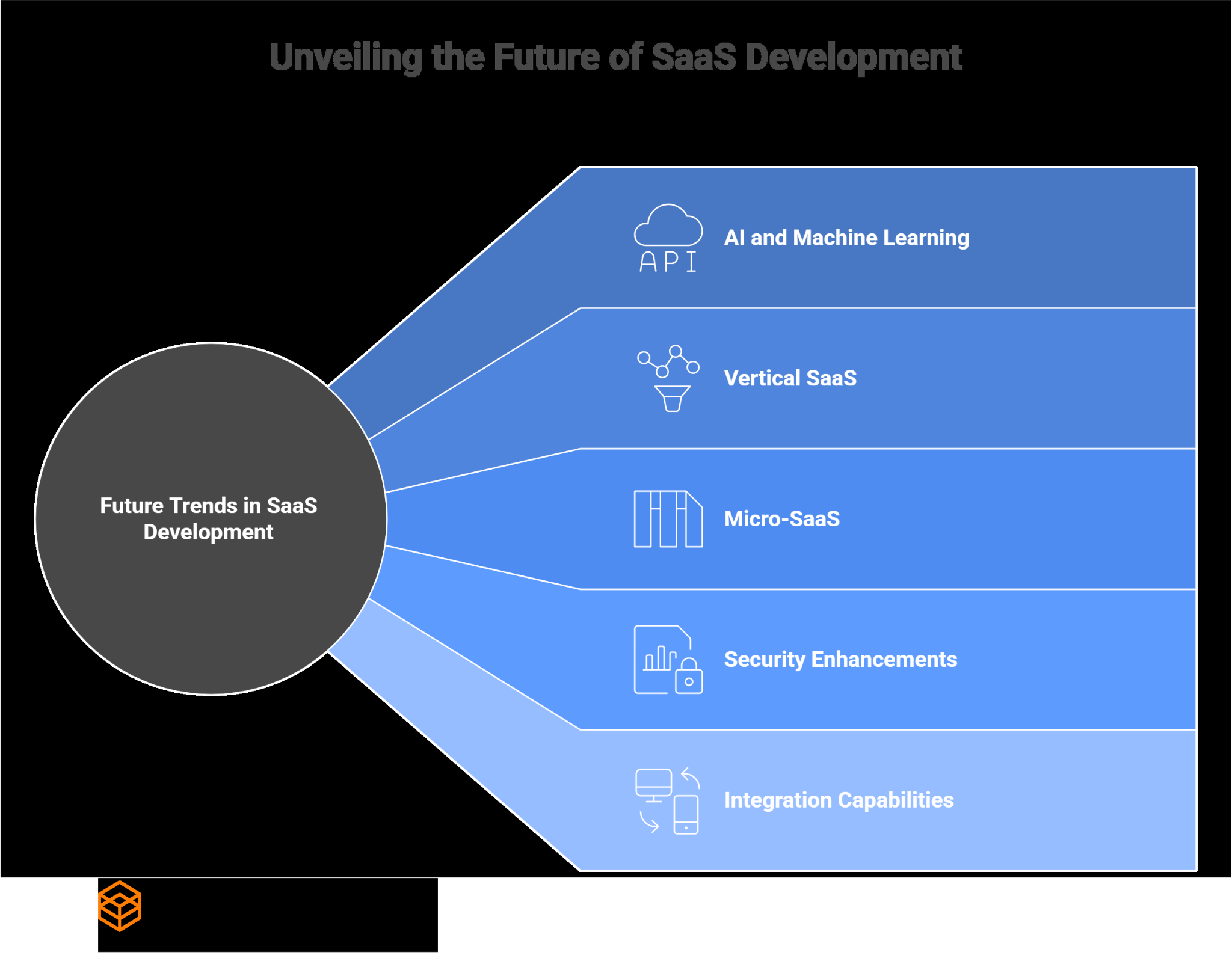
1. AI and Machine Learning
AI and machine learning have started being integrated into SaaS applications. These technologies allow more personalization, better data analysis, and better decision-making. Opt for AI development services from highly experienced developers.
2. Vertical SaaS
While horizontal SaaS has traditionally served the general market of all industries, vertical SaaS targets small, niche markets. This can allow for detailed solutions within that specific vertical market.
3. Micro-SaaS
Micro-SaaS consists of tiny, low-code SaaS products built by solo founders or small teams. These applications solve a portion of a specific pain or even power other SaaS solutions to be more productive and efficient.
4. Security Enhancements
The more complex cyber threats become, the more complex security measures will become. At any rate, there will be significant investment on the part of SaaS providers in terms of security features that will keep user data safe and trusted.
5. Integration Capabilities
Of growing importance are seamless integrations with other software and platforms. Users want applications that can easily connect with other tools and systems they use.
Must Read: Top SaaS Product Ideas of 2026
Final Words
Here, we come to the end. We explored the SaaS app development process. We even ensure that the aforementioned benefits are well-provided to different businesses across the globe.
Moreover, while SaaS app development costs may vary, the returns it can give, along with the operational efficiencies created, make it worth investing in for many companies.
With technology still in its evolution stage, the future of SaaS is bright, while trends such as AI, vertical SaaS, and enhanced security show the way to what more can be offered.
Now, is the world of SaaS something you’re ready for? Because there has never been a better time to witness the magic of this transformational technology with all the advantages attached.
For SaaS application development services, connect with our experts at ScalaCode. We can help you build innovative and scalable SaaS solutions tailored to your specific needs.