

Indeed, awareness of the environment has grown, and as such, the desire for good waste management solutions has increased tremendously. As per several reports, the international market shall witness a soaring demand for waste management software, which would peak at a whopping $4.5 billion by 2028.
Such a transformation represents a major movement toward the application of digital technologies to realize improved efficiency in waste collection, disposal, and recycling processes. Software use in waste management should therefore not be seen as a fad but rather as a means of achieving operational efficiency and sustainability.
Waste management applications that are customized can provide enormous benefits for businesses and entrepreneurs in such areas as cost efficiency, better workflows, and institutional compliance with sustainability.
This article, therefore, discusses the factors that determine the development costs of waste management software. This overview gives you all the reasons why you should aspire to such a project, whether you are an entrepreneur or an organization seeking to make a difference on a large scale.
So, let’s get into it!
What is a Waste Management App?
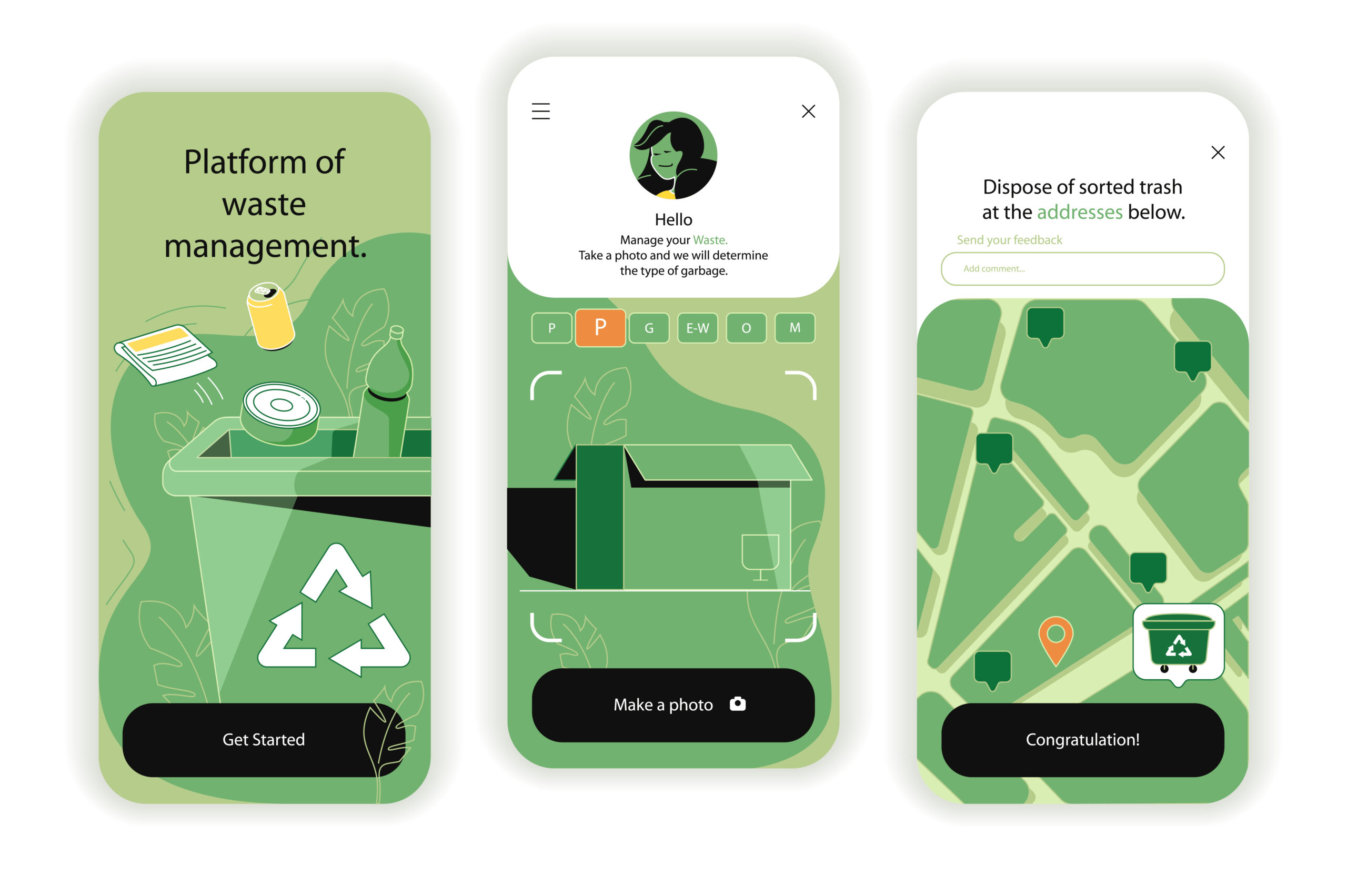
At its core, waste management applications are digitized networks where waste collection, segregation, disposal, and recycling processes are simplified and managed with relevant application modules. It adopts state-of-the-art emerging technologies like IoT, real-time tracking, and route optimization to provide a quick reconvening of users and waste collectors, even recycling facilities in an efficient and most effective way.
Indeed, intelligent waste monitoring compliance tracking sealed-up with data-driven decision making ultimately leads to sustainability and operational effectiveness at reduced environmental impacts.
Why Is It the Best Time to Build Waste Management Software?
Well, the demand for waste management software is increasing rapidly. The market for waste management software was valued at $6.5B in 2025 and is supposed to reach $14.37B by 2030. This is crazy because it is growing at a CAGR of 7.2% from 2024 to 2030.
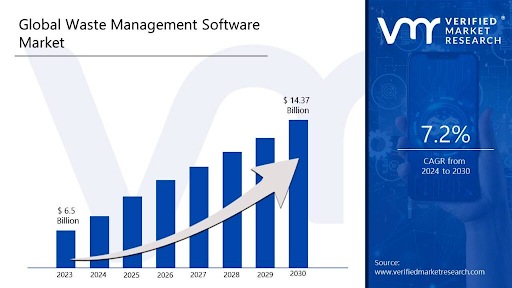
Another study shows that the Waste Management Software Market is predicted to reach USD 9.5B by 2031, increasing at a 9.2% CAGR from 2024 to 2031. The report comprises several segments and examines the trends and elements substantially shaping the market.

So, the future of waste management apps is quite bright. That’s why you should build it today. It’s a good chance for you to make a good position in the market. Let’s move ahead and know more about waste management applications.
Key Features of a Waste Management App
Here are some core features that play a major role in deciding the cost of a waste management app:
1. Smart Waste Classification
This application sorts the collected waste into the title categories- hazardous, e-waste, recyclable, or organic- enabling effective processing. In this way and where the waste is sorted into the subsequent processing location, the phenomenon basically reduces human errors greatly while promoting very high sustainable technological aspects at the same time ensuring compliance with environmental law.
2. Tracking and Monitoring of Bins
The user can view the location and capacity, fill levels of waste in the bins, and collection schedules through a map view. Through this feature, waste separation becomes very manageable with a clear, traceable control over using bins. Waste is considered easy to handle for both users and servicing providers as regards acting fast whenever their service gets required.
3. Insights into Cycle Filling for Bins
The application works on advanced data analytics that effectuate the tracking and prediction of filling patterns for bins, and this is aimed at optimizing waste collection. All through, cost reduction and enhancement into operations are achieved through time savings, avoidance of unnecessary collection trips, and improving resource utilization.
4. Route Optimization
The application maps the optimal collection route to save fuel and time. Besides, the improved operations convert quickly into quick pickups, thus removing delays to make the whole experience better and contribute less to carbon emission footprints.
5. Real-Time Data Through IoT
Thanks to the Internet of Things (IoT) for sensor integration, the application now contains the ability to monitor the current filling status of bins and process predictions when the bins reach maximum capacity.
Such data-driven information processes keep from over-filling, provide maximum coverage on collection schedules, and provide better service to accumulate more savings.
Different Types of Waste Management Apps
Waste is managed through various applications. The different kinds of waste management mobile apps have a tendency to specialize in the different needs of different customers; they have efficiency, compliance, and sustainability as generalized examples. The following categories form the major types of waste management apps:
1. Residential Waste Management Apps
There are application platforms designed specifically for home features such as a waste collection schedule, reminders, and hints on recycling; they help residents manage waste with effective information on disposal.
2. Commercial Waste Management Apps
Commercial waste management apps are designed for businesses to monitor waste generation, give plans to schedule pickups, and ensure their compliance with the rules. The applications further help businesses with analytics to find out the process of waste management for the reduction of operational costs.
3. Industrial Waste Management Apps
Waste management for hazardous and recyclable materials, particularly includes the waste class hierarchy, compliances checks, and improved reporting that meets several industry specifications, extending from waste generation to waste disposal.
4. Municipal Solid Waste Management Apps
Creating a living, intelligent city, these Apps facilitate waste management for municipal city solid waste by routing optimization, monitoring bins, and sharing real-time data. Through these kinds of apps that focus on effective resource management, a city can minimize environmental impacts.
5. Recycling Apps
An application that advocates sustainability and teaches how to deal with and recycle materials. Most of the time, it links users to the nearest recycling facilities while providing some incentives for appropriate disposal.
6. E-Waste Management Apps
These apps deal with electronic waste and help users identify collection centers, schedule a pickup, and keep track of the recycling processes. They generally address the special requirements for disposing of e-waste safely.
7. IoT-Integrated Waste Management Apps
The solution is the real-time data monitoring of fill levels of the cans, routing the waste collection vehicles, and predictive maintenance. The applications are meant for smart cities that healthily maximize waste collection through IoT-enabled mobility.
Factors That Affect the Cost of Creating a Waste Management Marketplace
Building a waste management marketplace will also require an understanding of the cost components. Every decision made-from app complexity to platform choice-was going to have an impact on the budget. An in-depth rundown of the key parameters that shape one’s development cost is given below.
1. App Complexity
One of the most crucial aspects determining the cost of an app is its complexity. A simple sort of app includes just the basic functionality, such as scheduling a waste collection, notifying users, and a simple user profile.
Such applications can easily be developed in a shorter span of time. Moderate applications, on the other hand, could include some features like real-time tracking, in-app payments, or integration with external systems such as waste management trucks or recycling centers.
Amongst all, advanced technologies could be employed for highly complex applications such as AI-based waste categorization, IoT for tracking containers, and data analytics dashboards. These require a lot of time for development, advanced skills, and resources. Hence, this increases the cost. Here’s a cost breakdown according to complexity:
| App Type | Cost Range | Features |
| Simple Apps | $10,000–$30,000 | Basic UI, alerts, and scheduling. |
| Moderate Apps | $30,000–$70,000 | Real-time tracking, in-app payment, API integration. |
| Highly Complex Apps | $70,000–$150,000+ | AI-based waste sorting, IoT tracking, advanced dashboards. |
2. Choice of Platform
The platform you choose has an impact on development cost as well. Native applications are built for a specific platform (only for iOS or Android) to achieve the best performance and use platform-specific features. But a separate development is required for each platform, adding to expenses.
A web application includes the applications accessed via the browser, which are usually cheaper but less performantly reliable, and inferior to user experience against native apps. Cross-platform development and hybrid app development allow the use of a single code base to reach out to many platforms, thus saving time and money in development.
A hybrid application has native and web components; however, they always lose in terms of performance as well:
| Platform Type | Cost Range | Features |
| Native Apps | $50,000–$100,000 | High performance, platform-specific customization. |
| Web Apps | $20,000–$35,000 | Browser-based access, wider audience, lower reliability. |
| Cross-Platform Apps | $25,000–$60,000 | Shared codebase for Android and iOS, cost-effective. |
| Hybrid Apps | $10,000–$150,000 | Combines native and web elements, moderate performance. |
3. Expertise Development Team
The technical prowess and expertise of your development team play a big part in the quality and costs of your app. Even if super-specialized developers or agencies demand higher fees, the proportions of square footage they could save in every inch of the way can outweigh the expense.
Senior developers are ideal in the context of projects that are too deeply complicated to understand advanced technologies. In the case of moderate projects, a mid-level developer can be a choice, while a junior developer is appropriate for simple applications or as a part of a larger team.
Freelancers should be considered a cost-effective solution, but may lack reliability and coordination within a professional agency.
| Developer Role | Hourly Rate | Key Features |
| Senior Developers | $100–$200/hour | Best for highly complex projects requiring advanced skills. |
| Mid-Level Developers | $60–$120/hour | Ideal for moderately complex projects. |
| Junior Developers | $30–$60/hour | Suitable for simple tasks or supporting roles. |
| Freelancers | $25–$100/hour | Low-cost, less reliable coordination. |
While choosing your development team, experience and histories of successful similar task execution would outweigh other factors in the decision-making process.
4. API Integration
The most common external APIs that you would like to integrate with your application would include the capability to receive payment by integrating with a payment gateway, a geolocation service, or an analytics provider.
When looking to integrate with an API, costs are based on how complicated the API is and how much customization you require. Basic integrations usually use very simple APIs with a limited number of endpoints, offering functionality like SMS notification or very basic user management.
A moderate integration might involve using multiple endpoints, creating some customized logic, or synchronizing with external systems such as waste tracking devices.
| Integration Type | Cost Range | Features |
| Basic | $2,000–$5,000 | Few endpoints, simple APIs. |
| Moderate | $5,000–$10,000 | Multiple APIs, custom logic. |
| Complex | $10,000–$20,000 | Advanced features, custom APIs. |
Complex integrations can involve extremely advanced technologies, such as AI-driven analytics solutions or IoT sensors for real-time monitoring of waste bins.
5. Development Region
Let me tell you that the development region matters a lot in the cost. The cost developers charge is also very different because of the cost of living and other economic standards in different areas. If you hire software developers in India, then you can get the best development solutions at an affordable price. Here is region wise cost breakdown for you:
| Region | Hourly Rate | Key Advantage |
| United States | $100–$150/hour | High-quality services, proximity to Western markets. |
| Western Europe | $80–$120/hour | Talented developers, cultural alignment. |
| Eastern Europe | $40–$80/hour | Cost-effective, skilled developers. |
| Asia | $30–$60/hour | Inexpensive, suitable for simple to moderate apps. |
| South America | $25–$50/hour | Economical, ideal for startups. |
| Africa | $20–$40/hour | Affordable, best for simple projects. |
For example, developers in the U.S. and Western Europe charge higher fees reflecting the high-quality services they provide and following Western business practices. Eastern Europe, Asia, and South America have skilled developers at lower costs that greatly attract businesses who want to save some bucks.
Select the development area correctly to strike a balance between quality and price but without compromising the app goals.
Monetization Models for Waste Management Apps
A waste management application will sound very good if attached with a proper revenue model. Below are some of the monetization possibilities mentioned for such waste management applications.

1. Residential Users
Provide free premium services like a pickup calendar or recycling advice and charge for premium ones like priority pickups, higher volumes of waste, or much deeper analytics. This, then, should create a subscription-based business model with regular dividends and loyalty.
2. Commercial and Industrial Users
These would be customized solutions for an enterprise, say compliance tracking and personalized recycling programs, charging according to the frequency of servicing, amount of waste, or other standardized services such as e-waste disposal. This is particularly beneficial to all businesses that do waste management on an administrative basis.
3. Pay-as-you-use Model
Users are charged only according to the actual service usage. For instance, the cost could be by the collection or based on the amount of waste volume. This model has flexibility and, at the same time, ensures the user pays only for what he or she needs.
4. Selling Through Advertisements
Trade space in the platform for an advertisement to pro-ecos brands or businesses concerned about advertising, and then have this profit generation, which is not really dependent directly on users.
5. Municipal and Government Organization
The enterprise solution for municipalities would have modules to monitor, analyze, and report charges based on the operational extent to ensure a continuous flow of revenue along with a fight for local waste management.
6. Freemium
The basic features are free while most of the premium features like detailed reporting, custom dashboards, AI recommendations, and others are paid for. This seems to be a good method of inviting many users to its doorstep.
7. Data Monetization
It collects and analyzes data from users and translates that into insights such as waste trend patterns, then sells or commercializes this to municipalities, environmental agencies, or researchers to garner additional revenue streams while rewarding the sustainability goals.
Top Waste Management Mobile Apps
The following are the best 5 waste management applications that play a key role in helping keep a cleaner and greener environment:
1. My WM
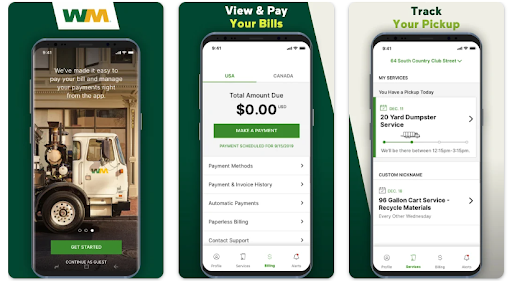
Comprehensive waste management services are offered for residential, commercial, and construction purposes through this app. My WM includes trash collection, recycling, roll-off container rentals, bulk trash pickups, construction waste disposals, and electronic waste recycling. It thus becomes simple and easy for households and businesses alike to have the most efficient waste management process through this app.
2. MyWaste
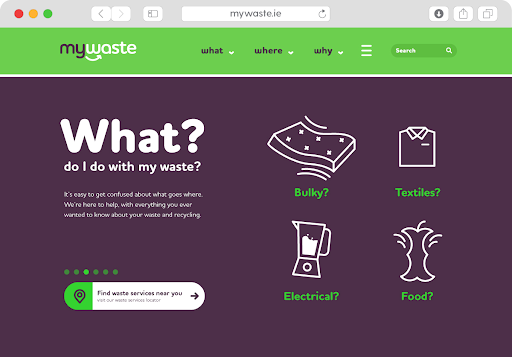
The MyWaste app is fully built to reduce the workload on waste management tasks through an image-centric interface, taking data entry down to a minimum. Automates: Real-time updates are integrated and the operation is tied together seamlessly. Major functions, such as fleet operations, include waste tracking, automated alerts for compliance notifications, route optimization, collection scheduling, and electronic documentation generation.
3. Waste Management PayAsUGO

This flexible app allows control over personal waste management accounts based on individual preferences. Services can be paused, resumed, or customized, with charges occurring only after waste is collected. This pay-as-you-go model provides efficiency and convenience in managing waste collection.
If you are thinking about how to build a similar app like these, then ScalaCode can help you out.
Partner with ScalaCode for Waste Management Software

This is an expanding industry segment that will always continue to expand owing to a lot of biological issues and regulatory requirements as well. When you are planning to create the number one waste management application in the world, ScalaCode is your best partner. It is a trusted app development company providing top-notch AI software development services.
The team consists of highly skilled developers and engineers specialized in developing highly scalable, feature-rich software solutions that understand all your business needs, consulting and strategy development, and prototyping to next-gen technology integration.
Bring brilliance to your dream and make it a really super-successful application with ScalaCode to transform the waste management paradigm into a cleaner, greener one for all of us.
Final Thoughts
Waste management apps are changing the way waste is disposed of and recycled by smart, tech-savvy applications. Such applications offer IoT, real-time tracking, and optimized routing for cost-effective use so that businesses and municipalities can easily manage waste while spending less money.
With these custom software development features, organizations involved in waste management would reap operational benefits while also securing long-term environmental benefits as they pave the way for a cleaner and greener future.
If you want to get a similar app, hire a custom software development company like ScalaCode that offers cutting-edge services. Contact us today to get your next app.
FAQs
1. How long does it take to develop a waste management app?
It usually depends on the complexity of the app. An App that is simple enough can be developed within 2-4 months, while an extremely supplemented app can last from 9 months to more.
2. How can I make my waste management application profitable?
Subscription packages, pay-per-usage services, advertisements, data monetization, and enterprise solutions for municipalities or businesses are some of the revenue streams through which waste management applications will most likely make revenue.
3. Why would I want to invest in waste management application development?
Proper building of a waste management application can sometimes save businesses a lot of costs, improve operational efficiency, keep businesses compliant with environmental laws, and go a long way to achieving sustainability goals.
4. Are waste management applications compatible with the Internet of Things devices?
Yes, they will attach IoT sensors to monitor the bin capacity, track real-time data, and optimize the collection schedule.