ScalaCode builds and deploys production predictive analytics systems, demand forecasting, churn prediction, predictive maintenance, fraud-risk scoring, and decision-support models, for enterprises across 45+ countries. With 13+ years of ML engineering experience, our teams move predictive analytics from descriptive dashboards to operational decisioning, with the eval harnesses, drift monitoring, and retraining pipelines that keep predictions reliable in production.
Whether you need to forecast demand with 95%+ accuracy across multi-region retail, build predictive maintenance on warehouse equipment using IoT sensors and Python + scikit-learn, optimize fleet routes for 10,000+ vehicles in real time, or score loan-default risk on a regulated BFSI portfolio, our predictive analytics engineers architect solutions that move the metrics that matter, forecast accuracy, decision velocity, cost avoided.













The same modeling stack solves very different business problems. Mapping your problem to the right pattern is the highest-use early decision.
SKU-level demand prediction across regions, channels, and seasons. Inputs span historical sales, weather, promotions, macroeconomics, and exogenous signals. Production engagements typically deliver 90-98% accuracy on stable SKUs and confidence-bounded forecasts on long-tail items. We’ve built demand forecasts that drive automated replenishment, capacity planning, and dynamic pricing.
Score every customer’s churn risk on a continuous scale, with the leading indicators that explain why. We integrate behavioral signals (usage frequency, feature adoption, support contacts), commercial signals (contract maturity, payment patterns), and engagement signals (NPS, email opens) into a single model that triggers retention workflows automatically.
For equipment-heavy operations, manufacturing lines, logistics fleets, warehouse robotics, energy grids, we build models that predict failure before it happens. Inputs come from IoT sensors (vibration, temperature, pressure, acoustic) plus historical maintenance records. Outputs feed CMMS systems with prioritized work orders. We delivered exactly this pattern for a warehouse logistics client using Python + scikit-learn + IoT sensors + Vue.js dashboard.
Real-time transaction scoring at sub-50ms latency for payments, loans, claims, and accounts. Adaptive models retrain weekly on new fraud patterns. Confidence routing means high-risk transactions go to human review with full reasoning. See our dedicated AI Fraud Detection Solutions page for that lane.
Predictive systems that combine real-time traffic, weather, and historical data to optimize fleet routes at scale. We built exactly this for a fleet logistics client, Python + TensorFlow with predictive delivery time models and Vue.js dashboards, scaled to 10,000+ vehicles.
Predict which leads will convert, which campaigns will lift revenue, which customers will respond to which message. We integrate this with martech stacks (HubSpot, Salesforce Marketing Cloud, Marketo) so predictions actually drive next-best-action workflows.
Patient deterioration risk scoring, readmission prediction, length-of-stay forecasts, and resource utilization models. These are typically deployed inside hospital perimeters with strict compliance, see our healthcare software development work for the broader vertical context.
Cash flow prediction, revenue forecasting, scenario modeling for FP&A teams. Particularly valuable when the forecast feeds downstream commitments (capacity, hiring, capex) where being wrong has real cost.
clients served
country delivery footprint
AI models deployed to production
client retention rate
years in business

Your data scientists do the modeling; we provide the production architecture, MLOps pipelines, eval-use design, and integration engineering. This is the most common arrangement when the in-house team is strong on modeling but needs help operationalizing.

We own the full lifecycle from problem framing to production. Common when the use case is outside the in-house team’s domain expertise (e.g. computer vision when the team is supply-chain focused).

One or more of our engineers join your team for 6-12 months. We’ve found this works best for clients building permanent ML capabilities, knowledge transfer is built into the engagement structure.

Need a specific skill (drift monitoring setup, feature store implementation, calibration audit) on a defined scope? Fractional engagements from 4 weeks. Our AI engineering talent page covers this in detail.
Predictive analytics buyers come from very different parts of the org with very different success criteria. Understanding which one you are determines almost everything about engagement structure.

Cares about cycle time, throughput, asset utilization, and unplanned downtime. Wants predictions integrated with operational systems (ERP, MES, WMS, CMMS). Success metric: hours of downtime avoided or units of inventory carrying cost reduced.

Cares about forecast accuracy, scenario planning, capex/opex efficiency, and risk-adjusted returns. Wants explainable models and audit trails. Success metric: forecast variance reduction or working capital efficiency.

Cares about churn, lifetime value, conversion, and engagement. Wants predictions plugged into martech and CX systems with clear next-best-action triggers. Success metric: retention rate, conversion lift, or customer lifetime value increase.

Cares about loss prevention, regulatory adherence, false-positive rates, and decision auditability. Wants real-time scoring with human-in-the-loop review and full model lineage. Success metric: loss rate reduction or false-positive reduction.
We get called in to fix predictive analytics programs roughly as often as we get called to build them from scratch. The recurring failure patterns:

The model predicts churn at 30 days but the retention team can only act at 7 days. Or the model predicts demand at category level but the planning system needs SKU-level. Targets must align with the action they enable. Discovery should catch this.

The model looks great in backtest because the eval use leaks future information into training. Common offenders: features that incorporate look-ahead bias, holdout periods that don’t account for seasonality, evaluation metrics that don’t match production cost structures.

The model launched in March is dramatically less accurate by October. Nobody noticed because nobody set up drift monitoring. The accuracy degrades quietly, the business metric degrades quietly, the project gets quietly canceled 18 months later. Drift monitoring is non-negotiable from day one of production.

The model exists. The score gets generated. Nobody acts on it because it’s in a dashboard nobody opens, or it’s pushed to a system nobody trusts, or there’s no clear workflow for what to do with a high-risk score. Operationalization is 40% of the work and gets 10% of the budget.

The team spent 6 months building a modern transformer when a gradient-boosted baseline would have hit 95% of the accuracy with 5% of the maintenance burden. Always start with the simplest credible baseline.

Models output probabilities but those probabilities aren’t calibrated, a “90% confidence” prediction is actually right 60% of the time. Without calibration, downstream decision rules don’t work. Calibration is cheap and underused.
Most predictive analytics engagements that fail did so before any modeling code was written. They modeled the wrong target, used the wrong success metric, or never figured out who would act on the prediction. Our engagement model front-loads those decisions.
Before any model is built, we run a structured discovery: what decision will the prediction drive, who will receive it, what’s the cost of being wrong (false positive vs false negative), what data is available, and what’s the realistic accuracy ceiling. This phase typically ends with a go/no-go on the use case and a target accuracy that’s tied to a business outcome, not a number picked from a paper.
We start with the simplest credible baseline (often gradient boosting or regularized regression) to establish a performance floor. In parallel, we build an evaluation use with golden test cases, holdout periods, and per-segment metrics. The eval use is non-negotiable, it’s what catches drift later, and what makes model upgrades safe.
Iterate on architecture (ensembles, deep models, sequence models, hybrid systems) until the eval use shows we’ve cleared the business-outcome threshold. We resist the urge to over-engineer, the model that’s 0.3% more accurate but 10x harder to maintain rarely justifies itself in production.
The hard part. The model gets wired into the system that consumes the prediction (CRM, ERP, WMS, CMMS, marketing platform). Inference infrastructure spins up with the right latency profile. Drift monitoring goes live. Retraining pipelines are scheduled. Confidence routing for low-certainty predictions is configured. Stakeholder dashboards surface the prediction quality, not just the predictions themselves.
Most enterprises need this and underestimate it. Production models drift. Data distributions shift. New patterns emerge. We run steady-state engagements that include automated retraining, eval-use extension as new edge cases appear, and quarterly model reviews with stakeholders. The most expensive ML mistake is launching a model and walking away.
Three reasons we hear consistently from enterprises after engagement.

Our predictive analytics teams are full-stack, modeling, infrastructure, integration, monitoring. Models we build land inside the systems that consume them, not as standalone notebooks that someone has to remember to run.
Drift monitoring, eval harnesses, retraining pipelines, calibration audits, model cards. These don’t get celebrated in conference talks but they’re what keeps production predictions trustworthy 18 months in.
Gradient boosting beats deep learning on most tabular problems. We resist the architectural status games that drive 70% of industry’s overengineering and walk you through the decision in plain language.
And we sit one layer below, when the predictive analytics work needs to be wired into broader AI capability (LLMs grounding decisions, agents acting on predictions, automation flows triggered by scores), our AI/ML engineering, agent development, integration, and automation teams plug in seamlessly.
The same techniques produce very different results depending on whether you understand the operational context. Below are the verticals where we've shipped multiple predictive analytics engagements and the patterns we've seen.

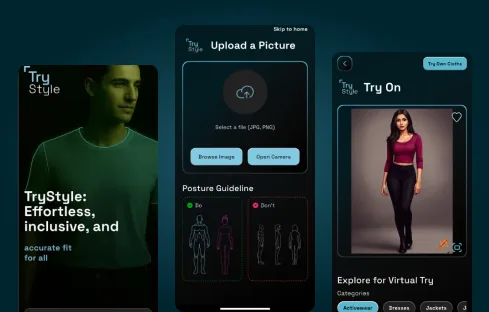
Demand forecasting at SKU × store × week granularity. Markdown optimization. Customer lifetime value scoring. Returns prediction (we built AI virtual try-on for TryStyle partly to attack the apparel-returns problem). Personalized recommendations linked to recommendation engine work.

Route optimization (10,000+ vehicle scale on the Fleet AI build), predictive maintenance on warehouse equipment (Predictive Maintenance case), inventory prediction, demand-supply matching, and ETA prediction with traffic/weather feeds.

Credit scoring, fraud risk, AML pattern detection, collections optimization. We built a portfolio management platform for Quantflo that handles complex financial data processing under stringent security requirements.

Patient deterioration scoring, readmission risk, capacity planning, care-pathway prediction. Plus operational analytics like supply prediction (we shipped SHG Group's hospital materials management on Android).

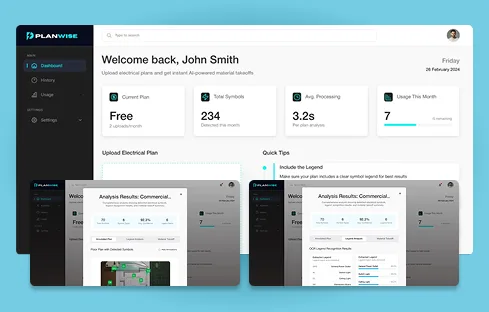
Material estimation (the Planwise AI Electrical Takeoff build uses computer vision but the same predictive lens applies), project cost prediction, equipment downtime prediction, schedule risk modeling.

Reputation prediction (the AI Reputation Management for Tour Operators uses sentiment + predictive trend modeling), occupancy forecasting, dynamic pricing, churn prediction across booking platforms.
We get called in to fix predictive analytics programs roughly as often as we get called to build them from scratch. The recurring failure patterns:
The model predicts churn at 30 days but the retention team can only act at 7 days. Or the model predicts demand at category level but the planning system needs SKU-level. Targets must align with the action they enable. Discovery should catch this.
The model looks great in backtest because the eval use leaks future information into training. Common offenders: features that incorporate look-ahead bias, holdout periods that don't account for seasonality, evaluation metrics that don't match production cost structures.
The model launched in March is dramatically less accurate by October. Nobody noticed because nobody set up drift monitoring. The accuracy degrades quietly, the business metric degrades quietly, the project gets quietly canceled 18 months later. Drift monitoring is non-negotiable from day one of production.
The model exists. The score gets generated. Nobody acts on it because it's in a dashboard nobody opens, or it's pushed to a system nobody trusts, or there's no clear workflow for what to do with a high-risk score. Operationalization is 40% of the work and gets 10% of the budget.
The team spent 6 months building a modern transformer when a gradient-boosted baseline would have hit 95% of the accuracy with 5% of the maintenance burden. Always start with the simplest credible baseline.
Models output probabilities but those probabilities aren't calibrated, a "90% confidence" prediction is actually right 60% of the time. Without calibration, downstream decision rules don't work. Calibration is cheap and underused.


We pick stack per use case rather than standardizing on one toolchain, but the choices below cover the vast majority of our 2026 engagements.
Predictive analytics is a use case lens, a category of business outcome (forecasting, scoring, prediction). AI/ML development is the engineering capability lens, building, training, and deploying models. Most predictive analytics work uses AI/ML techniques, but not all AI/ML work is predictive (some is generative, some is classificatory, some is conversational). On engagement structure: predictive analytics work usually leads with a business stakeholder (CFO, COO, CRO) and a defined business outcome. AI/ML development engagements usually lead with an engineering or AI team building broader capability. We do both, often together.
Depends entirely on the problem. Stable demand for fast-moving consumer goods can land 95-98% accuracy at SKU level. Long-tail items might be 70-80%. Customer churn prediction typically lands 75-90% AUC depending on data quality. Fraud detection typically lands 0.5-2% false-positive rates at acceptable detection rates. Predictive maintenance can hit 85-95% precision on equipment with rich sensor data. The right question isn’t “how accurate” but “what accuracy moves the business decision”, sometimes 70% is enough; sometimes 99% is still not enough. We anchor accuracy targets to business outcomes during discovery.
Less than most people think for many problems, more for some. Tabular problems with strong signal can produce useful models on a few thousand examples. Deep learning typically needs 10,000+ examples per class minimum. Time-series forecasting needs at least 2-3 full seasonal cycles of history. Image and video models often start at 1,000+ labeled examples per class but transfer learning reduces that significantly. The bigger constraint is usually data quality and feature richness, not raw volume. A small clean dataset with the right features beats a huge messy one almost every time.
Build in-house when predictive analytics is core to your competitive edge and you’ll need ongoing model evolution (e.g., a fintech with proprietary risk models, a marketplace with ranking models, a manufacturer with continuous predictive maintenance optimization). Work with a partner when you need to ship a specific use case fast, when the problem is outside your team’s expertise, or when you want to build capability over 12-18 months while the partner runs delivery. The hybrid model, partner-led delivery with in-house team alongside for knowledge transfer, is what most of our clients land on.
A focused single-use-case engagement reaches production in 12-18 weeks: 2-4 weeks discovery and feasibility, 4-8 weeks model build and eval use, 4-6 weeks operationalization. Multi-use-case programs run 4-9 months. Steady-state operation (retraining, monitoring, continuous improvement) is ongoing. The single most common reason engagements run long is data, extracting, cleaning, and integrating data takes longer than modeling on every engagement we’ve ever shipped.
Discovery and feasibility sprints: $25k-$60k over 2-4 weeks. Single-use-case production engagements: $80k-$220k over 8-14 weeks. Multi-use-case programs: $300k-$1.2M+ over 4-9 months. Steady-state operations: $8k-$25k/month per production model for retraining, monitoring, and reviews. Cloud infrastructure costs vary widely by inference volume, a real-time fraud-scoring model handling millions of transactions/day costs orders of magnitude more than a quarterly batch forecast. We size cloud cost in discovery so it doesn’t surprise anyone at deployment.
Yes. For data-sovereignty, regulated, or air-gapped deployments we run on AWS GovCloud, Azure Government, India MeitY-empanelled regions, or fully on-premises on customer-owned hardware. The modeling stack (Python, scikit-learn, XGBoost, PyTorch) runs anywhere. Serving infrastructure (FastAPI, NVIDIA Triton) runs anywhere. The only real constraint is GPU availability for deep models, large transformer-based predictions may need on-prem GPU clusters which we’ll size during discovery. We’ve shipped predictive analytics to financial regulators, hospital networks, and government clients under all these constraints.
Operationalization design, built into discovery, not bolted on at the end. Every engagement starts with: who’s the human or system that receives the prediction, what action do they take, what’s the workflow trigger, what’s the escalation path for low-confidence predictions, what’s the feedback loop that captures whether the prediction was right? Models pushed into systems with no clear action workflow get ignored within months. The single biggest predictor of long-term model usage is whether the prediction is wired into a system the receiver already uses every day, not surfaced in a new dashboard they have to learn.
Drift monitoring goes live with the model, we measure feature distribution drift, prediction distribution drift, and outcome accuracy as data flows in. Alert thresholds trigger automated retraining or human review depending on severity. Most production models we ship retrain weekly to monthly automatically with the latest data; some retrain on every meaningful drift signal. For high-stakes models, retrains require human approval before production cutover. Quarterly model reviews with stakeholders cover broader pattern shifts that automated drift detection might miss, competitor changes, regulation changes, business model shifts.
Yes, and we build explainability in from day one for regulated use cases. SHAP and LIME for tree-based models, integrated gradients and attention attribution for deep models, surrogate model approaches when needed. Every production model ships with a model card documenting training data, performance, limitations, and approval chain. Full lineage tracking covers data, code, and parameters per prediction. For BFSI we map to SR 11-7 model risk management. For healthcare, HIPAA + emerging FDA AI/ML clinical-decision-support guidance. For EU clients, EU AI Act high-risk-system controls apply where use case qualifies. Explainability isn’t an afterthought, it’s part of the architecture.



They delivered on time and even offered ideas I hadn’t considered. Their proactive input and execution exceeded my expectations.




Recognized by Industry Leaders & Valued by Global Clients