ScalaCode places vetted OpenAI specialists, GPT-5 engineers, Whisper voice integrators, Assistants API architects, function-calling experts, fine-tuning specialists, and prompt strategists, on enterprise teams across 45+ countries. With 13+ years of production AI deployment, our developers come pre-tested on real OpenAI engagements: custom scoring engines on GPT, multi-tenant Assistants API rollouts, voice screening systems on Whisper, and cost-engineered RAG pipelines that survive enterprise procurement.
Whether you need a senior GPT engineer to build a custom scoring engine, a Whisper specialist to ship a voice screening MVP, an Assistants API architect for a multi-tenant rollout, or a fine-tuning lead to optimize for your domain, our talent partners place pre-vetted OpenAI engineers who clear an engineering challenge before they join, moving the metrics that matter, ramp-up time, model accuracy, cost per request.













Our OpenAI developers bring production-grade fluency across the full API surface.
Application development on GPT-5, GPT-4.1, and GPT-4o, prompt engineering, structured outputs (JSON mode, Pydantic schemas), vision inputs, streaming responses, tool use, and cost-aware routing. Deep knowledge of model selection trade-offs: when GPT-5 beats GPT-4.1 on quality per dollar, and when it doesn’t.
Application of o-series reasoning models (o1, o3, o4-mini) to multi-step problem solving, math/code/scientific reasoning, and agentic planning. Prompt patterns optimized for reasoning models (brief, minimal scaffolding) vs. chat models, materially different design approaches.
Production deployments of the Assistants API for stateful agent workflows, threads, runs, tool calling, file search, and code interpreter. Integration with custom databases, webhooks, and external APIs. Pairs naturally with AI agent development engagements.
Structured tool definitions with JSON Schema, parallel function calls, strict-mode tools, and reliable error handling. Our engineers design tool schemas that minimize hallucination, maximize reliability, and support graceful fallback.
MCP-compliant server development, agent-to-tool integration, and cross-provider interoperability. We build MCP servers that expose internal enterprise tools (Salesforce, SAP, custom APIs) for LLM consumption across OpenAI, Anthropic, and Google models, avoiding vendor lock-in.
Pydantic / Zod / JSON Schema-driven response shapes that guarantee parseability. Eliminates the “try to parse JSON from a free-text response” anti-pattern that plagues first-generation LLM applications.
Image inputs, document understanding, chart analysis, UI screenshot reasoning, and visual QA. Integration with OpenAI Vision + open-source vision models for hybrid cost optimization.
text-embedding-3-large / 3-small selection, semantic search architectures, RAG design patterns, reranking, and metadata filtering. See our RAG development services for the retrieval-side depth.
Supervised fine-tuning (SFT), DPO (Direct Preference Optimization), RFT (Reinforcement Fine-Tuning) on reasoning tasks, and dataset curation. Our engineers know when fine-tuning beats prompting and when it doesn’t, a key cost/quality decision.
Low-latency voice interfaces using OpenAI Realtime API, streaming speech-to-speech, function calling in voice sessions, and barge-in handling. Critical for voice-first apps, contact-center copilots, and accessibility use cases.
OpenAI Evals framework, custom evaluation harnesses, LangSmith / LangFuse / Helicone / Arize Phoenix observability, and production cost optimization (prompt caching, model routing, distillation, batching).
clients served
country delivery footprint
AI models deployed to production
client retention rate
years in business

Full-stack ownership of OpenAI-powered features. Typical background: 5+ years software engineering, 2+ years production API experience, shipped at least 2 OpenAI-stack applications at enterprise scale.

Specialization in wiring OpenAI capabilities into enterprise systems, CRMs, ERPs, ticketing platforms, custom APIs. Deep expertise in function calling, webhook architectures, event-driven patterns, and MCP.

Specialization in prompt architecture, structured outputs, evaluation design, and prompt versioning. Common pairing with Application Engineers on teams shipping customer-facing AI features.

Specialization in Assistants API, multi-agent orchestration, CrewAI / LangGraph / AutoGen, tool-use design, and agent reliability patterns. Most effective on engagements building autonomous workflows.

SFT, DPO, RFT fine-tuning, dataset curation, eval design, and quality-vs-cost optimization. Typically paired with Application Engineers on engagements where prompting has hit a ceiling.

Leads complex engagements that span application, integration, agent orchestration, fine-tuning, and operations. Usually 8+ years engineering, 3+ years production OpenAI work, and a track record of shipping at enterprise scale.

Observability, cost optimization, SLO design, traffic routing, fallback architectures, and production operations. Especially relevant for high-volume consumer apps or mission-critical enterprise workloads.
Every engineer on our roster passes a 3-stage technical vetting process specifically designed for the OpenAI stack, not generic software interviews.
Candidates design a production OpenAI system under realistic constraints, volume, latency, cost budget, compliance requirements. We probe trade-offs: GPT-5 vs. GPT-4.1 vs. Claude, Assistants API vs. Chat Completions, fine-tuning vs. prompting, caching strategies, and fallback design.
Candidates implement a real production problem, an agentic workflow, a RAG system, a fine-tuning pipeline, or a cost-optimization challenge. We evaluate code quality, API usage correctness, evaluation design, and pragmatic trade-offs.
Candidates are given an existing OpenAI workload and asked to reduce inference cost 50% without quality regression. This separates engineers who understand the OpenAI stack economically from those who only understand it technically.
Production OpenAI experience is verified through references and work-sample review. We don’t place engineers whose only OpenAI exposure is tutorials, we place engineers who have shipped against real traffic.
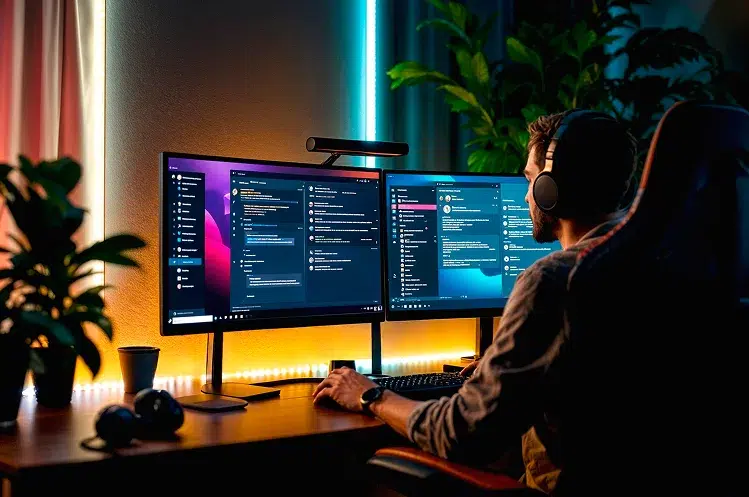
Every engineer on our roster has shipped OpenAI-powered features to real users at real scale, not tutorials, not demo apps, not Jupyter notebooks. Production experience is the non-negotiable baseline.
Our OpenAI developers are full-stack software engineers first, AI specialists second. They can own an AI feature end-to-end, UI, backend, prompt layer, integrations, observability, cost, without requiring handoffs to a separate “AI team”.
OpenAI workloads fail in production most often on cost, not quality. Our engineers are trained to optimize ruthlessly, prompt caching, model routing, response caching, distillation, batching, and typically reduce inference costs 40-70% between the first and sixth month of a workload’s life.
We’re fluent in OpenAI AND in Claude, Gemini, Llama, Mistral. That’s a strength, not a distraction: engineers who know when OpenAI is the right choice and when it isn’t make better architecture decisions than single-vendor specialists.
Unlike generic staffing agencies, our vetting is public and specific, systems design, live engineering, and cost-optimization exercises. You see the vetting artifacts during CV review, not after the engagement goes sideways.
Hourly, part-time, full-time, project-based, BOT, or managed operations. We match engagement structure to your actual need, not force a one-size-fits-all contract.
We staff engineers with healthcare, legal, financial, e-commerce, enterprise SaaS, or industrial-domain experience, not generic AI engineers. Domain fluency shortens onboarding and reduces architecture mistakes.

Chat assistants, content generation, smart search, personalized recommendations, and copilot experiences inside consumer and B2B apps.

Autonomous research agents, sourcing agents, compliance agents, support triage agents, and onboarding copilots built on Assistants API + MCP + function calling.

Contract analysis, claims processing, form understanding, invoice extraction, and long-document reasoning using GPT-5, Vision, and structured outputs.

Real-time voice copilots for agents, voice-native consumer apps, and IVR systems built on Realtime API and tool use.

Copilots embedded in enterprise tooling (CRM, HR, ERP, data warehouses) that answer questions with citations, draft work products, and automate repetitive tasks.

Custom OpenAI model fine-tunes for domain vocabulary, tone, compliance constraints, or structured-output reliability, deployed via standard OpenAI APIs for seamless integration.

Audit and optimize existing OpenAI workloads, typical outcome 40-70% cost reduction through prompt caching, model routing, response caching, distillation, and batching. See our AI & ML development services for the broader MLOps context.

Retrieval-augmented generation built on OpenAI embeddings + generation models, with reranking and evaluation harnesses. See dedicated RAG development services.
Dedicated OpenAI developers embedded with your team full-time for 3+ months. Ideal for teams with roadmaps that need sustained capacity. Standard rates vary by seniority and specialty, typically 30-50% below US on-site equivalents.
Senior OpenAI architects or specialists engaged 10-30 hours per week. Ideal for teams that need deep expertise periodically, design reviews, critical integrations, fine-tuning engagements, without the cost of full-time hire.
Fixed-scope engagement on a defined deliverable, an agentic workflow, a RAG system, a fine-tuning run, a cost-optimization audit. Typically 4-12 weeks with scoped milestones.
Senior OpenAI architects available for short-term consulting, architecture reviews, incident response, evaluation design, or targeted problem-solving. Available for as little as 10 hours.
We staff, train, and operate your OpenAI team for 6-12 months, then transfer the team to direct employment with your org. Ideal for organizations building durable in-house capability.
End-to-end operations of your OpenAI workloads, model updates, prompt refreshes, evaluation monitoring, cost optimization, incident response. SLA-backed.


Embedded 2 OpenAI application engineers for 6 months to build agentic compliance copilot. Shipped to 40+ enterprise customers, $2.8M ARR added in first year.

Fractional senior architect (15 hrs/week) led claims-processing RAG system. Processing time -44%, accuracy +12 points.

Project-based engagement (10 weeks) to build visual shopping copilot using GPT-5 Vision + Assistants API. CVR +29%, return rate -18%.

Cost-optimization audit reduced OpenAI inference spend 62% across 3 features without quality regression. Savings reinvested in expanded feature surface.

Embedded clinical-AI engineer ran 18-month engagement on clinician copilot. Documentation time -52%, clinician satisfaction +3.1 NPS.

BOT engagement staffed, trained, and transferred a 4-person OpenAI team over 9 months. Client now owns durable in-house capability.
OpenAI developers specialize in the OpenAI stack, GPT-5, o-series, Assistants API, function calling, structured outputs, Realtime, Vision, fine-tuning, embeddings, and MCP. That specialization matters because the OpenAI API surface changes rapidly, has non-obvious production pitfalls (rate limits, structured-output gotchas, Assistants API statefulness), and has distinct cost-optimization techniques. A generic AI developer who has read the OpenAI docs is not the same as an engineer who has shipped production workloads on it.
We staff five levels: Mid-Level Application Engineer (3-5 years experience, 1-2 years OpenAI production), Senior Application Engineer (5-8 years, 2+ years OpenAI), Specialist (Prompt / Fine-Tuning / Agents / Integration), Senior Architect (8+ years, 3+ years OpenAI, systems leadership), and Principal Architect (10+ years with track record at enterprise scale). Rates scale with seniority and specialty and typically sit 30-50% below US on-site equivalents. Custom domain experience (healthcare, legal, fintech) carries a modest premium.
Typical timeline: 3-10 business days from CV request to engineer starting. We share 3-5 pre-vetted CVs within 2-3 days of intake, run technical screens with your team (30-60 minutes each) within 5 days, and confirm start date within 10 days. Urgent placements (senior architects for incident response or critical integrations) can land in 24-72 hours if CVs match on first pass.
Both, and frequently both simultaneously in hybrid deployments. Every engineer on our roster is fluent in direct OpenAI API and Azure OpenAI Service (including deployment constraints, regional availability, content filter policies, and cost differences). Many engagements combine both, direct API for long-tail workloads and Azure OpenAI for compliance-critical enterprise paths.
Yes. Every engineer on our roster has production experience across multiple providers, OpenAI, Anthropic, Google, Llama, Mistral, Qwen. Vendor-neutrality is a core competency. Many modern architectures use multiple providers by design: OpenAI for reasoning, Claude for long-context analysis, open-source for cost-sensitive high-volume workloads. Our engineers design for this reality.
Yes. Standard engagement terms include a mutual NDA before CV sharing, work-product IP transfer to your organization, background-check documentation, and compliance with your security requirements (SOC 2, ISO 27001, HIPAA as applicable). For regulated-industry clients we have standard templates for data processing agreements, subprocessor lists, and security questionnaires.
Yes. Fractional engagements from 10 hours/week to 30 hours/week are common and often the most cost-effective way to access senior architects or specialists. Fractional engagements work best for architecture reviews, critical integrations, fine-tuning engagements, or periodic expertise needs, rather than sustained full-time build-out. Hourly consulting (minimum 10 hours) is also available for short-term needs.
Senior architects and specialists can work fully independently, designing architectures, making implementation decisions, and delivering outcomes with minimal supervision. Mid-level application engineers work well with lightweight oversight (daily stand-ups, code review, weekly architecture sync). We match seniority to supervision tolerance during intake so expectations are set correctly.
Our engineers cover US business hours (Pacific through Eastern), European business hours, and APAC overlap. Dedicated teams can work in your timezone fully or on overlap hours depending on your preference. For US clients, our standard overlap is 4-6 hours of US business time per day, with engineers typically available 9am-3pm Pacific.
We support conversion via our Build-Operate-Transfer model and direct-to-hire arrangements. Conversion fees depend on contract tenure and are typically waived after 6 months of successful engagement. We believe the right outcome for high-performing engagements is often direct employment, and our contract terms are designed to support that transition rather than block it.


ScalaCode has been consistently available, day or night. Their hands-on support throughout the journey made them a true partner.




Recognized by Industry Leaders & Valued by Global Clients