


Let’s face it- with huge hype in ecommerce and other sectors, logistics doesn’t just remain limited to moving goods anymore. It has become more about moving data, decisions, and customer satisfaction in real time. Ans numbers are proving it clearly.
According to the reports, the global logistics software market is expected to hit $23.89 billion by 2032, growing steadily at a CAGR of 8%.
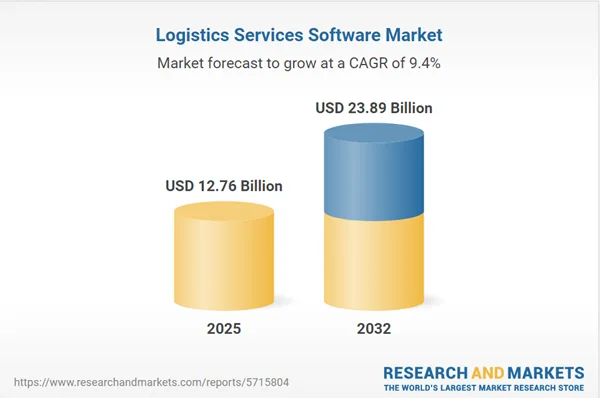
The logistics and supply chain management organizations often need to deal with multiple cargo fleets. Apart, the logistics network runs like clockwork. Optimizing routes, tracking inventory status, to monitoring customer deliveries in real time. Of course, there are enormous challenges in between. This is where custom logistics software development services come into the picture.
But Why Logistics Software Development?
Picture this: a shipment that should’ve arrived yesterday is still stuck between dispatch and delivery, your warehouse system doesn’t quite know where that cargo is, and the customer is refreshingly polite but clearly disappointed. Is it sound similar?
That’s where custom logistics software development steps in. By integrating advanced technologies like AI, IoT, cloud computing, and predictive analytics, logistics apps empower businesses to automate operations, track every cargo in real-time, and make data-driven decisions from a single, centralized platform.
Whether it’s fleet management, route optimization, warehouse tracking, or last-mile delivery, logistics and transportation software development services can ensure that your entire chain stays connected, visible and efficient.
In this blog, here we have covered everything from the technologies, must-have features to cost breakdowns and best practices. At the end, this blog guide can help you make an informed decision about how investing in a logistics software solution can help you expand your business and manage deliveries.
What is Logistics Software Development?
Logistics software development refer to the process of building digital solutions that help you manage and operate supply chain automatically. From order management to fleet tracking to control inventories at multi-location warehouses, everything becomes simple and visible through a single and central platform.
Logistics software acts as the central system for logistics and transportation businesses. Managers can access real-time visibility, predictive insights, and operational automation through this software. But how can it benefit you:
- It enables you to move goods faster
- Ensuring a smarter way of managing multiple deliveries
- No hassle of manual tracking and manual errors
- Increasing supply chain efficiency from point A to point B.
With the rise of eCommerce and global supply chains, businesses now rely on custom logistics software development to eliminate inefficiencies, cut operational costs, and gain total control over their supply networks.
At ScalaCode, we specialize in building custom logistics software development solutions, designed to bridge the gap between your goals and challenges.
Whether you need a cloud-based Transportation Management System (TMS) or a full-scale logistics and supply chain platform, we enable you to hire a dedicated software development team to build scalable and performance-driven solutions.
We combine innovation and technology to simplify complex logistics processes, reduce manual workloads, and ensure every delivery hits the mark.
Benefits of Logistics Management Software Development?
The logistics landscape has evolved at an unprecedented rate. With eCommerce booming and expanding trading, the demand for logistics has been rapidly increasing, but at the same time, it is becoming increasingly complex.

Logistics and supply chain management companies handle multi-layered supply chains, diverse fleets, and real-time customer demands. Handling all this manually is a real challenge.
That’s where businesses are investing in logistics software development services. These solutions can help automate operations, optimizing routes and modernizing the entire logistics workflow from end to end.
According to Allied Market Research, the global logistics automation market was valued at $52.7 billion in 2022 and is expected to reach $133 billion by 2032, growing at a CAGR of 9.7%. Meanwhile, businesses adopting digital logistics solutions witness a 20-30% reduction in cost and experience 25% faster deliveries.
Apart, here’s why businesses are investing in logistics software development:
1. Increasing Transparency Across Operations
Modern logistics isn’t just about moving goods from A to B. It’s more about getting visibility of cargoes. With custom logistics software, managers would know exactly where their assets are at all times.
A custom logistics software solution offers real-time visibility into your entire supply chain. Right from tracking vehicle locations and shipment statuses to keeping monitoring the warehouse inventory levels, everything is just one click away at the centralized dashboard.
Businesses looking to bring transparency are hiring software developers in India to customize a solution that helps them respond instantly to delays. It helps reroute shipments and communicate accurate ETAs to customers and achieve the utmost customer satisfaction.
2. Automating Manual Operations
Logistics and supply chain enterprises often manage multi-layer shipments, and if you are managing all these operations manually, then you might be lacking efficiency.
Manually handling data entry, scheduling, and route planning not only increases the risk of human errors but also wastes valuable time.
With logistics and transportation software development, businesses can automate repetitive processes like shipment assignment, route optimization, invoice generation, and proof-of-delivery updates.
Automation can cut administrative costs and ensure smoother day-to-day operations. Automation also frees up your workforce to focus on strategy and performance improvement.
3. Reducing Operational Cost
Automating the logistics operations can bring various cost benefits. Businesses using custom logistics software development services often save up to 20% on transportation and fuel costs. Wondering how?
With digital solutions, businesses can better optimize routes, improving asset utilization and preventing idle fleet time.
Moreover, predictive analytics can identify potential delays or underperforming routes. This ultimately helps you track cost-draining holes in the entire logistics system and avoid unnecessary expenses. In short, smarter logistics management translates the system into higher margins.
4. Smarter and Data-Driven Decisions
In logistics, every decision counts. One mistake can lead to a major blunder. Whether it’s choosing the best route, forecasting demand, or allocating resources. A logistic app can integrate powerful analytics and AI capabilities that help transform the raw data into actionable insights.
It helps businesses identify performance gaps, forecast shipping delays, optimize delivery schedules, and improve future planning. This is all based on real-time data rather than guesswork.
5. Boost Customer Experience
Achieving customer satisfaction with flawless delivery is one of the most challenging tasks. Businesses trying to achieve the utmost customer experience are considering hiring an offshore logistics software development company. With the help of experts, they can have a platforms that ensure fast, transparent, and reliable deliveries.
With custom software development for logistics, companies can send real-time delivery updates, offer accurate ETAs to their prime customers, and able to handle exceptions proactively.
This practice ultimately eliminates the communication gap, minimizes customer complaints, and enhances satisfaction. This helps in repeat business and stronger brand loyalty.
6. Scalability and Competitive Advantage
As businesses expand, the complexity of logistics also increases. Manual logistic processes always limit your business expansion. A scalable logistics solution ensures your operations grow without friction. Custom-built software can easily adapt to new routes, fleets, regions, and partners.
In the logistics industry, where timing is everything, having a custom logistics software development solution gives companies the agility to outperform competitors and capture more market share.
In a nutshell, these benefits can help streamline the logistics operations, but determining which type of logistics solution you need is a tough decision. So let’s the types of logistics software solutions you can implement for your business.
Types of Logistics and Transportation Software Solutions
Every logistics business has different work patterns and different operations. Some focus on fleet management, others look to control the warehouse or order fulfillment. That’s why there’s no single logistics software that fits all needs. Businesses require custom logistics software development that aligns with different goals.
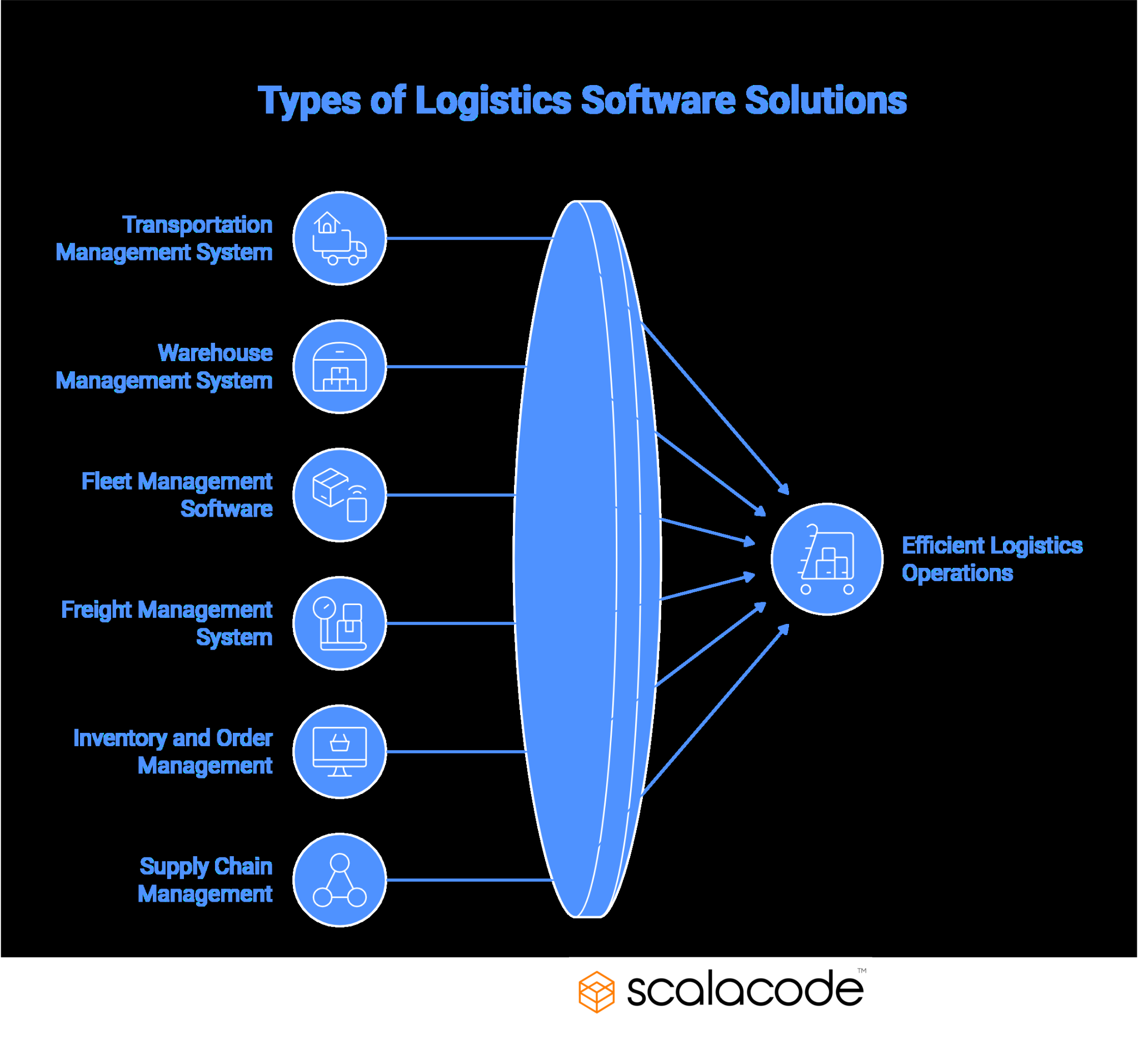
Here are the major types of logistics application software businesses would rely on to streamline logistics:
1. Transportation Management System (TMS)
It is a major part of logistics that requires proper planning, execution, and optimization of the physical movement of goods. The transport management system enables you to handle it with ease and simplify the process.
Here are the key benefits of implementing TMS:
- Automates route planning and allows efficient vehicle scheduling.
- Enables you to access the real-time location of shipments.
- Reduce fuel costs and delivery delays with route optimization.
- Improves driver productivity and fleet utilization.
Today, eCommerce companies are setting the biggest example of using TMS. It ensures on-time delivery of the product while managing the shipping cost.
2. Warehouse Management System (WMS)
Whether you are managing a single warehouse or a multi-location warehouse, WMS is a centralized platform that provides complete control over what’s coming in and going out of the warehouse. Just by accessing a single platform, you can completely control the warehouse operations. Right from receiving and storing goods to picking, packing, and shipping goods, you can track everything.
Key Benefits:
- Allow you to access real-time inventory status and optimize the stock.
- Automated stock replenishment and order fulfillment.
- Minimizes human errors in picking and dispatch.
- Improves warehouse space utilization and efficiency.
With custom logistics software development, companies can integrate WMS with ERP and order management systems to streamline the entire inventory lifecycle.
3. Fleet Management Software
Enterprises in the transportation industry, working under pressure of managing multiple fleets and keep juggling to track them, should consider integrating a fleet management solution. It is a comprehensive software that focuses on tracking, maintaining and optimizing a company’s transportation. With the integration of this solution, businesses can manage multiple vehicles and deliveries on time.
Here are the key advantages of implementing fleet management software:
- Monitor vehicle locations and driver behavior in real-time.
- Schedule maintenance before any breakdown and eliminate the risk of downtime.
- Tracks fuel consumption, optimizing routes and performance.
- Enhances delivery speed and safety compliance.
Companies that are engaged in the courier services, transportation companies, and logistics providers that manage large-scale distribution can leverage the potential of fleet management software and be able to keep track of every single fleet without any hassle.
Also Read: AI In Fleet Management: Role, Use Cases, and Future Trends
4. Freight Management System (FMS)
Simplify your shipping and freight forwarding process with FMS solutions. A Freight Management System is designed to handle the complexities of shipping and freight forwarding. It automates operations related to carrier selection, load planning, and freight billing.
Key Benefits:
- Allow you to make quick price comparisons of carriers and schedules.
- Streamlines billing, invoicing, and documentation.
- Get clear visibility with shippers, carriers and brokers and streamlined coordination.
- Offers transparency and cost control across the shipping process.
Developing a custom freight management platform allows businesses to manage end-to-end shipping processes and cut down the need to rely on multiple third-party systems. With FMS, get a unified shipping and freight forwarding experience.
5. Inventory and Order Management Software
Inventory management is a major tasks that affect the entire clockwork of logistics and supply chain. To avoid stockouts or overstocking conditions, businesses are rapidly investing in scalable inventory and order management software. This software help you synchronize product data across warehouses, stores and online platforms to meet the market demand without any friction.
Here’s why using inventory and order management software makes sense:
- Enhances collaboration between suppliers and distributors.
- Tracks raw materials, inventory, and finished goods.
- Simplify operational challenges and improve coordination.
- Strengthens end-to-end supply chain visibility.
When integrated with TMS and WMS, this system forms the backbone of a fully connected logistics network.
6. Supply Chain Management (SCM) Software
Are you still relying on different tools to manage procurement, production, and warehouses? It’s time to integrate Supply Chain Management Software into the logistics operations that bring together procurement, production, warehousing, and delivery into one seamless ecosystem. It ensures visibility and efficiency across the entire supply chain.
Key benefits of using SCM software:
- Monitors and updates stock levels in real-time.
- Sending real-time stock alerts while low in inventory.
- Automates order tracking and fulfillment, reducing manual errors.
- Ensures timely restocking and smoother supply flow.
Whether it be manufacturing, retail, or distribution companies, SCM systems are crucial as they enable you to create lean and agile supply chains.
7. Custom Logistics Software Solutions
Ready-to-deploy software doesn’t always fit every business. That’s where custom logistics software development comes in. Different businesses have different challenges and tasks to manage. Companies can design systems that match their unique workflows, integrate it with existing tools, and scale with growth.
Key Benefits:
- Enhances collaboration between suppliers and distributors.
- Tracks raw materials, inventory, and finished goods.
- Simplify operational challenges and improve coordination.
- Strengthens end-to-end supply chain visibility.
At ScalaCode, we offer custom logistics software development services that help businesses build solutions aligned with their specific goals. Whether it be developing a logistics solution from scratch or upgrading the existing one with modern technology trends, ScalaCode can help you customize logistics solution that fits to your business needs.
Step-by-Step Guide to Create Logistics and Transportation Softwares
Developing a powerful logistics solution requires more than just coding. It’s about understanding the business concept, its challenges, and user needs. At ScalaCode, we have a team of developers who follow a well-structured approach, maintaining consistent transparency throughout the process, and aim to drive results.
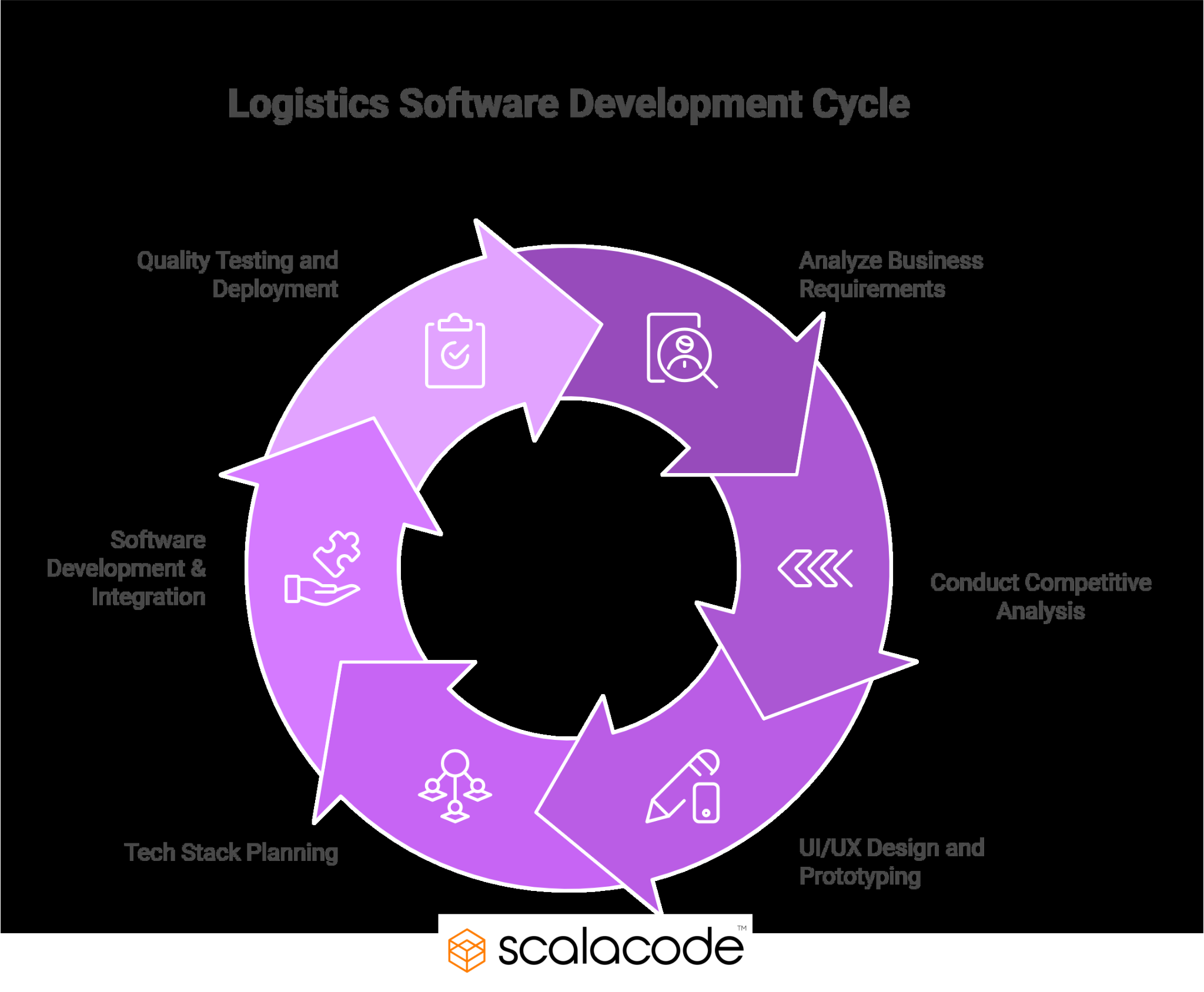
Here is a step-by-step breakdown of how we help businesses in conceptualizing, designing, and developing the custom logistics software solutions:
Step 1: Analyzing Business Requirements
Every successful software project development process begins with understanding the “why.” What are you trying to achieve through this software? This is where our software development team uses a collaborative approach with clients and takes a deep understanding of their business challenges and goals. We identify the performance gaps, design a logistics workflow, and develop a roadmap.
Apart, at this stage of development, we try to get a clear understanding of:
- What type of logistics software do you need? Whether it be TMS, WMS, FMS, or a full-scale SCM solution required at your workplace.
- What are you trying to achieve with this logistics software? Is it about controlling operational cost, improving operational visibility, or wanting to have a scalable solution?
- Who will be your end users- warehouse staff, dispatchers, drivers, or customers?
Getting clear answers to these questions can help you set a strong foundation for the entire software and enable you to understand what technologies, features and trends you need to integrate in the software.
Step 2: Conducting Competitive Analysis
Before jumping straight to the development process, take a deep understanding of what your competitors are doing. This helps you identify their gaps and opportunities.
At this stage, ScalaCode’s team conducts in-depth market analysis to evaluate:
- What emerging industry trends can you incorporate into the software?
- User experience standards in logistics platforms.
- Feature benchmarks across top logistics software providers.
This helps us create a product that not only meets current demands but also stays future-ready.
Step 3: UI/UX Design and Prototyping
Logistics management itself is a complex task. Therefore, developing a logistics management app requires an easy, engaging, and simple navigation. Since design plays a crucial role, our team builds interactive wireframes and prototypes that visualize the platform’s flow, dashboards, and user interactions.
While designing and prototyping the logistics software, we pay attention to:
- Clean and minimal dashboard designs.
- Easy navigation for quick task execution.
- Real-time data visualization for performance tracking.
This step ensures your logistics application software is both user-friendly and functionally efficient.
Step 4: Tech Stack Planning
The choice of technology always matters. To make your logistics software work like a well-oiled machine, these are the preferred technologies for building a scalable infrastructure.
Here are the tech stacks you can leverage for developing logistics software:
- Scalable Cloud infrastructure: AWS, Azure, or GCP.
- Secure Database management systems: PostgreSQL, MongoDB, MySQL.
- Strong Backend technologies: Node.js, .NET, Java, Python.
- Top Frontend frameworks: React, Angular, Vue.js.
- For API integrations: ERP, CRM, payment gateways, and GPS tracking.
Step 5: Software Development & Integration
Once the architecture is approved, our dedicated software development teams begin building the core modules. From shipment tracking and warehouse management to analytics dashboards and route optimization, we compile everything in one single platform.
We follow agile methodologies for software development to maintain transparency, and during this phase, our developers also integrate third-party systems such as:
- GPS tracking tools.
- Payment systems.
- Carrier APIs and warehouse automation systems.
This step transforms your concept into a fully functional logistics and transportation software development solution.
Step 6: Quality Testing and Deployment
No logistics system can afford downtime or errors in data; therefore, we conduct multi-level testing to ensure bug-free software that offers uninterrupted performance.
While testing, we include:
- Functional testing (verifying all modules).
- Security and data protection testing.
- API and integration validation.
- Performance and complexity testing under real-world conditions.
Once the app testing is completed, we assist in deploying the software on the selected cloud or on-premises environments. Our engineers ensure smooth deployment with zero friction.
At ScalaCode, we don’t just build software. We go up and beyond while building a scalable logistics ecosystem that will easily evolve with your business growth. Whether you want to hire dedicated software development teams or partner with the best offshore development company, we commit to transparency, faster development, and on-time delivery.
Key Features to Create Successful Logistics Management Software
When it comes to logistics software development, the right set of features can make or break your system. However, adding too many features initially can lead to an expensive budget. Therefore, we help you prioritize the features that enable you to build an ecosystem that connects drivers, dispatchers, warehouses, and customers seamlessly.
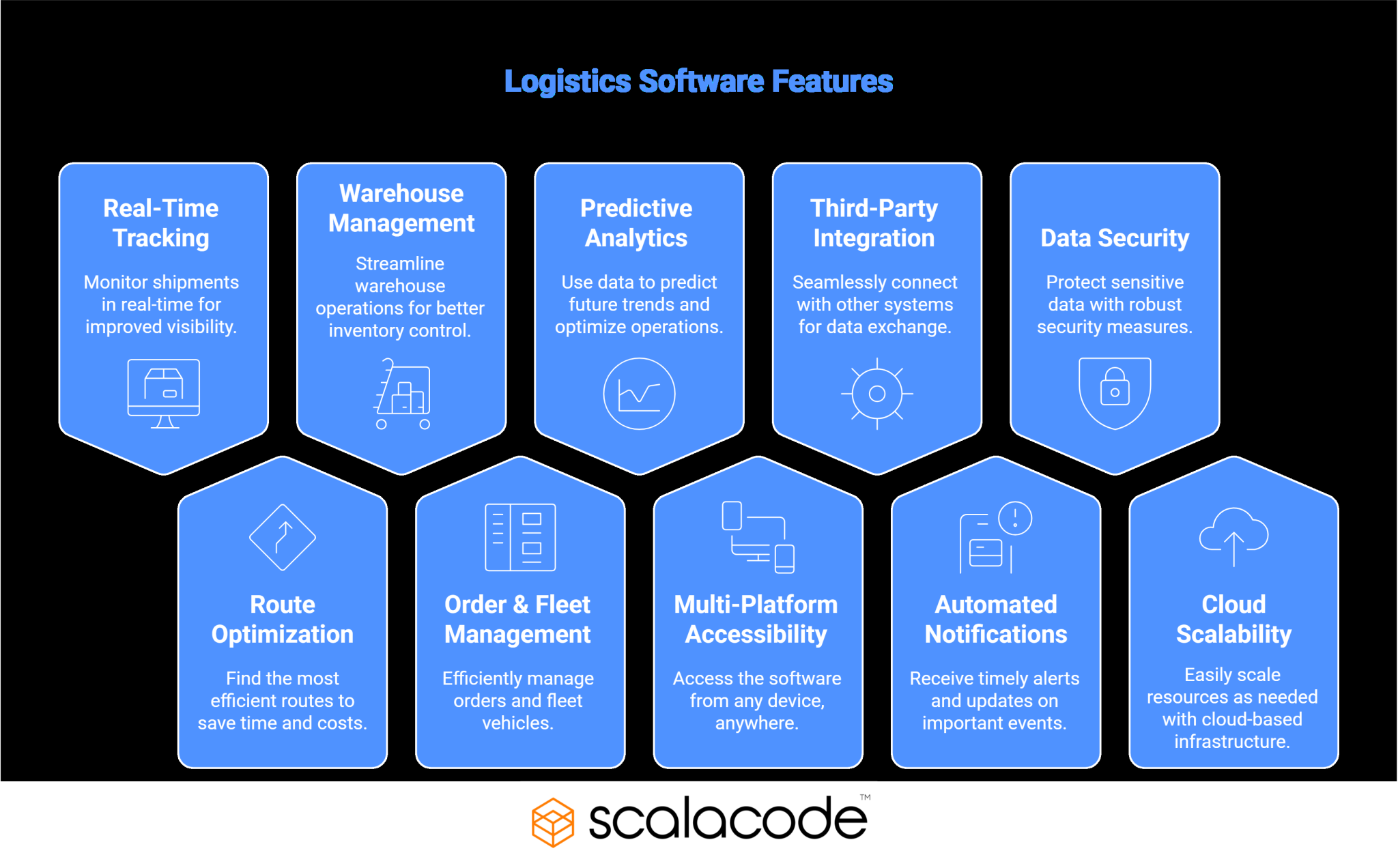
If you are still hesitating about what features you need to prioritize, then consider these top must-have features every logistics software should include:
1. Real-Time Shipment Tracking
The real-time shipment tracking is the backbone of any logistics and transportation software development solution. It allows you to access every movement of your cargo, track vehicle status, and delivery progress in real-time.
Key highlights of this feature:
- Improve the visibility between shipments and increase customer trust.
- Enables you to predict delays and optimize routes on the go.
2. Route Optimization
Integrating the route optimization feature in logistics software development will be a smart move. To save fuel and ensure on-time delivery, we implement smart routing that uses AI algorithms to identify the most efficient delivery routes based on distance, fuel usage, and traffic conditions.
Key highlights of implementing this feature:
- Reduces operational costs by up to 20 to 30%.
- Improves on-time deliveries and reduces driver fatigue.
3. Warehouse Management
Warehouse management is a critical feature that helps you control stock, monitor inventory levels, and manage space efficiently. With real-time inventory visibility, businesses can easily prevent overstocking or stockouts and ensure smooth order fulfillment.
Key highlights of adding this feature:
- Uplift inventory accuracy by up to 95% and minimize the risk of having errors.
- Speeds up order processing and automates the shipping process.
4. Order & Fleet Management
This feature helps centralize the order processing and fleet tracking. Using this feature, businesses can assign drivers, track routes, verify deliveries, and manage vehicle maintenance schedules, all from a single dashboard.
Key highlights of using this feature:
- Increases fleet utilization by up to 40%.
- Reduces idle time and improves resource allocation.
Good Read: AI In Fleet Management: Use Cases and Future Trends
5. Predictive Analytics
Modern logistics platforms rely heavily on data. With predictive analytics, you can forecast demand and analyze delivery performance. It helps you detect potential supply chain disruptions before they occur.
Major highlights of adding this feature:
- Enables you to make an informed decision.
- Enhances profitability through data-driven insights.
6. Multi-Platform Accessibility
With this feature, your team should be able to manage logistics operations anytime, anywhere. With cross-platform accessibility, drivers can update delivery status via mobile, while managers monitor everything from the web dashboard.
Major benefits of having this feature in logistics software:
- Enhancing team collaboration
- Boosts productivity and streamlines operations.
Read in detail: Top 10 Cross-Platform App Development Frameworks
7. Integration with Third-Party Systems
To maximize functionality, logistics software solutions should be integrated with multiple systems and GPS tools. This allows real-time data sharing and enhances operational visibility.
Here are the benefits of adding this feature:
- Eliminates data complexity.
- Streamlines business operations across multiple platforms.
8. Automated Notifications & Alerts
The software solution should send alerts about everything, whether it be shipment delays, route changes, or completing the deliveries. This feature ensures constant communication and minimizes uncertainty during the shipping process.
Key points of using this feature:
- Enhances customer satisfaction.
- Reduces manual follow-ups and improves response time.
9. Uplift Data Security
Logistics management is all about handling data and streamlining the supply chain. By adding the extra layer of security and strong encryption, you will be assured of high-end security. From client details to sharing shipment information, all data will remain secured and protected. Our custom logistics software development services include built-in security frameworks that protect every touchpoint.
Here are the benefits of using the
- Protect business data against breaches.
- Ensuring compliance with GDPR and industry standards.
10. Cloud-Based Scalability
Modern logistics management demands flexibility. Choosing a cloud-based logistics application software allows you to scale resources instantly based on seasonal demands or growth phases.
Key highlights of this feature:
- Reduces IT infrastructure costs by up to 35%.
- System uptime and easy scalability with business growth.
These are the major features when considering developing the custom logistics software. From warehouse to doorstep delivery, there are multiple features you can consider integrating into the app. At ScalaCode, we build logistics platforms that go beyond functionality. While customising solutions and prioritizing the features, we focus on performance, security, and user experience to help businesses stay ahead in a competitive marketplace.
Tech Stack for Developing Logistics Software
Logistics software development is a big task that requires proper planning, the right choice of technologies, and essential features to make it work like a well-oiled machine. Your choice of technologies will define how fast your platform performs, how easily it will scale, and how well it integrates with other systems.

To build a comprehensive logistics solution, we carefully select technologies based on your project’s goals. While choosing the technologies, we majorly focus on speed, flexibility, and long-term reliability. Here is a complete overview of the ideal tech stack for custom logistics software development:
1. Frontend Technologies
The frontend technologies refer to the interface of the app that users can access. It defines how users interact with your logistics system, from dashboards to live tracking screens- it should be simple, responsive, intuitive, and fast.
Best frontend technologies or frameworks you can refer to for logistics software development:
- React.js, Angular, Vue.js, Consider any of these for building dynamic, responsive, and interactive interfaces.
- HTML5, CSS3, or TypeScript: For smooth layouts and consistent styling across web and mobile.
- Next.js or Nuxt.js: For server-side rendering and improved SEO performance.
The ideal way of developing an engaging frontend design, make sure you are choosing a framework that ensures multi-platform compatibility, is fast to access, and is user-friendly.
2. Backend Technologies (Core Logic Layer)
The backend is the core logic layer of the app. Basically, it acts as the engine of your logistics application software that handles all the data flow, route calculations, and integrations. No matter how impressive your app frontend is, if the backend isn’t powerful enough, then all your efforts will be in drain.
Here are the top backend Tools & Frameworks you can rely upon:
- Node.js or Express.js: Ideal for developing scalable, powerful, and event-driven applications.
- Java or Spring Boot: Ideal tools for developing an enterprise-grade logistics application.
- Python, Django, or Flask: Great option in case of developing logistics software with AI-driven automation.
- .NET Core: Trusted for developing secure and high-performance enterprise systems.
Logistics software development requires a strong and scalable backend that can scale with business growth. These recommended tools and frameworks ensure seamless data exchange between modules and third-party services.
3. Database Management
Data is the core for any logistics and transportation software development. Your system has to manage thousands of daily transactions, shipments, and route updates in real-time. For efficient data handling and frictionless data management, you need a secure database system.
Recommended Databases:
- PostgreSQL or MySQL: An ideal option for structured data and relational models.
- MongoDB: It is being used for handling unstructured data and flexible schemas.
- Redis or Cassandra: Logistics software handles real-time caching and fast data retrieval.
Also Read: Top Big Data Databases
4. Cloud & Hosting Platforms
Unlike traditional architectures, cloud-based logistics software development architecture ensures high uptime and cost efficiency.
To build a scalable cloud platform, these are the secure cloud platforms for logistics software development:
- Amazon Web Services (AWS)
- Microsoft Azure
- Google Cloud Platform (GCP)
These platforms provide scalable hosting, built-in analytics tools, and advanced data security. Using these trusted cloud platforms cuts infrastructure costs, improves system reliability, and supports global scalability.
5. APIs & Integrations
To deliver a unified logistics management experience, make sure it can be easily integrated with multiple external systems. Whether it be ERP, CRM, payment gateways, IoT sensors, or GPS trackers, logistics software can be easily integrated while developing with the various APIs below:
- Google Maps API: Integrating with route mapping and real-time tracking.
- Stripe, PayPal or Razorpay: To support multiple online payments without any friction.
- SAP, Salesforce or HubSpot: For seamless enterprise-level CRM & ERP connections.
- Telematics & IoT APIs: For smart fleet tracking and maintenance alerts.
With these integrations and APIs, you can leverage a collaborative ecosystem that makes data sharing easier and enables you to make informed decisions.
6. DevOps & CI/CD Tools
Continuous Integration and Deployment (CI/CD) helps automate project delivery and ensure faster releases. In addition, using these tools can help you streamline the project delivery.
Here are the DevOps and CI/CD tools that you can refer to for quick delivery:
- Docker or Kubernetes: It can be used for containerization and microservice management.
- Jenkins or GitLab CI/CD: Widely used for automated testing and deployment.
- Terraform or Ansible: Businesses rely on these tools for automating their infrastructure.
Accelerates time-to-market while maintaining software reliability by using the trusted DevOps tools.
7. Analytics & AI Tools
AI-powered logistics systems bring predictive intelligence and automation to decision-making in logistics software development.
For analytics and AI prediction, here are the recommended tools you can leverage while customizing the logistics solutions:
- TensorFlow or PyTorch: Can be used for building predictive models.
- Power BI or Tableau: Leverage these tools for data visualization and reporting.
- Apache Spark or Hadoop: Widely used for big data processing.
With these high-end tools and frameworks, it becomes easier to turn raw logistics data into actionable insights. With these top technologies, businesses can improve efficiency and profitability.
At ScalaCode, we craft logistics solutions by combining the latest tech stacks with industry best practices. Whether you want to build an app from scratch or modernize existing systems, our dedicated software development teams ensure seamless delivery of the product.
Best Practices to Create a Successful Logistics Management Software
Trying to build a logistics software that is really capable of handling real-world complexities? It involves careful planning and expertise in software development. With so many moving parts involved , warehouses, fleets, deliveries, and customers- adopting best practices in logistics software development is the only way to achieve long-term success.
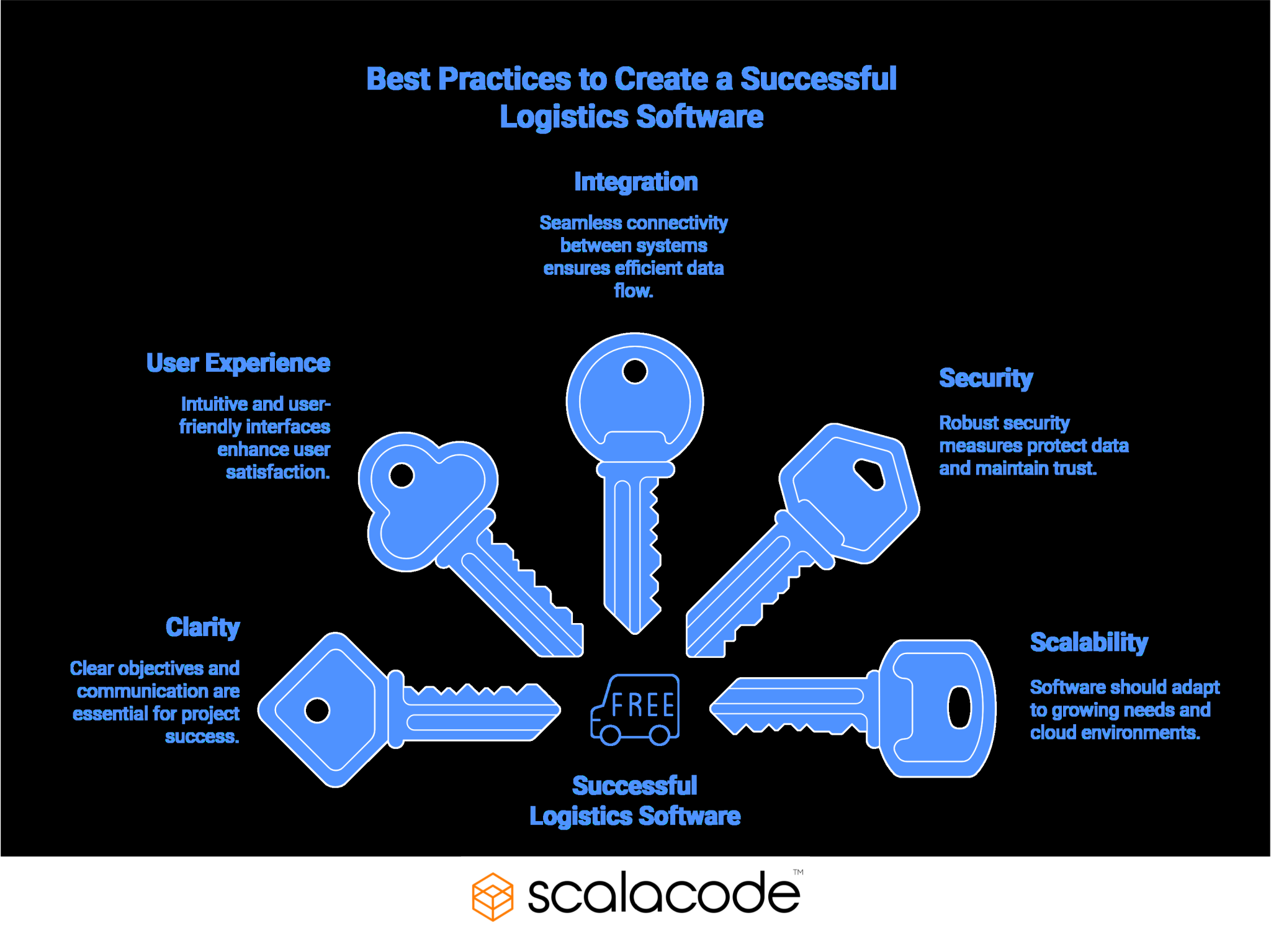
Here are some of the best practices to create logistics software and avoid developing blunders:
1. Begin With Clarity
Before jumping straight to the coding process, define why you are building this software. Starting a project with unclear project details will lead to major blunders.
Why does it matter? A well-defined project detail helps align design, features, and technology for a better outcome.
2. Pay Attention to User Experience
Logistics apps include multiple panels. From drivers updating delivery status to admins monitoring fleet routes , every user interacts differently with your system. Therefore, your software must be simple, responsive, and easy to navigate.
A smooth UX design can boost productivity and minimise user abandonment.
3. Ensure Seamless Integration
Hire an offshore software development team to build a logistics solution that can be easily integrated with multiple systems. However, to make it work easily, plan integrations at the early stage. Use API-first development to make future connectivity effortless.
Seamless software integration results in a centralized data ecosystem and provides real-time visibility.
4. Prioritize Security
Logistics software handles massive data, and no business can afford to compromise the security. In logistics, where systems handle sensitive shipment, location, and payment data, make sure it has an additional encryption security layer.
To make it possible, implement multi-factor authentication, role-based access, data encryption, and secure API protocols during development.
This ultimately results in zero data leakage and strengthens security at all touchpoints.
5. Go For Scalable and Cloud-Ready
As your business grows, your logistics operations will expand too. Make sure that the platform scales easily with new fleets, users, and data loads.
Use cloud-native architecture and microservices-based development while developing a logistics software. The right choice of cloud-based platform will ensure flexibility, uptime, and cost optimization.
How Much Does It Cost to Develop a Logistics App?
Estimating the average cost of logistics software development is a challenging task. However, if you are planning to venture into the logistics business and want to improve the functionalities with a digital solution, then one of the first questions every business asks is, “How much will it cost?”.
Well, every business has its own challenges and requires a custom solution; therefore, there’s no one-size-fits-all solution. The ultimate cost of logistics software development depends upon various factors. Its complexity, project scope, features, technologies, and software development company, its location, expertise of developers, and more, greatly influence the app development cost.
However, understanding the major cost drivers can help you plan your investment smartly and avoid unexpected overruns. At ScalaCode, we ensure complete transparency in our pricing and provide flexible billing models that easily fit Startups, SMEs, and large enterprises alike.
On average, the cost to develop a logistics app ranges between $25,000 and $70,000+, depending on your requirements.
Here’s a breakdown by project scale:
| Project Type | Estimated Cost (USD) | Timeline |
| MVP / Basic Version | $15,000, $25,000 | 2 to 3 months |
| Mid-Level App (with API Integrations, Admin Panel, Analytics) | $30,000, $40,000 | 4 to 6 months |
| Enterprise-Grade Logistics Platform (TMS, WMS, AI & IoT features) | $50,000, $75,000+ | 6 to 10 months |
Why ScalaCode is Your Ideal Logistics Software Development Partner?
Choosing the right software development partner can make a great difference in how your logistics system works. At ScalaCode, we don’t just build logistics software; we engineer intelligent, scalable, and future-ready ecosystems that automate the process and increase efficiency.
Here’s what sets us apart in the logistics software development journey:
Implementing proven expertise in logistics and supply chain solutions. We enhance logistics systems by leveraging blockchain technology and advanced AI capabilities to deliver improved insights and maintain transparency.
Enable you to hire dedicated software development teams to ensure full-cycle support right from concept to post-launch optimization.
Implementing a future-ready and innovation-first approach, therefore, we blend the power of top technologies.
As one of the best software development companies, ScalaCode helps you cut development costs by up to 60% without compromising on performance, security, and design.
At ScalaCode, we transform logistics challenges into digital opportunities by delivering scalable solutions that move your business forward.
Final Words
The logistics industry is evolving at a fast pace, and manual handling of operations can limit your business growth. This is where implementing technology in the logistics and supply chain systems can help you transform the ecosystem. From automating warehouse operations to predicting delivery delays, logistics software development enables businesses to gain visibility into their workflows.
By embracing custom logistics software development services, companies can reduce operational costs, optimize fleet routes, and deliver better customer experiences. At ScalaCode, we understand that every logistics network is unique. That’s why we design tailored solutions that fit your unique logistical needs.
Whether you want to build software from scratch to simplify the supply chain or want to upgrade the ecosystem with a next-gen solution, we can help you take control of your logistics ecosystem from end to end.
Common FAQs
1. How long does it take to develop a logistics software solution?
The average cost to develop logistics software will depend on the project’s complexity and features. Typically, a custom logistics software project would take anywhere from 3 to 7 months. It includes planning, designing, developing, and testing.
2. What is the estimated cost of logistics software development?
The estimated cost usually ranges from $30,000 to $75,000+, depending upon the technology, complexity, and the tech team you hire for the project. ScalaCode offers a flexible billing option that can help you achieve maximum ROI. For real estimations, it is worth consulting the experts.
3. What technologies can you leverage to build logistics software?
ScalaCode stands out as a trusted logistics software development company offering an end-to-end solution. From custom logistics solutions to enterprise-grade applications, we combine the best choice of technologies, including AI, IoT, cloud computing, Blockchain, GPS tracking, and predictive analytics, and more.