


Thanks to AI in transportation, which is now more intelligent, safer, and more efficient than ever before, around the world. From self-driving cars to new traffic systems, artificial intelligence is now reshaping transportation as we speak.
As intelligent systems are increasingly needed, AI for transportation is helping groups automate complex tasks, reduce errors, and work more efficiently. Regardless of whether the transport system is urban, focused on logistics, or for public use, AI is its main structure.
According to McKinsey & Company, implementing AI-enabled daily route optimization can lead to a 15% reduction in travel time for drivers, resulting in significant productivity gains.

This guide provides an overview of how to use Artificial Intelligence in transportation industry. There will be discussions on recent developments in transportation with AI, which technologies are involved, and how companies can start using them now.
This guide will assist you, regardless of whether you are a fleet operator, a logistics provider, or an OEM, in identifying the opportunities of AI Product Development Services, learning about the power of artificial intelligence in transportation, and moving towards automation in mobility.
All in all, AI is here to stay and will shape the future of transportation, which this guide will teach you how to adapt to.
What is AI in Transportation?
AI in transportation includes adjusting the system by using intelligent programs and data in order to make it perform better, remain safe, and function efficiently. Artificial intelligence is involved in every step, from regulating traffic in real time to facilitating self-driving cars in the mobility and logistics sector.
In AI for transportation, the main goal of Artificial Intelligence is to reduce dependence on people, use past data to forecast results, and boost decision-making for different types of transport.
With more money being invested in AI Application Development, transportation is adopting automation and using data in real time to obtain better results.
Now that we know what AI is in transportation, let’s move forward to learn transportation technology examples in the real world.
Learn The Real-World Applications of AI in Transportation
The influence of AI in transportation covers a larger area now and repositions basic functions in city design, handling shipments, car engineering, and public transit. Let’s discover the impact of Artificial intelligence in transport systems.

1. Smart traffic management systems
Many cities use intelligent traffic management, which is one of the most popular AI in transportation. AI software analyzes real-time data and camera footage to observe the flow of traffic, alter traffic signals, and make predictions about busy periods. As a result, there are fewer traffic jams, a lowered average commute time, and reduced exhaust emissions.
Adaptive traffic control is achieved by these systems as they evolve with the changing roads, which is necessary in today’s AI efforts for transportation. Cities that choose smart traffic solutions often join forces with AI startup software development services to guarantee their projects work well on a broad scale.
2. Predictive maintenance for vehicles
Predictive analytics powered by AI is changing the way vehicles are maintained. Now, sensors and AI-powered analysis are used by fleet managers to spot signs of component damage, leaking fluids, or unusual activity inside the engine right away. It stops problems from arising and helps vehicles survive for a longer period.
With custom Automotive Software Development Services, such advancements highlight the power of AI and transportation, lower idle time, and increase cost-effectiveness for logistics companies and public transport bodies.
3. AI in logistics and route optimization
AI also has a major effect on the transport sector by enabling routing that changes with new data. AI software takes into account the weather, fuel prices, the amount to be delivered, and current traffic to choose practice routes. It means trains reach their destinations on time, and this leads to less fuel being consumed and fewer carbon emissions.
Leading companies in logistics take advantage of Logistics Software Development with AI for better monitoring of the supply chain, inventory predictions, and immediate dispatching. This becomes very important in the final delivery stage, which requires both promptness and good accuracy.
4. Use of AI in autonomous vehicles
Applying AI in transportation has largely resulted in autonomous vehicles being a prominent idea. A mixture of Computer Vision, deep learning, and sensor fusion allows these systems to work on their own in challenging areas.
AI makes it possible for vehicles to find nearby objects, read traffic signs, stay on their lanes, and decide fast, that’s why OEMs consider AI in Automotive an important priority. As the technology matures, partnerships with the Best AI Software Development Services providers are crucial to ensure compliance, safety, and performance.
Also Read: AI in Automation
5. AI-based public transport solutions
New advances in AI for transport are improving how routes are planned, how people experience public transport, and how standard the service is. Artificial intelligence (AI) has made it possible for transit networks to track in real-time, anticipate demand, and update their schedules.
In some locations, AI is applied to organize buses to match high-demand moments or the real-time movement of passengers to enhance public transportation. Transportation technology reveals that AI is making an impact on private vehicles and will also impact the future of urban transportation.
The AI in transportation examples we have seen show that using AI in transportation is both forward-thinking and very useful. So, let’s look at the actual advantages that organizations and cities get from using AI in transportation.
Top Benefits of AI in Transportation Industry
By using AI in transportation, there are notable changes in the way systems behave and big improvements in safety, costs, and sustainability. Artificial intelligence is enabling those in the transportation industry to gain valuable results in public and commercial applications.
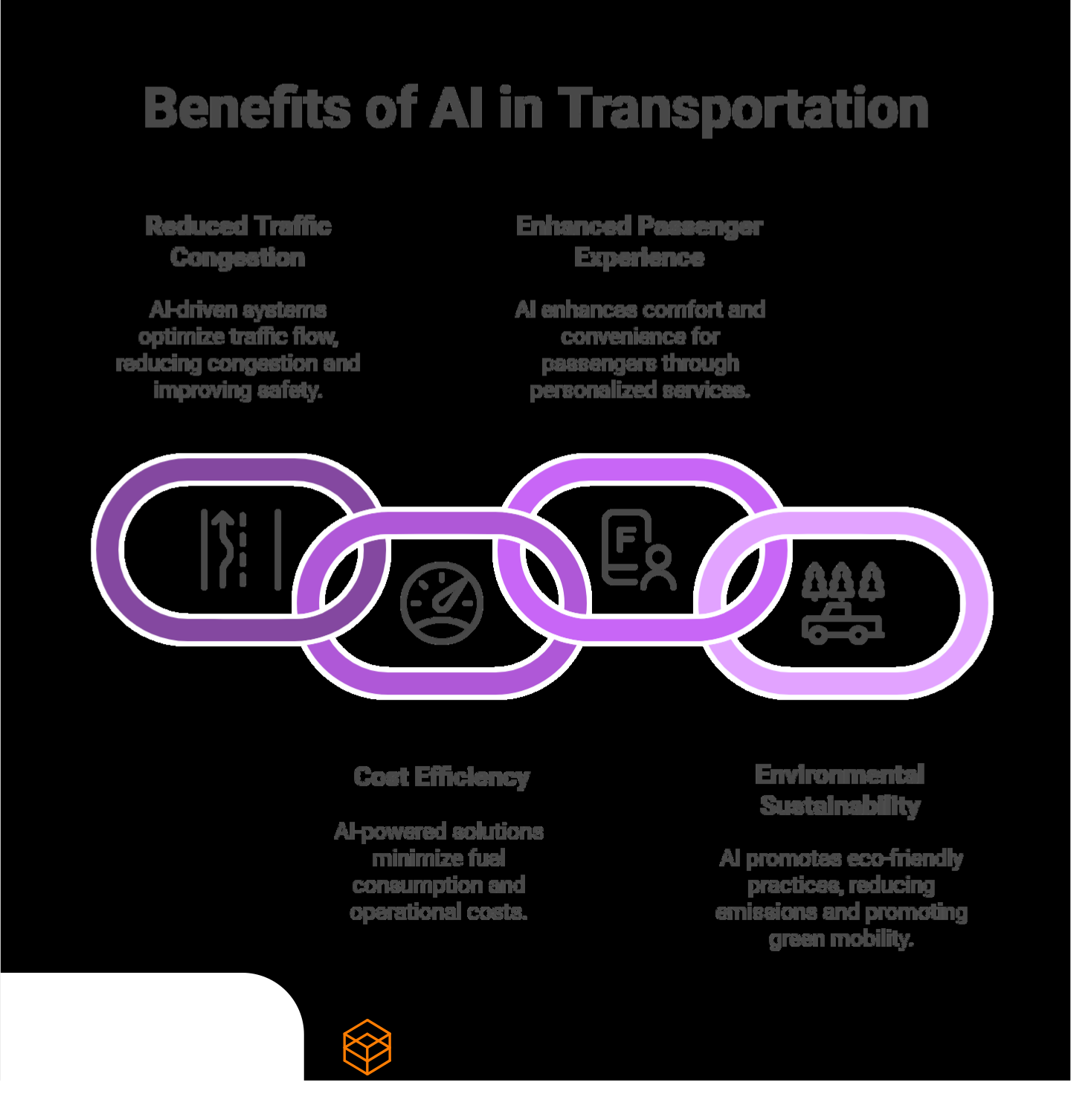
#1. Reduced Traffic Congestion and Improved Safety
One of the fastest results from Artificial Intelligence is its part in reducing traffic delays and increasing road security. Live traffic information is used by AI to make lights respond more efficiently, which reduces the number of jams in crowded cities.
Additionally, having real-time analytics and computer vision makes it possible to spot accidents, report them instantly to the authorities, and indicate possible safety threats. So, cities can monitor roads more closely and use safety protocols, which is why AI in transportation plays a key role in the future of urban planning.
#2. Cost Efficiency and Fuel Savings
Through AI, logistics firms and those in public transit can plan the best routes, plan their fuel use, and decrease time spent waiting for extra cars. As a consequence of using these smart systems, vehicles cover fewer miles and use less fuel, which lowers the company’s costs considerably.
The use of AI in cars results in better fuel economy since the gear system, engine idling, and cruise control can all function more intelligently. Thanks to better AI App development cost management, these new features help companies get a better return from their investment in transport businesses.
#3. Enhanced Passenger Experience
In today’s mobility, making customers happy is the main goal. Artificial Intelligence and transportation can be synonyms of each other, as they both support each other. In addition to that, using AI for transportation is now helping to make each passenger’s experience more personal.
Fortunately, AI updates and voice guidance in transportation make travel easier for both groups and individuals. Moreover, custom AI Development companies in transportation can follow user habits, ensure the best services, and slash waiting periods, thus earning faithful customers and better efficiency.
#4. Environmental Sustainable Mobility Solutions
AI is very important for making things more environmentally friendly. Making use of AI systems, electric vehicles are improving the ways people travel as they leave behind less pollution.
One of the AI in transportation examples is how EV logistics can improve battery use and cut down on deadhead mileage, which makes the industry more eco-friendly and eco-efficient. Moreover, AI in automotive companies is being used to make cars that are both smart and eco-friendly for a better future.
Although AI in transportation is supporting traditional ways, its most important effect is the growth of autonomous vehicles that mix intelligence with driving independence.
Bonus visit: Top AI Mobile App Ideas
How AI in Transportation Powers Autonomous Vehicles
Autonomous vehicles are a defining innovation in the evolution of AI in transportation. They depend on several technologies to help each other examine their setting, choose the best course of action instantly, and drive roads with limited or no help from humans.
Artificial intelligence in transport systems helps organizations compete to polish their self-driving systems, enhance safety, and make autonomous cars available to everyone.
☑️ The Role of Computer Vision, Sensors, and AI Models
The main engine of autonomous driving is a group of advanced technologies.
- With Computer Vision, cars can spot pedestrians, detect when the lights are on, see painted lines on the road, and detect obstacles around them.
- Data on what is happening on the road is obtained by using LiDAR, radar, ultrasonic sensors, and high-resolution cameras in real time.
- Artificial intelligence processes the gathered data so the car can decide when to stop, when to use a different lane, or when to change the route.
All these aspects join to create a learning process where AI for transport gets better as it is used on the road. Real-time data analysis and reliable protection features are often added to vehicles by companies looking to hire AI developers and collaborate on intelligent solutions.
As autonomous vehicles evolve on individual roads, AI is also transforming how entire cities move, ushering in a new era of smart traffic flow and intelligent urban mobility powered by AI in transportation.
☑️ Role of AI in Traffic Flow and Smart City Transport

As we enter the digital era, smart city designs depend heavily on Artificial Intelligence in transportation industry. With real-time information, predictions, and smart technology, AI makes it possible for cities to ease traffic, cut congestion, and create sustainable ways of moving people.
Let’s see how Artificial Intelligence (AI) is helping to build clever, secure, and well-connected streets for transport in cities.
☑️ AI-Based Traffic Light Control Systems
AI for transportation helps by managing smartly how traffic signals are used in smart cities. With AI, traffic lights will change their timing in real time according to the situation on roads, the weather, incidents occurring, and how many pedestrians are present.
Computer Vision and data sensors are used to manage the timing of signals, keep car engines off while standing, and cut down on people’s waits. For this reason, transportation in cities becomes more efficient and the air cleaner, making it obvious that Artificial Intelligence is now essential for planning our urban areas.
Often, cities turn to AI development to set up traffic systems that can expand and respond well to different situations while also working with public safety measures.
☑️ Integration with IoT for Vehicle-to-Infrastructure (V2I) Communication
When AI and IoT merge in V2I communication, it leads to more intelligent ways of transport. The installation of sensors on roads and vehicles in cities allows cars and important points like signals and lights to share data in real time.
This way of communicating improves how routes are given, coordination at intersections, and responding when emergency vehicles are on the road. V2I acts as a key part of AI in transportation to keep coordination smooth between public and private transport.
Incorporating V2I into their work, Logistics software companies are now regulating the routes their clients’ drivers take to avoid delays.
☑️ Data-Driven City Planning
AI is involved in traffic management and also helps plan transportation for the future. City planners review GPS, public transport, ride-sharing, and sensor network statistics to help them decide on investments, transit plans, and zoning.
If AI discovers that there are usually traffic issues near a business district, it might suggest making new layouts for roads, increasing bus services, or creating more paths for pedestrians. Thanks to AI applications, cities are changing for the future by reducing their effects on the environment.
The use of Artificial Intelligence in transportation is bringing about a change to rely on data for making urban planning more effective and solid.
Though AI makes transportation better for cities and industries, it also introduces concerns about data protection and issues with regulations that should be handled. So, let’s look at the challenges of using AI in transportation.
Challenges of Using AI in the Transportation Industry
Here we will look at the real-life challenges of using AI in transportation:
1. Data privacy and cybersecurity issues
AI for transport uses current data, like traffic on the roads, how passengers act, and vehicle maintenance. Still, handling so much sensitive material regularly results in major cybersecurity and privacy issues.
Unless transport systems use strong encryption, access limits, and proper data management, Artificial Intelligence may become a target for being attacked by cybercriminals. People entering AI traffic signals or vehicle software without permission could endanger the public.
Because of this, organizations must also focus on creating secure AI applications and ensure they are aligned with well-known data protection rules like GDPR and ISO 27001.
2. Legal and ethical concerns (esp. around autonomous driving)
Self-driving technology creates difficult issues that must be dealt with legally and ethically. When an accident happens, can the one at fault be the manufacturer, the AI developer, or the vehicle’s owner? How ought an AI act when an unavoidable collision is possible?
Since laws about autonomous vehicles are not the same everywhere, it is complicated for them to be used globally. The issues found in AI in transportation usage show that we should have ethical standards and new laws that develop as AI grows.
As these issues are handled by governments, those creating AI for use in transport must adhere to safety regulations and train AI models clearly.
3. Resistance from traditional sectors
Since AI commonly transforms current ways of doing things, it may discourage some traditional transportation companies from accepting it. There are many resistors, for example, unions who fear losing jobs or operators who are not eager to move to new equipment, so change management becomes important.
People should understand that Artificial Intelligence in transportation adds value rather than competes with them to make its use smoother. Updating staff skills, launching the transition slowly, and keeping stakeholders interested will help a lot for companies that have worked the same way for many years.
By partnering with firms that are experts in building phenomenal AI-based software and applications, you can more easily implement new ideas in your operations.
4. High initial implementation costs
Creating and expanding AI systems for infrastructure or logistics requires a big investment in various tools, programs, and training. Many startup companies and municipal governments struggle with spending on AI systems used in innovative transportation like self-driving cars, predictive traffic, and V2X networks.
Even though the future profit may be good, the high cost of AI app development at the start can discourage set-up by firms in developing countries or smaller logistics companies. By cooperating with leading software development companies, organizations are able to lower costs by introducing MVPs or partially built systems.
Since we have pronounced the word cost, let’s dive into that and learn how much it costs to build an AI-based software or applications in 2025 in the next section with the help of a table.
Estimated Cost Breakdown for AI-Based Transportation Software in 2025
| Component | Estimated Cost Range (USD) | Description |
| Project planning and research | $5,000, $15,000 | Market analysis, requirement gathering, use-case scoping |
| UX/UI design | $4,000, $10,000 | Designing intuitive interfaces for dispatchers, drivers, or passengers |
| Backend & Frontend Development | $15,000, $40,000 | Core app functionality, including route planning, scheduling, etc. |
| AI/ML Model Integration | $20,000, $60,000 | Incorporating AI features like predictive analytics, traffic forecasting |
| IoT & Sensor Integration (if needed) | $10,000, $30,000 | Integration with V2I communication, GPS devices, and other sensor hardware |
| Cloud Infrastructure & DevOps | $5,000, $15,000 | Hosting, scalability, and performance monitoring |
| QA & Testing | $3,000, $8,000 | Testing for bugs, performance, and real-world usability |
| Compliance & Data Security | $2,000, $7,000 | Ensuring data privacy, security, and industry regulation compliance |
| Maintenance & Support (Annually) | $10,000, $25,000 | Ongoing support, updates, and server maintenance |
| Total Estimated Cost: $74,000, $210,000+ depending on features, scale, and integration complexity. |
This is the estimated cost of AI in transportation in 2025, you can take an idea from this table. The future of AI in transportation holds even more promise for innovation, automation, and worldwide influence as implementation costs become more affordable and technology advances.
Let’s look at the next section…
Leverage the expertise of ScalaCode to overcome infrastructure, data, and safety challenges.
Future of AI in Transportation
In the long run, AI in transportation will be smart and also flexible, connected, and rely on automation. 5G, generative AI, and aerial logistics are showing that the logistics and transportation industry is now undergoing a period of transformation and growth.
Here’s a look at the transformative trends shaping the road ahead.
1. Rise of mobility as a service (MaaS)
MaaS connects several types of transportation, including trains, buses, ride-sharing, and e-scooters, into one system that’s easy to use. AI makes it possible for MaaS systems to give users personal advice, cheaper journeys, and rapid updates depending on what they need and the current travel situation.
Partnerships between cities and private developers can take place to design eco-friendly, flexible, and smart MaaS services.
2. AI and 5G integration for real-time coordination
The combination of AI in transport with 5G allows vehicles, buildings along roads, and control centers to communicate super quickly and without delays. This real-time coordination is essential for:
- Dynamic rerouting during congestion
- Real-time fleet visibility
- Collision avoidance systems
Such capabilities make it possible for businesses to build better logistics systems and fleets, which in turn reduce their AI application development cost and ensure better system performance.
3. Use of generative AI in predictive modeling
Within the transportation sector, generative AI is greatly improving the prediction of demand, simulating traffic flows, and planning for the supply chain. With experience from huge collections of real data, these algorithms create situations that look like the real world, assisting planners and operators to make better and stronger risk-aware decisions.
Predictive models can foresee how such things as weather, special days, or events will make a difference to traffic flow and delivery plans. Now, AI developers are including this capability in their strategies for logistics and urban transport platforms.
4. Drone delivery and aerial logistics
AI is making drones better at delivering items in the last phase of shipping. No matter if the cargo needs to go to an isolated place or be delivered to a busy city, drone technology can get it there more quickly and easily than traditional vehicles.
Because of improvements in navigation, object finding, and navigation, drones now play a key role in Artificial Intelligence within transportation. Organizations that have invested in Logistics software development are experimenting with AI-powered drone fleets to maximize airspace utilization and ensure compliance with regulations.
As these innovations mature, the future of AI in transportation will be defined by hyper-efficiency, personalization, and sustainability, paving the way for smarter cities and connected economies.
Also read: Top AI Trends
Getting Started with AI in Transportation: A Step-by-Step Adoption Strategy
Although AI could greatly help transportation, it needs to be implemented with detail and with the help of data. AI should be regarded as a long-term strategy, starting from finding needs and finishing with measuring results.
Here’s a step-by-step roadmap for businesses looking to integrate AI into their transportation operations.
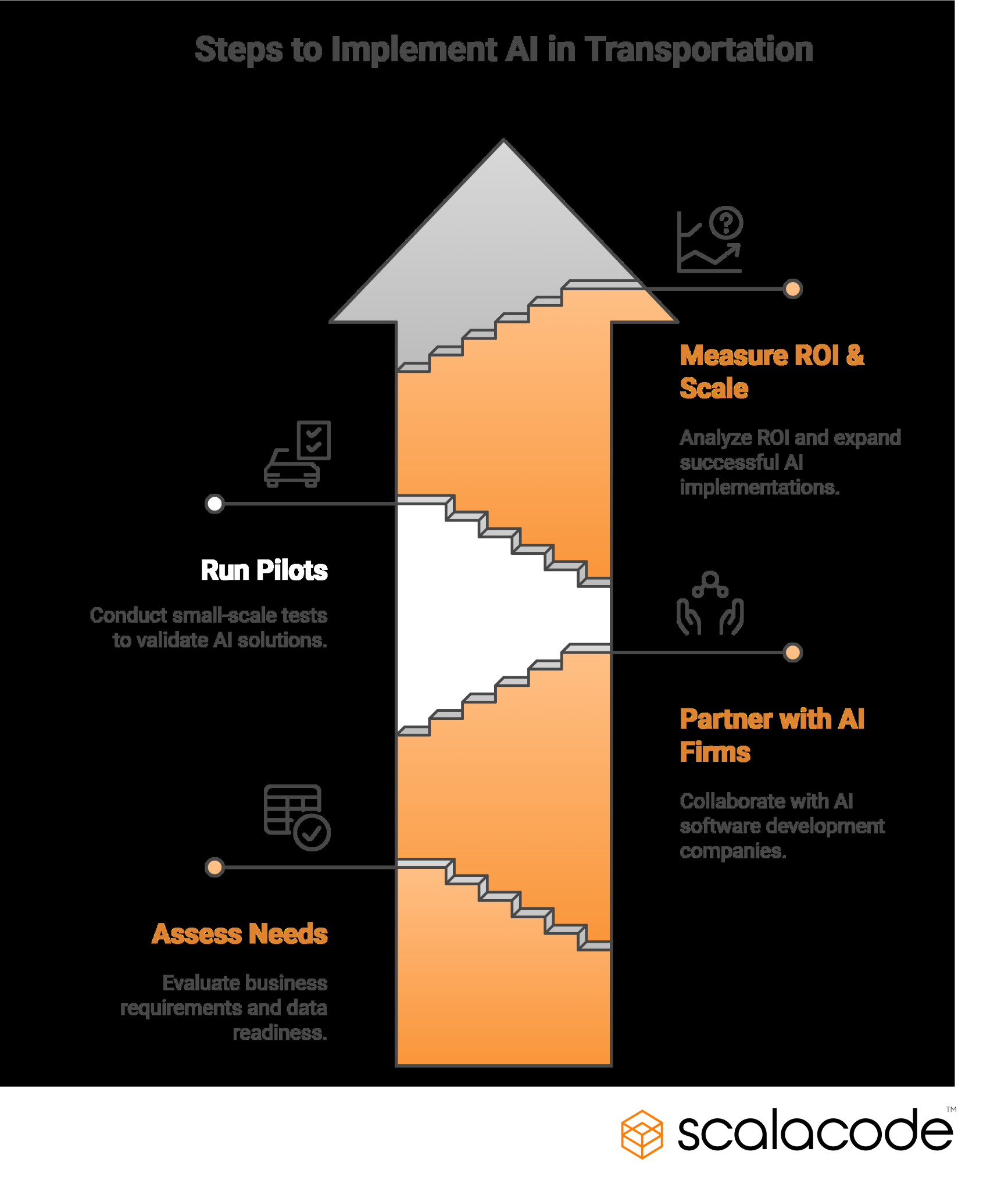
1. Assessing business needs and data readiness
Identify where your transportation workflow has problems, sometimes this includes problems with routes, forecasting traffic, mechanical breakdowns of vehicles, or how passengers feel. Check your existing infrastructure, look at how much data you collect and how well that data is of use to you, and assess how skilled your team is in technical matters.
If transport companies want to use Artificial Intelligence correctly, they have to clean up their data sources and ensure they are available. All the next stages depend on your data being strong and well-prepared at this stage.
Now is an excellent moment to approach AI Consulting Services for fleet and city-wide transit operations that must handle lots of data and ensure correct strategies.
2. Partnering with AI software development companies
Once you set up your data foundation, the next important thing to do is to cooperate with professionals offering the Best AI Automotive or Software development services. Such companies provide professional knowledge in predictive maintenance, smart logistics, and monitoring in real-time.
With an ideal development team, your system will start out as secure, scalable, and meet all the necessary regulations. They can show you which types of ML models, APIs, cloud facilities, and tools for analytics are most suitable for your chosen use case in AI for transportation.
3. Starting with small-scale pilots
It’s best not to implement an entire AI platform throughout your transport system from the very beginning. A better approach is to start with something small, including route optimization for a regional fleet or predictive maintenance for only a few vehicles.
With this strategy, you can lower risks and manage the development cost, trying out your ideas, receiving input from others, and boosting your staff’s trust in what you have done. They also provide key results and important data so that more resources are approved.
A lot of logistics companies that engage with AI app development companies begin with a small project, check its results, and grow step by step.
4. Measuring ROI and scaling up
At last, track the progress of your AI by using important factors like the savings you gain, efficient fuel usage, improved delivery time, safer work, or higher customer approval. Make use of the information to keep improving the system and determine the steps for the next phase of scaling.
Thanks to the model, you can use AI solutions for transportation in multiple fleets, routes, or cities and limit friction in your operations.
Now, automating and applying advanced analytics gives higher accuracy and highlights weak spots in the process, which leads to additional long-term benefits.
Learn more: Top DevOps Consulting Companies
Bonus: Industry Stats and Case Studies
If we want to appreciate the potential of AI in transportation, we should consider actual results. Already, the integration of AI in transportation and city planning is proven to make things more efficient, secure, and provide a better service.
The transportation industry has experienced growth and improvements due to impressive statistics and success achieved by artificial intelligence.
Key statistics showing the growth of AI in transportation

- $14.79 billion: The global AI in transportation market is projected to reach this valuation by 2030, growing at a CAGR of 22.97% from 2022 to 2030. (Source: Fortune Business Insights)
- 15% reduction in travel time: According to McKinsey & Company, AI-enabled route optimization can cut average travel times by up to 15%, greatly enhancing delivery efficiency.
- Over 70% of logistics companies are already exploring AI Product Development Services to integrate predictive analytics, robotics, and route intelligence in their operations. (Statista, 2024)
Case study examples
1. UPS AI-driven logistics
UPS has implemented AI for transport through its proprietary ORION (On-Road Integrated Optimization and Navigation) platform, which uses machine learning to optimize daily delivery routes for over 66,000 drivers. The result?
- 100 million fewer miles driven annually
- 10 million gallons of fuel saved
- Massive reductions in delivery costs and emissions
UPS’s use of Logistics & Manufacturing Software Development and real-time AI insights showcases how data can revolutionize last-mile delivery.
2. Singapore’s AI-based traffic systems
Singapore has pioneered AI in transportation at a city-wide level, implementing AI-based traffic light control systems that adapt in real-time based on congestion patterns.
Integrated with IoT infrastructure, the system enables vehicle-to-infrastructure (V2I) communication and smart urban planning. The result: smoother traffic flow, reduced emissions, and fewer delays in one of the world’s busiest cityscapes.
This is a model example of Artificial Intelligence in transport systems, improving both efficiency and sustainability in urban environments.
3. Ola/Uber using AI for fare & route optimization
Ride-hailing giants like Ola and Uber use AI in transportation examples daily. Their algorithms:
- Predict demand surges based on historical data
- Calculate optimal fare pricing dynamically
- Suggest the shortest or fastest routes in real time
These capabilities improve driver earnings, passenger satisfaction, and fuel efficiency, key goals in any AI Agent Development effort within mobility platforms.
Conclusion: The Road Ahead for AI in Transportation
AI in transportation is now a reality and is playing a major role in improving the global movement of people and goods. With Artificial Intelligence, transportation now sees advanced vehicles, preventive maintenance, better road management, and improved logistics by air.
Those who invest in AI product development and modern AI mobile app development are demonstrating improved efficiency, more safety, and satisfied clients. When it comes to affordable route planning, anticipating demand, or real-time traffic handling, AI has a strong record of providing an advantage over other solutions.
With transportation systems becoming more advanced and using data, the difference between being in charge and lagging is obvious. Today’s use of AI will influence and reshape the mobility infrastructure in the future.
In short, AI in transportation isn’t just transforming mobility, it’s steering the entire industry toward a smarter, more sustainable future.
Predictive AI-powered diagnostics outperform reactive repairs, saving fleets time, money, and performance.
Frequently Asked Questions
-
Can you name the applications of artificial intelligence in travel and transport?
AI is used in route optimization, predictive maintenance, autonomous driving, and smart traffic control. ScalaCode builds intelligent solutions to streamline logistics and enhance mobility systems.
-
What is the role of generative AI in transportation?
Generative AI enables demand forecasting, route simulations, and predictive modeling for dynamic transit planning. Scalacode integrates it to create adaptive, data-driven transportation apps.
-
How much will AI in transportation cost?
AI-powered transportation solutions typically range from $25,000 to $300,000+ based on features and scale. ScalaCode offers custom development with flexible pricing to match your needs.
-
How is AI used in public transport?
AI enhances route planning, automates ticketing, and improves passenger safety through real-time analytics. ScalaCode delivers smart public transport systems powered by AI and IoT integration.