

Do you know that as of October 2024, over 5.52 billion people use the Internet, and approximately 60% of those people do not speak English? That is a lot.
Well, when businesses make an effort to reach out to more and more customers, the language barrier may stand in the way. But then, emerging technology today has gifted us with a multilingual AI assistant.
It’s not just a fancy tool- how it sounds- but a necessity: a multilingual AI assistant will help the company to communicate with clients all over the world effectively.
In fact, studies have shown that organizations with multi-lingual support increase customer satisfaction. Also, 57% consider this to be biased in favor of the brand for not providing an end-to-end multilingual experience to customers.
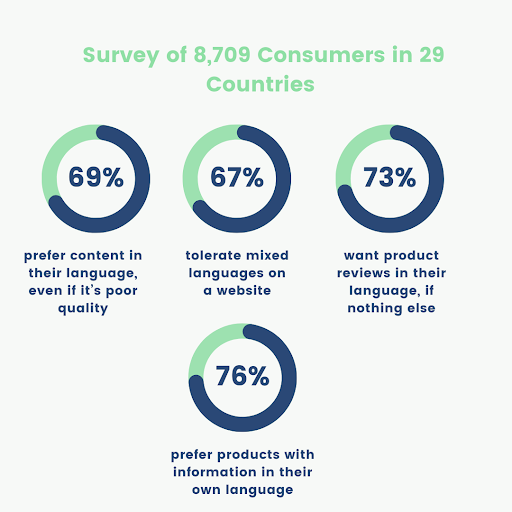
It is also estimated that a total of 76% of online consumers prefer to purchase products in their native languages.
So, if you want to stay competitive, it’s essential to consider developing a multilingual AI assistant that can support your business.
Therefore, let’s get into this in-depth. We will see every aspect that is required in building a multilingual AI assistant.
First off, understand: what exactly does a multilingual AI assistant mean?
What is a Multilingual AI Assistant?
The multilingual AI assistant is a software program that makes devices understand and respond in various languages, thus enabling global communication. This technology is important in today’s interconnected world, as it allows smoother interactions across language barriers.
With multilingual AI, for instance, it would be easier for tourists to talk to the natives through their smartphones, hearing each different language in translation. Additionally, companies are able to serve their customers much better across different parts of the world through the power of multilingual AI assistants.
Sounds cool, doesn’t it?
Why is a Multilingual AI Assistant Important?
These AI-based solutions developed by availing software development services offer several benefits. These are designed to process and develop text in different languages that humans use, thus breaking the barriers in communication.
In addition, a multilingual AI assistant is key, but AI-powered language tools will be able to further help a business with translation and content creation.
These tools offer translations of good quality, which in return means a lot for a company because creating multilingual content both on websites and marketing materials becomes easier.
Not only will it save time, but messaging will also be consistent across all different languages.
Thus, AI-powered language tools used in addition to a multilingual AI assistant can make a big difference in the communication strategy of an enterprise.
Moreover, it would be appropriate to have a look at some statistics concerning AI assistants before going further.
AI Virtual Assistant, Statistics & Facts
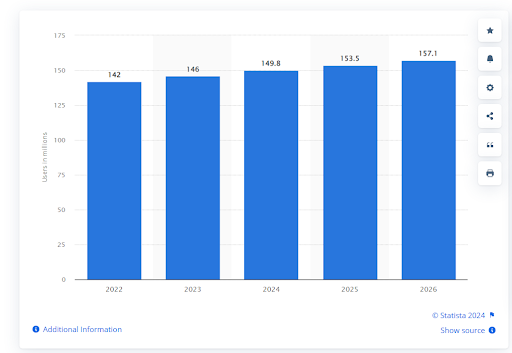
The number of US voice assistant users will have a mild increase from 142 million in 2022 to over 157 million users by 2026.
Besides, there are myriad other convincing reasons why businesses look to build a multilingual Artificial Intelligence assistant. A look into those follows.
Why Businesses Need to Build Multilingual AI Assistants
Here are several reasons why building multilingual AI assistant solutions for their businesses is
1. Improvement of Customer Experience
One of the crucial reasons for developing a multilingual AI assistant can greatly enhance the customer experience. When customers are greeted in their native language, it makes them feel valued.
This emotional connection is paramount. A report says 86% of customers will actually pay more for a better experience. If companies can offer multilingual communications, then inquiries can be dealt with more effectively, reducing misunderstandings.
It’s, for instance, when one has a question, and immediately the client needs assurance from the side, say from Spain. Immediately, the AI assistant should respond in Spanish. Hence, it is no surprise that a company using this very technology also tends to increase its customer loyalty base.
2. Expanding Global Reach
Where companies want to expand their businesses all over the world, they should consider incorporating the use of a multilingual AI assistant. It is out of the company’s reach because there are over 7,000 languages spoken in the world.
While humans find it exhausting to deal with multiple languages, an AI assistant will do so with ease and break down this communication barrier.
Think about opening a new market in Asia; immediately, a multilingual AI assistant is going to help discuss business in Japanese, Chinese, or Korean with potential clients. Indeed, this tool changes it all for businesses that are willing to run worldwide.
3. Improvement in Efficiency and Productivity
Efficiency and productivity are at the core of every business. A multilingual AI assistant can help handle mundane tasks, such as answering frequently asked questions, and thus free up human staff for more important issues.
Automation, therefore, leads to quicker responses, which adds to the efficiency in service provision. A study shows that all companies that have applied AI in customer service spend 20% more on efficiency. Thus, it saves time as well as operational costs.
4. Gaining Competitive Edge
Having a multilingual AI assistant gives businesses a competitive advantage in the market. To stay ahead of the pack is the key to living in today’s market. While most companies still depend on conventional customer service, by incorporating AI technology, companies can offer faster, better, and more personalized customer service.
This alone could make a potential customer’s mind when it comes to choosing between two similar companies. Indeed, companies using AI technologies reportedly achieve more revenue growth than those without their implementation.
So, investment in a multilingual AI assistant may significantly boost the performance of your business. With an AI chatbot development company, there is the use of advanced Natural Language Processing (NLP) techniques, which help chatbots understand and respond to user queries in multiple languages accurately and effectively.
5. Accessibility and Inclusion
Notably, other important aspects are accessibility and inclusivity. Having a multilingual AI assistant basically opens your business more easily to people of diverse linguistic backgrounds.
This inclusivity also speaks volumes about your regard for diversity and, therefore, reinforces a positive reputation for the brand. Indeed, more often than not, one hears that companies with higher levels of inclusivity have better employee and customer satisfaction ratings.
Multilingual support, therefore, can be a big move toward an inclusive approach in one’s business or workspace.
Now, go a step ahead and build an understanding of the types that make a Multilingual AI assistant.
Also Read: Generative AI vs Predictive AI
Types of Multilingual AI Assistants For Business
Multilingual AI Virtual Assistants usually interact with us; text-to-text, speech-to-speech, and vice versa. Let’s have a closer look at what forms these innovative tools come in and how they’re breaking ground in communication.
1. Text-based Assistants
The most common type of multilingual AI applications are text-based assistants. They allow users to enter their queries in one language and get responses in another. Such assistants help with:
- the translation
- fast information look-up
- simple conversations
Due to support for many languages, they turn out to be indispensable for users who frequently switch between languages.
They are efficient because the text-based AI assistant is easy to use: you just type your question, and the assistant processes it and gives you the answer. Most of them come integrated with messaging platforms for ease of access.
The accuracy may vary in translations, however, especially when the sentence structures are complex. Nevertheless, they provide a speedy and handy way to cross the barrier.
2. Voice-Activated Assistants
A step further in this regard would be the fact that AI-powered voice assistants enable their users to speak out queries. In simple words, such assistants employ speech recognition skills for an understanding of the user’s language and then act upon the same.
They are fast catching the imagination of all the users simply because of their ease of use. You could ask questions, set reminders, and send control signals to your smart home devices without using your hands.
This multilingual aspect is more helpful in a household or work environment that is more diverse. Since users can speak to virtual assistants in their native language, life’s tasks are more doable.
But sometimes, accents and background noise can reduce accuracy. Despite these issues, speech recognition technology continues to improve voice-activated assistants.
3. Customer Service Conversational Agents
Multilingual AI-powered virtual assistants also find their place in business, where they increasingly act as conversational agents in customer service. They are used by companies to support clients from all over the world without necessarily needing to hire a team of human agents who could speak multiple languages.
In such a way, the virtual assistant is able to handle queries, troubleshoot problems, or even provide product information in the native language of the customers.
They enhance efficiency and cut down costs for businesses while ensuring customers get served on time and have a better experience with the company.
Although they work in standard queries, complex issues may still require human intervention. Whatever the case, these agents are important tools for any business reaching out to an international market.
Till now, we have understood that multilingual AI assistants work through voice commands or text inputs, but how do they manage such a complex task? A bundle of technologies is used to make this possible, including machine learning, natural language processing, speech recognition, and many others. Let’s have a look at those.
Learn More: Top AI App Ideas
Key Technologies Behind Multilingual AI Assistants
Here in this section, we will learn some of the key technologies that power multilingual AI assistants. These technologies work together in harmony to provide seamless language support.
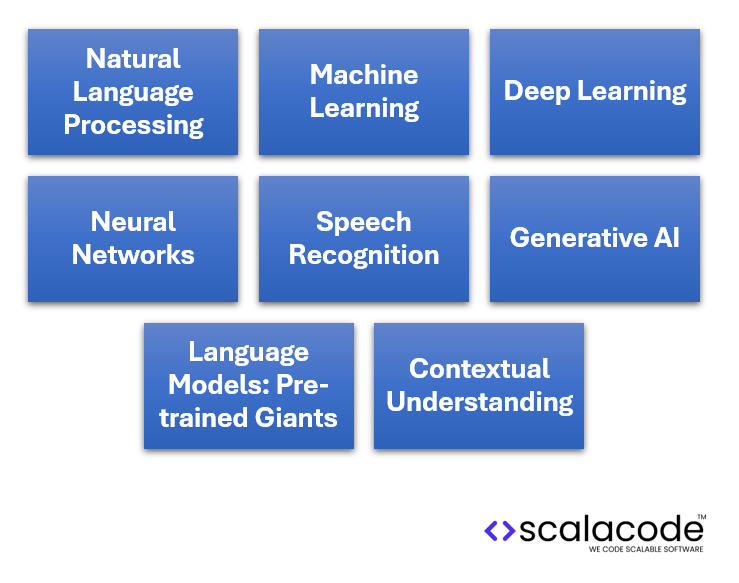
1. Natural Language Processing
Because every AI assistant has NLP right at its backbone, to help machines understand human voice and language. A state-of-the-art survey clearly shows that 72 percent of users want AI solutions; it should understand their penchant for languages seamlessly.
These are possible because of none other than NLP, as it processes your words before analyzing the context to just give you the correct type of responses. Furthermore, it improves over time for better results by learning, if needed, from interactions that end.
2. Machine Learning
It’s just teaching the computer to learn from data. It’s how AI assistants get smarter with use; for example, if you always ask about the weather, your AI assistant will then prioritize that information.
With Machine Learning, these virtual assistants will be able to provide personalized experiences to make them appear even more human-like.
3. Deep Learning
Deep learning, on the other hand, is a subset of machine learning that involves a deep neural network. With deep learning, AI assistants are able to study elaborate speech patterns and increase their levels of accuracy.
For example, deep learning lets assistants differentiate between homophones-word groups that sound alike but have completely different meanings-and understand contexts.
4. Neural Networks
Neural networks take inspiration from the human brain and are a great help in making AI understand complex patterns. In multilingual AI assistants, neural networks allow for language translation and speech recognition.
These networks process huge amounts of data to identify speech patterns and accents, hence your AI assistant can understand you even when you have a strong accent or speak multiple languages in one conversation.
5. Speech Recognition
Ever wondered how your AI assistant understood the voice commands? It’s due to speech recognition technology that recognizes spoken words into text; this text is further processed by AI for the actual command execution.
So great is its efficiency that it was shown recently in one study that 95% accuracy in voice recognition exists on major AI platforms.
6. Generative AI
We all know about ChatGPT, and most of us must be using it; this is a multilingual AI assistant that supports more than 100 languages.
Businesses are availing Generative AI development services to leverage its power in various applications, including:
- Content Creation
- Customer Service: (AI-powered chatbots and virtual assistants)
- Product Development:
- Research and Analysis
Learn More: Generative AI in Media & Entertainment
7. Language Models: Pre-trained Giants
Pre-trained on enormous datasets, these models acquire the structure and context of languages. Popular examples are pre-trained models from OpenAI, including the recent GPT-3 model, which is used in generating human-like text in multiple languages.
These are significant in facilitating multilingual AI assistants that can give proper translations for certain responses.
8. Contextual Understanding
Contextual understanding means that AI has the capability to understand the context of a conversation. For instance, if one has been discussing the forecast of the weather, when he asks, “Is it raining?”, the AI then knows he is inquiring about the present state of the weather. This technology enhances user satisfaction, as 70% of the users reported better interactions when AI understands context.
Steps Involved in Building a Multilingual AI Assistant
Now, this is the answer to one of those questions that might have hit your mind: how to build a multilingual AI assistant. The discussed steps are mere basic things involved ,and you should do them to build a multilingual AI assistant for your business.
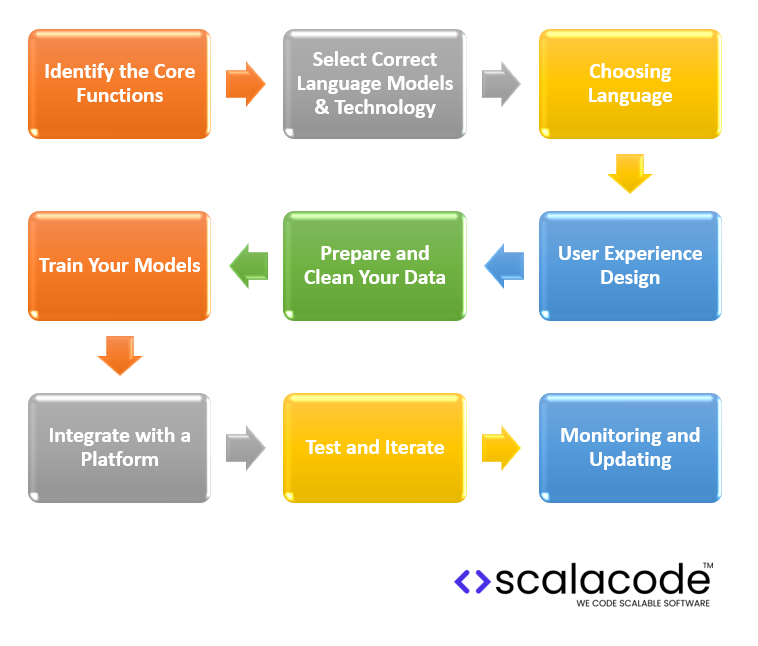
Step 1: Identify the Core Functions
Before your AI developers begin working on the coding process for developing a multilingual AI assistant, it is necessary that you be crystal clear with what the AI assistant would do. In short, have the outline ready. Know the main functions your AI assistant will serve. Consider these key areas:
- Information Retrieval: Retrieving and surfacing information from the web, databases, or internal systems.
- Performing Tasks- sending a reminder, email, and even calling. Translation involves the translation of texts or speech inputs in various languages.
- Natural Language Understanding: It involves processing and deciphering the queries correctly to produce an accurate output.
- Natural Language Generation, It generates a response in a very human-like manner based on the user’s query.
Step 2: Select Correct Language Models & Technology
In developing a multilingual AI assistant, choosing the right technology is the key. For example, NLP forms the backbone of any language-based assistant; it helps it understand and respond in different languages.
Besides, there are also many language models available; study them and choose based on the compatibility of the languages they offer with your existing systems. This is because it will directly impact the performance of the assistant.
Consider these options:
- Transformer-based models: Models such as BERT, GPT-3, and T5 exhibit state-of-the-art understanding and generation of natural languages. They can be fine-tuned for specific tasks and languages.
- Neural Machine Translation (NMT) Models: These are designed for translating text between languages.
- Speech-to-Text and Text-to-Speech Models: This helps your assistant understand spoken speech and speak back to the users in a voice.
Step 3: Choosing Language
The next major process involved in the development of a multilingual assistant is deciding on which languages it should be capable of supporting. Consider your target audience and the geographical territories your business is situated or operates within.
Research what the most spoken languages among your customers are. In such a way, you’ll be targeting those languages with the highest demand to make sure your AI assistant will effectively serve a bigger part of your customer base.
Step 4: User Experience Design
The user experience is ultimately going to determine the success or failure of your multilingual AI assistant. Put yourself in the shoes of a user and ask how they interact with your assistant. The interface should be intuitive and user-friendly. Language options should easily be accessible, and there should be no glitches as transitions are made between languages. Giving your users a great experience means people will come back to use your assistant.
Step 5: Prepare and Clean Your Data
A well-prepared dataset is the key to training your AI assistant. A well-prepared dataset would involve the following:
- Collecting a diverse dataset involving text and speech data in several languages
- Cleaning the data to remove noise, inconsistencies, and errors
- Preprocessing the data by tokenization, normalization, and formatting for model training
- Annotate the data to train your models to recognize entities, intents, and sentiments
Explore More: Top AI Development Companies
Step 6: Train Your Models
Training is an essential step. Your AI assistant needs to understand language nuances. Use diverse data sets from various languages to train it. Include common phrases and potential customer queries. Regularly update the data sets to keep the assistant’s responses accurate and relevant. Training is an ongoing process that ensures your assistant improves over time. Train your language models using the prepared dataset. Consider these techniques:
- Supervised Learning: Training models with labeled data to understand patterns and associations.
- Unsupervised Learning: Training of models on unlabeled data in order to identify hidden patterns and structure.
- Transfer Learning: The ability to utilize pre-trained models, fine-tuning them for one’s specific dataset.
Step 7: Integrate with a Platform
An AI assistant should be integrated into your existing setup and arrangements without issues. It does not matter if it is your CRM platform, your e-commerce ground, or your customer experimentation platforms or channels; integration is vital. This enables the assistant to fetch Customer information and respond to them individually. It also increases the efficiency of business processes and final customer satisfaction, and imparts a smooth and continuous workflow. Select the right environment in which to host your AI assistant. Consider these options:
- Cloud-based Platforms: AI Software development services and tools for creating and deploying AI assistants are available via Google Cloud Platform, AWS, and Azure.
- Mobile and Web Applications: It thus means that you should hire dedicated helpers who can work hand in hand with your mobile applications and related websites.
- Voice Assistants: Connect to Google Assistant, Amazon Alexa, and Apple Sir,i among others.
Step 8: Test and Iterate
Remember that before you can go full-fledged with your AI assistant, you need to test it first. Run it in real-life cases to test how it is in different languages to come up with one that is most efficient. Ask users of the system to report any observations they have regarding the facility or operation of the system. This is because the assistant is tested frequently with feedback given, which makes it more reliable in fulfilling the needs of your customers. This paper aims to present key factors that ought to be taken into consideration while designing Multilingual AI Assistants.
- Language Diversity: Offer a wide range of languages and dialects.
- Cultural Nuances: The cross-cultural communication should be understood and appreciated in terms of language and the language used in different settings.
- Translation Quality: Get correct and smooth translations.
- Contextual Understanding: Think about the topic of the discussion so that the answers given are suitable.
- Privacy and Security: Provide stringent privacy measures to prevent leakage of data belonging to the users of the sites.
Step 9: Monitoring and Updating
However, after getting your AI assistant functional, constant supervision is required. Monitor its efficiency and effectiveness and make improvements when and wherever possible. Language trends and customer preferences evolve, so keeping your assistant updated is important. This ensures it continues to meet customer needs and remains a valuable tool for your business.
The world of AI is constantly evolving, and your multilingual assistant should too. Regularly update your language models and incorporate new data to improve the assistant’s performance. Pay attention to user feedback and keep refining the assistant to meet changing needs and preferences. By staying committed to continuous improvement, your AI assistant will remain a valuable asset to your business.
Now, what sort of features does a multilingual AI assistant have? Let’s have the answer for the same:
Key Features of a Multilingual AI Assistant
| Feature | Description |
| Comprehensive Language Support | Ability to understand and respond in multiple languages, including local dialects and accents. |
| Context-Aware Communication | Understanding the context of a conversation to provide relevant and accurate responses, even in complex queries. |
| Cultural Adaptability | Adjusting to cultural nuances, customs, and communication styles of different regions to provide culturally sensitive responses. |
| Personalized Interactions | Tailoring responses to individual user preferences, past interactions, and demographics creates a more engaging experience. |
| Seamless Language Switching | Ability to smoothly transition between languages within a single conversation, enhancing user experience. |
| Scalability | Handling increasing volumes of multilingual conversations and supporting new languages as needed, ensuring business growth. |
| Integration with Other Systems | Seamless integration with CRM, ERP, and other business systems to provide comprehensive solutions and automate tasks. |
| Sentiment Analysis | Understanding the emotional tone of user queries to provide empathetic responses and tailor interactions accordingly. |
| Voice Recognition and Text-to-Speech | Enabling voice-based interactions and text-to-speech capabilities for accessibility and convenience. |
| Machine Translation | Accurate and contextually relevant translation of text and voice inputs, ensuring effective communication. |
| Knowledge Base Integration | Accessing and leveraging a vast knowledge base to provide informative and accurate answers to user queries. |
| Error Handling and Recovery | Gracefully handling errors and unexpected inputs to maintain a positive user experience, even in challenging situations. |
| Continuous Learning and Improvement | Utilizing machine learning techniques to learn from user interactions and improve performance over time, ensuring the chatbot stays up-to-date and relevant. |
| Security and Privacy | Implementing robust security measures to protect user data and privacy, building trust with customers. |
| Multi-Channel Support | Supporting various communication channels (e.g., websites, mobile apps, social media) to reach users where they prefer. |
| Human Handoff | Seamlessly transferring complex or sensitive queries to human agents when necessary, ensuring a smooth customer experience. |
Popular Multilingual AI Assistant
Some of the most trending multilingual artificial intelligence assistant technologies and gadgets.
1. Amazon Alexa
For smart home management, Amazon Alexa’s cloud-based voice service has really taken a new dimension. It is mainly accessed through Amazon’s Echo line up it is available on over 100 million devices -isn’t that fabulous? To communicate with Alexa, customers use the wake word, which is Alexa. During the voice commands, the device will be lit up by a light to show that it is listening. Alexa understands routine questions such as What is today’s weather? Alexa, play pop music. Moreover, in more sophisticated ways Alexa applies AI as well.
2. Apple Siri
Other prominent AI assistants are iPhone, iPads, Apple Watches, Macs, and Apple TVs integration. Siri, an AI-based voice assistant, can practically perform any task starting from sending a message and including reminding you of something. First and foremost, because it works throughout the Apple ecosystem, Siri is the favorite of any Apple consumer.
3. Google Assistant
The primary intended platform is Android, with Google’s assistant easily capable of performing anything on the phone be it answering general knowledge questions or scheduling meetings. What sets it apart from other AI assistants is very close integration with a variety of other services provided by Google, the thing that the one often may have to employ. Whenever the user wants specific directions on which is the fast home, he or she can tell the Google assistant using Google maps about his or her destination. It also stores top-tier voice detection technologies as well.
4. Microsoft Copilot

Microsoft Copilot is brand new to Windows 11 and introduces an entirely new approach to using AI-powered chat. It will operate as an assistant within the operating system environment to operate on data within any of the apps or programs that can exist in the Windows system, hence enhancing efficiency.
Explore More: Top AI Trends
Wrapping Up
As discussed earlier, the instances of multilingual AI assistants are changing different sectors. They are improving existing systems across the board, from how patients are treated in hospitals to how well a gamer plays the game. What can be further seen is that AI is not just a fad but the future of the world. For everyone, from an entrepreneur to a client, adopting an AI assistant can provide a nearly limitless number of advantages.
The potential for multilingual AI virtual assistants has only been touched upon in this guide. We only have to wait for further development of technology to see what new magnificent ways AI is going to propose to us. We have even discussed the steps to build a multilingual AI assistant and some of the important features of the application.
However, in case you have any questions or are in any way in need of assistance, you can opt for the AI consulting services at ScalaCode. Here, you will get better assistance from highly experienced business consultants, AI developers, QA engineers, and more.
Build innovative, intelligent solutions to transform your business.