
Key Takeaways
- Increases the automation of existing ERP activities.
- Lowers the number of manual tasks and accelerates business operations.
- ERP AI chatbots enhance decision-making and eliminate report-dependent scenarios.
- Increase user adoption through simplification of complex ERP systems and making them more conversational.
- Cut down costs through minimising human involvement.
- Enhance customer and employee satisfaction due to quicker responses.
- Chatbot-led seamless ERP navigation minimises confusion and IT support requests.
In the era of a fast-running world, you must have noticed that no matter how robust the ERP system you have implemented in your organization, your employees still wait for approvals, updates, and multiple other things.
As a result, this whole process slows down the ultimate productivity of the organization- this is where ERP AI Chatbots enter the game.
An ERP AI chatbot can seamlessly speed up your day-to-day tasks like helping your team to place orders quickly, track shipments, answer queries, handle repetitive tasks, etc.
Let’s look at some stats of ERP AI chatbots:

- According to a report by McKinsey, 21% of the organizations have already changed or redesigned their workflow.
- They also claim that in the future, AI could increase $4.4 trillion in productivity growth.
- It is estimated that the integration of AI in the ERP system can reduce manual efforts by 20% to 40%.
A Sneak Peek Into The ERP AI Chatbots
An ERP AI chatbot is a chatbot with an Enterprise Resource Planning (ERP) system. It is based on natural language processing (NLP) to respond to user queries in natural language, allowing users to engage with complex ERP data and processes in conversational language.
An AI chatbot for ERP automates routine operations like data retrieval, generation of reports, and approvals, enhancing efficiency, accessibility, and decision-making in organizations.
By simplifying navigation and providing access to real-time insights to employees, that helps them guide in the right way and increase productivity. In addition to that, reduce manual tasks and time on a daily basis.
What Are The Types of ERP AI Chatbots?
Well, there are multiple types of AI chatbot ERP, as not all AI-based ERP works in the same way; enterprises opt for the ERP AI chatbots depending on their business needs. Hence, there are several AI ERP systems. Let’s look into it:
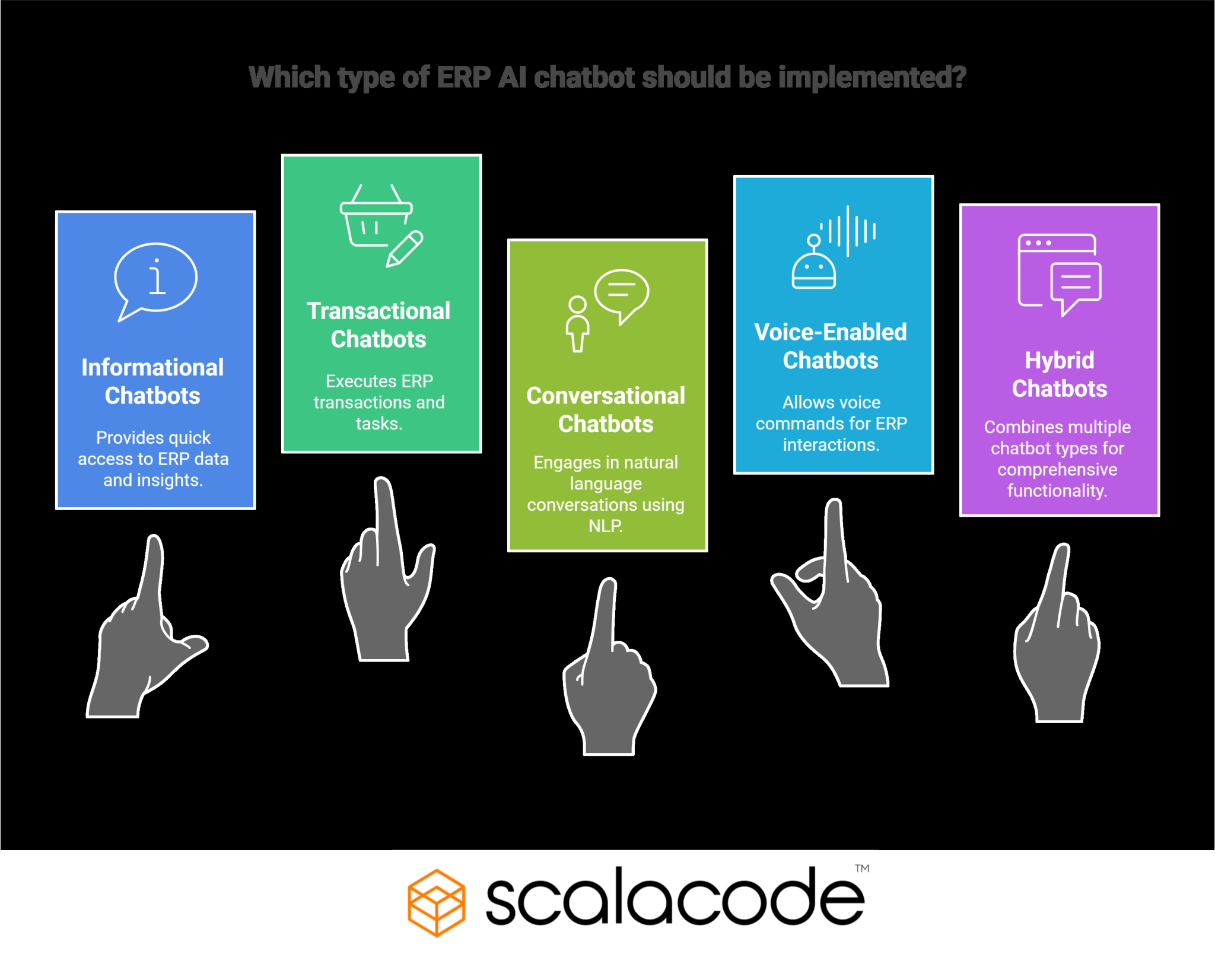
1. Informational ERP AI Chatbots
As the name suggests, the informational ERP AI chatbot is to provide a huge amount of data quickly. In addition to that, this type of ERP system also provides real-time information in just a matter of seconds, for example, order status, inventory levels, or payment due dates etc.
Moreover, you can also create your own data-based chatbot by providing data to learn the cost of developing a Chatbot like ChatGPT.
Also Read: How Much Does It Cost To Develop a Chatbot App Like ChatGPT?
2. Transactional ERP AI Chatbots
The next type of AI chatbot ERP is transactional; this type of ERP helps in doing daily, weekly, or monthly activities or actions. For example, integration of transactional ERP in your organization will help you in approving purchase orders, submitting leave requests, updating inventory, and generating invoices.
3. Conversational ERP AI Chatbots with NLP
The third type of ERP AI chatbot is conversational ERP, with the help of NLP (Natural Language Processing), these chatbots understand the human language and then answer their queries. Additionally, this also helps in solving complicated workflows and helps you get approvals faster.
You can get chatbot development service to build your custom data-based chatbot that will only help your business employees work faster and smarter.
4. Voice-Enabled ERP AI Chatbots
We all know that the future is not text-based; according to consultants, the AI future is all hand-free. Hence, the demand for voice-based ERP systems is increasing day by day. These types of ERPs interact with people via voice commands, useful in warehouses, plants, or field operations.
5. Hybrid ERP AI Chatbots
The hybrid ERP AI chatbots are chatbots that have the combined capabilities of information and transactional ERPs. They work depending on the human needs to improve productivity and speed up flexibility.
Now, let’s move forward to learn the business benefits of ERP AI chatbots, as we are helping businesses to grow in 2026, it is mandatory to have a separate section on business benefits. So small to big enterprise stakeholders know the value of the best AI chatbot ERP in their organizations.
What Are The Business Benefits of ERP AI Chatbots?
This section is one of the crucial sections in the blog; we have designed it specially for business owners. From small business owners to enterprise project managers, you all must know what advanced AI-based ERP can do for you. Here are the top business benefits of an AI chatbot for ERP:
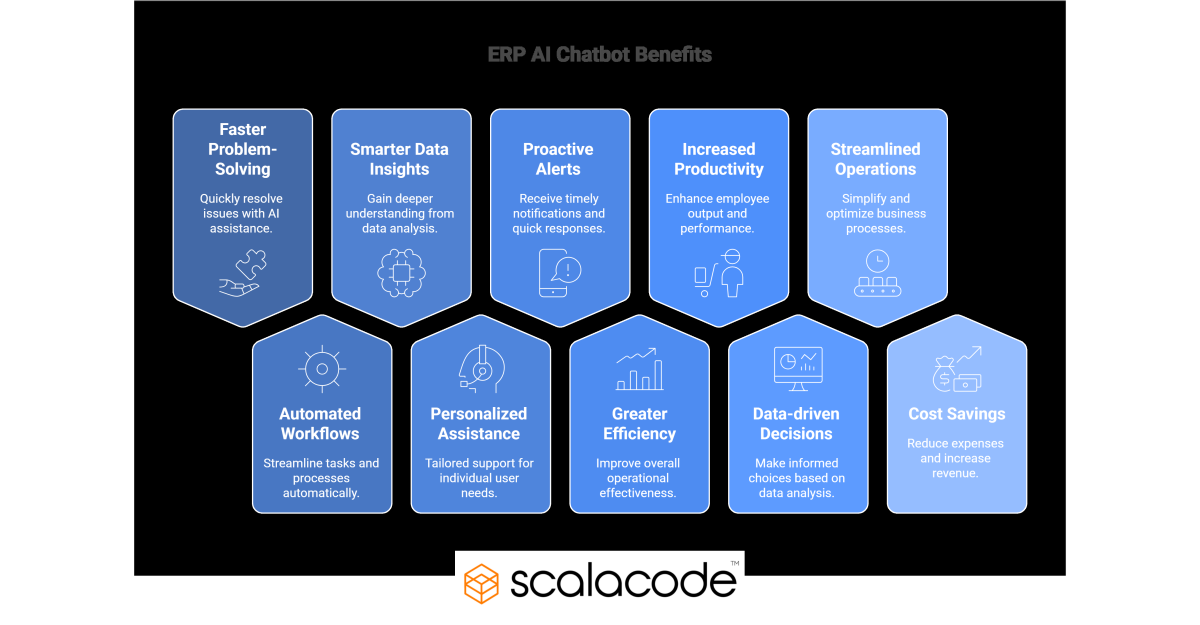
1. Faster Problem-Solving
ERP AI chatbots help people quickly solve their problems; hence, they are in demand, as we all know that nobody has time to solve one problem at a time. AI-based ERP plays a crucial role in organizations, as without waiting to be assisted by staff or human-generated answers, ERP guides them on step-by-step instructions on how to fix a particular issue.
2. Automated Workflows
Robotization of monotonous operations such as data entry, report preparation, and approval is too boring but needs full-fledged concentration. With the help of ERP, these tasks can be automated, and this also reduces human errors. Additionally, this saves the employees the hassle of jobs and enables them to do more important tasks to improve business performance in general.
3. Smarter Data Insights
AI-based ERP chatbots can deliver actionable insights in real time by examining large volumes of data in your existing systems. This helps in enabling managers and employees to make more informed and faster decisions. In addition to that, this also helps in reducing the research time of managers and employees by giving them effective data instantly.
4. Personalized Assistance
Another business benefit of ERP AI chatbot is that it provides or works as personalized assistance for each and every employee. These chatbots can understand user options and capabilities to provide personalized responses and suggestions to maximize user satisfaction and performance.
5. Proactive Alerts and Quick Responses
If you integrate AI into your existing ERP system, then this will also alert you to important conditions like approvals, delays, or when inventory runs low. This will save you the time of checking them one by one daily and manually, hence you can focus on your other tasks. Additionally, businesses can take the necessary steps to avoid any bottlenecks at the right time.
6. Greater Efficiency
Automation also reduces the number of errors in the process and centralizes the process of processing data, leading to less interference in business activities. This simply means that AI-based ERP can increase efficiency by 10X in your business, and there would be a lot more to learn for your employees.
7. Increased Employee Productivity
Increasing employees’ productivity simply means increasing the ROI of the business, and AI-based ERP helps in improving the productivity of the company. With the help of ERP, data is easily accessed in a conversational manner without excessive navigation, less training, and tasks are completed at a faster rate.
8. Data-driven Decision-making
Making decisions for an enterprise is a way more responsible task this is all based on real-time data. But now you need not worry as combined AI and machine learning tools provide the organization with precise predictive forecasts, trends, and performance indicators as the normal work processes.
9. Enhanced Customer Support and Engagement
You can integrate an AI-based ERP in your existing system with the help of an AI development company, as this will help you enhance customer support. ERP AI chatbots deliver instant customer support and are available 24/7 with chat, which helps organizations in increasing customer satisfaction and minimizing the workload on the customer support team.
10. Streamlined Business Operations
The best AI chatbot for ERP streamlines business operations by automating multiple tasks and reducing human work and errors. In addition to that, ERP also helps in linking different systems and automating interdepartmental workflows, removing silos, and improving continuity in processes.
11. Cost Savings and Revenue Growth
Every company wants to cut down costs due to obvious reasons, and without any doubt, AI-based ERP can help you in doing so. This is because it reduces the human workforce and speeds up the task. This simply means fewer people and mistakes decrease the cost of operation, and accelerated insights and better interaction with customers can increase revenue.
Explore in depth: AI App Development Cost Estimation Guide
12. Unified Digital Ecosystem
Chatbots facilitate the harmonious cooperation and information exchange throughout the organization by uniting ERP and CRM, HRMS, and financial systems. This all called a unified digital ecosystem where your HRs, project managers, clients, and employees don’t have to update any sheet, maintaining their tasks, approvals, etc. This can all be done in a single place automatically.
You can seamlessly opt for these benefits in your business and can achieve your goals in a short period of time with boosted ROI with the help of an ERP development company. Now, let’s move forward with learning real-time use cases of ERP AI chatbots with an example.
Top 7 Real World Use Cases of ERP AI Chatbots With Example
AI-based ERP is transforming the way businesses operate, and big business players have already integrated this amazing technology into their existing systems. So, what are you waiting for? Inspire with these given real-world examples and boost your business operations by 10X.
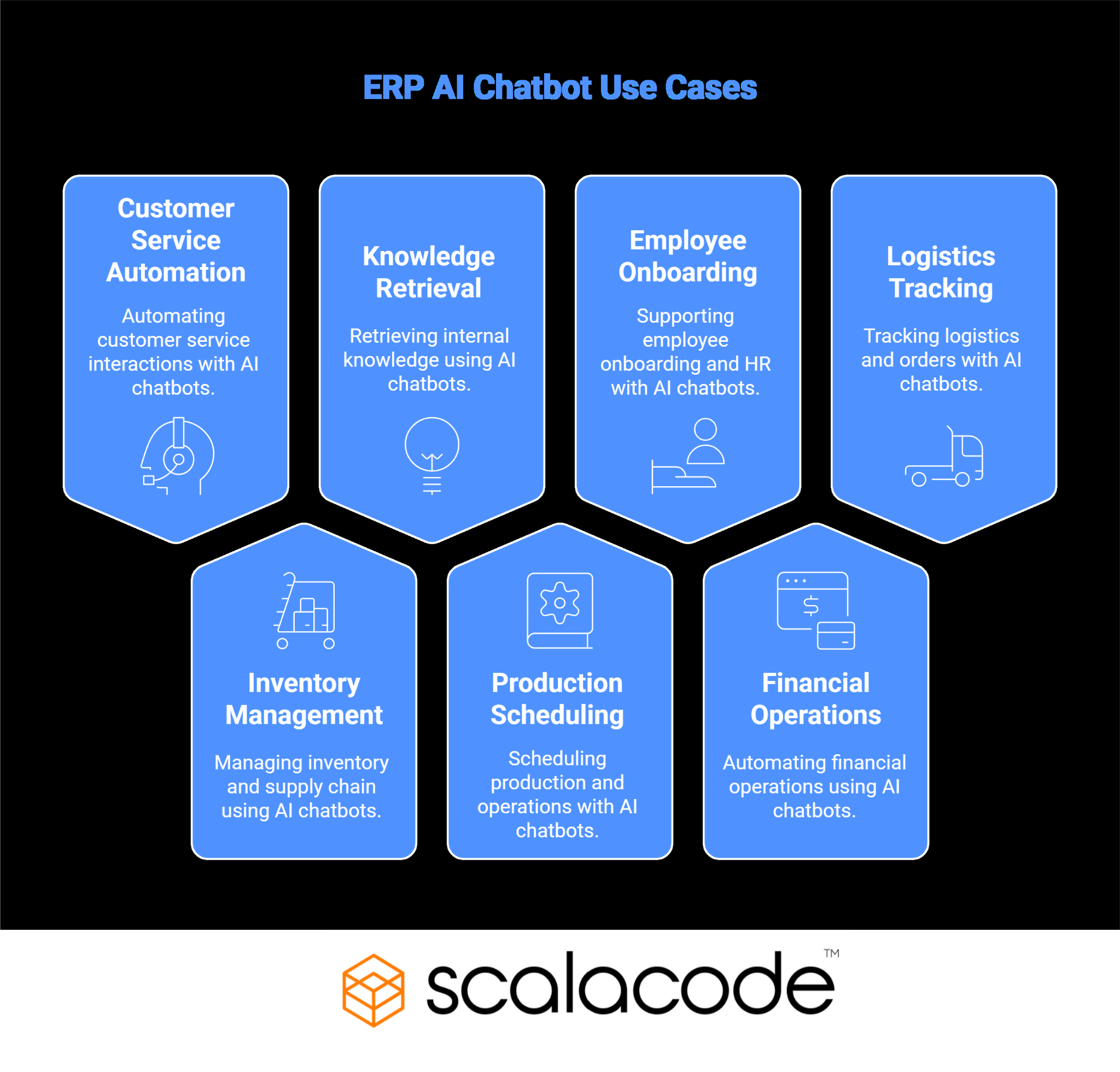
1. Customer Service Automation
ERP-based AI chatbots can be used to assist customer care personnel in responding to frequently asked questions about order status, return policy, and product information etc. This decreases the number of support tickets and shortens response time, leading to higher customer satisfaction.
Example: Currently, most of the e-Commerce companies are using ERP AI chatbots to manage over 60% of customer inquiries without any delay.
2. Inventory and Supply Chain Management
ERP AI chatbots help trace the stock levels, send reorder messages, and track the shipments. Stock refill and supply chain responsiveness can be automated by procurement and warehouse teams.
Example: Unilever uses ERP AI chatbots to monitor inventory and supply chain management, which helps in keeping an eye on raw material stocks and automatically generates purchase orders and production downtime.
3. Internal Knowledge Retrieval
ERP chatbots enable employees to swiftly find company policies, training content, and frequently asked procedural questions. This does away with time-wasting manual searches on ERP dashboards and documentation.
Example: AI-based ERP chatbots help employees in knowledge retrieval so that they instantly get informed about their tasks and can increase productivity.
4. Production Scheduling and Operations
ERP-integrated chatbots can be used to assist the production planning process by providing live access to resource availability, schedule, and order priority to optimize the manufacturing workflows.
Example: Coca-Cola uses ERP AI chatbots within SAP to manage production schedules and prioritize orders. This helps them in reducing delays, and they achieve 100% customer satisfaction every time.
5. Employee Onboarding and HR Support
ERP AI chatbots facilitate HR processes, onboarding, document and policy clarification, automation of standard interactions between AI software and new employees, and the organization.
Example: Siemens uses AI chatbots in their system, which helps them in guiding new employees through onboarding paperwork and training.
6. Financial Operations
Invoices approval, expenses tracking, and financial reports are automated activities through AI chatbots to reduce the number of errors and reduce financial processes time cycles.
Example: Deloitte also takes AI-based ERP in use to offer customers real-time tracking updates, delivery rescheduling, and issue resolution. This all ultimately enhances service and reduces support calls.
7. Logistics and Order Tracking
The ERP AI chatbots are implemented in logistics companies to deliver real-time tracking information to customers, reschedule the delivery, fix the problems, improve the service, and reduce the support calls.
Example: One of the leading logistics firms integrated ERP AI chatbots into their system with the help of Odoo ERP to provide ETAs and rescheduling options.
After looking at these real-time use cases, if you also want to have ERP AI chatbot development, then you can take the help of custom software development firms. Now, let’s move to learn the key features of the ERP AI chatbot.
What Are The Key Features of an ERP AI Chatbot?
Now, after knowing the real-world use case, if you also want to integrate ERP AI chatbots into your system, then you must know what the features should be that has to be your chatbot should have.
1. Natural Language Understanding (NLU)
The ERP AI chatbots use a technique called complex natural language understanding (NLU) to understand human queries of humans and translate them into the required language to answer. This enables users with different levels of technical ability to engage with the ERP system naturally without the need to learn complicated commands.
2. Automated Workflow Execution
ERP chatbots can be used to automate repetitive and predictive processes, such as approvals of purchase orders, payment of invoices, and inventory management. They help them to handle such workflows themselves and reduce human error, in addition to freeing employees to do more useful work.
3. Integration with External APIs
Confluent API connections allow ERP AI chatbots to connect to most enterprise applications, including CRM, HRMS, supply chain applications, and third-party services. This built-in connectivity enables them to exchange data in real-time and further develop the capabilities of chatbots beyond the ERP core to provide users with an end-to-end perspective of their operations and control through a single conversational interface.
4. Detailed Analytics and Reporting
ERP AI chatbots can access and process ERP databases in real-time to produce reports, dashboards, and key performance metrics on request, using advanced analytics capabilities. This enables managers and teams to make data-based decisions in real time, through conversational queries, rapidly supplying business insights.
5. Contextual Conversation Handling
ERP chatbots also remember context between multiple interactions, and what has been typed in and what is underway. This enables conversations that can be conducted in multiple steps to be completed as well, and workflows can be provided in more detail, or more assistance can be provided without having to repeat and input the information several times.
6. Real-Time Data Access
AI-based ERP chatbots provide users instant access to live ERP data, such as stock data, order history, and financial data. Live visibility enables quick decision-making so that the teams can be updated without going out of their way to search for data.
7. Conversational AI with Intent Recognition
Intent recognition allows chatbots to detect the objectives of the user who may be asking questions, initiating a transaction, and other support requests, and respond. Such a smart design decreases mistakes, accelerates communication, and customizes chatbot replies.
8. Seamless ERP Navigation
ERP AI chatbots make it easy to navigate the complex systems through workflows, forms, and menus by talking to the robots. This minimizes training and user frustration and eases the use of ERP systems for non-technical personnel as well.
9. Multi-System Integration
Chatbots combine access to cross-functional data by incorporating several back-end systems and ERP, including CRM and finance platforms. This facilitates teamwork and makes work easier by eliminating data silos and redundancies.
10. Transactional Capabilities
In addition to information retrieval, ERP chatbots can serve as the computer processors of business transactions, such as purchase approvals, leave requests, or the submission of expenses directly within chat interfaces. This simplifies the working processes and speeds up the pace of accomplishing tasks without moving the apps.
11. Role-Based Access and Security
Chatbots have unyielding user access controls using their roles to protect highly sensitive ERP information. Safe authentication and encryption procedures ensure the privacy of data, as well as assist enterprises in meeting regulatory requirements.
12. Voice-Enabled Functionality
ERP chatbots are voice-recognition-enabled, so they can operate hands-free, and that is best suited to employees in warehouses or manufacturing factories, or in the field. They become more usable and more productive in environments that do not permit typing.
13. Predictive and Proactive Insights
Artificial intelligence-based predictive analytics can help chatbots with predictive analytics to anticipate inventory shortages, delayed approvals, or financial risks and stop them. Preventive notices are issued to allow the user to be proactive in order to facilitate work and minimize interruptions.
14. Learning and Continuous Improvement
As the process is repeated, ERP chatbots have the potential to learn what the user likes and what they are most searching for. This practice makes it more precise in their response and more conversational with them over time. This is lifelong learning that will make the chatbot useful and relevant as the business needs evolve.
15. 24/7 Availability with Instant Response
ERP AI chatbots allow 24/7 services and provide instant replies to customers worldwide. This helps to maintain continuity of access to important information and services to enhance productivity and customer experience.
16. User-Friendly Customization
Chatbot workflows, conversation scripts, and user permissions can be easily set up by any business without technical skills. This flexibility allows an organization to customize chatbot behavior according to the unique processes and needs of the organization.
17. Multi-Language Support
ERP based on artificial intelligence can also be used to assist international business because it can speak many languages, and it is not difficult to communicate with users on both sides of geographical boundaries and across cultures, and they are able to promote international cooperation.
18. End-To-End Workflow Orchestration
ERP Artificial Intelligence chatbots can help you automate the entire business process, such as combining data search, approvals, notifications, and reporting into a set of error-free workflows. This enhanced process is quicker and reduces hand-offs between manual work.
These are the main 18 key features that your AI development firm must provide you, and if you are looking for the best AI development companies in India, then you must go through our list can choose the best at the top.
Before choosing the right AI development agency for you, you must know how an ERP AI chatbot works in the real world in the next section.
How Does an ERP AI-Chatbot Work?
Knowing how any new model or technique works is always important for entrepreneurs and project managers to estimate how the new technology or technique will progress their daily tasks. Here in this section, we will tell you how an ERP AI chatbot can boost your productivity.
1. Setting Clear Objectives
It begins with the definition of certain objectives of the ERP AI chatbot, including automation of common operations, improved customer service, and improved workflows in the ERP system. An explicit goal will make the chatbot personalized to address actual business issues and bring quantifiable value.
2. Choosing the AI Platform
Second, organizations choose an appropriate AI platform or framework such as Dialogflow, Microsoft Bot Framework, or a bespoke version to match their ERP architecture. The decision must take into consideration compatibility, scalability, and available NLP capabilities, as well as compatibility with the ERP.
Must Read: Top AI Agent Frameworks
3. Designing Conversational Flow
The conversational processes of the chatbot are developed to build upon common user queries. This step would involve the mapping of the dialogue paths, developing context-based responses, and integrating NLU elements to ensure that the chatbot can read between the lines to interpret customer intent correctly and address industry-specific lingo.
4. Integrating with ERP System
APIs or custom connectors are subsequently used to integrate the chatbot into the ERP. This integration guarantees data sharing in real-time and helps the chatbot to retrieve, update, and process ERP data as it interacts with the users to facilitate smooth workflow operations.
5. Deployment and Continuous Monitoring
Finally, the chatbot is adopted in the business to monitor the performance and receive feedback, as well as modify conversational logic and data links. The chatbot is accurate, pertinent, and aligned with the evolving business requirements because of its constant improvement.
With the help of this section, you have learnt about how ERP AI chatbots work. The next section will be about how you can integrate AI chatbots into your existing ERP system. Here we will also let you know from whom you can take help to integrate this latest wonderful technology.
How to Integrate AI Chatbots into ERP?
Integrating AI chatbots into ERP systems can significantly enhance business efficiency, streamline workflows, and improve user experience. The process begins by identifying key use cases such as automating customer queries, simplifying data entry, or providing instant access to ERP insights. Next, the chatbot is connected to the ERP database and modules through APIs or middleware, enabling real-time data exchange. Natural Language Processing (NLP) allows the chatbot to understand user requests and deliver accurate responses, whether it’s checking inventory, generating reports, or managing HR tasks. With proper training, security measures, and continuous optimization, AI chatbots can transform ERP systems into intelligent, interactive business tools.
Here are the steps for how to integrate an AI chatbot into ERP:
1. Set up API Integration
Start with a strong API linkage between the chatbot platform and the ERP. The chatbot is able to safely access, read, and update ERP data in real time using an API, which is the basis of smooth interactions. Identify API endpoints based on business requirements and provide bi-directional information flow to ensure that operations are synchronized.
Read in detail: API Development: Guide to Build, Test, and Deploy APIs
2. Map Chatbot Functionality
Decide which ERP tasks, use cases, and workflows will be handled by the chatbot. Functionalities Map chatbot supports, such as tracking orders, approvals, or locating reports to ERP modules and fields. This alignment ensures that the chatbot is offering business-specific value that is pertinent and able to interact with the data structures of the ERP appropriately.
3. Customize Chatbot for ERP Language
Train the chatbot to include domain-specific words, ERP commands, and company language. It is a practice of adaptation that assists the chatbot to recognize the queries made by users, process the industry language, and give an accurate response depending on the workflow and the data of the organization.
4. Implement Security Measures
Implement sound security measures (e.g., role-based access, encryption, regulatory compliance, e.g., GDPR). Also, make sure sensitive ERP data is only accessed by authorized users through the chatbot and keep track of all your interactions to identify abnormal behavior. Security is a priority to ensure business vital information is secured and confidence is earned by the stakeholders.
5. Test and Deploy Chatbot
Test rigorously, pilot launches, and user-feedback loops to be sure that it works smoothly, data is properly handled, and the user experience is as easy as possible. A bug when it does, and then roll out the chatbot to the ERP setting, keeping a close track of performance to refine precision and user satisfaction with time.
While integrating the AI chatbot to your ERP system, you may face some challenges, so here in the next section, we have listed all the possible and common challenges and their solutions to make your tasks easy.
ERP AI Chatbot Challenges: What to Expect and How to Solve Them
Let’s look at the common challenges and their solutions:
| Challenges | Solutions |
| Data Security and Privacy | Enforce strong encryption, access management, routine security audits, and adherence to data regulations. |
| Natural Language Processing (NLP) Limitations | Trained Chatbots with industry-specific data, trained on an advanced NLP model, and regularly retrained to improve accuracy. |
| Backend Integration Issues | Application: API-driven architecture, in-depth mapping of ERP operations, and working hand in hand with IT to integrate smoothly. |
| Unrealistic Expectations and Goal Misalignment | Establish specific project goals, train stakeholders about the chatbot features, and match deployment objectives. |
| Maintaining Context in Conversations | Use memory buffers, sliding windows, and context tracking of chatbot architecture to store past interactions. |
| Organizational and Internal Resistance | Prioritize end-user training, engage staff in development, and show value with pilot deployments. |
| Vendor Dependency and Knowledge Gaps | Select vendors whose support is clear, document all integrations, and train internal teams in all vital operations. |
| User Frustration Due to Repetitive Questions | Enhance memory of context, personalize replies, and optimize chatbot interaction patterns through feedback loops. |
| Handling Legacy System Compatibility | Use middleware or adapters, phase integration, and invest in scalable APIs in older ERP environments. |
| Continuous Knowledge Base Updates | Create periodic reviews, facilitate content editing, and give knowledge a refreshing automatic update with business updates. |
Conclusion
It’s time to sum up the blog!
But this blog concludes that ERP AI chatbots transform the work of enterprises by introducing intelligence, algorithms, and real-time feedback into the existing system of the business. Combining AI-based chatbots and ERP not only simplifies complex workflows and improves user experience, but can also solve the main implementation obstacles, such as data security, integration, and NLP constraints.
If you want to integrate artificial intelligence your your ERP system or want to build an AI chatbot-based ERP system for your business, then you must approach an appropriate custom software development company.
They will make this implementation seamless for you with their tailored solutions, supporting team, and much more other facilities. The future-proofing of businesses, cost efficiencies, and unlocking of even more productivity than ever are all achievable by strategically investing in ERP AI chatbot technology.
How Can ScalaCode Help You in Developing an ERP AI Chatbot?
ScalaCode is a reliable custom software development agency that has an in-depth understanding of the development of ERP AI chatbot solutions that would meet the specific business requirements.
Selecting ScalaCode, organizations will be able to hire AI-experts with the best knowledge in AI, natural language processing, ERP integration, and workflow automation. The team of ScalaCode guarantees a smooth integration of APIs, customized conversation flows, role-based access control, and scaling to future-proof your solution.
Regardless of the initial efforts or the update of the current ERP, ScalaCode provides powerful, efficient, and user-friendly ERP AI chatbot solution to help you lead digital transformation and achieve a competitive advantage in your industry.
- Expert AI Developers: ScalaCode has highly skilled AI developers with deep domain expertise.
- Custom Solutions: WE provides tailored ERP AI chatbots built precisely to your business needs.
- Seamless Integration: Smooth API integration with ERP is one of our USPs.
- Advanced NLP & AI: For your ERP system, we will offer you cutting-edge natural language processing for human-like conversations.
- Scalable Architecture: Our tagline says “WE BUILD SCALABLE APPLICATIONS” to help you grow efficiently.
- Robust Security: Providing our customers with strict and robust data privacy is mandatory for us.
FAQs
1. How are AI chatbots shaping the future of businesses?
AI chatbots are changing businesses and making customer interactions automated, internal processes smooth, and enabling real-time insight. These chatbots help in reducing the costs of business operations, make customers happier, and provide 24/7 services.
2. How does a chatbot integrate with existing AI systems?
Chatbots are integrated with AI systems by API, middleware, or direct ERP/CRM connectors. They feature the use of natural language processing (NLP), machine learning, and existing analytics tools. This fluid coordination makes chatbots able to access data, give correct answers, and aid decision-making.
3. How can businesses use ERP and AI to become an intelligent enterprise?
Using AI with ERP can seamlessly help companies automate repetitive operations, obtain insights into predictability, and enhance resource planning. In addition to that, the ERP systems that are AI-driven can convert raw data into actionable intelligence, which facilitates smarter decisions.
4. How quickly can an ERP AI chatbot be implemented?
The time taken in implementation should depend on the complexity of the system, data preparedness, and customization. Most basic ERP AI chatbots can be implemented in a few weeks, whereas more complex, enterprise-wide ones can take several months.
5. What industries benefit the most from ERP AI chatbots?
The greatest beneficiary industries are: manufacturing, retail, healthcare, finance, and logistics. These industries deal with huge volumes of data and demand decision-making in real-time. ERP AI chatbots enhance the efficiency, reporting, and customer/employee interaction.
6. How do ERP AI chatbots improve customer support and engagement?
ERP AI chatbots are quick to respond to questions, walk users through the processes, and provide customized recommendations. They minimize wait periods, promote self-service, and make the customer experience more interactive.
7. What are common challenges in implementing ERP chatbots?
The difficulties are how to integrate with previous systems, properly handle data, how to train the chatbot for industry-specific applications, and user adoption. There are also challenges in data security, customization cost, and keeping chatbot accuracy.
8. Can ERP AI chatbots understand natural, conversational language?
Yes, the current ERP AI chatbots interpret natural language with the help of NLP and machine learning. They are also able to cope with slang, context, and even multi-turn conversations. But success requires training data, language models, and continuous optimization.
9. What are the security considerations for using AI chatbots in ERP?
Protecting business and customer sensitive information, adherence to the regulations, such as GDPR, and unauthorized access are the major considerations. It is necessary to have strong authentication, encryption, and frequent monitoring.