


For businesses, understanding the software development cost is more crucial than ever before. This is because the software market is rapidly evolving with increasing demand for AI-driven applications, cloud-native solutions, and scalable mobile and web platforms.
If we look at the recent stats, according to Precedence Research, the global software market size accounted for USD 823.92 billion in 2025 and is expected to reach around USD 2,248.33 billion by 2034, expanding at a CAGR of 11.8% from 2025 to 2034.

Investing in software development offers businesses numerous benefits, including improved operational efficiency, automation of repetitive tasks, enhanced customer engagement, and the ability to make data-driven decisions.
However, all these advantages come with their own challenges, and one of the most significant factors businesses need to manage carefully is the cost of developing software. In this guide, we are going to discuss all the notable points that you need to know about the software development cost in 2026.
Also Read: Top Software Development Trends
Software Development Cost Overview Based on Complexity Level
In simple words, software development cost is not just about paying developers’ hourly rates, but it’s more than that. Basically, software development is the process of designing, coding, testing, and maintaining software applications or systems.
In 2026, with the increasing demand for AI integration, cloud-based infrastructure, multi-platform support, and robust security measures, the overall cost can vary significantly depending on the complexity of the project.
Hence, understanding these costs is essential for businesses to make informed decisions, allocate budgets wisely, and ensure that their software delivers both high quality and long-term value.
Software development cost can vary with software complexity. Let’s discuss the software complexity and its cost:
| Complexity Level | Typical Features Included | Approximate Cost Range (USD) | Estimated Timeline |
| Low Complexity / Basic Software | Simple UI, core features, minimal integration | $30,000-$80,000+ | ~3 to 6 months |
| Moderate/Mid-Level Software | Custom UI, payment integration, moderate feature set | $80,000-$250,000 | ~6 to 9 months |
| Advanced Software | Sophisticated functions, complex workflows, APIs | $250,000-$600,000 | ~9 to 12 months |
| Enterprise-Grade/High-Complexity Software | Large-scale systems, real-time data, AI/ML, strong security | $600,000+ | 12 to 18+ months |
This is the estimated cost of software based on complexity. In case you want your software to be fully customized, then you should reach out to the top software development companies in India. Additionally, they will guide you about the right technology stack, feature prioritization, development approach, and accurate software development cost.
Breakdown of Software Development Cost From Planning to Deployment
After taking a look at the overview of software development cost, it is now important to know its complete breakdown. In this section, we are going to discuss the budget of software development from planning to deployment.
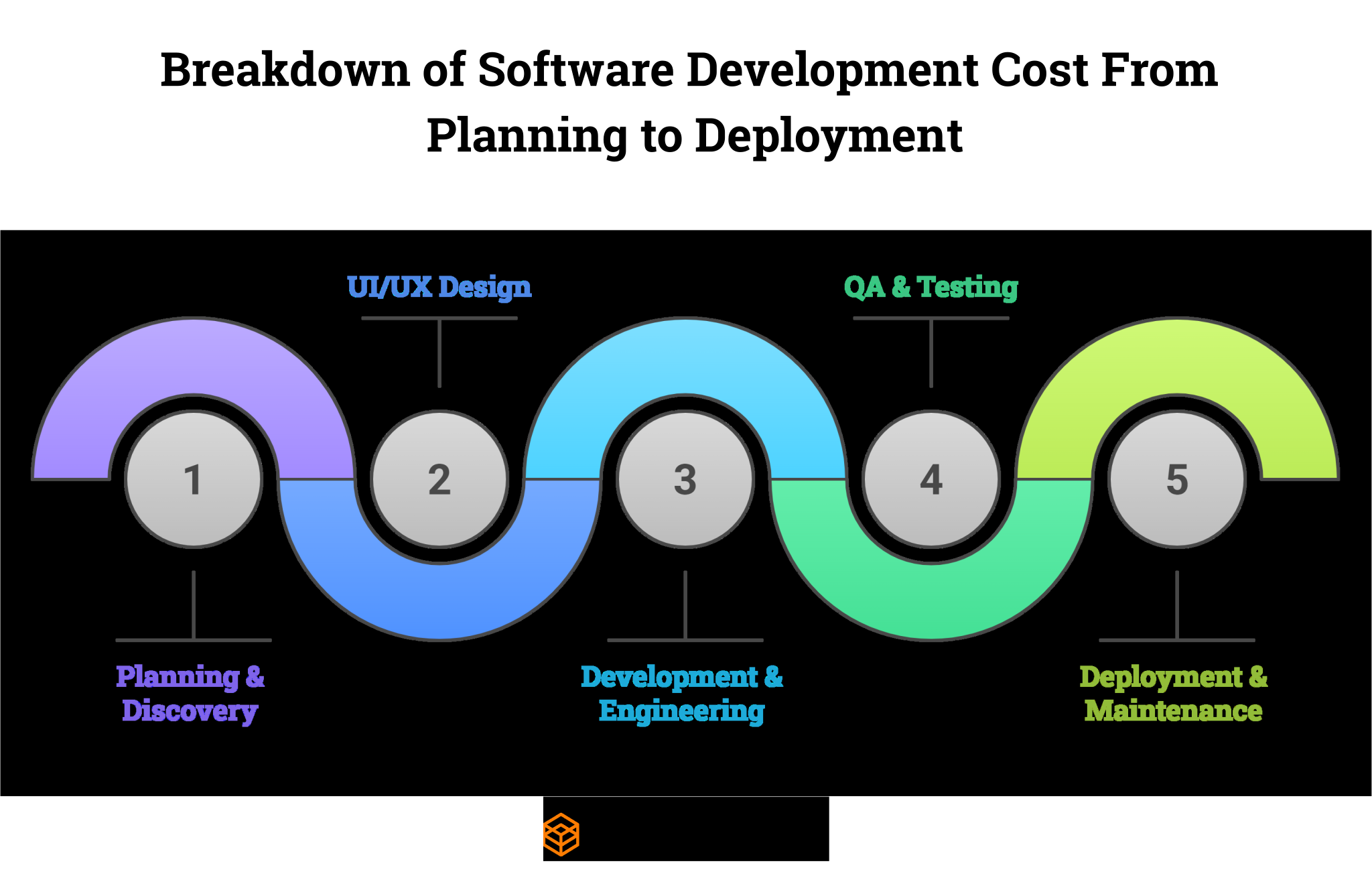
1. Planning & Discovery
The initial stage of software development is planning and discovery. This phase includes a deep understanding of business objectives, user expectations, and technical constraints before a single line of code is written. Additionally, this stage is critical as stakeholders collaborate to define clear requirements, identify potential risks, and align technical decisions with long-term business goals.
Key activities include:
- Detailed requirement gathering and documentation
- Market, competitor, and user research
- Technical feasibility analysis and architecture planning
- Feature prioritization based on business impact
- Project roadmap creation and timeline estimation
- Risk assessment and dependency mapping
2. UI/UX Design
The next stage is UI/UX designing, where developers focus on designing intuitive, accessible, and visually consistent experiences that align with user behavior and business branding. Along with that, this phase also includes conducting user research and creating wireframes and interactive prototypes. Not only this, but companies also map user journeys and develop high-fidelity visual designs to ensure seamless navigation across platforms.
Design cost components include:
- Wireframes and low-fidelity prototypes for early validation
- High-fidelity UI design and visual branding
- User journey mapping and interaction design
- Responsive design for multiple devices and platforms
- Accessibility compliance (WCAG standards)
- Creation of reusable design systems
3. Development & Engineering
The development phase represents the most resource-intensive and technically demanding stage of the software lifecycle. This stage includes transforming designs, plans, and requirements into fully functional, secure, and scalable software. In 2026, this stage may include modern frameworks, cloud-native architectures, microservices, and AI-driven features, all of which increase engineering complexity.
Key activities include:
- Frontend development for user-facing interfaces
- Backend development for business logic and workflows
- Database design, optimization, and management
- API development and third-party service integrations
- Cloud infrastructure setup and configuration
- AI, ML, automation, or data-driven feature implementation
4. QA & Testing
The next stage is testing the software across multiple platforms. This phase ensures that the software performs reliably, remains secure, and delivers a consistent experience. In addition to that, this stage also validates both functional and non-functional requirements before release. Moreover, performance benchmarking, security validation, and compatibility testing across multiple devices, platforms, and browsers are part of this phase only.
Testing activities include:
- Manual and automated test case execution
- Functional and regression testing
- Performance, load, and stress testing
- Security and vulnerability assessments
- Cross-platform, device, and browser testing
5. Deployment & Maintenance
The last stage involves deploying the software and then maintaining it once it goes live is an important step. This phase is crucial when it comes to the cost of software development, as it ensures that the software is production-ready and accessible to end users without disruptions. Additionally, it includes configuring cloud infrastructure, setting up scalable servers, implementing CI/CD pipelines for automated releases, and integrating monitoring tools to track performance and system health.
Key activities include:
- Cloud hosting and server configuration
- CI/CD pipeline setup for automated releases
- Bug fixes and performance optimization
- Feature enhancements and upgrades
- Monitoring, logging, and analytics integration
Let’s turn your vision into powerful software.
Software Development Cost Drivers: Key Factors That Impact Your Budget
After learning about the software development cost breakdown, let’s look into what the factors are that really drive the cost of any software. Keeping an eye on the factors can also help you in staying within budget and avoiding unexpected expenses.

1. Project Complexity & Feature Scope
The first feature that may affect the software development cost is the complexity of your business software and its feature scope. In simple words, a simple or basic software with minimal features can take minimal time and cost to develop. Additionally, a feature-rich software can take from 7 months to 1 year.
Moreover, if you belong to an enterprise and want to make your software more advanced by integrating real-time data processing, multi-user roles, and third-party integrations. AI-powered features and high-level security requirements further add to the complexity, which ultimately increases the overall cost of development.
2. Technology Stack Selection
The other factor that plays a crucial role in boosting the cost of developing software is choosing the right technology stack for your software. Popular and mature technologies like Java, .NET, Python, and React often reduce development risks and long-term maintenance costs because they are widely supported and well-documented.
However, using emerging frameworks, niche programming languages, or specialized AI and cloud-native tools may increase initial development expenses. But choosing the right tech stack is crucial, as it ensures long-term scalability and reduces maintenance costs in the future.
3. Team Composition & Developer Expertise
The next factor is team composition and developing expertise. Basically, “team composition” means hiring a skilled team of developers. This team will include frontend and backend developers, UI/UX designers, QA engineers, DevOps specialists, and project managers to develop result-driven software.
In addition to that, you should hire remote developers who have years of experience in building such software. So that they can deliver higher-quality code faster, reduce rework, and ensure smoother project execution.
4. Location & Global Hourly Rates
The next factor that may increase the software development cost is the location of the software developer. This is because the hourly rate of developing any software significantly varies across regions due to differences in labor costs, market demand, and economic conditions.
To better understand this, let’s take an example: hiring developers from North America or Western Europe usually results in a higher cost as compared to hiring Indian developers. This is the reason why companies choose agencies that provide custom software development services to optimize development costs.
5. Design & UX Requirements
UI/UX design directly affects both development time and the cost of software development. As this phase includes designing Custom animations, advanced interactions, branding elements, and accessibility compliance tips, it makes the software look attractive.
Additionally, businesses that prioritize user experience often require extensive user research, prototyping, usability testing, and design iterations. While all these requirements increase the software development cost and also the time of development.
6. Testing & Compliance Needs
Testing the software once it is developed and integrating all the necessary security compliance is required, as it determines whether the software is working as expected or not. Other than that, integrating security compliance requirements like GDPR, HIPAA, or PCI-DSS to protect sensitive user data, meet regulatory standards, and avoid legal or financial penalties.
Integrating different security compliance and testing the software across platforms increases the software development cost. However, this testing and integration significantly reduces post-launch risks, system failures, and costly rework in the long run.
7. Maintenance & Scalability
The custom software development cost does not end at deployment, but there is one more step where the software development cost can increase: maintenance & scalability. This step includes ongoing maintenance of the software performance monitoring, bug fixes, security updates, and feature enhancements.
Performing all these activities is essential to keeping the software reliable and scalable in real time. In addition to that, building a scalable architecture that supports future growth may increase the initial cost of software development. However, this will be beneficial in the future and can save you from long-term expenses.
Average Cost to Develop Different Types of Software in 2026
Not only complexity, but software development cost in 2026 also depends on the types of software that you choose to build. Here in this section, we are going to discuss the different types of software and their average cost of development.
1. Mobile Apps (iOS, Android, Cross-Platform)
If you choose to build a mobile app (whether iOS, Android, or cross-platform), based on its complexity and feature set, the mobile app development cost will increase or decrease accordingly.
| Platform Type | Typical App Complexity | Estimated Development Cost (USD) |
| iOS App | Basic to Advanced | $40,000, $300,000+ |
| Android App | Basic to Advanced | $35,000, $280,000+ |
| Cross-Platform App (Flutter / React Native) | Medium to Advanced | $45,000, $250,000+ |
2. Web & SaaS Platforms
Next are web applications and SaaS platforms, where not only an intuitive interface but also a scalable backend matter. Building a visually appealing design to a scalable backend, including backend systems, subscription management, data analytics, and cloud integrations, may cost you around $80,000-$150,000.
In addition to that, if your business demands something advanced and complex like multi-tenant architecture, role-based access control, real-time data processing, AI-driven analytics, third-party API integrations, etc. The cost of development will increase and can cost you somewhere around $200,000-$300,000 or more.
3. Enterprise Systems
Next is enterprise software, such as ERP, CRM, HRMS, or large internal platforms that demand deep integration with existing business processes, tailored workflows, complex data models, and stringent security, which may increase the costs of enterprise software development, which may cost you around $100,000 to $300,000+. Not only this, but this type of system includes a longer development timeline and higher engineering requirements.
4. API-Driven & AI-Enabled Apps
Applications that rely on APIs for integration and also include AI-based features and other advanced AI technologies like machine learning models, predictive analytics, or intelligent automation are often more expensive. This type of software may cost you around $80,000-$200,000+ with features like backend logic, data pipelines, performance optimization, and security safeguards.
Software Development Cost Across Different Regions
Other than complexity and software type, the software development cost also depends on the region or location of the development team. We have curated this section to let you know about the software development cost globally.
| Region | Typical Hourly Rate (USD) |
| India | $15-$40/hr |
| Southeast Asia | $23-$55/hr |
| Asia (General) | $20-$50/hr |
| Middle East | $30-$70/hr |
| Europe (Western & Eastern) | $35-$55/hr typical; $40-$78/hr in Ukraine |
| Latin America | $28-$90/hr (varies by country) |
| South Africa | $40-$80/hr |
| USA | $60-$130/hr |
| Canada | $80-$140/hr |
| UK | $55-$75/hr |
| Australia | $90-$120/hr |
Again, this is the estimated cost of software development region by region. If you belong to any of them, you can contact the mobile app development company and understand their cost structure.
Software Development Engagement Models: How it Affects Budget
Most software development companies offer multiple engagement models based on project scope, duration, and team structure. It helps customers in planning their budget and selecting a model based on the requirements of their business software. Moreover, it also helps organizations in defining project scope clearly, allocating resources efficiently, and reducing the risk of unexpected expenses during the development lifecycle.
1. Dedicated Team Model
- Ideal for long-term or evolving projects.
- Offers transparency through regular communication and reporting.
- Provides scalability, adding more resources as needed.
- Ensures alignment with your product vision.
- Keeps software development costs manageable for ongoing work.
2. Fixed-Price Model
- Great for predictability and budget control.
- Reduces risk since changes are limited outside the agreed scope.
- Helps businesses lock in development costs and avoid unexpected overruns.
- Best suited for well-defined projects or smaller scopes.
3. Time & Material Model
- Perfect for projects with evolving requirements.
- Encourages an agile approach where priorities can shift as development progresses.
- Allows incremental improvement with continuous feedback loops.
- Offers a cost-efficient solution when the scope is uncertain or likely to change.
4. Offshore Development Model
- Reduces cost without compromising quality by tapping into talent in lower-cost regions.
- Enables round-the-clock development cycles thanks to time zone differences.
- Offers cultural adaptability, especially helpful for products targeting global audiences.
- Provides a balance of quality, speed, and value, making it a cost-efficient choice.
Learn More: Enterprise Mobile App Development
How to Calculate Software Development Cost Accurately
As far as we have discussed, all the factors that may affect the software development cost. Now it’s important to know how to calculate the software development cost based on your business needs and requirements. Here in this section, we have discussed some impactful strategies that will not only help you in saving costs but also ensure accurate software development cost estimation based on your business requirements.
1. Decide scope & features list
First, you should decide the project scope and do deep market or competitor research to find out the most result-driven feature that you need to add to the software. Additionally, in this step you should also look into the core functionalities, optional enhancements, user roles, third-party integrations, and future scalability needs. As a result, all these activities help in building well-defined software.
2. Select target platforms & tech stack
In the next step, choose the platform of your software, like operating systems (Windows, iOS), cloud platforms (AWS, Azure), developer platforms (Java, .NET), and service/business platforms (Salesforce, Shopify, Marketplaces). Different frameworks, programming languages, and tools have different development costs. Hence, you should choose your platform wisely by aligning it with your business goals, scalability requirements, and long-term maintenance strategy.
3. Choose location & team model
We have discussed both the location of the developers & their estimated costs and the team model. Based on your business goals, software complexity, feature requirements, etc., you should choose the development team’s location and cost model. You can choose Offshore or nearshore teams to reduce cost, while local development teams are better suited for projects that require frequent in-person collaboration.
4. Add contingency
No project is entirely predictable; it is quite possible that at some time you will want to make some major changes in the software. This could be based on how consumers are using the software, real-time feedback, new trends & technology, etc. Hence, adding a contingency buffer (typically 10 to 20%) helps account for unexpected changes and is essential to maintain financial stability.
Use ScalaCode’s software development cost calculator to plan, build, and scale within your budget.
Software Development Cost Optimization Strategies
Optimizing the software development cost does not mean compromising on quality, but you can also strategize the steps and use some good tips to save big. Here in this section, we will discuss some impactful tips that you can take into use before you build the whole software and make it live in the real world.
1. Start with an MVP
The first thing that you can do is build a Minimum Viable Product (MVP), which allows you to launch with only essential features and validate your idea before making the software live.
2. Outsource to nearshore teams
Next is hiring nearshore or offshore development teams that can significantly lower the cost of software development. Additionally, they can also provide you with competitive rates while maintaining quality standards.
3. Use modern frameworks & reusable components
You should use modern frameworks and reusable components like React, Angular, Vue.js, Flutter, .NET Core, Spring Boot, and open-source UI libraries or pre-built modules to speed up development. Additionally, choosing trending technologies also facilitates reduced engineering effort.
4. Leverage AI automation intelligently
The next tip is to leverage AI automation intelligently. Here, developers use AI-powered tools for testing, code reviews, and DevOps automation. AI automation tools can also help you in enhancing customer support, optimizing resource usage, and reducing manual effort.
How ScalaCode Helps Businesses Optimize Software Development Cost
Managing software development costs for small-to-medium-sized businesses is a crucial step. However, ScalaCode provides tailored software development solutions that focus on cost efficiency, timely delivery, and sustainable product growth. In addition to that, we combine domain expertise, efficient development methodologies, and strategic technology choices to minimize development overhead.
What else we offer:
- Strategic discovery & cost planning
- Right tech stack & reusable components
- Efficient team composition
- Continuous quality assurance
- Scalable architecture & future planning
To deeply understand how ScalaCode can help you create a result-driven solution, let’s take an example of Truly Home Cooked Meals (THCM) app. In this project, we built a scalable food delivery platform with optimized backend systems and a seamless user experience. We leverage cloud-based infrastructure and modular development for faster go-to-market and long-term scalability.
If you also want to build such an impactful solution for your business that leverages AI capabilities, then you should reach out to ScalaCode for AI app development costs. Additionally, our team will also ensure optimal performance without unnecessary development overheads.
Conclusion
Understanding software development cost in 2026 is crucial and requires more than just looking at development hours or hourly rates. This guide can be your go-to one, as we have discussed everything from project complexity and technology stack selection to team composition, regional pricing, and long-term maintenance.
We have also discussed that multiple factors collectively determine the overall cost of developing software. So, you should first analyze your business goals & demand, define a clear feature scope, and choose the right technology stack and engagement model accordingly. By doing this, you can create a realistic software development cost estimation and avoid unnecessary expenses.
FAQs
-
How much does custom software development cost?
The custom software development costs can be around $20,000 for simple apps to over $500,000 for complex enterprise systems, averaging often between $80k-$400k+.
-
How long does it typically take to develop software in 2026?
The development time of any software completely depends on the complexity of the software. Usually, basic software may take around 2 to 4 months, while complex enterprise or AI-driven software can take 9 to 18 months or longer.
-
How much budget should be allocated for unexpected expenses?
It is recommended that 10 to 20% of the total software development budget should be allocated for unexpected expenses. These unexpected expenses may include additional feature requests, scope changes, third-party integrations, unforeseen technical challenges, bug fixes, and delays in development timelines.