
Imagine arriving at a new airport and, in a few minutes, having a car of your desire waiting to be taken instead of filling in shelves of papers and then wasting your time in a rental office. Such a smooth process entices millions to apps such as Turo. Turo is innovating the way we rent cars, with over 14 million users and more than 450,000 listed cars.
However, the road to getting here was not easy. Turo dealt with some sore spots of the traditional car rental market, such as an insufficient number of cars, excessive fees, and inflexibility.
The on-demand car rental industry is experiencing rapid growth globally:
- The global car rentals market is projected to reach $106.37billion in revenue by 2025, with an expected annual growth rate (CAGR) of 5% through 2030.
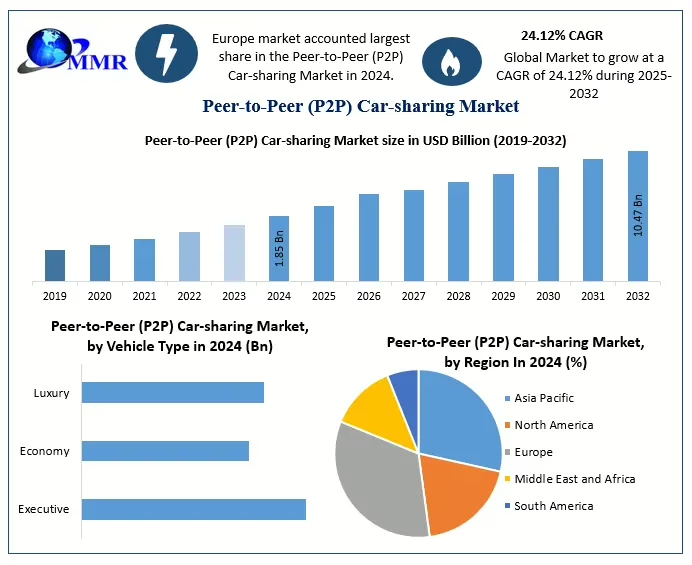
- Peer-to-peer (P2P) car-sharing revenue is booming, forecast to grow at a remarkable 24.12% CAGR from 2025 to 2032, reaching nearly $10.47billion.
- The online car rental platform market was valued at $101.76billion in 2024 and is anticipated to climb to $193.47billion by 2033.
These numbers are indicative of a rapid growth in the demand for flexible, technology-enabled, and peer-powered mobility alternatives. The success story of Turo shows that apps that take on the biggest challenges, such as selection, pricing, and convenience, have a good position in this hyper-growth market.
With the technology revolutionizing transportation today, the question that every entrepreneur and business is interested in having the answer to is: How much investment and planning do you have to do to develop a successful car-rental app like Turo?
In this blog, you will get to know the car rental app development cost, features, and strategies for building your own on-demand car rental platform, helping you turn industry pain points into business opportunities.
First, let’s get to know what is Turo app is, let’s get started…
What is the Turo App?
Turo is one of the most popular peer-to-peer car sharing markets where you can book any car you require right through the local hosts. In contrast to traditional car rental companies, Turo uses modern technologies to develop car rental applications, allowing people to communicate directly with each other and simultaneously providing a larger variety, fair prices, and convenient booking through mobile and web applications.
Anyone who is familiar with it will tell you that the company has an easy-to-use interface, extensive insurance options, and a straightforward rating system, and as such, it has become the standard bearer when it comes to contemporary mobility tools.
Through collaboration with an experienced car rental app creation company, Turo has managed to maximize the flexibility and scalability, moving the levels of car rental app development in the industry. on-demand car rental app development has given this platform what it deserves to achieve in a competitive on demand car rental market.
Key highlights:
- Broader car selection through peer-to-peer listings
- Competitive pricing and flexible rental durations
- Secure payments and insurance for peace of mind
- Supports both mobile and web platforms for easy access
To any entrepreneur or company getting into this environment, it is necessary to invest in car rental app development services and an innovative car rental app development system to have the same convenience and influence that Turo has attained in the market.
Cost to Develop a Car Rental App Like Turo
The cost of car rental app development for a platform like Turo depends on various factors, but a typical ballpark estimate ranges from $40,000 to $200,000 or more. Here’s a quick breakdown:
- Basic car rental app: $40,000 to $60,000
- App with advanced features: $80,000 to $120,000
- Enterprise-level solution: $150,000 and above
The price of building a car rental app, such as Turo, is highly dependent on a variety of factors, mainly application complexity, the selection of features, the region of the team that will work on the application, and the platform itself. To have a better picture, specific research by various people shows what it takes to invest in levels of complexity:
- Simple car rental app: $20,000, $50,000
Includes essential features like user registration, car listing, basic booking, and payment integration.
- Mid-level car rental app: $50,000, $100,000
Adds enhanced UI/UX, advanced search, ratings, messaging, and admin panel.
- Advanced/Enterprise-level solution: $100,000, $200,000+
Involves complex features such as real-time GPS tracking, dynamic pricing, multi-language support, seamless third-party integrations, and high scalability.
Breakdown of Car Rental App Development Costs
| Complexity Level | Estimated Cost (USD) | What’s Included |
| Simple | $20,000, $50,000 | Core app functionality, basic UI, essential payment flows. |
| Mid-level | $50,000, $100,000 | Advanced UI, extra features, an admin dashboard, and notification systems. |
| Advanced | $100,000, $200,000+ | Real-time features, large-scale support, analytics, and cloud hosting. |
Primary Factors Affecting the Cost of Car Rental Mobile App Development
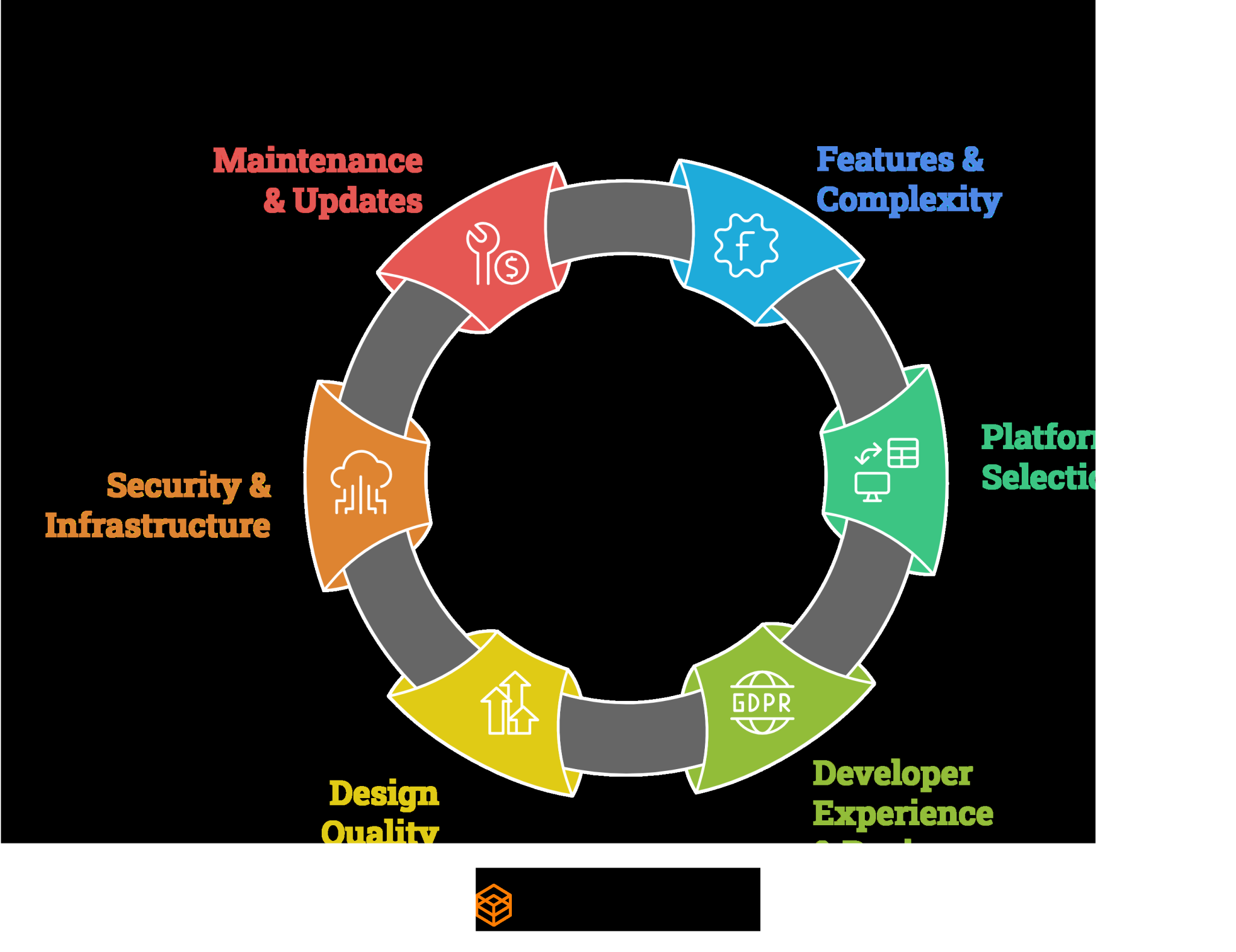
Several key factors influence the cost of developing a car rental mobile app, from feature complexity to technology stack. Knowing these variables enables companies to plan ahead, budget smart, and focus on the important features.
1. Features & Complexity of Apps
The cost will be higher the more developed the features (such as recommendations powered by AI, multi-currency functionality, and instant booking).
2. Platform Selection
The platform: whether developing for iOS or Android or both (cross-platform) has an effect on time, along with budget. Savings can be achieved by cross-platform technologies (such as Flutter/React Native).
3. Developer Experience & Region
The rates paid to skilled professionals in North America or Western Europe may be as much as $80 to $150/hour, and those in Asia may be only $20 to $50/hour.
4. Design Quality UI/UX Design
The development budget may be increased, noticeably, with the help of custom, branded, or animated designs.
5. Security, Infrastructure Back-end
Timely investment in safe and scalable cloud infrastructure (particularly of the enterprise apps) holds an influence on development cost as well as mid-term maintenance costs.
6. Continuous Maintenance, Support & Updates
Security, compliance, and user satisfaction require annual fixes whose cost averages about 15 to 20% of the cost of the original development.
Example Platform-wise Cost Estimates
| Platform | Estimated Cost (USD) |
| iOS | $14,000, $27,000 |
| Android | $14,000, $27,000 |
| Cross-Platform | $20,000, $39,000 |
Additional Considerations
- Marketing and Branding: $10,000-$20,000 (initial promotion and market entry).
- Legal/Compliance/Insurance integrations: Costs vary by region and legal complexity.
- Post-launch scaling: Enabling cloud hosting, analytics, and big-data support may add $20,000-$50,000 for enterprise solutions.
It is essential to select a dedicated partner for car rental mobile app development that will help cover all expenses and stay scalable. Choosing skilled providers of car rental app development services and tested car rental app development solutions allows one to prevent the most frequent pitfalls and hidden costs.
By making a thoughtful investment in car rental app development, you set your app platform in a favorable position to become a viable rival among the already well-known brands, with an opportunity to enjoy a part of the rapidly expanding on-demand mobility market.
Advanced Features of a Car Rental Turo-like App
Creating an app that has multiple features and is well-linked, such as Turo, takes a keen knowledge of the necessary and advanced features that make such platforms special. These are some of the features that any dominant AI software development company will emphasize to deliver the best user experience and efficiency in the operation of your car rental business.
Below is a detailed explanation of the core features every Turo-like app needs, integrated with industry-approved car rental app development solutions:

1. User Registration & Profile Management
User retention highly depends on the ease of onboarding users. The users must have an option of registering through email, telephone number, or social media. The system is supposed to record great information, such as the information on the driving license and customization of the profiles by renters and car owners. The app also uses secure authentication: 2-factor authentication, which increases the level of trust and safety.
2. Car Listing & Search Functionality
Owners of the cars can list their cars with descriptions, pictures, price, and availability. A great search filter feature by location, date, car model, price, features, etc, enables renters to find their right vehicles in just a few seconds. Proper app development solutions in car rental services make the marketplace very diverse in terms of choice, but discovery is also easy for the user.
3. Booking and Availability Calendar
An interactive calendar is important to the owners and the renters in real time. Those with listings can block out dates in order to manage listings, availability can be checked, and on-the-spot bookings can be made. Such functionalities as instant booking (when there is no manual approval required) make car rental app development dramatically simplified to achieve a frictionless experience.
4. Price Calculator
Taking into consideration the price in real time (hourly data, daily, weekly rates, insurance expenses, taxes, and other miscellaneous rates) would contribute to instant visibility of the prices. Not only does this enhance the level of trust on the part of the user, but it also fixes the paths of both parties.
5. Secure Payment Gateway Integration
Integration with a variety of secure means of paying (credit/debit card, PayPal, wallets, etc.) is a necessity. The strong system of payment gateway automates the processing of transactions, which pays the owners of the cars, maintains the security of the deposits, and protects families. Implementing the use of top gateways is the norm in the development of car rental apps nowadays.
6. GPS Navigation & Real-Time Location Tracking
Introducing GPS will enable renters to trace nearby cars and find their way to pick-up locations. Geofencing and real-time tracking will allow the car rental app development business to improve control of operations, check the progress of each trip, and control the safety of the fleet. It also gives peaceful assurance to the renters and car owners.
7. Push Notifications
Automation of notifications makes users aware of their reservations, upcoming trips, payments, promotions, and other prominent activities. This is a common feature of an efficient car rental app development, which increases participation and reduces the loss of messages.
8. In-Web Chat Support
An integrated chat or messaging system breaks the gap between the renters and the owners in the event of clarifications, pick-ups, or emergency issues. Also, customer service chatbots are able to answer user questions in real-time, which is becoming a more worthwhile feature of well-developed car hire app development solutions.
By integrating all qualities in a smooth, streamlined interface with a user-centric approach through an experienced car rental app development firm that provides the use of the newest technologies in this sphere of mobile development, a Turo-like platform is made successful.
When your business takes a serious approach to building such features by investing in professional solutions to the development of car rental applications, your product will likely deliver not only an outstanding user experience but also the stability needed to stay afloat in the competitive auto rental industry.
Benefits of a Car Rental App like Turo
Full of advantages, investing in car rental app development is one of the most effective tools a business and a user can get. Commenting on their ability to take advantage of high-tech solutions and efficient businesses, platforms such as Turo have become a highlight of the contemporary industry that is rapidly transforming the digital environment.
These are the essential advantages explained in detail:
1. Unmatched Convenience for Users
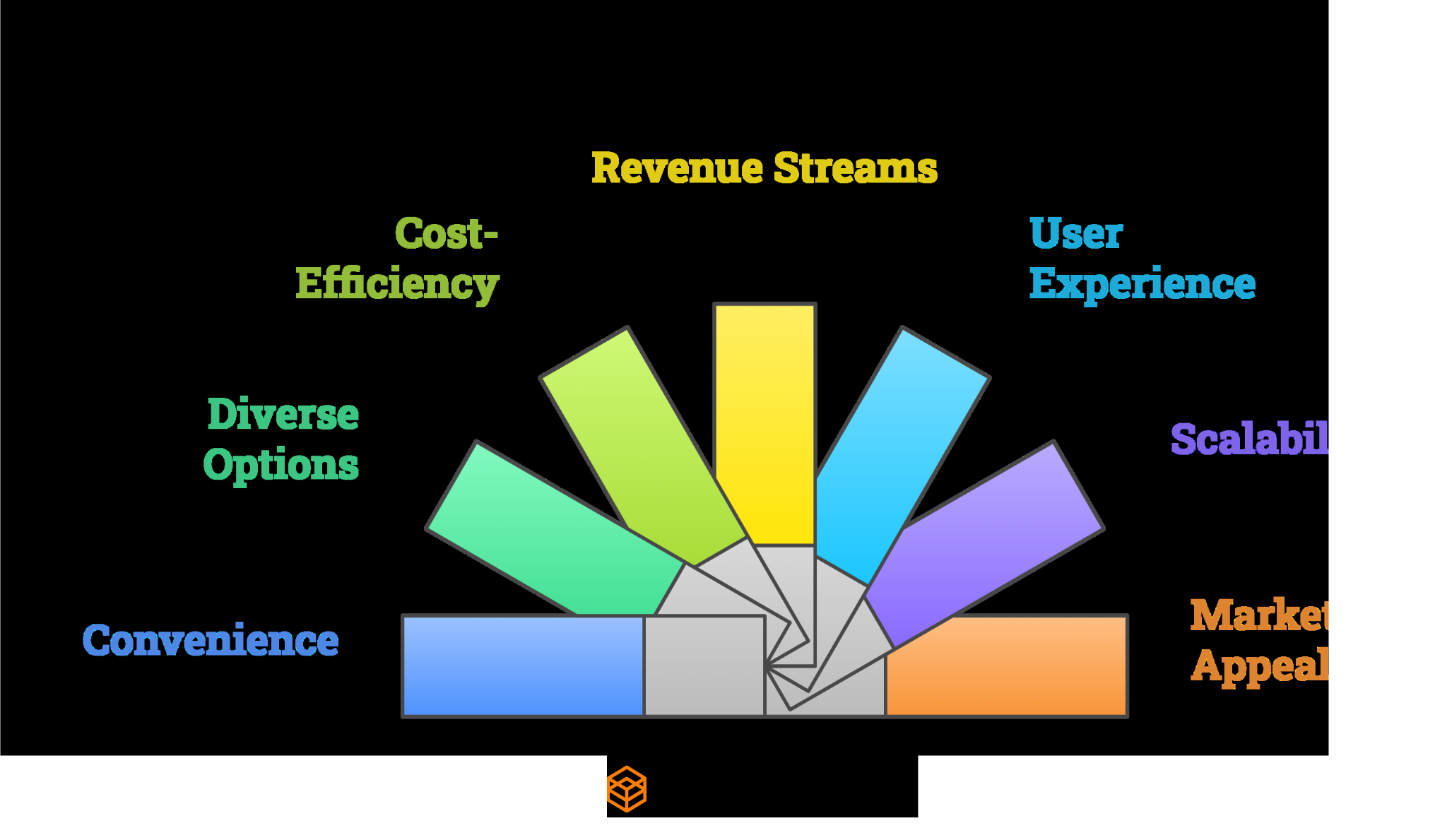
The latest technology of car rental app development eliminates the necessity of visiting an office to make a reservation by providing the possibility of 24/7 booking, as well as avoiding document work by using a computer from any place. Through their smartphones, users are able to search, book, and pay in a few taps. The outcome leads to friction-free movement and instant gratification, both when at home as well as out in the streets.
2. Diverse Fleet Options
A properly distributed app, in the form of a peer-to-peer, must be developed on the basis of a strong car rental application that allows users to view a considerably larger range of vehicles compared to office-based car rental agencies. Whether it is an entry-level sedan or a luxury SUV, or a specialty car, there is a choice for everyone and every budget. Car owners will be able to make a profit from their cars, and the additional supply will be increased without the business having to carry inventory.
3. Superior Cost-Efficiency
A properly designed car rental application development approach establishes a price competition situation. The peer-to-peer model dodges most of the overhead expenses of legacy shops, resulting in reduced end-user prices in addition to rental charges of different morphologies, an hourly price, and weekly rent, to name a couple, which conflict with offering a client maximum valorisation of each user segment.
4. Multiple Revenue Streams
Development of a car rental app will help the staff of platforms to multiply their income through several directions:
- Commission rates on each rental are made
- Premium or featured listing for car owners who desire greater exposure
- Add-ons on insurance as per the rental period and vehicle type
- Priority booking or convenience charges
5. Enhanced User Experience
Easy navigation and an intuitive interface that is made with a good rental car application ensure that the user is satisfied to the maximum. Among them are tangible accessibility, up-to-date available calendars, transparent payment channels, and clear communication between users and car owners. The result is increased retention and favourable word-of-mouth marketing.
6. Scalability and Rapid Growth
Car rental application solution development in the Cloud gives the ability to manage the surges in demand and scale or gain access to new territories with ease. Scratch it in a single city or ramp it up internationally; there were millions of users, advanced analytics, and safe transactions, which a well-structured backend infrastructure will provide.
7. Market Disruption and Millennial Appeal
Car rental apps driven by the latest technological innovations cater to the tastes of the younger generation who are tech-savvy, prefer flexibility, and respond to experiences rather than possessions. The on-demand business model is superior to legacy rental, and the current generation of age people prefer self-managed digital solutions, transparent systems, and those that are driven by demand.
To recap it all, the benefits of using revolutionary car rental app development strategies will enable the business to provide quality, ease of accessibility, and scalability, as well as challenge the conventional car rental modes. These advantages present on-demand car rental applications such as Turo as appealing to entrepreneurs who want to remain in business in the future of mobility.
Final Words
To sum up, effective development of a car rental app needs its planning, an appropriate set of features, and professional performance to develop the platform that is seamless, scalable, and user-friendly, like Turo.
Not only does using advanced solutions in car rental application development resolve the difficulty of combating the most commonly described pain points of convenience, prices, and selection, but it also creates a variety of options of revenue options and creates a competitive edge in a fast-developing market.
ScalaCode is the right choice whenever any business is willing to develop a state-of-the-art on-demand car rental app. As an advanced specialist in the car rental mobile app development services, ScalaCode can provide profit-booster solutions that are highly customized, secure, and may grow in response to market needs, and these solutions aim to fit your vision exactly.
Select ScalaCode and make your idea a successful reality with expertise and technology unrivaled, and with the resources to set your direction and start on a good road.
Why Choose ScalaCode for Car Rental App Development?
- Deep expertise in car rental app development with a proven track record of successful projects.
- Offers comprehensive, end-to-end car rental app development solutions tailored to your unique business requirements.
- Utilizes advanced technologies for secure, scalable, and high-performance mobile and web platforms.
- Delivers intuitive, user-friendly interfaces for both renters and car owners.
- Provides robust post-launch support, regular updates, and maintenance for ongoing business growth.
- Employs a team of skilled mobile app developers specializing in on-demand and peer-to-peer car rental models.
Frequently Asked Questions
Q1. How much does car rental app development cost?
The cost of car rental app development varies based on app complexity, features, and platform choice. Basic apps start around $20,000 to $50,000, while advanced solutions can exceed $150,000. It also depends on the location of your car rental software development company.
Q2. What features are essential for a car rental app like Turo?
The key functionalities are user registration, finding cars and adding cars, booking and payment gateway connectivity, GPS tracking, sending push messages, ratings, insurance status checks, and a dashboard to manage other things. A secure and comfortable journey is guaranteed by these in-app features provided by professionals in car rental app development.
Q3. Which platforms are best for car rental app development?
You may pick native iOS and Android development or go with a cross-platform framework such as React Native or Flutter. The cost and time involved in cross-platform development are often aware with failures in terms of quality.
Q4. How long does it take to develop a car rental mobile app?
Typically, development ranges from 4 to 9 months. This includes planning, UI/UX design, coding, testing, and deployment phases handled by your car rental app development company.
Q5. What business models are common in car rental app development?
Popular models include peer-to-peer (P2P), fleet-based rentals, or hybrid approaches combining both. The choice affects app features and monetization strategies.
Q6. How do car rental apps make money?
The generation of revenue can be through commissions on rentals, premium or featured listings, insurance add-ons, and convenience charges. The innovative car rental app development solutions seamlessly combine these monetization tools.
Q7. How can I ensure security and safety in my car rental app?
It is important to implement secure user verification, driver license checks, encrypted payments, GPS tracking, and integration with insurance. Join experts in the sphere to develop a car rental app that is strong in development and security.
Q8. What third-party integrations are necessary in car rental app development?
Essential integrations include payment gateways (Stripe, PayPal), map and GPS services (Google Maps), identity verification APIs, and notification services. These improve app functionality and user experience.
Q9. Do I need post-launch support for my car rental app?
Yes, continuous maintenance, bug fixes, performance optimization, and feature updates are vital for sustained success. Professional car rental app development services always include ongoing support.
Q10. How to choose the right car rental app development company?
Seek businesses that have experience in car hire mobile application development, clear pricing, technical skills, and when the business has good testimonials from clients. The collaboration with the effective company guarantees quality results and on-time delivery.