
DevOps and DevSecOps entered the scene in the software development world, giving a maximum edge over the qualitative creation of highly competing software. Both focus on a good development process that turns out to be quality software; however, their focus areas are pretty different.
DevOps puts a great deal of emphasis on collaboration, automation, and fast time-to-deployment. Those are great things that could lift it, actually joining the gap between development and operation teams. DevSecOps goes much further to ensure security in every development process and ensures that even the most sensitive pieces of information and assets are secured.
Let’s compare both approaches by showing their differences and benefits. This way, you will know which one works best for your business.
What is DevOps?
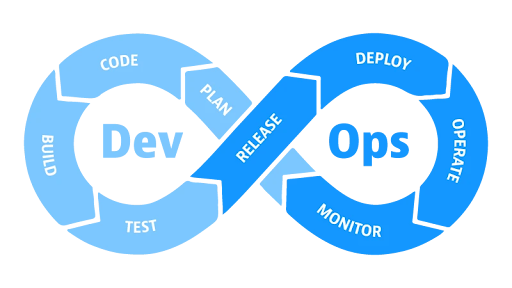
DevOps comes from the words “Development” and “Operations,” combining them into a single term with the goal of breaking traditional barriers that separate Development, QA, IT Operations, and Security teams.
The main purpose behind DevOps is to afford a faster and more reliable collaborative environment for development, testing, and software delivery. It simply holds better communication and collaboration between software developers and the people in charge of the IT operations team.
The Market Size of DevOps

In the very same year, 83% of IT decision-makers were of the opinion that putting DevOps practices into action would deliver more business value. This was earlier divided into two areas: development and operations.
For example, in the case of a traditional Waterfall model, programmers used to code and leave it for system operators to integrate and deploy. As Agile practices evolved, there came the need to release software at an increased pace, so a new approach was required to make this significant evolution in the industry.
DevOps has appeared as an all-in-one package to administer the changing scenery of software development. It integrates planning, coding, rigorous testing, deployment, and infrastructure monitoring. This single process speeds up delivery and ensures the results are of high standards of quality and reliability, thus giving assurance of effectiveness.
Key Benefits of DevOps
The companies offering managed IT services have expertise in both. However, what you choose depends on your business requirements So, let’s first look at some of the benefits of DevOps.
-
Stability of System
DevOps enables a more stable computing environment through streamlined processes and enforcement of standardized configurations.
-
Reduced Costs through Automation
Automation is at the core of DevOps, whereby efficiency is enhanced by reducing manual intervention, therefore cutting operational costs.
-
Stronger Security
Security is an integrated part of the development lifecycle in DevOps. Secure coding practices are enforced at the development stage, ultimately protecting against various potential threats.
-
Interdepartmental Relationship Building
Breaking down silos leads to enhanced collaboration between departments for a more peaceful and productive workspace.
-
Faster Deployment Times
Another factor that keeps DevOps vs DevSecOps debate on is that DevOps speeds up project delivery, internal or external, with better workflows and automation.
-
Lower Failure Rate
At the heart of DevOps is a CI/CD pipeline that enforces rigorous automated tests, bringing down the rate of software release failures significantly.
-
Mean Time to Recovery Improvement
DevOps practices, like automated incident response and fault-tolerant design, enable fast recovery in the event of system failure.
What are the Challenges with DevOps?
Of course, it has some challenges and here are some of them:
- As vulnerabilities and security breaches are assigned to some person, then they do occur.
- The tools, training, and constant maintenance include high-cost expenses.
- It takes a lot of time and resources. However, the approach of all automation has some negative implications.
- Steep learning curve due to the skill requirement and the chances of internal challenges.
DevOps Principles You Should Know
DevOps works on these key principles:
-
Collaboration
Collaboration is the underlying principle of DevOps. Development and operational teams function as single teams for communication, feedback sharing, and collaboration.
-
Automation
Automation is one of the essential elements that lets developers write code and develop features. CI/CD mitigates human errors; enhanced productivity of the entire team leads to short iteration, constant improvements, and instant customer feedback.
-
Continuous Improvement
The continuous improvement principle deals with experimentation, minimization of waste, and maximization in relation to speed, cost, and ease of delivery. This practice enables teams to have updated pushes, enhancing software systems’ efficiency.
-
Customer-centric Action
DevOps teams trace customer feedback to develop products with customer-centric requirements from the end-user. Due to real-time monitoring, feedback can be gathered promptly, and the user can respond to it for a quick development process. This helps in getting feedback and checking improvements in the future.
-
Create With the End in Mind
This is a principle that helps one understand customers’ needs and then develop products or services. DevOps teams should better understand the root cause of a customer’s problem from creation to implementation of the product.
What is DevSecOps?
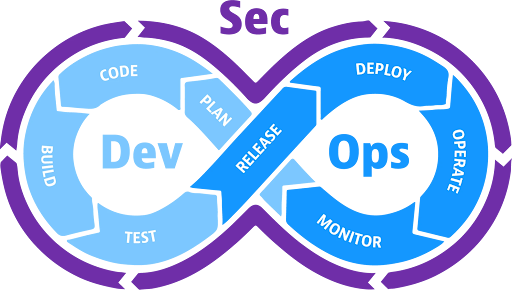
DevSecOps, sometimes referred to as DevOps Security, is a subset of DevOps that focuses more on security within the operations of developing and deploying software.
A point to note about DevSecOps is that it is not simply an extension of DevOps; rather, it is quite a different discipline in its own right, requiring a different set of skills. All this notwithstanding, the overlap between DevOps and DevSecOps is much more significant than the former.
DevSecOps is based on essential practices, including automation, monitoring, and enforcement, to ensure that all security practices are upheld throughout the software development life cycle (SDLC). This includes the structured application of automated testing and the enforcement of rules.
DevSecOps doesn’t just end at identification; it also encapsulates the automatic remediation of the identified vulnerabilities at the testing phases so that comprise code is not emitted when the production process gets underway. This, coupled with raising the resilience of the security posture, will also increase the speed of deployment.
The Market Size of DevSecOps

According to Gartner’s Hype Cycle for DevOps and Agile, DevSecOps is poised at the very edge of mainstream adoption. Today, it has reached a moderate level of 20 to 50% among its target audience.
In a survey of Gartner in 2022, 36% of respondents mentioned they had adopted DevSecOps, up from 27% in 2020. Of the rest, 96% mentioned they were adopting some core principles of the methodology, with security and compliance processes topping the list to automate.
Key Benefits of DevSecOps
Below are some of the major advantages of DevSecOps:
-
Proactive Cybersecurity
At the very beginning, DevSecOps provides security, reducing risks and increasing overall cybersecurity. With such proactive action, vigorous defense is provided while the threats are still developing, which helps safeguard the applications from the foundation.
-
Team Synergy
DevSecOps provides an environment that acts as the bridge between the developers, operations, and security experts. This collaboration bridge breaks silos, leading to the consequent emergence of communication and better decision-making for more secure products.
-
Security Embedded
Since security is built into development, it automatically triggers most security processes. This provides visibility very early on into vulnerabilities and thus further increases the pace of development and reduces the time for extended security reviews at the end of the process.
-
Streamlined Security
DevSecOps reduces the risk of vulnerabilities by implementing security checks in the development pipeline. This brings consistency into the application of security practices and thus continues the testing process to really achieve a more secure end product.
What Are the Challenges with DevSecOps?
Some of the key challenges of DevSecOps are as follows:
- There is low assurance on security at the development levels.
- Risks of organizational collaboration, culture, or tooling imbalance.
- Risks in security exist due to the lack of expertise and skills in developers.
- The lack of awareness about various security aspects, such as resources, data, and standards.
DevSecOps Principles You Should Know
The significant principles of DevSecOps are as follows:
-
Shift “LEFT” Approach
In this approach, maximum security practices are implemented from the beginning to the very inception of the software development life cycle.
-
Continuous Automation
This is, in part, achieved by continuing to automate security checks and processes within DevSecOps. Automated testing provides speed, consistency, and accuracy.
-
Collaboration and Communication
DevSecOps mainly focuses on collaboration and communication to facilitate communication between the development, security, and operations teams. It caters to building a culture of shared responsibility, keeping everyone aligned toward the common goal of eradicating security concerns.
-
Continuous Monitoring
Continuous monitoring allows developers to detect and respond to security threats.
-
Periodic Risk Assessments
Conducting regular risk assessments helps in finding inherent threats and ranking them with respect to security measures.
What is the Similarity Between DevOps and DevSecOps?
DevOps and DevSecOps actually share a lot in common at the core. Both emphasize team collaboration, automation, and increased visibility into an organization’s security posture.
1. Collaboration
DevOps brought a collaborative culture between the developers and operations, which broadened with DevSecOps to include developers and security teams. In DevSecOps, developers collaborate with the security teams to develop inherently secure systems ground-up, where security was only an afterthought.
2. Automation
In both DevOps and DevSecOps, automation is the keystone. This includes running regular, routine operations with implemented scripts at periodic intervals. In this manner, this approach trims the time and effort that have to be spent on repetitive tasks so that teams can concentrate on more critical objectives. This can include the following:
- Automating server builds: No manual rebuilding is required after every code deployment.
- Automate security audits for the manual examination of vulnerabilities in the system.
3. Continuous Monitoring
Monitoring is the process of collecting, analyzing, and presenting data regarding information on a system with fast responses. It’s an important part of any DevOps pipeline because if not done, then anomalies or failures in applications will not be noticed on time. DevSecOps champions proactive monitoring to ensure early identification and response to potential security threats.
4. Adopting Infrastructure as Code (IAC)
Infrastructure as Code is a powerful tool in any organization since it helps in automating critical resources, including the creation of servers, networks, and databases, and can even provide additional functionality for management purposes. IAC allows for these resources to be defined with code and removes the burden of having to manually create them each time.
This approach is instrumental in automating tasks that pertain to provisioning, deploying, configuring, and maintaining the infrastructure. It, in turn, comes in handy within cloud environments since it facilitates easy scaling according to site traffic and workload demands.
DevOps vs DevSecOps: What Are the Key Differences?
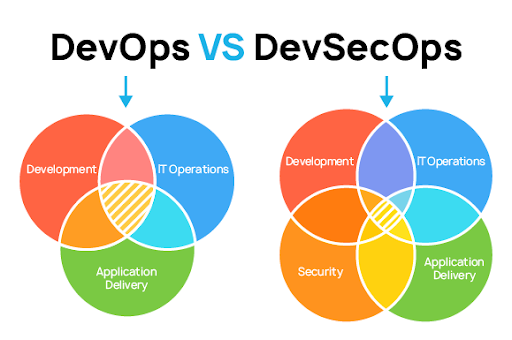
You can only pick a software development company when you know the differences and similarities. We have already discussed the similarities; now, let’s have a look at some major differences.
1. Target
DevOps focuses on timely collaboration of development and operation units to ease software delivery and enhance productivity. Whereas, DevSecOps builds on DevOps but includes security integrated across the whole development cycle, making security shared.
2. Team Composition
DevOps primarily deals with developers and IT operations staff. DevSecOps adds security professionals as part of the team. It collaborates with developers and operations right from the start.
3. Automation Scope
DevOps automates the build, test, and deployment processes for greater speed and reliability. On the other hand, DevSecOps augments automation to include security testing, vulnerability scanning, and compliance checks
4. Release Cycle
DevOps concerns about fast and frequent releases so that features reach the market at the earliest. DevSecOps is concerned about balancing rapid releases with security considerations. The release cycles may be a little longer, but the solution gets released with higher security intact.
5. Risk Management
DevOps is concerned only about the operational risks as well as system stability. DevSecOps is equally concerned about security risks. This actively works to identify and mitigate possible threats.
6. Compliance
DevOps can address compliance requirements only late in the procedure. DevSecOps integrates the regulatory compliance checks while developing and ensures that the regulations are followed right from the development stage.
7. Philosophy
DevOps is based on the philosophy of speed and efficiency, ensuring quick delivery of features without ever compromising on quality. Thus, it is best for organizations that want to update rapidly. On the other hand, DevSecOps allows organizations handling sensitive data or working under strict compliance requirements to include security in the development process.
8. Purpose
While both DevOps and DevSecOps aim to collaborate between the development and operations teams, the latter adds one essential layer: security. DevSecOps mitigates vulnerability risks and simplifies compliance by natively integrating security into the development process.
9. Goal
DevOps is used to facilitate software development through collaboration, breaking up silos, and increasing velocity. DevSecOps has the same goal but adds security checks to the process to slow things down and create more secure code.
10. Team Skill Set
DevOps teams focus on the technical domains of development and Operations. DevSecOps teams focus on security, proactively protecting software from any threats that may arise.
11. Security Integration
DevOps automates software delivery. On the other hand, DevSecOps embeds security at the beginning. Although DevOps is faster than DevSecOps, it is still less likely to be careful in catching vulnerabilities at the start.
12. Challenges
DevSecOps adds complexity to DevOps by integrating security into all of its processes. This requires more upfront resources and more work at the start but provides a tighter product.
13. Advantages
DevOps simplifies development, and DevSecOps adds a highly required layer of security. While a bit more complex to implement, DevSecOps becomes essential when organizations deal with sensitive data or work within regulated industries.
DevOps vs DevSecOps a short comparison table:
| Aspects | DevOps | DevSecOps |
| Target | Increased collaboration for increased velocity | Integrates security all through the development process |
| Team Composition | Developers and IT operations staff | Security professionals alongside developers and operations |
| Automation Scope | Automation in building, testing, and deployment | Automation in security testing and compliance scanning, in addition |
| Release Cycle | High-velocity, often release | Speed is to be counterpoised with security; therefore, a slightly longer cycle |
| Risk Management | DevOps allows operational risks. | Operational and security risks |
| Compliance | Compliance is usually done at the end of the process | Grabs compliance checks right from the beginning |
| Philosophy | Quick, efficient | Secure in the first place |
| Purpose | Automates development processes | Brings a layer of security into the development process |
| Goal | Break silos, speed up development | Secure code with extra checks |
| Team Skill Set | Technical development and operations | Security expertise |
| Security Integration | Automation of delivery | Security embossed from the start |
| Challenges | Easier but less secure | More complex with added security measures. |
| Advantages | Realization of faster development cycles | Tightened security, especially for sensitive data |
The above differences explain how DevSecOps extends DevOps with a more holistic approach to software development, where security is an enabler rather than an afterthought.
Real-Life Example of DevOps and DevSecOps Projects
Here are the key examples of DevOps and DevSecOps:
| Category | Company | Description |
| DevOps | Netflix |
|
| DevOps | Amazon Web Services (AWS) |
|
| DevSecOps | Capital One |
|
| DevSecOps |
|
How ScalaCode Can Help You Get DevOps Services?
Whether you choose DevOps or DevSecOps, you need an expert software development company to reach your goal and ScalaCode just does it for you. It’s a professional DevOps services company with a team of proficient programmers and market researchers. We have delivered several successful DevOps projects to clients from across different parts of the world.
Our developers are certified and know how to deliver the top-notch software that gives your business a brand value. So, if you are searching for a trusted software development firm, ScalaCode is a one-stop destination for you.
Final Thoughts
There is no one solution to rule them all in the debate between DevOps vs DevSecOps. DevOps focuses on speed and collaboration; DevSecOps integrates security into development. This will depend on your specific organizational needs, industry requirements, and risk tolerance.
Companies can take elements of each approach to balance their own needs, working out an integration of efficiency, security, and quality. At the end of the day, it is an adoption of practices that best support your business objectives and development culture. It’s always good to consult a software development firm that can guide you better.
FAQs
Q1. How will you know if DevOps is right for you?
DevOps can be the right step towards organizational excellence if one faces issues in collaboration between the development and operation teams, seeks to increase deployment frequency, and speeds up time-to-market for new features while improving the overall quality of software. Consider DevOps if you need automation for repetitive tasks, a smoother development pipeline, and a culture of continuous improvement and shared responsibility.
Q2. Why do companies use the DevOps approach?
Companies are moving to DevOps to reap competitive benefits from faster delivery, improved product quality, higher customer satisfaction, and lower operational costs. By adopting DevOps practices, organizations are better placed to respond to changes in the market more quickly, reduce time spent on non-value-added activities, and institute a more agile and efficient development process.
Q3. What could be the initial step toward implementing DevOps within an organization?
The first step to implementing DevOps usually involves evaluating processes and finding areas for improvement. This will involve looking over the development and operations workflows, knowing the pain points that reside within the team, and setting goals on what is expected to be achieved with DevOps.
It’s also important to get buy-in from leadership and your team members because DevOps requires a culture shift besides technical changes.
Q4. What’s the process involved in DevOps and DevSecOps implementation?
DevOps means integrating development teams and operations to automate software delivery through continuous integration, deployment, automation, and cooperation.
This does, therefore, put a premium on the culture of shared responsibilities, development and operations working as a single unit to optimize workflow, breaking down silos, and increasing velocity and reliability in software release.
DevSecOps simply extends this process by baking security practices into the DevOps pipeline, making security a core component in each stage, from code development to deployment.
This proactive security measure, automated compliance check, and continuous monitoring provide speed and efficiency to enable an organization to deliver secure software.