ScalaCode builds and deploys custom ML models, computer vision systems, NLP engines, and predictive analytics solutions for enterprises across 45+ countries. With 13+ years of production ML deployment experience, our teams take machine learning from proof-of-concept to measurable business outcome — at scale, in production.
Whether you need to forecast demand with 95%+ accuracy, automate document classification across millions of records, or fine-tune a large language model on proprietary data, our ML engineers architect solutions that move the metrics that matter — revenue, efficiency, customer experience.













We deliver six core categories of custom ML solutions, each grounded in production-grade engineering practices and aligned to measurable business outcomes.
Custom predictive models for demand forecasting, churn prediction, price optimization, financial risk scoring, and preventive maintenance. We build models that generalize — not ones that only work on training data. Our forecasting solutions routinely deliver 90%+ accuracy on 12-week horizons for retail and supply chain clients. Explore our detailed guide to AI-powered demand forecasting.
Object detection, image classification, OCR, video analytics, defect detection, and visual search systems. We deploy vision models on factory floors (quality inspection), retail environments (shelf monitoring), healthcare (medical imaging triage), and security systems (real-time anomaly detection). Typical inference latency: under 50ms per frame on GPU-accelerated infrastructure.
Document understanding, sentiment analysis, named entity recognition, intent classification, semantic search, and multilingual translation. Our NLP stack spans classical approaches (TF-IDF, spaCy) and transformer based architectures (BERT, RoBERTa, DeBERTa) for tasks requiring deep contextual understanding.
Custom generative applications using GPT-4, Claude, Gemini, and open-source models like LLaMA and Mistral. We build content generation pipelines, code assistants, image synthesis systems, and retrieval augmented generation (RAG) systems that combine LLM reasoning with your proprietary data. For deep generative capability, see our generative AI development services.
Collaborative filtering, content-based, hybrid, and session-based recommendation engines for e-commerce, streaming, edtech, and fintech platforms. We architect for cold-start problems, handle long-tail inventory, and optimize for business metrics (revenue per session, retention) rather than just recommendation accuracy.
Real-time anomaly detection for fraud, cybersecurity, industrial IoT, and operational monitoring. We build models using isolation forests, autoencoders, and LSTM-based sequence models for streaming time series data — with latency budgets measured in milliseconds.
clients served
country delivery footprint
AI models deployed to production
client retention rate
years in business

Every ML system starts with a data pipeline. We architect ingestion, validation, and feature engineering layers using Apache Spark, Airflow, and dbt — with schema enforcement, data quality checks, and lineage tracking built in from day one. Training data is versioned; feature stores (Feast, Tecton) are used for production to eliminate training-serving skew.

We use automated feature engineering tools (Featuretools, tsfresh) combined with domain expertise to construct features that capture real signal. Feature importance is evaluated through SHAP values and permutation importance — not just model weights — to ensure the model relies on features that will remain stable in production.

We benchmark baseline models (logistic regression, gradient boosting) before jumping to deep learning. For many enterprise problems, tuned XGBoost or LightGBM outperforms transformers while being 100x cheaper to train and serve. When deep learning is the right choice, we train on distributed infrastructure (Horovod, DeepSpeed) to keep training times manageable.

Bayesian optimization (Optuna), population-based training, and automated hyperparameter sweeps using Weights & Biases or Ray Tune. We budget compute deliberately — random search is wasteful at enterprise scale.

Model evaluation goes beyond accuracy. We stress-test for fairness across demographic slices, robustness under distribution shift, calibration quality (important for downstream decision systems), and computational efficiency. Models that pass our evaluation framework are those that will continue performing after deployment.

New ML models never go directly to full production. We deploy in shadow mode first (the model runs but its outputs aren’t used for decisions), compare to the incumbent, and roll out progressively via A/B tests measured on business KPIs — not just model metrics.
MLOps is where most ML projects fail. A model that achieves 95% accuracy in a notebook is worthless if it can’t be deployed, monitored, and retrained reliably. Our MLOps stack handles the full production lifecycle.

We deploy models using the deployment pattern that matches the use case: batch inference (overnight scoring runs), online inference (real-time API serving via TensorFlow Serving, TorchServe, or Triton Inference Server), or edge inference (on-device via ONNX, TensorFlow Lite, or Core ML). Containerization (Docker), orchestration (Kubernetes), and autoscaling are standard.

Production models degrade silently when input distributions shift — a phenomenon called data drift. We instrument every deployed model with monitoring for feature distribution changes, prediction distribution drift, and downstream business metric regression. Alerts route to the data science team before customers notice.

When drift is detected (or on a scheduled cadence), automated retraining kicks in: new training data is pulled from the feature store, the model is retrained, evaluated against the production incumbent, and — if it passes quality gates — deployed automatically. Human approval stays in the loop for high-stakes models (credit decisions, medical diagnostics).

We treat ML code with the same discipline as application code — version control (Git), automated tests (pytest for data/model logic, Great Expectations for data validation), code review, and CI/CD pipelines (GitHub Actions, GitLab CI) that build, test, train, and deploy models end-to-end. Every production model is reproducible from code and data versions.

MLflow and Weights & Biases track every training run, hyperparameter, and evaluation metric. Models are versioned in a centralized registry so any production deployment can be traced back to its exact training dataset, code commit, and hyperparameters. This is critical for audit compliance in regulated industries.
We select model architectures based on the problem, not on what’s trending. Here’s the breakdown of what we build.

GPT-4, Claude, Gemini, LLaMA-3, Mistral, BERT, RoBERTa, DeBERTa, T5. Used for language tasks, content generation, document understanding, semantic search, and agent systems. We also fine-tune open-source LLMs on domain-specific data — see our large language model development capability page.

ResNet, EfficientNet, YOLO, Vision Transformers (ViT), DETR. Used for image classification, object detection, segmentation, and video analytics. We optimize models for edge deployment using quantization and pruning techniques.

LSTM, GRU, Bidirectional LSTM, Temporal Fusion Transformer. Used for time-series forecasting, anomaly detection on sequential data, and speech recognition. In many enterprise cases we prefer transformer-based time-series models (Informer, TFT) for their superior long-horizon performance.

XGBoost, LightGBM, CatBoost, Random Forest, stacking architectures. For tabular enterprise data (the majority of real-world ML problems), these models consistently outperform deep learning while being dramatically cheaper to train and serve.

GCN, GraphSAGE, GAT. Used for fraud detection, recommendation systems, and knowledge graph applications where relational structure carries signal that traditional models can’t capture.

PPO, SAC, DQN for bid optimization, dynamic pricing, inventory management, and autonomous decision systems. RL is harder to deploy safely in production — we use offline RL and constrained exploration strategies.

Autonomous agents built on LLM foundations, using frameworks like LangGraph, AutoGen, and CrewAI. See our AI agent development services and the AI agent orchestration frameworks we evaluate for production use.
A structured six-phase approach that de-risks ML projects from discovery through deployment.
Workshops with your team to understand the business problem, available data, success metrics, and deployment constraints. We produce a technical feasibility report with recommended approach, timeline, and risk assessment.
Data pipeline setup, quality audit, exploratory data analysis, and baseline benchmarking. We document findings and align on what the target model must achieve.
Iterative model building, hyperparameter tuning, and evaluation against business KPIs. Regular stakeholder demos ensure the work aligns with business goals — not just ML metrics.
Model containerization, inference API development, MLOps tooling integration, and shadow deployment in production. Load testing and SLA validation.
Progressive rollout, A/B testing against the incumbent system, and business metric validation. We don’t declare victory until the business metrics move.
Model monitoring, retraining cadence establishment, incident response, and performance optimization. We transition knowledge to your team or continue operating the model as part of a managed engagement.

We’ve shipped 350+ ML systems to production. We know how models fail in the real world — distribution drift, training-serving skew, feature pipeline bugs, latency SLA violations — and we engineer defenses from day one.
Our MLOps practices are modeled on the reference architectures of leading ML teams. Every model we deploy has observability, automated retraining, and rollback capabilities built in — not bolted on.
Our senior ML engineers have backgrounds from top-tier research labs and published work in NeurIPS, ICML, and ACL. For cutting-edge problems (LLM fine-tuning, RAG architectures, novel neural architectures), we bring research-grade capability to commercial projects.
For many engagements, we guarantee model performance metrics (accuracy, latency, throughput) and stand behind them with SLA-backed contracts. We can do this because we’ve done it repeatedly.
ML models are only useful when integrated into business workflows. We’ve connected ML systems to SAP, Salesforce, Oracle, Dynamics, ServiceNow, and dozens of industry-specific platforms. See our AI integration services.
No black-box consulting. We share training data choices, model decisions, evaluation results, and deployment plans. Your team learns what we learn.
ML implementations succeed when they’re grounded in domain reality. Our industry practice covers verticals where we’ve shipped dozens of production systems.

Medical imaging (radiology triage, pathology classification), clinical decision support, patient risk stratification, drug discovery support. HIPAA-compliant data pipelines and PHI-safe training workflows. Read our perspective on the role of AI in healthcare.

Predictive maintenance on PLC and sensor data, visual quality inspection, production line optimization, supply chain forecasting. Typical ROI: 15-25% reduction in unplanned downtime within 6 months of deployment. See our AI in manufacturing deep-dive.

Credit scoring, fraud detection, AML monitoring, algorithmic trading signal generation, customer churn prediction. Our fraud models regularly detect 40%+ more fraudulent transactions than rule-based baselines while reducing false positives.

Demand forecasting, dynamic pricing, personalized recommendations, visual search, customer lifetime value prediction. For seasonal businesses, our forecasting models typically deliver 30-50% MAPE reduction vs. rule-based or Excel-driven approaches.

Route optimization, delivery ETA prediction, inventory forecasting, demand sensing, carrier selection. Our route optimization systems for fleet operators deliver 8-12% reductions in fuel cost and distance traveled.

Contract analysis, spend categorization, supplier risk scoring, automated invoice processing. See our AI in procurement playbook for specific use cases.

Content recommendation, metadata tagging, video content moderation, viewer churn prediction, dynamic ad placement optimization.

Personalized learning paths, automated grading, student engagement prediction, content recommendation, plagiarism detection using semantic similarity.
We structure engagements to match project risk, team readiness, and speed-to-value goals.
Clearly defined projects with known requirements, timeline, and deliverables. Ideal for specific ML use cases like a recommendation system launch or a production computer vision pipeline.
A dedicated ML engineering pod (data scientists, ML engineers, MLOps engineers, a tech lead) embedded with your team. Best for ongoing AI initiatives and teams who need sustained ML velocity. Learn more about how to hire dedicated AI/ML engineers.
A multi-team engagement that includes ML capability buildout, internal training, process establishment, and strategic advisory. Structured for enterprises treating AI as a long-term operating capability rather than a series of projects.
For mature AI use cases with measurable business KPIs, we’ll structure an engagement that ties our compensation to the outcome — shared risk, shared reward.

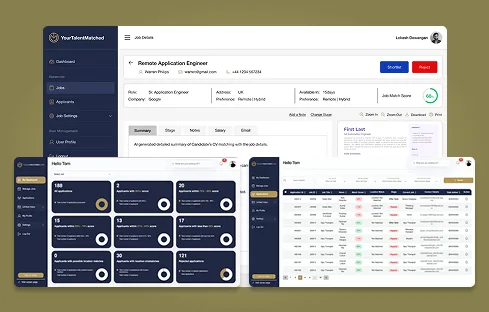

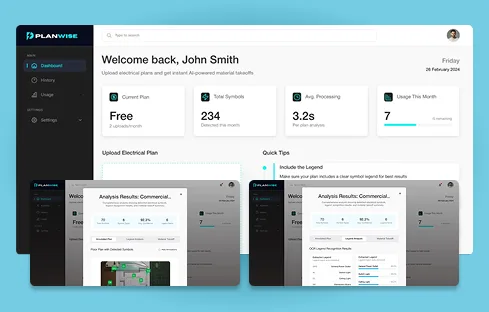
We select tools based on problem fit, team expertise, and long-term maintainability — not hype.
What the best ML teams are doing differently this year.

4-8B parameter models fine-tuned on enterprise data are now competitive with GPT-4 on specific tasks — at 1/10th the inference cost. Expect SLM deployments to dominate 2026 enterprise AI budgets.

Single-step ML predictions are giving way to multi-step agent systems that plan, retrieve, reason, and act. Our vertical AI agents article explores the commercial implications.

Anthropic’s MCP is becoming the standard for connecting AI models to enterprise systems — a major shift from bespoke integrations to composable tool ecosystems.

For problems with rare edge cases (fraud, medical anomalies, manufacturing defects), synthetic data generation using generative models is becoming the standard way to balance training datasets.

Retrieval-augmented generation is replacing pure embedding-based search as the default pattern for enterprise knowledge applications. Our RAG development services cover design patterns for production RAG.
For a comprehensive view of how these trends connect, see our coverage of top AI trends in 2026.
ScalaCode offers six core ML development services: predictive analytics, computer vision, natural language processing, generative AI, recommendation systems, and anomaly detection. Each service includes full-lifecycle engineering — data pipeline construction, model development, MLOps integration, production deployment, and ongoing monitoring. We’ve shipped 350+ ML systems across healthcare, fintech, retail, manufacturing, logistics, and media industries over 13+ years.
A typical custom ML development project takes 12 to 20 weeks from discovery to production deployment. The timeline breaks down as roughly 1-2 weeks for discovery and feasibility, 2-4 weeks for data engineering, 4-8 weeks for model development and evaluation, 2-4 weeks for deployment engineering, and 2-4 weeks for A/B validation and go-live. Simpler use cases with clean data can ship in 8 weeks; complex deep-learning systems with custom architectures may take 24+ weeks.
AI development is the broader discipline covering any system that performs tasks requiring human-like intelligence, including rule-based systems, expert systems, generative AI applications, and ML-driven systems. ML development specifically refers to systems that learn patterns from data – supervised learning, unsupervised learning, reinforcement learning, and deep learning. At ScalaCode, most modern AI projects are ML-driven, but we distinguish ML development (building and training models) from broader AI solution engineering (which includes integration, orchestration, and user-facing application layers).
We treat training data as a first-class engineering artifact. Our approach covers data ingestion from your operational systems, automated quality validation (using tools like Great Expectations), versioning (DVC or lakeFS), PII and PHI handling for regulated data, synthetic data generation for rare-class augmentation, and careful train/validation/test split discipline to prevent leakage. For regulated industries, we apply privacy-preserving techniques including differential privacy and federated learning when appropriate.
Our production MLOps stack monitors four distinct layers: input feature distributions (detecting data drift), model prediction distributions (detecting concept drift), downstream business metrics (detecting ROI regression), and infrastructure performance (latency, throughput, error rates). We use MLflow for model registry and experiment tracking, Evidently AI or Arize for drift monitoring, Prometheus and Grafana for infrastructure observability, and automated retraining pipelines triggered by drift detection or scheduled cadences. Every production model has a defined SLO and an incident response runbook.
Yes. Enterprise integration is one of our core capabilities. We routinely integrate ML models with SAP, Salesforce, Oracle, Microsoft Dynamics, ServiceNow, Workday, and industry-specific platforms (Epic/Cerner for healthcare, Guidewire for insurance, Bloomberg for financial services). Integration patterns include real-time API
endpoints, batch scoring pipelines, event-driven streaming (Kafka-based), embedded model serving, and increasingly MCP (Model Context Protocol) for standardized AI-system integration. For more on integration architectures, see our dedicated AI integration services page.
ScalaCode has deep ML practice in eight industries: healthcare and life sciences (medical imaging, clinical decision support), manufacturing (predictive maintenance, quality inspection), financial services (credit scoring, fraud detection, algorithmic trading), retail and e-commerce (demand forecasting, personalization), logistics (route optimization, delivery ETA), procurement and B2B operations (contract analysis, spend categorization), media and entertainment (content recommendation, moderation), and edtech (personalized learning, automated assessment). We also serve clients in telecommunications, energy, insurance, and real estate on project-specific engagements.
We ensure model reliability through a layered evaluation approach: train/validation/test splits with rigorous leakage prevention, cross-validation for robust performance estimation, fairness evaluation across demographic slices, robustness testing under distribution shift, calibration assessment for decision-support models, shadow deployment before production cutover, and A/B testing against the incumbent system measured on business KPIs. Production models then get continuous monitoring for drift and performance regression. For high-stakes applications (medical, financial), we add formal model risk management processes and audit trails.
Custom ML development costs typically range from $50K to $500K+ depending on scope. Proof-of-concept engagements start around $25K-$50K over 4-6 weeks. Production MVP ML systems with deployment infrastructure typically land $80K-$150K over 12-16 weeks. Enterprise ML platforms with multi-model governance, MLOps, and integration requirements run $250K-$500K+ over 6-12 months. Factors that drive cost include data complexity, model sophistication (deep learning vs. traditional ML), integration requirements, regulatory compliance, and ongoing operations scope. We provide fixed-price quotes after discovery – no ambiguous hourly estimates.
Yes. Most production ML models require ongoing operations — this is core to successful deployments. We offer several post-launch engagement options: managed operations (we operate the model end-to-end), shared operations (we handle MLOps while your team owns business logic), or knowledge transfer (we train your team and hand off completely). Ongoing activities include model retraining cadences (typically monthly to quarterly depending on drift rate), incident response, performance optimization, infrastructure scaling, and periodic model architecture refreshes. For dedicated ML team engagements, ongoing operations are built into the engagement
model.



I had a vision but needed technical execution—ScalaCode transformed it into a working platform with creative precision.




Recognized by Industry Leaders & Valued by Global Clients