
Healthcare has long been reactive, stressful, and fragmented. Patients often feel unheard or unable to convey their health conditions properly. Whereas doctors struggle with incomplete data and delayed insights. Hence, the result was frustration on both sides due to delayed treatment.
Here, IoT emerges as a potent solution and shifts healthcare from reactive to proactive care. The Internet of Things has reshaped operations with data-backed decisions and precise medical care. As numbers speak for the change scale. The IoT in healthcare market is expected to reach over $289 billion by 2028, showcasing rapid adoption.
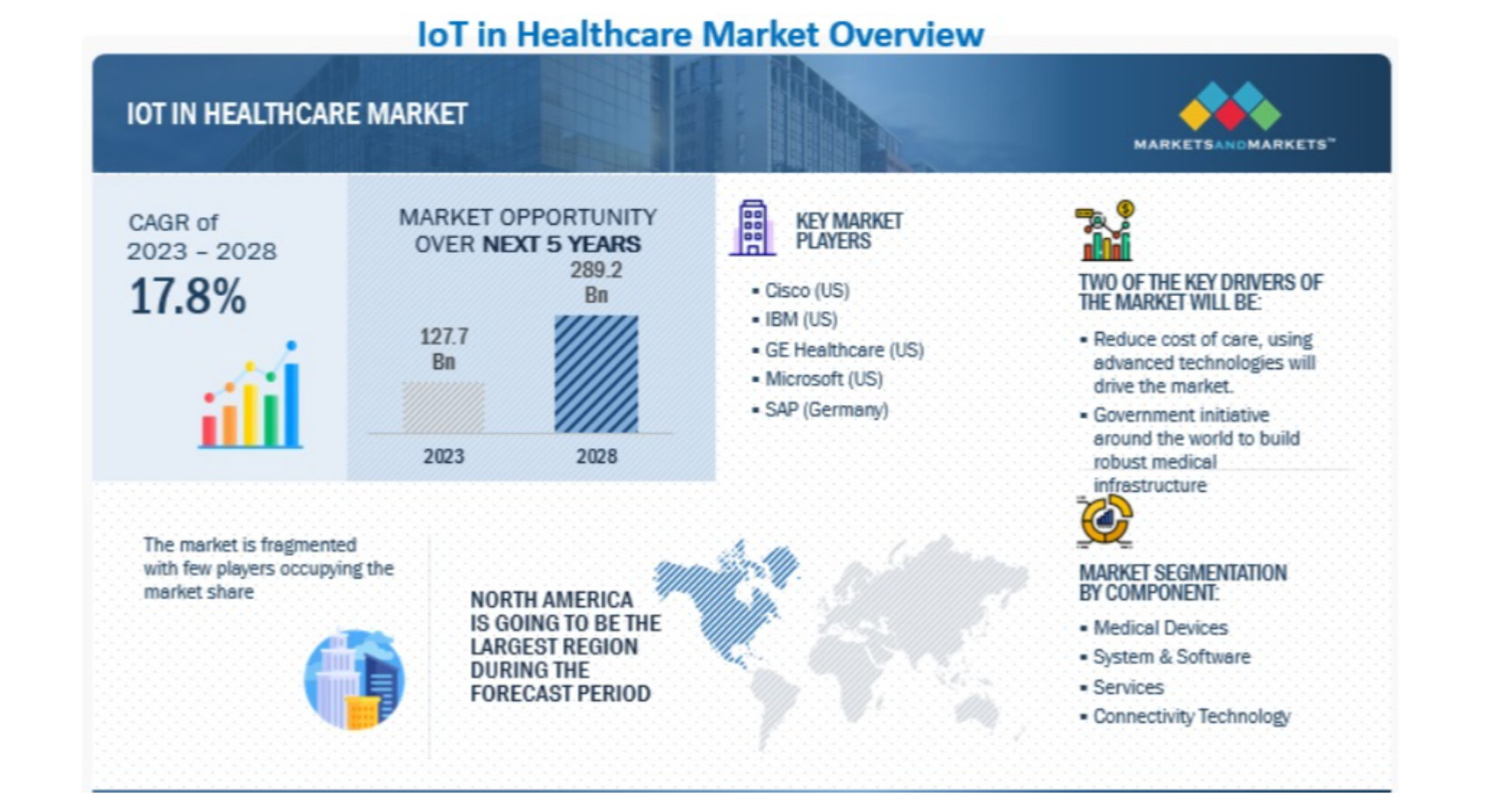
This is driven by the increasing demand for remote patient monitoring and a global push for cost-effective health solutions. However, this tech integration requires skills and hands-on experience. One error and your entire patient data can be compromised. Hence, opting for healthcare software development services from an experienced partner is vital.
This blog explores what the Internet of Things in Healthcare means, its applications, its benefits, and its challenges.
What is IoT in the Healthcare Industry?
IoT in healthcare industry is represented as the Internet of Medical Things (IoMT). This is a network of interconnected healthcare software, devices, and systems that collect, analyze, and transmit data over the internet.
Every device includes advanced sensors and wireless technology to communicate and share information. This has improved the siloed operation and empowered patients and doctors to check live health updates and reports.
You must have seen a wearable patch that sends oxygen and heart data to doctors, glucose monitors, wearable watches, and more IoT-enabled tech that automatically reports key information and sends vital data to the healthcare service provider.
However, with the rapid tech changes, the level of innovation and adoption is high in the healthcare industry as well. The value of IoT healthcare applications is significantly growing by leaving fewer blind spots to tackle for healthcare providers.
Working Model of IoT in Healthcare
Before integrating any new technology into your legacy system, you must be aware of its working model. So, here, we are going to discuss the working model of IoT in healthcare.

- IoT-enabled devices and sensors collect real-time patient data such as heart rate, blood pressure, glucose levels, body temperature, and oxygen saturation.
- Next is connecting wearables, medical equipment, and smart implants that continuously monitor patient health without manual intervention.
- Connectivity technologies like Wi-Fi, Bluetooth, cellular networks, and LPWAN securely transmit collected data to central systems.
- Cloud-based platforms store large volumes of healthcare data and ensure scalability, accessibility, and data security.
- You can also add AI and data analytics tools to process the data to identify patterns, detect anomalies, and predict potential health risks.
- Automated alerts and notifications are generated when abnormal readings are detected, enabling quick medical response.
- Integrated workflows improve hospital operations, reduce manual errors, and enhance overall care efficiency.
How do IoT-enabled Healthcare Operations Transcend Traditional Ones?
Traditional medical settings revolve around a scenario or episode, like a visit, a test, or a prescription. But with the introduction of IoT in healthcare, the operations have shifted more quickly.
| Aspect | Traditional Healthcare | IoT in Healthcare |
| Patient Monitoring | Clinic visits, once a week or a month | Continuous monitoring |
| Data Collection | Manual records or files | Automated data collection |
| Response Time | Reactive treatment after symptoms appear | Predictive and proactive |
| Accessibility | Limited to clinics and hospitals | Remote access through a mobile application |
| Asset Management | Manual tracking | Real-time location tracking |
| Data Sharing | The process was lethargic and slow. | Fast and secure |
Clearly, IOT applications in healthcare have not only transformed patient care but also improved operational efficiency.
The Technological Backbone of IoT Healthcare Applications
Internet of Things in Healthcare is backed by advanced technology and a layered architecture that precisely converts raw data from sensors to clinical intelligence. One must partner with an IoT app development service that understands the precise importance of the tech backbone of this technology for effective operations.
1. High-Speed Connectivity
Speed plays a vital role in the delivery of information via IoMT devices. High speed ensures seamless communication between medical devices. Technologies like 5G, WiFi, or LPAWN ensure real-time data transmission with ultra-low latency (as low as 1 millisecond). This is highly beneficial for applications like remote patient monitoring or telemedicine.
2. Data Analytics
IoT systems in healthcare gather a wide amount of patient data. Data analytics plays a crucial role in filtering crucial information from the raw data. It helps healthcare professionals to deliver improved patient care with precision.
3. Edge Computing
Edge computing brings data computing closer to IoT devices. This enables near real-time analysis and faster decision-making for critical events. For instance, a pacemaker with edge computing enabled can analyze its own vital data. In case of a life-threatening heartbeat, its built-in processor triggers an immediate corrective action.
4. AI & ML
AI and ML play a vital role today in healthcare IoT. The technology analyzes large volumes of data generated by IoT devices to enable predictive medical care. Moreover, ML algorithms are effectively helpful in detecting early signs of cancer and related diseases.
Good To Read: AI in Healthcare
Key IOT Applications in Healthcare
The advent of the Internet of Things in healthcare industry has indeed changed how patient care, data collection, and decision-making are conducted. IoMT-focused applications have radically transformed healthcare operations. Here are some of the patient- and facility-centric IOT applications in healthcare:

1. Patient-Centric Applications
Applications that are centric to how patients interact and gather information. These Internet of Things-powered healthcare applications empower patients to keep track of and manage their health proactively outside traditional clinic settings.
- Remote Patient Monitoring
RPM provides real-time information to patients about their health through wearable sensors and connected devices. These types of devices stay active 24/7, track an individual’s goal towards their health, and provide a signal based on any significant changes in vital signs. The RPM facility, providing sensor-focused applications, has lowered hospital readmissions through post-operative care.
- Smart Medication Management
Technology has upped the management of medicine via sensor usage. Now, Smart Med Box tracks and automates medication management. This empowers patients to automate dosage verification and provide real-time adherence alerts. What does this IoT-enabled application do? These prevent errors and immediately notify caregivers if doses are missed, which is highly helpful with specific medications.
- Personalized Health Tracking
IoT-powered patient-centric healthcare applications like advanced wearables, health rings, and hearables play a vital role in providing personalized health tracking to patients. These applications offer clinical-grade tracking of stress, sleep cycles, hormonal changes, and more. Based on that, these offer personalized health guidance.
- Chronic Condition Support
Over the years, various specialized IoT healthcare applications and devices have been curated to provide support to patients suffering from chronic conditions. Devices like smart inhalers for asthma patients and wearable neurological monitors for Parkinson’s disease.
Facility-Centric Applications
Well, IoT not only amplified patient care but also empowered healthcare organizations to optimize their operations. These are transforming internal operations and improving staff efficiency, asset tracking, and patient safety.
- Robotic Surgery Assistance
One of the things we’ve envisioned or watched in sci-fi movies is now a reality with IoT. This tech forms a specialized ecosystem to empower healthcare organizations to perform efficient robotic surgery. However, the surgical movements are typically hard-wired. The role of IoT is to manage the broader data environment and remote capabilities.
One of the prime examples is the SSI Mantra, which precisely performs minimally invasive telesurgeries.
- Environmental Monitoring
Various healthcare applications that involve the role of sensors play a vital role in monitoring the overall environment of hospitals. Apps for air quality, infection control, climate checking, cold chain monitoring, and more maintain critical conditions in labs and pharmacies by tracking temperature, humidity, and air quality.
- Real-Time Location Systems
Hospitals or pharmacies have always faced a problem in managing the real-time location of the assets, like where the wheelchairs or ventilators are. This is due to the large number of patients and service providers. IoT healthcare applications have reduced search times. These apps enable them to know the precise location through RFID tags and BLE (Bluetooth Low Energy) beacons. This tracking has substantially improved the staff’s responses during emergencies.
- Automated Workflows
IoT has enabled automation in healthcare settings through effective data collection, analysis via AI integration, and report generation. With smart systems like AutoBed, they can track the bed occupancy and automate the discharge/admission process. For instance, a 1% reduction in readmission for a hospital with around 10,000 discharges annually can save approximately $500,000 to $1 million.
Key Benefits of IoT in the Healthcare Industry
The healthcare-focused IoT applications provide various advantages to both patients and service providers. The Internet of Things technology has evolved drastically from a support tool back then to a strategic necessity now. Whether patients or doctors, the data-backed, timely insights have changed the face of modern healthcare delivery.

1. Operational Efficiency
The introduction of the Internet of Things in healthcare has significantly helped in streamlining hospital workflows by automating administrative and clinical tasks. This tech integration with EHR results in effectively optimizing resource management through precise data.
2. Enhanced Patient Management
Through IoT-powered applications, patients can efficiently track their health status. These interconnected devices track vitals (heart rate, glucose level) in real-time. As a result, this reduces the need for in-person hospital visits. The access to real-time data empowers patients to actively participate in their health management. Thus, it improves adherence to treatment plans.
3. Precise Medical Care
Healthcare IoT applications have changed how doctors deliver treatment to patients. With these modernized applications, they have insights about the patients’ disease, recovery level, or early disease symptoms. Well, not just IoT; AI and ML algorithms also play a vital role in uplifting medical care and making it patient-specific.
4. Reduce Physician Burnout
Keeping things in a document regularly actually has increased physicians’ and healthcare providers’ tensions. IoT emerges as a technology that helps them significantly reduce it by delegating the automated, mundane tasks. Now, wearables can directly integrate with EHR, capturing the information automatically and eliminating the need for manual entry.
5. Cost Reduction
The introduction of IoT in healthcare apps has significantly resulted in cost efficiency for patients and medical organizations. For patients, remote health monitoring plays a crucial role in reducing hospital stays and frequent doctor visits. This allows non-critical patients to stay at home and save hospital costs. Moreover, IoT majorly helps in automation, which allows healthcare facility providers to improve their staff productivity.
Critical Challenges to Internet of Things Adoption in Healthcare
With the benefits of IoT in healthcare industry, there are some specific challenges that are still keeping away the majority of healthcare providers from adopting this tech entirely. These challenges can impede the operations of a healthcare organization. Here are some of the main ones that you must not avoid:
1. Data Security
Data security issues are growing at a rapid pace with the modern tech evolution. For a healthcare facility provider, it becomes a primary challenge to safeguard the crucial patient information from malicious cyberattacks. This is because information shared across networks is highly targeted for sophisticated attacks.
To mitigate these risks, an organization should work with partners offering secure API Integration development services by following cybersecurity best practices to secure data. This ensures to maximize your healthcare IOT security and compliance with data protection regulations.
2. Data Overload
Data plays a vital role in IoT healthcare applications to work efficiently. It is crucial to perform timely storage checkups, as continuous data from wearables and other connected devices can create pileups and hamper the operations of IoT-powered apps.
3. Interoperability Issues
Interoperability is one of the main challenges in IoT-focused applications. A lack of standardized communication protocols often prevents data from being shared between different devices. As a healthcare organization, while implementing IoT in your processes, you must focus on this challenge to ensure seamless data flow.
Learn More: Cloud Computing in Healthcare
Emerging Trends Shaping IoT in Healthcare
The future of IoT in healthcare is moving towards intelligence, decentralization, and a smarter edge. Hospitals will expect IoT devices to send only relevant and required data, which significantly reduces the data overload challenge and provides doctors with the information they need precisely.
1. Internet of Bodies (IoB)
One of the IoT future trends is the Internet of Bodies (IoB). IoB includes smart implants, ingestible sensors, and more that level up the real-time tracking of internal vitals. Moreover, this will not be a tech upgrade only, but also a shift towards personalized medical care by improving health awareness.
2. Voice-Activated Healthcare
AI with IoT has transformed medical care into a seamlessly interconnected, data-driven system. Voice-enabled healthcare integrates speech recognition and NLP into medical devices and hospital ecosystems. This voice tech connects with physical medical devices and software to build a unified ecosystem for data collection and communication. Clinicians use hands-free conversational AI tools for patient documentation and patient history retrieval.
3. Decentralized Security
Healthcare IOT security is one of the crucial aspects, and with changing times, the chances of data theft and other malicious activities are also growing. Thus, to combat escalating cyber threats, a surge in blockchain-based technology is evident. This ensures data interoperability and transparency through decentralized identifiers (DIDs), improving the security of IoT-powered applications.
Build an IoT-Focused Healthcare Application with ScalaCode
IoT in healthcare has certainly transformed the operations of this industry. From gathering data to providing real-time insights, this technology is significantly upscaling the precision, accessibility, and operational efficiency. The Internet of Things has gradually become a part of daily practices in medical care.
However, various challenges still surround its complete adoption. Partnering with a skilled company like ScalaCode can help you build a healthcare IoT application tailored to your specific needs. As a top mobile app development company, we have built IoT-powered mobile apps for businesses operating in different industries and driven meaningful results.
We bring attention to detail to every project we undertake. Our IoT development service providers follow a structured process, from defining your specific goals to EHR/EMR integration via APIs to sync data directly into the hospital systems. As an experienced company, we ensure strict adherence to regional laws like HIPAA or GDPR, build a zero-trust architecture to ensure top-notch security, and integrate advanced Gen AI models to monitor critical vital health signs.
We bring your vision to life by making the most of IoT technology in your specific business use case.
Frequently Asked Questions
1. How does IoHT work?
The Internet of Healthcare Things works on data it gets from interconnected devices via sensors or wireless devices. In healthcare IoT, medical service providers can track their patients and provide personalized, proactive care. The timely alerts and accurate data lead to accurate decision-making.
2. What are some common IoT devices in healthcare?
Some common healthcare IoT devices in healthcare include wearables like smart watches or fitness trackers for continuous vital sign monitoring, remote patient monitoring tools for chronic care, and a hospital management system for asset tracking.
3. How does IoT help manage medications?
IoT-powered applications track medication intake via data coming through sensors or wireless technology. It sends reminders to patients about their dosage and alerts healthcare service providers if a dosage is missed. This improves adherence, especially for elderly or chronic patients.
4. How long does it take to build and implement IoT in healthcare applications?
Approximately, it takes 12 to 24 months or more to build and implement an IoT-powered healthcare application. The actual time depends on a project’s complexity and the app development service provider’s experience.
5. How much does it cost to build healthcare IoT applications?
It takes around $50,000 to $250,000 or more, depending on the specific requirements of IoT apps.