

In web application development contexts people tend to mix up REST API and RESTful API terminology although they represent different concepts. Haven’t you?
Well, you’re not alone. The question of differentiation between these two APIs excites developers because they need to determine which API best fulfills their requirements. But here’s a little fact to ponder: The analysis reveals that 83% of active APIs in operation today derive from REST design principles.
This research data prompts questions regarding REST API adoption patterns in current web development practices.
What separates a REST API as distinct from a RESTful API? And why should you care? The ability to recognize these differences helps you make decisions that bring positive outcomes to your project development. The evolution of web services creates new methods together with different professional practices that develop along with them.
The purpose of this guide is to establish clarity by defining these terms alongside an analysis of RESTful services with their contrast to REST APIs and web services. We will now start our combined examination of REST API versus RESTful API concepts.
Moving onto the comparison between REST API and RESTful API we must first understand the basic definitions.
- What a REST API is?
- Key element of REST API?
Similarly, we will have a look into these sorts of stuff around the RESTful APIs.
What is a REST API?
REST stands for Representational State Transfer. It’s an architectural style that uses HTTP requests for communication between a client and a server.
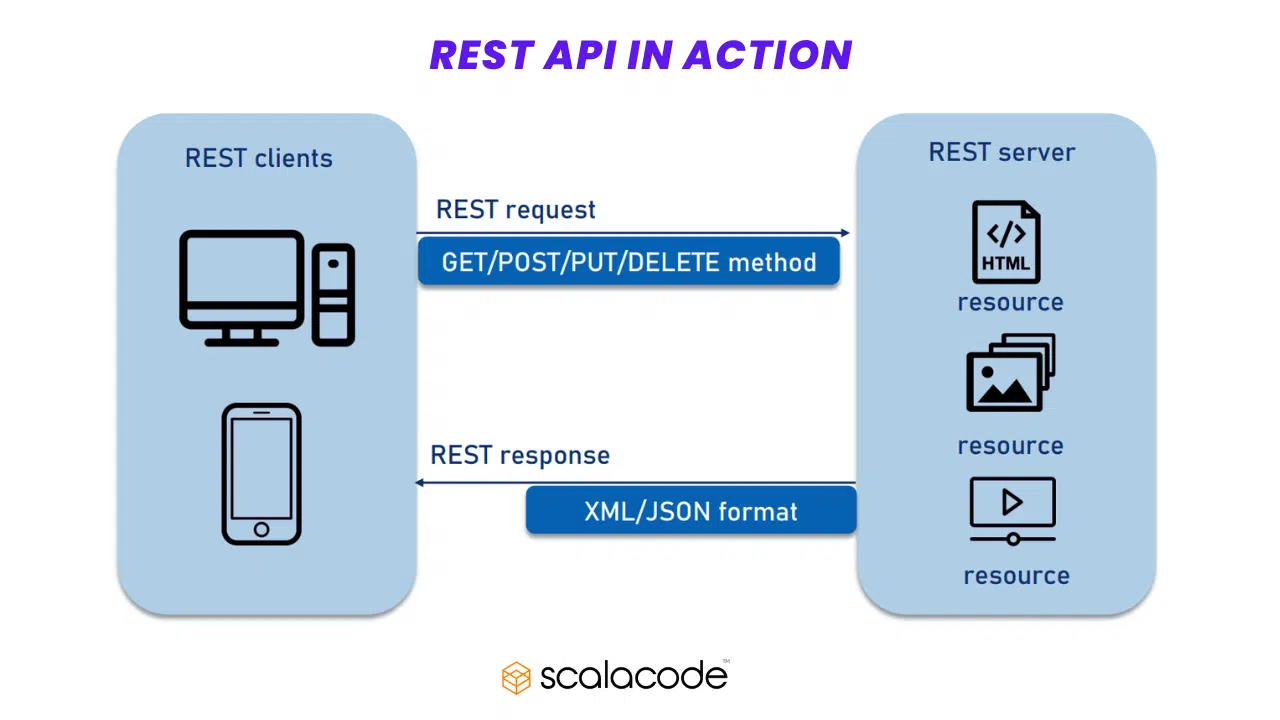
REST functions as an API to build scalable and efficient environments by requiring interface statelessness.
The system requires each client HTTP request to deliver complete data to enable the server’s fulfillment. The server keeps session information minimum during stateless communication.
REST stands for an architectural format which functions by sending HTTP instructions for data retrieval and management. The system functions through two communicating computer networks which operate without storing client information. The main elements of a REST API include:
Key Components of REST API
| Elements | Definition |
| Client | The application or software that initiates the request and runs on a user’s device. |
| Server | The system provides access to its data or features through the API. |
| Resource | Any piece of content that the server can provide to the client, such as text files, videos, or other data. |
What is a RESTful API?
Now, about RESTful APIs, the term RESTful API is used to describe APIs that adhere to the principles of REST. Not every API labeled as RESTful conforms fully to all REST principles. It is a subtle difference, but one worth pointing out.
Some of the constraints on RESTful services include the appropriate usage of HTTP methods such as GET, POST, PUT, and DELETE, and statelessness. In sum, a RESTful API is simply an API that’s built following REST principles, focusing resources around nouns in URLs rather than actions.
The main components of RESTful APIs are
- POST: This is most commonly used to create new resources, especially subordinate ones. If creation is successful, it returns an HTTP status 201, with a link to the newly created resource.
- Headers: RESTful APIs use HTTP headers to specify the details for requests and responses message – data, types of connections, and metadata.
- Data: This is the body of the response, including detailed information about the resource requested by the client.
- Approach: RESTful APIs employ HTTP methods, including DELETE, POST, and GET, for updating data, in such a way that the server works efficiently.
- Endpoints: These could be some kind of URLs indicating where data is located on the server; in other words, they represent the resources available through the API.
Some key advantages of the RESTful APIs include that they utilize very minimal bandwidth, support for all data formats, and they are extremely easy to learn. In general, these APIs are in wide usage when it comes to the development of SaaS products. They are also appropriate for public and private applications.
Read More: How is Google Cloud Healthcare API Transforming Healthcare Providers?
RESTful API vs. REST API: What Sets Them Apart?
In web development, REST represents an architecture, while RESTful APIs are an implementation of that concept. Even though these terms are used complementarily very frequently, there lie some specific distinctions between them. A detailed examination of the fundamental distinctions between REST and RESTful APIs is presented in this paper.
1. REST vs RESTful API: Architecture
REST spells out the standard ways to apply HTTP and URIs web standards effectively. In rest applications, it is typical to find a layered architecture since their client-side interacts only and exclusively through a uniform interface to the server. The structured system enables separate functional units which process independent duties that cover caching and security together with the balancing of loads.
A RESTful API implements standard REST foundational principles to deliver additional functionality. In addition to GET, this API also supports HTTP POST and PUT and DELETE, which allow for resource creation, including read and upcomping and deletion operations. The APIs allow developers to build intricate system interactions that adjust to unique project requirements.
The main difference lies in the way architecture is dealt with in each: the REST framework offers the possibility of realizing standard principles of service development, which are further extended by RESTful APIs with functional capabilities in creating comprehensive applications. Moreover, a good PWA needs a good, RESTful backend. That means, partnering with a Progressive Web App Development Company that understands and prioritizes RESTful API design is crucial for building a successful and performant PWA.
2. REST vs RESTful API: One Consistent User Interface
A uniform user interface represents a crucial aspect that defines all REST applications. Standardization acts as a critical element for attaining consistent integration between components and device platforms.
RESTful APIs share with their sibling REST only one core feature-to organize data resources through separate namespace identifiers. They provide an interface, standardized such that it provides equal visual experiences among all users in different platforms and devices.
In this context, the degree of uniformity maintained is the main difference. While REST applications try to provide a consistent experience across devices, RESTful APIs can be flexible; for example, developers might want to make the interface more suitable for their applications.
3. REST vs RESTful API: Caching Capacity
Also, the Caching mechanics are important in Web performance but differ between REST APIs and RESTful APIs. In the REST API, clients can independently determine which data to cache; thus, the client is able to store and re-use data in an efficient manner to enhance further performance levels. The non-cacheable data content is replaced by new information which is inputted into the system, ensuring fresh data content in the system.
RESTful APIs have improved performance by enabling flexible methods of caching for their clients. RESTful APIs can allow their clients to have full control of their data and cacheable states while keeping the system states unmodified through time. Besides that, it supports modern web development tendencies, enabling developer customization to meet unique project specifications.
The main difference is in the extent of control upon the caching level. When Developers use REST, they obtain standard guidelines on caching, while with RESTful API, the former are completely free to determine the method of storage and the protocol of the data retrieval procedure.
4. REST vs RESTful API: Stability
The major difference between REST and RESTful APIs is how stability works in web development. In REST applications, every request a client makes to the server contains complete processing data since REST does not store user information. Client-server decoupling, such as made possible by statelessness, provides for operational stability since both devices would work independently yet in communication with each other.
RESTful APIs allow clients to act upon the system without regulation details, thereby realizing abstraction. Client interactive and routing based on the framework response determines the representational state of RESTful API and chooses next system infrastructure information. Other elements are stopped to interfere through the process with distributed objects.
The main difference is related to the abstraction level: whereas in RESTful applications, the client manages every phase of an application, RESTful APIs encapsulate all the details of the execution, hence providing a more stable and smooth experience.
5. REST vs RESTful API: Multi-Layered Architecture
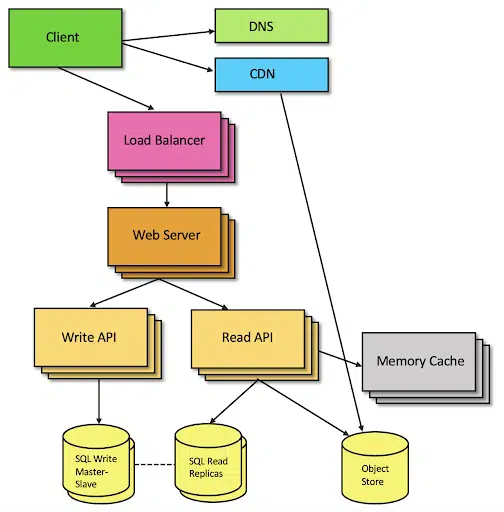
The use of REST and RESTful APIs makes a difference in designing the multi-layer architecture. In REST, a single device sees just the assigned layers, whereas in contrast, the intermediaries-like proxies or load balancer-are used to solve different challenges like security and performance solutions.
With RESTful APIs, information crosses various layers, facilitating integration amongst systems beyond what is possible by the devices using REST. The flow of data in this system is controlled, whereby clients can control or manage data flow across layers and as they prefer; a client is in total possession of his data and its editing version.
The difference in this respect is the capability of navigation and usage of several layers: REST puts restrictions on the use of predefined layers and, on the other hand, versatile possibilities for dynamic exchange in RESTful APIs make the integrated system more flexible.
6. REST vs RESTful API: Protocol Utilization
The two main aspects of the topic are differentiated in their usage of protocols. The primary design of REST APIs operates under HTTP/HTTPS protocols, which allows their application across web and mobile platforms. RESTful APIs operate through HTTP/HTTPS but only support the HTTP method set that includes GET and POST in addition to PUT and DELETE.
The clear commitment to HTTP methods gives RESTful service users a high level of predictability in implementation.
In REST vs RESTful, the exact nature of REST methodology brings architectural consistency; it yet again restricts the protocol that a developer would want to choose as an alternative to HTTP/HTTPS methods. The clarity of understanding protocol preferences does allow for better definition for the REST API vs RESTful API argument.
Although in developing software with Node.js as a backend technology, both REST and RESTful approaches can be implemented, the prevalent use of HTTP/HTTPS within the Node.js ecosystem often naturally aligns with RESTful principles, making it a popular choice for building scalable and efficient APIs. Hire Node.js developers for better result.
7. REST vs RESTful API: Scalability
RESTful APIs offer unparalleled scaling benefits compared to REST APIs. Due to the loose adherence to REST constraints, REST APIs offer flexible scaling possibilities. During implementation, developers can choose which constraints to enforce; hence, they can scale their projects to suit specific requirements.
RESTful APIs exhibit predictable scaling behavior since they strictly adhere to REST constraints. Predictability in scaling enables an organization to achieve maximum efficiency in resource utilization. This becomes important during discussion on scalability considerations between rest versus restful service, for developers to make such a differentiation.
8. REST vs RESTful API: Compatibility and Flexibility
A key differentiator for analyzing the difference between rest and restful services includes their interoperability amongst them along with their flexibility. REST APIs have superior flexibility features because of which their operation does not require to exactly align with the REST architectural constraints.
A constructive feature of flexible architecture is that it helps developers to build new applications or change the basic structure. RESTful APIs must, at all times of their operations, keep the REST constraints; hence, setting some boundaries that could deny them adding new features that may violate their rest compliance.
In this regard, the understanding of restful interfaces vs. RESTful APIs calls for consideration based on the contradiction of their extreme flexibility and REST compliance.
9. REST vs RESTful API: Ease of Implementation
Among other options, the ease of implementation over and above is what makes RESTful APIs stand out. REST APIs are easier to implement any time there is a decision by developers to choose which REST constraints their job applies to.
When developers develop REST APIs quickly to achieve a set timeline for publication, then REST obvious simplicity means quicker deployment is beneficial to such projects with tight timing needs.
It might be a bit more challenging for the developers to implement RESTful APIs since the developers have to cover all the principles of REST appropriately. In return, the complexity brings better and more reliable performance of the application.
The choice between restful services and web APIs is very often done with regards to how smooth the results of the implementation will be.
10. REST vs RESTful API: Performance Optimization
Performance enhancement is another dimension that shows dissimilarities among REST and RESTful APIs. Developers can improve performances using REST APIs by selecting and enforcing certain application-oriented constraints.
Optimized resource management results along with accelerated response performance from this approach. RESTful APIs ensure quality in maintaining performance by the fixed rules of REST constraints to statelessness and cacheability for quick data acquisition and messenger response.
Performance optimization is a big part of the rest vs restful API discussion, therefore understanding how each of these types tackles performance issues is instrumental.
Moreover, businesses whose web applications leverage Laravel can benefit significantly from carefully choosing and implementing their API strategy. Laravel’s robust framework provides tools and features that support both REST and RESTful API development.
With Laravel Development Services, businesses can access expert guidance and implementation support to build high-performing, scalable web applications.
Peeling Back the Facade: Comparing RESTful API Against REST API
| Feature | REST API | RESTful API |
| Architecture | Foundation, flexible implementation | Implementation adhering to REST principles |
| Interface | Consistent across platforms, potentially flexible | Standardized resource identifiers, consistent user experience |
| Caching | Client-controlled, data freshness maintained | Flexible caching, client control, system state preservation |
| Stability | Stateless, client manages all interaction | Stateless, abstraction of implementation details |
| Multi-Layering | Limited layer interaction | Data flow across layers, client control |
| Protocols | Primarily HTTP/HTTPS | HTTP/HTTPS, specific methods (GET, POST, PUT, DELETE) |
| Scalability | Flexible, developer-defined constraints | Predictable, adheres to REST constraints |
| Compatibility | Highly flexible, may deviate from REST | Adheres to REST constraints, potentially less flexible |
| Implementation | Easier, faster | More complex, requires full REST compliance |
| Performance | Optimized through selective constraint enforcement | Optimized through adherence to REST constraints |
REST API vs RESTful API: When to Use Which?
To understand proper API selection, let’s first learn how REST APIs differ from RESTful APIs.
1. Use REST API when
- Programming your current legacy applications involves the fragmented implementation of REST principles.
- Your application needs more flexibility in the implementation of the REST constraints.
- Your project can continue without full compliance with REST.
2. Use RESTful API when
- Complete implementation of REST principles shall be an essential requirement.
- Scalability, together with reliability and performance, is the key demand.
- Your API design should target an organized resource-based architecture, free from complexities.
The success of a project depends on basing the decision on how your unique goals and requirements align with different available options. Your development requirements achieve their best results when you select the correct API.
Also Read: Top SaaS Product Ideas
Examples in the Real World for RESTful API and REST API
The following examples work better when we take into consideration some real-life implementations.
1. Twitter API
The Twitter RESTful API allows developers to use their platform by providing interfaces for the developers within the system. Developers can fetch tweets and create new messages, as well as manage direct messages through normal HTTP method implementations. Twitter has developed a RESTful API because it follows the guiding principles of stateless interactions and maintains a uniform interface.
2. Spotify API
Spotify’s API enables developers to fetch knowledge of music catalogs with playing musical content while managing playlists via the service using REST design principles. It’s aimed at supporting a stateless, consistent API interface.
3. GitHub API
The extensive use of the RESTful design in the implementation of GitHub can show how strong their API functionalities are. In the RESTful interface system, users view repositories, driving the workflows. They are able to fetch commit data, issues, and requests for pulling through simple HTTP request protocols. All of the services offered by the GitHub API remain inside the REST principles, forming an intuitive environment for programmers to work within.
4. Google Maps API
The Google Maps API works with a slightly altered framework. The API offers many features additional to its partial adherence to RESTful through the capability display of maps along with location retrieval and route generation. Even though the API uses HTTP requests and responses, the API does not strictly follow RESTful because of variations present in its protocols and methods.
How can ScalaCode help in REST API and RESTful API Activities?
ScalaCode provides professional support to clients who want to adopt their REST APIs or enhance their RESTful APIs. With 13+ years of experience, ScalaCode leverages the best REST and RESTful APIs professionals to support businesses in designing, implementing, and maintaining web app development services.
ScalaCodecan assists in providing:
- It develops APIs for web services that are fitting for strict adherence to REST principles in order to attain efficient and scalable outputs.
- We design solutions to match your specific requirements, from basic implementations of REST API to full-fledged RESTful API system design.
- Our team will keep your APIs up to date with industry standards through continuous maintenance services intertwined with frequent technological and standard updates.
- ScalaCode connects the dots for manufacturers onto REST API development solutions, ensuring REST and RESTful API development processes.
Wrap Up
Technical differences between REST and RESTful APIs are few and far in between, as much as similar the design for both these systems. Not really. REST is the architectural style and RESTful its web service implementation. Understanding the difference between REST and RESTful APIs empowers you in mastering processes of API interaction.
Whether you are a Startup, SME, large enterprise, or even a person who just wants to know how things work in a digital space, learning the concepts of REST and RESTful services will be beyond value. These technologies lie at the heart of modern web development, powering everything from social media services to streaming services.
Next time you use an application or interact with any digital service, you will appreciate the seamless communication that occurs behind the scenes, thanks to REST and RESTful APIs. They are the unsung heroes of our interconnected digital landscape. For better benefit, partner with a reliable API Development company like ours.
We are here to help you navigate the complexities of API design and implementation, ensuring your applications are robust, scalable, and seamlessly integrated with the services they need to thrive in today’s digital world.
Explore More: Top Software Development Companies
FAQs
Q1. When should I use a REST API versus a RESTful API?
Understanding the right API selection requires learning how REST APIs differ from RESTful APIs.
- REST API is to be used when:
- Since most of the time you program your existing legacy applications, that would mean fragmented implementation of REST principles.
- Your application has more freedom with the implementation of REST restrictions.
- Your project can be moved ahead without full implementation of REST compliance.
- RESTful API is used when
- An essential requirement is the full implementation of the principles of REST.
- Scalability, along with reliability and performance, is a basic requirement.
- Your API design aims at organized resource-based architecture and avoids complexity.
Q2. What are the advantages and disadvantages of REST API?
Advantages of REST API:
- Scalability: REST APIs are strong in terms of scalability, since increasing the number of usages with developing interaction rates enables the extension of capabilities.
- Flexibility: REST can process different call types – it can return data in different formats, usually JSON and XML.
Disadvantages of REST API:
- Stateless: While each API call creates an exhaustive information bundle for processing, this design approach generates unnecessary inefficiencies.
- Overhead: Execution involves more processing time and data consumption due to the HTTP headers.
Q3. What are the advantages and disadvantages of RESTful API?
Advantages of RESTful API:
- Performance: The performance of the RESTful APIs is improved for organizations that use the REST constraints.
- Better organization: The principles of RESTful design bring code structures organized and neat.
RESTful API Disadvantages:
- Complexity: The use of RESTful principles in building applications demands more complexity during software development.
- Limitations: Strong adherence to the RESTful concept reduces the room for flexibility in development design.