![Food Delivery App Development: Features, Cost and Process [2024]](https://www.scalacode.com/wp-content/uploads/2023/07/Food-Delivery-App-Development-Features-Cost-and-Process-2023-ScalaCode.png)
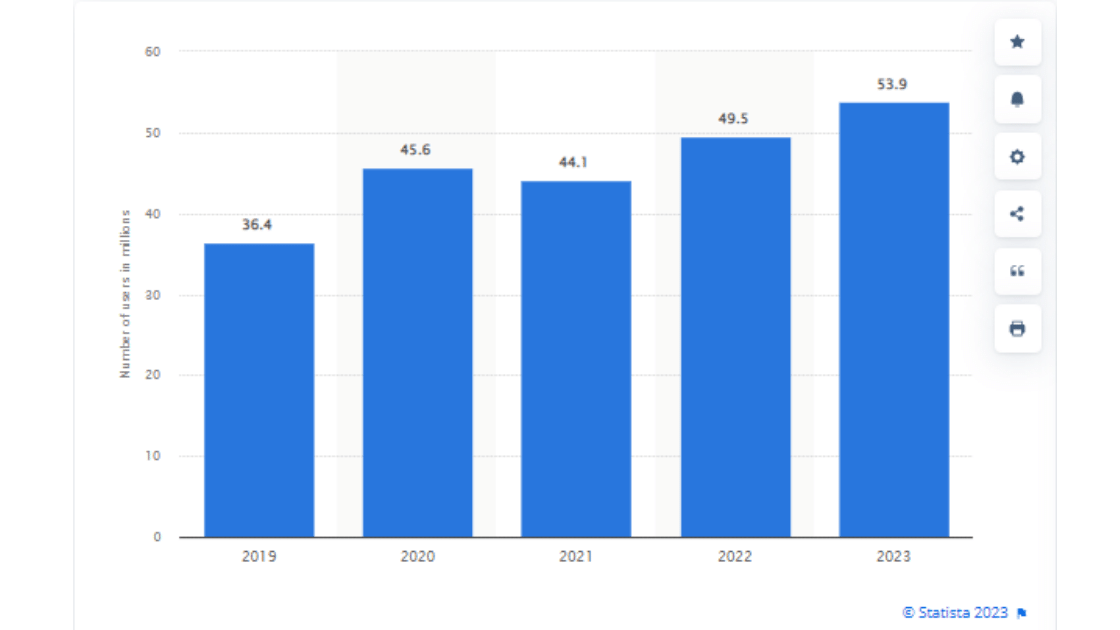
Though the United States may lag behind China in terms of food delivery app usage, the industry is nowhere going to stop. It is quickly growing day by day. Don’t believe us? See the stats by Statista. It says- in 2020, the US recorded 45.6 million users. However, when we look at its future, this number is projected to reach 53.9 million by 2023.
Isn’t that amazing?
If we go deeper into this sector, we see that giants like Uber Eats, Postmates, and DoorDash have dominated the market. Uber Eats alone generated $50 billion in revenue in 2021. And, surprisingly, this was a 70% increase from the year prior.
The industry is only projected to continue its growth – the online food delivery segment reached $306,808 million in revenue in 2021. Plus, it is estimated that 2,897.1 million users will be utilizing on-demand food delivery services by 2025.
Thus, it won’t be wrong to say- an app that delivers food is one way to take advantage of the growing food delivery market.
But how would you do that? That’s the main question.
You must be wondering-
- How to develop a food delivery application?
- How much will it cost you to develop a food delivery app?
- Whom should you hire to develop this app?
Well, if you’re an entrepreneur with a logistics background or an interest in delivery apps, then this guide will offer you all the answers you seek. So, keep reading.
Food Delivery App Development: What it is & Who Needs It?
Food delivery app development is the process of creating mobile applications that facilitate ordering and delivering food from restaurants to customers.
But what do you think- is that just for customers who want to satisfy their cravings without leaving the comfort of their homes?
Definitely not! Several players can benefit from food delivery app development:
- Restaurant owners who want to expand their customer base and offer online ordering and delivery services
- Delivery drivers who want to earn extra income by delivering food to different restaurants
- Entrepreneurs who want to create a new food delivery service and compete in the market
Therefore, it’s essential to understand the market, the process, the team, the mistakes to avoid, and the food delivery app development cost.
Let’s get back more into the food delivery app development market.
Food Delivery App Market 2024
This new market niche has been created in response to coronavirus and quarantine. The new reality demands new products. The competition is gaining speed, but the supply still falls short of the demand. It’s now your turn.
Why?
Venture capital firms are pouring substantial investments into this sector, reflecting its tremendous growth potential. By 2029, the food delivery industry is estimated to reach a staggering worth of $165 billion, with its most significant surge in five years occurring in 2020, driven by the COVID-19 pandemic.
To tap into this growing market, businesses must adopt the latest trend in on-demand food delivery apps, which
- optimize the customer experience
- provide convenience
- time savings
- a wide selection of food options
- real-time tracking of orders
- contactless delivery
- easy payment options
Also, it optimizes inventory management through strategically positioned
- ghost kitchens
- dark stores
- automated order processing systems
So, where do you start? No idea? Well, let’s start with knowing the different types of food delivery apps out there.
Types of Food Delivery Apps
When it comes to food delivery app development, selecting the right business model holds the utmost importance. The choices available are diverse, and making the right decision can truly make a difference.
Among the various options, one intriguing business model that has gained tremendous popularity is the concept of ghost kitchens.
It is forecasted that by 2027, the global cloud kitchen market will hit something around 71.4 billion U.S. dollars.
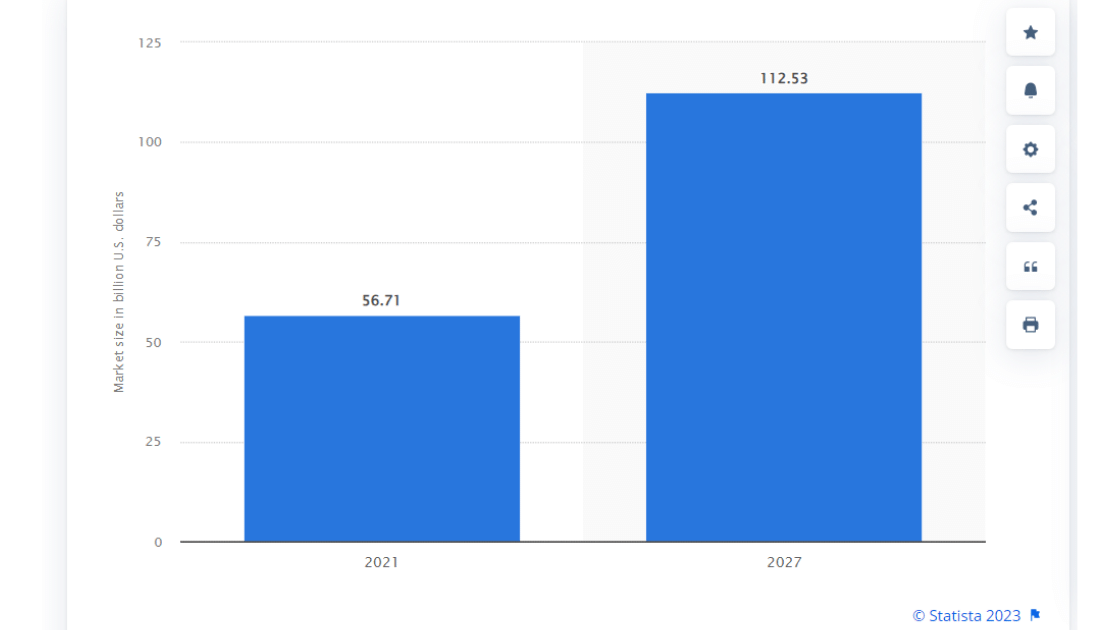
But one thing, ghost kitchen or cloud kitchen business models operate solely on delivery and takeaway orders. In such a business model, food delivery app development is a great call for success.
For those venturing into food delivery app development, it is wise to start small and gradually expand based on demand. Now, let’s dive into the three primary types of food delivery app business models, each with its own distinct characteristics.
Type 1: Order-Only Model
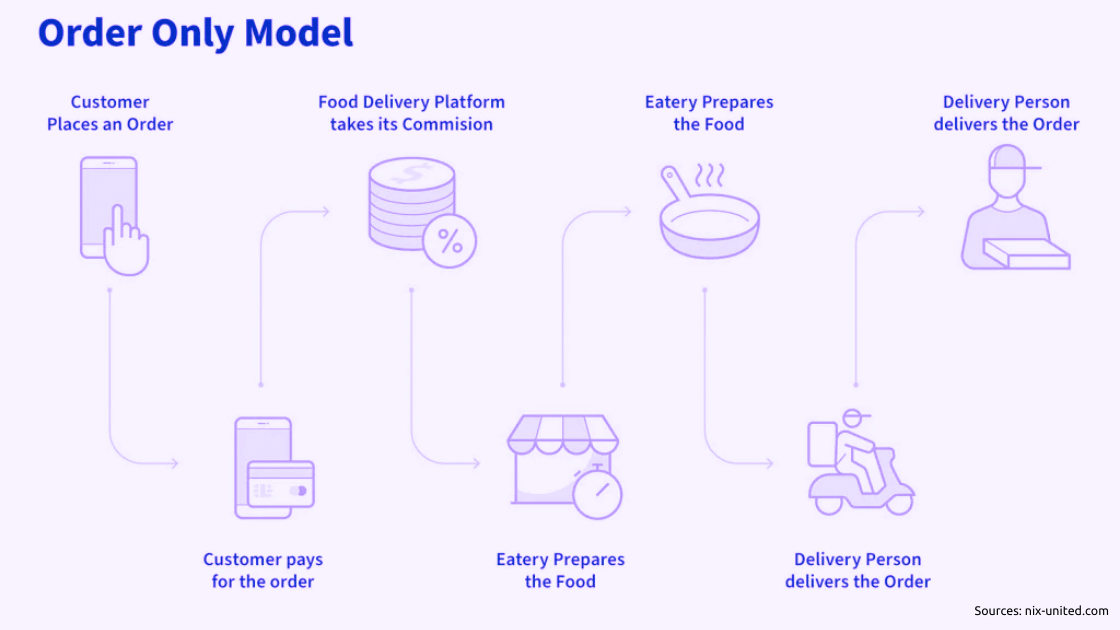
This type of food delivery app empowers customers to effortlessly order food from their preferred restaurants, which is then delivered by either the restaurant itself or a dedicated delivery company.
Renowned players such as Grubhub, JustEat, and Foodpanda operate on the order-only model.
Pro: This model offers the advantage of avoiding investments in kitchen infrastructure and the need to hire a culinary team.
Con: However, the downside is a reliance on external restaurants for both the supply of food and its delivery.
Type 2: Order and Delivery Model
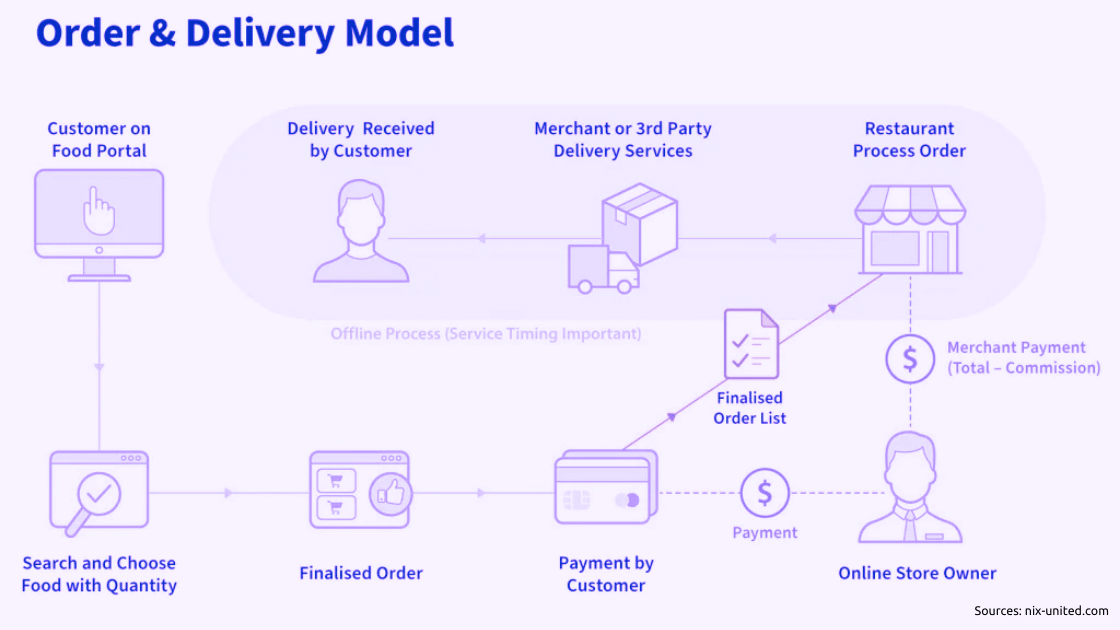
Here, the app facilitates the delivery of food from a wide range of restaurants that do not offer their own delivery services. Well-known examples like Uber Eats, DoorDash, and Deliveroo follow this model.
Pro: The beauty of this model lies in its vast array of restaurant options, catering to diverse customer preferences.
Con: Yet, it necessitates substantial investments in technology and building a fleet of delivery drivers.
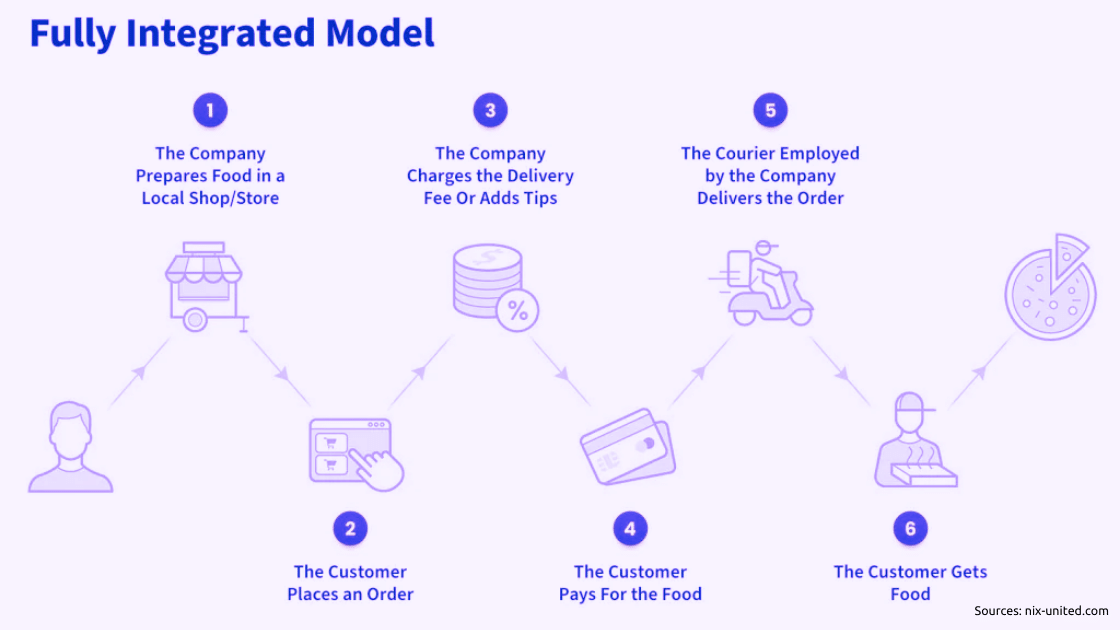
Type 3: Fully-integrated Model
Undoubtedly the most complex, yet rewarding, business model in terms of revenue, is the fully-integrated model. It involves a food delivery company owning and operating its own kitchens for cooking and preparing food.
Prominent examples of fully integrated food delivery apps include Metabolic Meals and Eat Purely.
Pro: This model offers you complete control over the process involved in food preparation, ensuring timely and quality delivery. As an added benefit, it allows chefs to create unique culinary items not available anywhere else.
Con: However, it demands significant investments in kitchen infrastructure and staffing.
Tips To Improve Your Idea For Food Delivery App Development
Before going down the lane of food delivery app development, there are a few easy yet important tips that you should implement for improving your idea.
#Tip 1: Explore market trends and seize opportunities
Begin by thoroughly researching the market, identifying its
- current trends
- potential opportunities
- emerging competitors
Besides, gain an understanding of
- what resonates with frequent food delivery application users.
- what technologies and features are currently popular in the market
- what type of app design is more common in this field
- Analyze prevalent practices employed in food delivery app development.
#Tip 2: Analyze your competitors
The importance of conducting an extensive analysis of your competitors cannot be overstated. Scrutinize their apps, evaluate their strengths and weaknesses, and take note of features you appreciate or wish to improve upon.
Consider creating a comparative table that encompasses all relevant details for future reference.
#Tip 3: Build an MVP for your idea
Why not put your unique idea to the test with an MVP, also called Minimum Viable Product? By developing an MVP that includes only the most essential functionalities, you can determine-
- If your product has the potential to succeed in the market
- If your idea is viable and solves the problem it aims to address,
- If there is a market demand, market trend for your product or service,
- If users find value in your offering,
- What improvements and enhancements are needed to make your product or service better?
#Tip 4. Finalize Your Unique Selling Proposition
Figure out what sets your food delivery application apart from competitors. Whether it’s offering a specific cuisine, providing exclusive deals, or focusing on a particular niche, having a unique selling point will attract users.
Food Delivery App Development Challenges
From finalizing which tech stack to use to decide on the features, there are several challenges you may encounter during the development of a food delivery application.
Challenge 1. Choosing the right technological stack
One of the key hurdles in developing a food delivery application is selecting the appropriate technology stack. Many teams or individual developers may lack the necessary knowledge to determine the ideal stack for creating such an application.
Thus, it is crucial to carefully choose a skilled and experienced team that utilizes advanced technologies and follows best practices to ensure a successful product development journey.
Challenge 2. Data security
Similar to any other application, a food delivery app must prioritize data security to safeguard against potential data breaches and cyber-attacks.
Considering that users will enter personal information and card details during the registration process, it becomes imperative to protect them from system breaches and the theft of sensitive data. Implementing robust security measures is essential to maintain user trust and confidence.
Challenge 3. Integration with payment systems
Seamless and secure payment processing is a vital aspect of a food delivery application. Users should be able to conveniently make payments for their orders within the app itself, without having to navigate to external platforms.
Integrating various payment methods, such as bank cards, PayPal, Apple Pay, or Google Pay, enhances user experience and ensures smooth transactions.
Challenge 4. Navigation API
A food delivery application heavily relies on accurate and automated location detection. This functionality is crucial for determining the courier’s location or the delivery destination.
Implementing a reliable Navigation API is essential for ensuring precise tracking and efficient order management within the app.
Challenge 5: Finding the right development Partner
Since the development of a food delivery app needs technical expertise and diverse skill sets, it is essential to find the right food app development company or reliable app developers for your project.
Food Delivery App Design Challenges
Now, let’s have an overview of the challenges you might encounter during the design phase of your food delivery app.
1. Product usability
Usability plays a pivotal role in ensuring the convenience and ease of using any type of app. There are five key components of usability to consider:
- Ease of use: The food delivery application should have a clear interface that allows new visitors to move from one tab to next effortlessly. Avoid overwhelming users with complex designs or time-consuming tasks like disabling pop-ups.
- Efficiency: Users should be able to quickly perform desired actions, such as browsing the menu, placing orders, or contacting the company.
- Memorability: Users should be able to easily navigate the app’s structure even if they haven’t visited it for a while.
- Satisfaction: The design, navigation, and content should resonate with users, fostering positive experiences and encouraging them to make orders and engage with the app.
- Minimizing mistakes: Errors should occur infrequently, and when they do happen, they should be easy to rectify.
2. Readability
Readability focuses on how easily users can comprehend the content and information presented in the application. Factors such as typography, fonts, layout, text size, and color influence readability.
It is crucial to ensure that users can quickly understand how to place an order or perform other actions within seconds of using the app.
3. Satisfying the needs of each target user
A food delivery app caters to users like us, restaurants, and courier service providers. It is way crucial to consider the needs and choices of all these sets of groups during the design process.
While the app’s style can remain consistent, functional differences should be incorporated to accommodate the unique requirements of each group.
4. Creating a brand
The app design should incorporate elements that represent your brand identity. It should be recognizable and distinguishable from your competitors’ apps. Incorporate branded colors, logos, and other visual elements to establish an eye-catching, memorable, yet shareable brand presence.
5. Synchronizing with the marketing strategy
Remember that after launching the app, you will need to promote and advertise it. Therefore, your design should align with your marketing plan and messaging. Consistency between the design and marketing efforts ensures a cohesive and impactful brand image.
Food Delivery App Development: Core Elements
When developing a food delivery app, it is essential to identify the core elements that will be involved in the development process. These core elements include:
1. User Application
The user application completely transforms the way we dine out. You can find a smooth and user-friendly interface for ordering food, convenient payment options, and live updates.
Besides, it provides a wide range of menu choices, allows personalized order customization, and ensures secure payments.
Want to know where your delivery is? No problem! You can even be allowed to track it in real-time. Plus, you can explore different restaurants and make informed decisions by checking out reviews and recommendations. Isn’t that cool?
2. Courier Application
The courier application empowers delivery personnel with essential information for efficient order fulfillment. It provides a clear overview of assigned orders, delivery addresses, and special instructions.
Advanced tracking features optimize routes, while real-time updates on traffic ensure timely deliveries. Effective communication tools streamline interactions between couriers, customers, and restaurants, ensuring a smooth delivery process.
3. Restaurant Application
The restaurant application enhances online presence and operational efficiency. It enables easy menu updates, showcasing enticing dishes with vivid descriptions. Real-time order insights help restaurants manage resources and cater to customer demand effectively.
The application facilitates coordination between the kitchen and couriers, optimizing delivery routes. Customer feedback loops allow continuous improvement and build customer loyalty.
Food Delivery App Development: Must-Have Features
For Client-side
Features |
Explanation |
| Registration | Users can sign up and create an account using email, phone, or social media platforms like Facebook and Gmail. Include features like email confirmation and password restoration. |
| Map | Utilize geolocation to help customers find desired restaurants, especially if there are multiple locations in the area. Allow users to enable location services to view vendors closer to their homes or offices. |
| Order and Shopping Cart | Make sure the menu and shopping cart are easy to navigate and easy to use when checking out. Implement filters to help users find specific items, and include product descriptions and prices. The shopping cart should display important information such as total cost, delivery time, and payment methods. |
| Scheduling | Allow customers to select a preferred delivery timeframe to receive their orders at a convenient time. |
| Payment | Integrate various payment options such as PayPal, credit and debit cards, Stripe, Apple Pay, Google Pay, etc. Additionally, consider offering cash on delivery for locations with less technological advancement. |
| Location Tracking | After placing an order, enable real-time tracking of the courier’s location. This feature helps customers estimate the delivery time and stay informed about any possible delays. Alternatively, provide a pick-up option where users can collect their orders directly from the restaurant. Location tracking also aids customers in finding the restaurant quickly for self-pickup. |
| Ratings and Reviews | Although not essential for an inventory business model, it is beneficial to include a ratings and reviews feature. This allows users to learn about various dishes and form opinions about the cuisine before placing an order. |
| Courier’s Information | Make available the courier’s information, including their name, vehicle details, and phone number. This allows customers to contact the courier if necessary. |
| Order History | Store order history on the client, restaurant, and admin panel sides to assist customers in recalling their previous orders. This feature is particularly helpful if a customer wants to reorder a favorite dish but may have forgotten its name. |
For Restaurant Side
Features |
Explanation |
| Menu Management | Provide restaurant owners and employees with the ability to add, remove, and edit items on the menu. Allow them to upload pictures, descriptions, and prices to enhance the presentation of dishes. This feature ensures that the menu is up-to-date and reflects the available options for customers to order from. |
| Order Management | Make new orders easily accessible within the application for restaurant owners and employees. They should be able to view and manage incoming orders promptly. Provide options to accept, decline, or make changes to orders as needed.
Moreover, the application should allow restaurant owners to update the status of orders, such as marking them as “in progress,” “ready for delivery,” or “completed.” This helps streamline the order fulfillment process and ensures effective communication with customers. |
For Admin Side
Features |
Explanation |
| Restaurant Management | Enable permission management for designated users to perform specific activities related to restaurant management. |
| Analytics | Provide administrators with valuable insights into app performance metrics. Track orders, inventory, delivery times, revenues, and marketing campaigns. |
| Payment Integrations | Store and manage payment methods within the admin panel to ensure security and accuracy. |
| Assigning Orders | Grant the app administrator the ability to assign or reassign orders to delivery personnel, ensuring timely and efficient deliveries. |
Food Delivery App Development: Step-by-Step Guide
Step 1: Conduct thorough research and analyze your specific niche
Dive into the market and study your competitors meticulously. Identify their strengths and weaknesses, learning valuable lessons from their past mistakes. It’s crucial to gain deep insights into the market to develop a superior, efficient, and innovative food delivery app.
If you lack expertise in this area, seek the assistance of a professional team to guide you through the process.
Step 2: Choose a suitable business model for your food delivery app
There are three main options to consider:
- Utilize your own fleet of transport vehicles: This model requires significant investment and entails higher responsibility, as you will be responsible for managing and maintaining your own delivery infrastructure.
- Collaborate with taxi services or external couriers: In this model, your app acts as a bridge connecting three key agents: customers, drivers, and restaurants. It offers a more scalable approach without the burden of managing a fleet but requires coordination and integration with external service providers.
- Facilitate delivery through the food service itself: With this model, your primary focus is connecting customers with restaurants, leaving the delivery responsibility entirely to the food establishments. This model provides less control over the delivery process but requires minimal involvement on your end.
Step 3: Strategize your monetization approach carefully.
Startups need to have a well-defined monetization strategy to sustain themselves. Let’s take inspiration from Uber Eats and explore three effective app monetization strategies:
- Delivery Fee: You can charge a delivery fee, either as a fixed amount or calculated based on the distance between customers and restaurants. This approach helps in covering the costs associated with the delivery service.
- Revenue Sharing: Implement a revenue-sharing model where you charge a percentage fee for each order made through your app. This way, you earn a commission from the food businesses for facilitating their orders.
- Advertising: Provide an advertising platform within your app where restaurants can pay to promote their services. By offering targeted advertising options, you create an additional revenue stream.
Step 4: Determine the key functionalities of your app.
Consider the needs of three primary user roles involved in the food delivery process: the client, the restaurant, and the courier. Here are some essential features to consider for each role:
Client’s App
- Seamless sign-up process with authorization options through email or social media.
- User-friendly interface for browsing and selecting restaurants based on listings, ratings, and reviews.
- In-app communication channels (calls and chat) for customers to interact with restaurants and couriers.
- Integration of multiple payment options such as PayPal, Google Wallet, Apple Pay, and credit cards.
- Streamlined order placement functionality directly from the restaurant’s menu.
Restaurant’s App
- Registration page for food businesses, including profile information like name, location, menu, business hours, and contact details.
- Real-time tracking of available couriers for order delivery, ensuring efficient coordination.
- Smooth communication channels between restaurants, couriers, and customers.
- Order status tracking, providing visibility into upcoming, processing, and delivered orders.
- Capability for restaurants to update their profiles and showcase special offers.
Courier’s App
- The user-friendly registration process for couriers, includes personal information, location, language, and vehicle details.
- Efficient order management system with real-time updates on delivery status.
- Communication features allow couriers to interact with restaurants and customers, resolving any issues and providing order updates.
- Account history to demonstrate the courier’s experience and track earnings.
Step 5: Select the appropriate tech stack for your app
The choice of technologies depends on the specific functionality you want to incorporate. While the following is a general example, it’s important to customize the tech stack to your app’s unique requirements:
- Programming languages: Swift, Kotlin, JavaScript
- Frameworks: React Native, Xamarin, Iconic, Flutter
- Backend: Node.js, Python, PHP
- Database: MongoDB
- Cloud storage: Amazon S3, Google Cloud Storage
- Payment gateway integration: Stripe, Paypal,
Step 6: Initiate the development process for your food delivery app
Partner with an experienced on-demand food delivery app development company to bring your vision to life. The development stages generally include:
- Prototyping: Create the logical user flow and design application screens based on your requirements.
- UI/UX Design: Develop an appealing and intuitive interface that incorporates the desired functionality.
- Development: Build the actual app by combining all the components and features.
- Testing and Publishing: Conduct rigorous testing to ensure fault-tolerant functionality and a seamless user experience. Once the app passes all tests, it can be published on relevant platforms.
Food Delivery App Development Cost
It’s challenging to provide an exact cost as it depends on various factors, including:
- app development company you partner with
- mobile app complexity.
- technologies and features you choose.
- platform choice.
However, opting to outsource the development can often be more cost-effective. Consider offshore destinations like India. Hiring a mobile app development company in India cut your development cost by 59%.
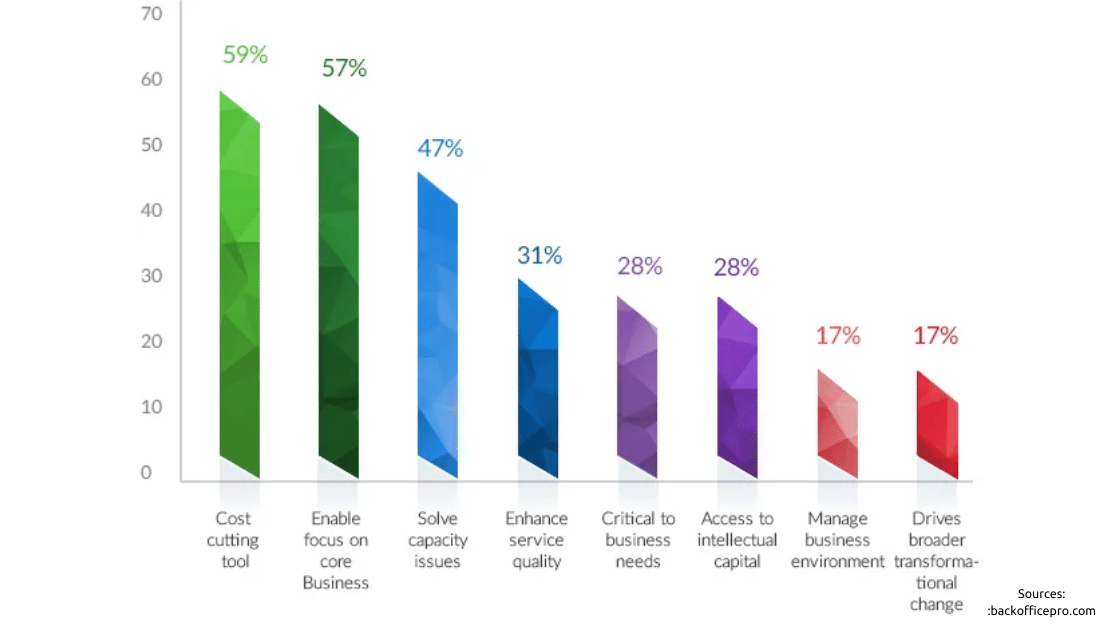
Besides, incorporating advanced functionalities like real-time order tracking, push notifications, or integrated payment systems will naturally increase the overall food delivery app development cost.
To obtain the best price for your food delivery app, it is advisable to gather quotes from multiple development teams and compare their offerings. This way, you can make an informed decision while considering both cost-effectiveness and the capabilities of the development team.
However, here’s a rough estimate of food delivery app development costs:
| Feature | Native App Development Cost (USD) | Cross-Platform App Development Cost (USD) |
| Customer app | 20,000 – 25,000 | 15,000 – 20,000 |
| Delivery partner app | 15,000 – 20,000 | 10,000 – 15,000 |
| Restaurant/Merchant app | 10,000 – 15,000 | 7,500 – 10,000 |
| Admin panel | 10,000 – 15,000 | 7,500 – 10,000 |
| API integration | 5,000 – 7,500 | 3,750 – 5,000 |
| Testing and deployment | 5,000 – 7,500 | 3,750 – 5,000 |
| Total | 65,000 – 85,000 | 40,000 – 55,000 |
How ScalaCode Can Help In Food Delivery App Development?
In the vast land space of food delivery app development, ScalaCode has emerged as a pioneer, crafting revenue-generating and market-fit products. Our seasoned mobile app developers possess the knowledge and skills required to kickstart your project, ensuring its success and captivating the hearts of users.
At ScalaCode, we understand the paramount importance of finding a reliable and experienced vendor who will treat your project with utmost care and dedication. When clients approach us with their visionary ideas, our team of tech leads guides them through stuff like
- MVP: They diligently define the scope of the Minimum Viable Product, ensuring that the app encompasses all essential features to meet user needs and expectations.
- Provides a clear overview of the project timeline, milestones, and crucial deliverables.
- Outline the ideal tech stack for your food delivery app.
- Will assist in your decision-making process, and we estimate the development hours required for your project
So, don’t waste a moment! Get in touch with us right away to create your very own food delivery application.
FAQs
Q1: How do I create a food delivery app like Uber Eats or Zomato?
Ans. You have to follow a few things to build a food delivery app like Uber Eats or Zomato:
- Track Food Delivery Industry Trends.
- Choose a food delivery model.
- Research the target market.
- Decide which features of Uber Eats you want to include in your food delivery app.
- Select which technology stack will work well for food delivery app development.
- Partner with the right app development company or app developers.
Q2: How much does it cost to develop a food delivery app?
Ans. The food delivery app development cost depends on its complexity, features, development partner location, your choice of technology, and more. However, for a simple app, it may range from
Type of food delivery app:
- Native app: 65,000–85,000
- Cross-platform app: 40,000–55,000
Q3: How long does it take to develop a food delivery app?
Ans. The development of a food delivery app takes approximately 4 to 6 months, depending on its complexity, type of tech used, features included, and the type of development platform being used.

Mahabir
Mahabir is the founder and CEO of ScalaCode, a distinguished technology firm that specializes in a comprehensive suite of software development services. These services include Custom Software Solutions, AI & ML, System Integration, Cloud & DevOps, Remote Software Teams, MVP Development, and Web 3.0. With a robust background in technology and over a decade of experience, Mahabir leads ScalaCode in delivering innovative solutions that drive business success. His passion for emerging technologies and commitment to excellence has positioned ScalaCode as a leader in the software development industry.